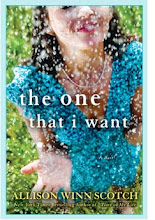
I did a long Q/A with the lovely folks at Writer Unboxed, and it's live today. Check it out. They asked insightful, fab questions, and I'm thrilled to be a part of the site, not just for this Q/A, but as a contributor as well.
Also, if anyone in NYC is participating in the Revlon Run/Walk tomorrow (I am!...I hope I can drag myself out of bed early enough to see my girlcrush, Mandy Moore, perform), they're giving away 100 copies or so of TDLF at the finish line...so run that baby superfast, and you can grab yourself a free copy!
And because I know that you come here for more than just Q/As with me (ha!), here's the question of the day:
Here's my deal, I'm a former lawyer, current stay-at-home-mom. I just started writing and got my first 2 clips last month in a downtown NY paper. The editor called me last week regarding a last minute assignment. As I'm just starting out, I was not going to turn him down and was quite pleased he thought of me to do the piece. The problem is, I have a regular sitter twice a week and obviously assignments/deadlines don't always coincide, of course, with when I have my sitter. I would love to devote tomorrow to writing but I am with my toddler all day on Mondays. Anyway, just wondering how stay-at-home-moms manage these issues. I can't really continue just writing late nights - I end up wiped for weeks on end!
Well, for me, I think it really comes down to time management. You mentioned that you do have a regular sitter, so that's wonderful. But when you say that the deadlines don't always coincide, I think it's up to you to make them do so. Here's what I mean by that: it sounds like this piece was a last-minute assignment, so let's put that aside and address that later. But part of the reason that I can juggle so many balls, I think, is that I'm incredibly organized. I sat down at my office today, knowing that I had A TON of things that I wanted to do OUTSIDE of work this afternoon, and immediately tackled my to-do list...which I'd written out for myself last night before I closed down. I recognize that between my dog, my kids, my need to get the gym, my errands, and today - a necessary mini-massage thanks to sleeping wrong and an incredible pain in my neck, that if I'm not efficient, it all goes to hell in a handbasket.
This is where I'm going with this: if you have a limited time to get your work done, you need to work really far ahead of yourself. It's really easy to put aside assignments that aren't due for a few weeks because, well, they aren't due for a few weeks. But as you said, who knows what else is going to pop up, and when you'll find the time to get to them. So, what I would recommend, is that as soon as you get an assignment, to start on it immediately. If you complete it early, all the better. Send it in early, and not only will you earn your editor's gratitude, you'll also feel a lot less stressed. Second of all, keep a list or take whatever organizational steps necessary to streamline your day. I've gotten a little lazy with my list-making as of late, and I've been far less productive. I mean, I can literally see the minutes ticking by when I should be doing something, and I'm not, simply because I don't have that list in front of me, and thus, I'm not as motivated.
And when it comes to last-minute assignments like the one you mentioned above, don't be afraid to ask for a day or so extension. You don't have to say that you hang with your daughter on Mondays: just say you already have a previous commitment, can you get it to him on Tuesday? I spend a couple of hours with my own daughter on Tuesdays and Thursdays, when she can't attend a pre-nursery class with my son, and when people ask if I can do a call or whatever at that time, I simply say that I already have a commitment. Period. Which is true. Just to my daughter, not to work. And if the deadline won't budge, ask your husband or whomever else is around to help you pick up the slack. Any juggling mom will tell you that it's not easy, but it is made easy by having a really, really good support team in place. It sounds like you already know that and are well on your way.
So working moms, any advice?
Friday, May 04, 2007


Thursday, May 03, 2007
Q/A With Moi
Today's post is brought to you by the fabulous Sara Hantz, whose first book, THE SECOND VIRGINITY OF SUZY GREEN, will be published this fall. I remember reading about her deal on Publishers Marketplace - here's what it said: Sara Hantz's debut THE SECOND VIRGINITY OF SUZY GREEN, about a girl who joins a virginity club in her new town to try to make a new start, to Andrew Karre at Flux, by Sara Crowe at Harvey Klinger (world) - and thinking that it sounded like a hilarious concept. So I, for one, am looking forward to it!
Anyhoo, Sara was kind enough to ask me to do a Q/A for her blog a while back, so head over there to check out my thoughts on the agent hunt, having faith in your work, and how to become a better writer.
http://sarahantz.com/blog/
Enjoy!
Anyhoo, Sara was kind enough to ask me to do a Q/A for her blog a while back, so head over there to check out my thoughts on the agent hunt, having faith in your work, and how to become a better writer.
http://sarahantz.com/blog/
Enjoy!
Wednesday, May 02, 2007
The Other Side of the Coin
Admin note: A kind friend just informed me that the copy of TDLF that she'd pre-ordered from Amazon had been bumped from her cart. I know that Amazon recently shifted the release date of the book (to the correct one), so maybe that's the cause? In any case, if you've pre-ordered (and to those of you who have - thank you!!), you might want to double-check your cart.
Question of the day: My question has to do with the other angle of freelancing--how does a person with a forthcoming nonfiction health-related book make contact with freelancers to be considered for book reviews, interviews, profiles, discussion of article ideas, etc.? Would love to hear your thoughts on this.
Good question, though I can only answer it from the perspective of a freelancer. But I'm hoping that there are some readers out there who have been in the position of promoting their own books who might chime in with ideas.
There are a couple of ways to go about this. 1) Hire a small PR firm who has reasonable rates or hope that your in-house publicist is proactive. The firm or publicist will take it upon themselves to craft a press release and blast it to all the necessary outlets, as well as come up with other snazzy angles to get your name and book in the press. 2) Write a press release yourself and do that same blast, though this might be harder for you, since you don't have the contacts. That said, I think it's Bacon's that has the email addys of just about every contact you'd ever need, and if you had the time and energy, you could put together a good list on your own. 3) Personally email all the freelance writers and editors you know to let them know about your book. As much as I just chatted about press releases, I tend not to read that many that are sent my way. A personal note or a referral from a contact/mutual friend grabs my attention much more.
So those are my thoughts, but I'm certain that there are a lot of other and better ways to go about it. So what say you, readers? What do you recommend for this book author?
Question of the day: My question has to do with the other angle of freelancing--how does a person with a forthcoming nonfiction health-related book make contact with freelancers to be considered for book reviews, interviews, profiles, discussion of article ideas, etc.? Would love to hear your thoughts on this.
Good question, though I can only answer it from the perspective of a freelancer. But I'm hoping that there are some readers out there who have been in the position of promoting their own books who might chime in with ideas.
There are a couple of ways to go about this. 1) Hire a small PR firm who has reasonable rates or hope that your in-house publicist is proactive. The firm or publicist will take it upon themselves to craft a press release and blast it to all the necessary outlets, as well as come up with other snazzy angles to get your name and book in the press. 2) Write a press release yourself and do that same blast, though this might be harder for you, since you don't have the contacts. That said, I think it's Bacon's that has the email addys of just about every contact you'd ever need, and if you had the time and energy, you could put together a good list on your own. 3) Personally email all the freelance writers and editors you know to let them know about your book. As much as I just chatted about press releases, I tend not to read that many that are sent my way. A personal note or a referral from a contact/mutual friend grabs my attention much more.
So those are my thoughts, but I'm certain that there are a lot of other and better ways to go about it. So what say you, readers? What do you recommend for this book author?
Tuesday, May 01, 2007
Getting Started
What was the moment like for you the first time you sat down to type out your book of fiction? Did you write that first sentence and then the story took off? Was that first sentence the most difficult to write? (As it has been for me.) Or, by the time you sat down to type, had you already sculpted the protagonist and all her qualities in your mind so you were equipped to build the plot?
I'll be honest: I find that the first 25k words of a book are the toughest. I know that some people struggle with the second half...they lose momentum and run out of ideas, which is why so many people have half-written novels tucked away in the archives of their computers, but for me, starting out is the hardest. Because it just seems SO DAMN DAUNTING. That, like, from this blank page, a novel will emerge.
But, on to your question.
No, I didn’t (and don’t) just sit down and start writing. Both times, I had a pretty good idea of at least the first half of the book, as well as the characters who would be in it. I really like to come up with a loose plot – and I say loose because a lot of things change once I start diving in, ie, in TDLF, one of the main love interests wasn’t even an original love interest at all, and I’d planned to have a different character fill that role...but when I started writing, things just fell into place organically – and spend some mental time with my characters before I start writing. I think that if you don’t do that, you’re prone to writing rambling chapters without enough plot because you’re sort of feeling your way as you go. And that doesn’t lead to good writing. (See: my first draft of my first novel!)
So rather than force yourself to write, which, by the way, is still a good way to exercise your fiction muscle, I’d instead focus on your key character and what you want to do with her. What’s her story? What are the conflicts that she might be dealing with? Is she a go-getter? Ballsy? Complacent? Is she happy in her job/relationship/life? Etc. Spend a little time kicking that around, and then the writing will come easier, I think. In fact, after I get to know the characters in my head, the first line and the opening scene come to me pretty easily. I'm guessing the same will be true for you.
So readers - what's your process? Do you sit down and write or take some time to craft a background story before you begin?
I'll be honest: I find that the first 25k words of a book are the toughest. I know that some people struggle with the second half...they lose momentum and run out of ideas, which is why so many people have half-written novels tucked away in the archives of their computers, but for me, starting out is the hardest. Because it just seems SO DAMN DAUNTING. That, like, from this blank page, a novel will emerge.
But, on to your question.
No, I didn’t (and don’t) just sit down and start writing. Both times, I had a pretty good idea of at least the first half of the book, as well as the characters who would be in it. I really like to come up with a loose plot – and I say loose because a lot of things change once I start diving in, ie, in TDLF, one of the main love interests wasn’t even an original love interest at all, and I’d planned to have a different character fill that role...but when I started writing, things just fell into place organically – and spend some mental time with my characters before I start writing. I think that if you don’t do that, you’re prone to writing rambling chapters without enough plot because you’re sort of feeling your way as you go. And that doesn’t lead to good writing. (See: my first draft of my first novel!)
So rather than force yourself to write, which, by the way, is still a good way to exercise your fiction muscle, I’d instead focus on your key character and what you want to do with her. What’s her story? What are the conflicts that she might be dealing with? Is she a go-getter? Ballsy? Complacent? Is she happy in her job/relationship/life? Etc. Spend a little time kicking that around, and then the writing will come easier, I think. In fact, after I get to know the characters in my head, the first line and the opening scene come to me pretty easily. I'm guessing the same will be true for you.
So readers - what's your process? Do you sit down and write or take some time to craft a background story before you begin?
Monday, April 30, 2007
Paying It Foward
I wanted to take today to give a shout-out to a fellow author, Jen Lancaster. Not only does Jen run the snarkalicious, Jennsylvania blog, and contribute to Snarkywood - a must stop for anyone who is interested in biting commentary on pop culture - but she's also the author of Bitter is the New Black, and Bright Lights, Big Ass, which is released tomorrow!
Now. Why did I title this post, "Paying It Forward?" Because, as you'll see when my book comes out next week (!!!), Jen kindly and graciously blurbed TDLF. And she did this not because she knew me or because we go way back or are tight buddies or anything like that, she did it because I sent her a blind email and asked her to read. Not only did she take the time to read, she then wrote me a kick-ass blurb.
It's really easy to feel alienated and discouraged in this industry - sitting alone in your office typing words onto a page that may or may not ever be read by the outside world - and generous people like Jen (and all of my blurbers) reinforce the notion that a lot of us enjoy giving each other a boost up.
So - go out there and buy Bright Lights! If you liked Bitter, you'll love this one. Same biting wit, same bruising commentary! Her chapter on finding a trainer made me laugh so hard that my husband kicked me out of the room.
Now. Why did I title this post, "Paying It Forward?" Because, as you'll see when my book comes out next week (!!!), Jen kindly and graciously blurbed TDLF. And she did this not because she knew me or because we go way back or are tight buddies or anything like that, she did it because I sent her a blind email and asked her to read. Not only did she take the time to read, she then wrote me a kick-ass blurb.
It's really easy to feel alienated and discouraged in this industry - sitting alone in your office typing words onto a page that may or may not ever be read by the outside world - and generous people like Jen (and all of my blurbers) reinforce the notion that a lot of us enjoy giving each other a boost up.
So - go out there and buy Bright Lights! If you liked Bitter, you'll love this one. Same biting wit, same bruising commentary! Her chapter on finding a trainer made me laugh so hard that my husband kicked me out of the room.
Friday, April 27, 2007
Let's Rewind
I spoke at at conference last weekend and was asked a lot of questions afterward about magazine writing. I know that there are a lot of newbies to this blog, so I wanted to pull up an old post from December in which I interviewed a variety of my editors to glean their dos and don'ts. So sorry if you've already read these, but I think they're invaluable and wanted to repost 'em.
Here's that old post:
Editors Sound Off
I've gotten so many questions in about queries - how to write them, common mistakes, proper etiquette - that I decided to go right to the source, namely, some of my favorite editors. I promised them anonymity, but let's just say that these guys are the cream of the crop: every one of them works at a top tier magazine that you see front and center at a newsstand. They took the time to jot down their dos and don'ts. Take note. You won't often have the luxury of peering inside an editor's brain.
-Do Flesh Out Your Query. "My 2 cents is that freelancers worry so much about their queries, and they should worry about their ideas, which are generally lame. 95% of the ideas I get are generic, evergreen, lack sourcing and are too narrow. Make that 99%. So to be honest it doesn't matter how great the letter is -- the idea needs to be better developed." Says another editor: "If you have a genius idea, I don't care if you write it on a dirty cocktail napkin or leave it on my voicemail or send a three sentence e-mail...I just want it. In other words, if the idea ain't great, it doesn't matter how perfect the pitch is...."
-Do Read The Freakin' Magazine First! "My biggest pet peeve, whether I'm being queried by a writer or a publicist, is when it's obvious she doesn't read the magazine. For example, I get a million pitches about women starting their own businesses -- great, but a topic we simply don't cover and never have -- which the person would know if she read the magazine once or twice. Perhaps I'm the only one, but when I get a pitch like this I'll automatically disregard every bit of correspondence from the writer forever thereafter. It's my little way of protesting against people who waste my time." This editor isn't the only one to say this. Another echoes this same peeve: "When a writer who's pitching me isn't familiar with the magazine (i.e., pitches a story we'd never run, pitches a story we ran in the last issue, doesn't pitch to a specific department, pitches to a department we don't even have, etc.). If you're going to pitch, sit down with at least three past issues of the magazine and get to know it before you e-mail me." And finally, yet another one wants you to be even more thorough: "Go to the NY public library and read a year's worth of back issues before you pitch."
-"Do think about where in the magazine the story will go. Is it a department? An FOB short? If you can't find a home for it, I probably won't be able to either."
-"Do consider how you'll package it. Straight narrative? Bulleted list? Infographic? This is particularly important if you're pitching an FOB item. If it's a service story, give me a short list of possible sources. This will help me judge the likely quality of your research." Another editor agrees: "Do have specific examples/people lined up and have already talked to some key sources."
-"Do check in with editors periodically -- you never know when an editor might need your help!"
-"Do target a specific section or column and pitch the editor who handles it. Doing both of these things speeds up the process because you've already figured out for the editor where your story fits and why, and you're not waiting for your pitch to get passed along to the appropriate person."
-"Do send a few links to your nat'l clips at the bottom of your query. And if you don't have nat'l clips, don't pitch a feature. Despite how great a writer you are, it's just not likely you'll get the assignment before showing us you can handle it by writing shorts. So just pitch shorts. And you might want to write the short you're pitching--not just give me a graf--and wow me so much that I accept it on the spot. This will show me you've done your homework, know what we run, and can write the type of stuff we publish."
-"Do a Google search or a Nexis search and find out if your idea (or things like it) has been covered anywhere else, and let the editor know when and where. Just because something was covered doesn't necessarily mean we wouldn't do it to (each publication will put their own spin on it, of course), but if it's a trend item and it was a huge story in the NYTimes or God forbid, a competitors mag, that's bad. It just shows that you took an extra step."
-Don't Lob an Airball into a Random Editor. "A major pet peeve is when I get a note saying, 'If you're not the right person for this pitch, please pass it along to whomever is." 99 times out of 100 I pass it along all right -- into the trash. It's the pitcher's job to track down the right person, not mine. It's easy to call a magazine and ask, 'Who edits the travel pieces?'"
-Don't Be a Nag. "I hate it when a writer calls over and over to ask if i've gotten the pitch. Calling to check once or even twice is fine, but after that, it should be clear that the editor isn't interested. (And I apologize on behalf of all of us -- in a perfect world editors would have time to respond to every pitch, not just those she's interested in.)"
-Don't Take Things Personally. "The editor is working for the reader, not for you. The goal is for everyone to be happy but in this order: 1. Reader, 2. Editor-in-chief, 3. You." "Don't treat the assistant badly. Be nice to the little people." Before you know it, they'll be the ones assigning. (Note to readers: truer words have never been spoken. I can't tell you how many assistant editors I've befriended. We moved up in the ranks together, and they now feed me work.) So there you go. A few thoughts from the mouths of people whom really matter.
Does that help? Does that open up more questions?
Here's that old post:
Editors Sound Off
I've gotten so many questions in about queries - how to write them, common mistakes, proper etiquette - that I decided to go right to the source, namely, some of my favorite editors. I promised them anonymity, but let's just say that these guys are the cream of the crop: every one of them works at a top tier magazine that you see front and center at a newsstand. They took the time to jot down their dos and don'ts. Take note. You won't often have the luxury of peering inside an editor's brain.
-Do Flesh Out Your Query. "My 2 cents is that freelancers worry so much about their queries, and they should worry about their ideas, which are generally lame. 95% of the ideas I get are generic, evergreen, lack sourcing and are too narrow. Make that 99%. So to be honest it doesn't matter how great the letter is -- the idea needs to be better developed." Says another editor: "If you have a genius idea, I don't care if you write it on a dirty cocktail napkin or leave it on my voicemail or send a three sentence e-mail...I just want it. In other words, if the idea ain't great, it doesn't matter how perfect the pitch is...."
-Do Read The Freakin' Magazine First! "My biggest pet peeve, whether I'm being queried by a writer or a publicist, is when it's obvious she doesn't read the magazine. For example, I get a million pitches about women starting their own businesses -- great, but a topic we simply don't cover and never have -- which the person would know if she read the magazine once or twice. Perhaps I'm the only one, but when I get a pitch like this I'll automatically disregard every bit of correspondence from the writer forever thereafter. It's my little way of protesting against people who waste my time." This editor isn't the only one to say this. Another echoes this same peeve: "When a writer who's pitching me isn't familiar with the magazine (i.e., pitches a story we'd never run, pitches a story we ran in the last issue, doesn't pitch to a specific department, pitches to a department we don't even have, etc.). If you're going to pitch, sit down with at least three past issues of the magazine and get to know it before you e-mail me." And finally, yet another one wants you to be even more thorough: "Go to the NY public library and read a year's worth of back issues before you pitch."
-"Do think about where in the magazine the story will go. Is it a department? An FOB short? If you can't find a home for it, I probably won't be able to either."
-"Do consider how you'll package it. Straight narrative? Bulleted list? Infographic? This is particularly important if you're pitching an FOB item. If it's a service story, give me a short list of possible sources. This will help me judge the likely quality of your research." Another editor agrees: "Do have specific examples/people lined up and have already talked to some key sources."
-"Do check in with editors periodically -- you never know when an editor might need your help!"
-"Do target a specific section or column and pitch the editor who handles it. Doing both of these things speeds up the process because you've already figured out for the editor where your story fits and why, and you're not waiting for your pitch to get passed along to the appropriate person."
-"Do send a few links to your nat'l clips at the bottom of your query. And if you don't have nat'l clips, don't pitch a feature. Despite how great a writer you are, it's just not likely you'll get the assignment before showing us you can handle it by writing shorts. So just pitch shorts. And you might want to write the short you're pitching--not just give me a graf--and wow me so much that I accept it on the spot. This will show me you've done your homework, know what we run, and can write the type of stuff we publish."
-"Do a Google search or a Nexis search and find out if your idea (or things like it) has been covered anywhere else, and let the editor know when and where. Just because something was covered doesn't necessarily mean we wouldn't do it to (each publication will put their own spin on it, of course), but if it's a trend item and it was a huge story in the NYTimes or God forbid, a competitors mag, that's bad. It just shows that you took an extra step."
-Don't Lob an Airball into a Random Editor. "A major pet peeve is when I get a note saying, 'If you're not the right person for this pitch, please pass it along to whomever is." 99 times out of 100 I pass it along all right -- into the trash. It's the pitcher's job to track down the right person, not mine. It's easy to call a magazine and ask, 'Who edits the travel pieces?'"
-Don't Be a Nag. "I hate it when a writer calls over and over to ask if i've gotten the pitch. Calling to check once or even twice is fine, but after that, it should be clear that the editor isn't interested. (And I apologize on behalf of all of us -- in a perfect world editors would have time to respond to every pitch, not just those she's interested in.)"
-Don't Take Things Personally. "The editor is working for the reader, not for you. The goal is for everyone to be happy but in this order: 1. Reader, 2. Editor-in-chief, 3. You." "Don't treat the assistant badly. Be nice to the little people." Before you know it, they'll be the ones assigning. (Note to readers: truer words have never been spoken. I can't tell you how many assistant editors I've befriended. We moved up in the ranks together, and they now feed me work.) So there you go. A few thoughts from the mouths of people whom really matter.
Does that help? Does that open up more questions?
Thursday, April 26, 2007
Diving Back In
How do you get going again when you've have been away from a project too long?
The first - and only - way that I can dive back in after taking time away is to reread the entire WIP. Undoubtedly, I'd forgotten details or plot points (!!!), and if I don't reread, the next sections come across as very disjointed.
But just as importantly, rereading also really helps amp up my motivation. Just knowing that I've already started spinning this fictional world gets my juices flowing to keep going.
And when all else fails - as in, I've taken time off and really, really can't seem to find the motivation to dive back in, I schedule time in which I have to write. I force myself to sit in front of the computer for an hour and see what happens. It might be 300 words, it might be 1300. But by mandating that time, I'm at least getting started. And from there, within a week or so, I'm usually psyched to keep writing.
So readers, what works for you when you've taken too much time away?
The first - and only - way that I can dive back in after taking time away is to reread the entire WIP. Undoubtedly, I'd forgotten details or plot points (!!!), and if I don't reread, the next sections come across as very disjointed.
But just as importantly, rereading also really helps amp up my motivation. Just knowing that I've already started spinning this fictional world gets my juices flowing to keep going.
And when all else fails - as in, I've taken time off and really, really can't seem to find the motivation to dive back in, I schedule time in which I have to write. I force myself to sit in front of the computer for an hour and see what happens. It might be 300 words, it might be 1300. But by mandating that time, I'm at least getting started. And from there, within a week or so, I'm usually psyched to keep writing.
So readers, what works for you when you've taken too much time away?
Tuesday, April 24, 2007
Going National
If I'm pitching a big national women's magazine with a trend story, should I mention that I covered the general topic this year already. I did a local feature on an example of this trend for a local city magazine. So I have contacts and a general passion for the topic. Should I include this local story in my clips with the pitch or will this turn off national NYC editors...who I assume want something fresh and new? My pitch for the national magazine is broader but it touches on the same general trend I featured in the local story.
Ooh, this is a toughie, and I'm guessing that there are folks out there who have done this, so I'm hoping they'll weigh in, since I've never been in this position.
My instinct is to say that it's fine to mention the previous story IF it's not dated (i.e. older than six months) and IF you can make it "fresh" for the nationals. In fact, if you're going to take it from a local story to a national story, you'll have to put a different spin on it because editors at Vogue aren't going to care what's happening in Ohio unless it's part of a nationwide-trend. So you'll have to answer the question as to a) why is this still relevant six months later and b) what makes this trend applicable to country-wide readers, not just those in Ohio. If you can do this, then I'll argue that you're previous experience is your trump card. I've mentioned before that in your query, you need to convince the editor that you are the sole person who should write this story, and thus, in this pitch letter, I'd list the contacts and experts you'd use and mention that you already have established relationships with them. This gives you a leg up.
That said, I'm open to being swayed as to why you shouldn't mention the previous clip. Thoughts?
Ooh, this is a toughie, and I'm guessing that there are folks out there who have done this, so I'm hoping they'll weigh in, since I've never been in this position.
My instinct is to say that it's fine to mention the previous story IF it's not dated (i.e. older than six months) and IF you can make it "fresh" for the nationals. In fact, if you're going to take it from a local story to a national story, you'll have to put a different spin on it because editors at Vogue aren't going to care what's happening in Ohio unless it's part of a nationwide-trend. So you'll have to answer the question as to a) why is this still relevant six months later and b) what makes this trend applicable to country-wide readers, not just those in Ohio. If you can do this, then I'll argue that you're previous experience is your trump card. I've mentioned before that in your query, you need to convince the editor that you are the sole person who should write this story, and thus, in this pitch letter, I'd list the contacts and experts you'd use and mention that you already have established relationships with them. This gives you a leg up.
That said, I'm open to being swayed as to why you shouldn't mention the previous clip. Thoughts?
Monday, April 23, 2007
Sorry Mailman! It's Not Personal.
Oops! So I was speaking at a conference this weekend, and they happened to have early copies of my book for sale!! I almost died of excitement. Anyhoo, the Barnes and Noble sales rep asks me to sign some, and I did...but he directed me to the title page, rather than the blank opening page. Turns out that I had no idea that aficionados like the signature to go there. (Why is it that everyone who has ever given me a book in the past has signed the opening page???) Anyway, the point of me telling you this is because for the ten of you who will be getting your copies in the mail today, you'll see that my signature is on the wrong page. Sorry!! I hope this doesn't lessen the value too much when you go to resell it on Ebay. :)
Question of the day: Do you think you get better results submitting queries by email or snail mail? My inclination is to save time and money by emailing, but I've heard of successful writers who swear by snail mail.
Question of the day: Do you think you get better results submitting queries by email or snail mail? My inclination is to save time and money by emailing, but I've heard of successful writers who swear by snail mail.
(ETA on 4/24: Btw, I took this question to mean querying magazines. Querying agents is different, and while I only queried via email, people do certainly still resort to snail when on the agent hunt.)
I know no one, repeat NO ONE, who still snail mails queries. Seriously, I've never even heard of it anymore! The only time I ever hear of writers using the actual mail is to drop requested clips in the mail to an editor.
Snail mailing queries is like microfiche: it worked at the time but now, there's just no need for it. And seriously, I could be wrong about this, but I feel like it will make you look a lot more amateurish. Especially if you read a magazine's guidelines and then send in to the generic address they request. This is just a filter with which to weed out newbie writers.
The best way to get your query read (and responded to) is to research the masthead, target the appropriate editor, and email them your pitch. There's certainly no guarantee that he or she will read it even then, but I suspect it's a lot likelier than if your query lands in their untouched - and mile-high- mail pile.
Writers out there...does anyone still query via snail mail? Or do you all stick to the electronic highway?
Friday, April 20, 2007
When Your Work Sucks
Thanks to EVERYONE who asked for a book! I ran out pretty quickly, so huge apologies to those who didn't get one. The good news is that the book will be in stores soon enough! :)
Question of the day: I had an oh-shit moment with book one today, 200-pages into the rough draft and I just thought, "this sucks. this totally sucks." i still believe in the idea of the novel, but it...is starting to suck. I take it that's not a good sign. Has this ever happened to you before? Do you go back in, keep trucking, and take a deep breath and edit, or do you chuck the entire thing? Are people's first books just usually doomed? I know I'm getting rhetorical. Apologies.
It happens to me all the time. LOL. As I mentioned earlier in the week, it even happens once the book is published!
What I like to do when I'm feeling like the writing is really stinking up the joint is stop and go back and edit. By doing this, I can usually pinpoint the plot lines that aren't working and the passages that really blow. I also find that I usually can restore my confidence by rereading because I realize that the majority of what I've written really isn't that abysmal. You tend to forget that as you go along. Hell, I forget about entire passages I've written, and upon rereading, I'm like, "Wow, that's pretty damn good. I had no idea that I was capable of that!"
I think you know that a book is really doomed when you lose any and all will to keep working on it. When you're just so stymied that you can't muster the creative energy to go on. Barring that, I do think that most works are capable of being revised to the point of where they're so much improved. I know this because my first novel wasn't so fantastic, and yet, I've been able to pull small pieces out of it and create my current WIP, which both my agent and my editor really dig.
Are first novels always doomed? Not at all. But do they have a lower chance of getting published? Probably. Only because writing is a learning process, and on your first crack - just as with anything - you're probably not going to hit a home run. You might, but you also might have to go to batting practice before you do so. And for a lot of people, that first novel is like batting practice. But again, plenty of people can and do sell book #1.
So readers, how do you know when your book is sucking the big one? And what do you do about it?
Question of the day: I had an oh-shit moment with book one today, 200-pages into the rough draft and I just thought, "this sucks. this totally sucks." i still believe in the idea of the novel, but it...is starting to suck. I take it that's not a good sign. Has this ever happened to you before? Do you go back in, keep trucking, and take a deep breath and edit, or do you chuck the entire thing? Are people's first books just usually doomed? I know I'm getting rhetorical. Apologies.
It happens to me all the time. LOL. As I mentioned earlier in the week, it even happens once the book is published!
What I like to do when I'm feeling like the writing is really stinking up the joint is stop and go back and edit. By doing this, I can usually pinpoint the plot lines that aren't working and the passages that really blow. I also find that I usually can restore my confidence by rereading because I realize that the majority of what I've written really isn't that abysmal. You tend to forget that as you go along. Hell, I forget about entire passages I've written, and upon rereading, I'm like, "Wow, that's pretty damn good. I had no idea that I was capable of that!"
I think you know that a book is really doomed when you lose any and all will to keep working on it. When you're just so stymied that you can't muster the creative energy to go on. Barring that, I do think that most works are capable of being revised to the point of where they're so much improved. I know this because my first novel wasn't so fantastic, and yet, I've been able to pull small pieces out of it and create my current WIP, which both my agent and my editor really dig.
Are first novels always doomed? Not at all. But do they have a lower chance of getting published? Probably. Only because writing is a learning process, and on your first crack - just as with anything - you're probably not going to hit a home run. You might, but you also might have to go to batting practice before you do so. And for a lot of people, that first novel is like batting practice. But again, plenty of people can and do sell book #1.
So readers, how do you know when your book is sucking the big one? And what do you do about it?
Thursday, April 19, 2007
Free Books! Who Wants a Free Book?
Okay, I have ten free books to give away - here are the deets.
I'm going to give away signed copies of TDLF to the first ten people who email me either from here or from MySpace. The stipulations? You must have a blog, and all that I ask is that you blog about the book the week of May 8th, the official release date, despite Amazon listing it for May 1st.
Send me your blog address and your mailing address, and if you're one of the first 10, I'll pop a book in the mail!
Email me at allison@allisonwinn.com to get yours!
I'm going to give away signed copies of TDLF to the first ten people who email me either from here or from MySpace. The stipulations? You must have a blog, and all that I ask is that you blog about the book the week of May 8th, the official release date, despite Amazon listing it for May 1st.
Send me your blog address and your mailing address, and if you're one of the first 10, I'll pop a book in the mail!
Email me at allison@allisonwinn.com to get yours!
To MFA or Not? That is The Question.
I'm a young writer, just starting out. I'm working on my first novel and I've just been accepted to a pretty good MFA program, but I'm still considering whether or not to go. I know there are a lot of writers, such as yourself who have made amazing, truly enviable careers for themselves out of smarts and talent, and I keep waffling on whether the MFA is necessary or even that beneficial to the career. Do you have any thoughts?
Ooh, what a good question that opens up a lot of debate, so readers, please do chime in on the comments section.
The truth is that I don't think there's a black and white answer to this, and I also think this might depend on your literary goals. Most writers I know have not gone through an MFA program, but most of the writers I know are more focused on magazines, so getting their MFA wouldn't necessarily help them. That said, I also do know plenty of novelists, and in my close circle, again, many don't have their MFAs.
That said, there's no doubt in my mind that if I were a more literary writer - my stuff is commercial fiction - that an MFA program could and would help me fine-tune my skills. I also believe that a degree would help you land an agent, but only if you graduate from some of the more prestigious programs, such as Iowa, in which agents scout for new talent.
So...the answer is that I really don't know. Again, I think it all depends on your anticipated course and where you are right now, in terms of writing and success.
Readers - what say you? Yay or nay to the MFA?
Ooh, what a good question that opens up a lot of debate, so readers, please do chime in on the comments section.
The truth is that I don't think there's a black and white answer to this, and I also think this might depend on your literary goals. Most writers I know have not gone through an MFA program, but most of the writers I know are more focused on magazines, so getting their MFA wouldn't necessarily help them. That said, I also do know plenty of novelists, and in my close circle, again, many don't have their MFAs.
That said, there's no doubt in my mind that if I were a more literary writer - my stuff is commercial fiction - that an MFA program could and would help me fine-tune my skills. I also believe that a degree would help you land an agent, but only if you graduate from some of the more prestigious programs, such as Iowa, in which agents scout for new talent.
So...the answer is that I really don't know. Again, I think it all depends on your anticipated course and where you are right now, in terms of writing and success.
Readers - what say you? Yay or nay to the MFA?
Wednesday, April 18, 2007
Seeking Out Studies
I am researching a nutrition piece, and encountering some problems with finding/citing studies. I want to ask how do you go about finding studies/researches for health stories. My article has to do with best foods to take before and after exercise. Now, how do I find what studies have been conducted on pre and post exercise nutrition. And any general advice on how to approach research for a health piece would be appreciated, too.
My go-to sites for medical research are PubMed.com and Newswise.com. I particularly like PubMed because not only does it contain nearly all of the latest medical research and published studies, it also has a really handy tool on the right-hand side of the page in which you can click on similar studies to the one you're currently reading.
I don't know that there are any magic ways to find studies other than to play around with key words, in your case, obviously food, exercise, recovery, muscle strength, caloric expenditure, etc. I plug in variations on these keywords and see what comes back to me.
Of course, google is another fantastic way (obviously!) to get some direction on what you might be looking for, and if you find a study referenced in, say, an article on CNN, then you can head to PubMed to find the exact study. Yahoo Health is also a very user-friendly way to find new studies, but their archives don't extend back that far. Oh, also, Medlineplus.gov is another good source to check out too.
Writers, what health resources do you prefer? And how do you go about tracking down specific studies? Is there an easier way?
Tuesday, April 17, 2007
The Waiting is The Hardest Part
I know you recently sold a novel, so I hope you'll have some insights for me. My agent is sending out my novel to a portion of his list today and the balance, next week. I wondered if you could tell me how long it took to hear back from publishers when your book went out. Did some get back to you in days? Weeks? What's the shortest, longest, average response?
Happy to. But keep in mind that how quickly you hear back really isn't an indication of whether or not you'll get an offer. I know plenty of folks who have sold after two months or three - or longer. It all depends on how busy the editors are, if someone else shows interest in the ms, and your agent's relationship with the editors. (I.e, trusted confidantes might get quicker reads.)
That said, here's my story:
I finished my tweaks for my agent in early December 2005. Obviously, we didn't want to send it out then, but my agent (smartly) called everyone to say that it would land on their desks first thing in January, and several editors requested a sneak peek. Which was a really good move for me. Because when folks got back into the office on Jan 3rd, we already had feedback - namely, that it was getting second reads at most of the places that had gotten sneak peeks. So from there, the remaining editors madly rushed to read, and we held an auction the following Friday - ten days later - in which we received four offers.
So for me, it was very quick. BUT, a lot of that was a result of the early reads over the holidays and the fact that we got initial interest right away. I'd wager that most sales don't happen this quickly, and you only hear about the ones that do happen overnight or so because they're so unusual.
The waiting period sucks. It just does. Try to distract yourself by working on your next project. And remember, you only need ONE editor to fall in love with your work. That person might read the first night or the might read three months later - it really doesn't matter. It just matters that eventually, he reads it.
So readers, how long did it take you to sell your ms? What's the fastest sale you've heard of, and what's the longest?
Happy to. But keep in mind that how quickly you hear back really isn't an indication of whether or not you'll get an offer. I know plenty of folks who have sold after two months or three - or longer. It all depends on how busy the editors are, if someone else shows interest in the ms, and your agent's relationship with the editors. (I.e, trusted confidantes might get quicker reads.)
That said, here's my story:
I finished my tweaks for my agent in early December 2005. Obviously, we didn't want to send it out then, but my agent (smartly) called everyone to say that it would land on their desks first thing in January, and several editors requested a sneak peek. Which was a really good move for me. Because when folks got back into the office on Jan 3rd, we already had feedback - namely, that it was getting second reads at most of the places that had gotten sneak peeks. So from there, the remaining editors madly rushed to read, and we held an auction the following Friday - ten days later - in which we received four offers.
So for me, it was very quick. BUT, a lot of that was a result of the early reads over the holidays and the fact that we got initial interest right away. I'd wager that most sales don't happen this quickly, and you only hear about the ones that do happen overnight or so because they're so unusual.
The waiting period sucks. It just does. Try to distract yourself by working on your next project. And remember, you only need ONE editor to fall in love with your work. That person might read the first night or the might read three months later - it really doesn't matter. It just matters that eventually, he reads it.
So readers, how long did it take you to sell your ms? What's the fastest sale you've heard of, and what's the longest?
Monday, April 16, 2007
And This Is When the Neurosis Begins
I know that I have a backlog of questions to get to, and fear not, I'm getting to 'em, but I also promised that I'd talk a bit about the time leading up to my publication date (three weeks!!), so please indulge this post.
It's a funny thing: now that I have the book in my hands, I've become completely neurotic about other people reading it. I was flipping through it this weekend - I can't bring myself to read it from cover to cover because I've literally already read it like, 15 times - and was thinking, this sucks!! I can't believe that this is going out into the world!! Who agreed to publish this??
Cue: me heading to the gym and running five miles to deal with myself.
I'm not the type of person who has a lot of self-doubt. You're probably not going to get the figurative, "does this make me look fat," question from me. But let me tell you, publishing a novel is terrifying. Thrilling, yes. But terrifying all the same, and at this very moment, it's hard not to be plagued with all sorts anxiety.
I mean, not only do you put yourself out there for critics, who actually don't bother me so much, but you put yourself out there for all of your friends and acquaintances and friends of acquaintances to see...and inevitably, some of them are going to think you suck. That's just a fact. Fiction is so subjective that what floats my boat won't float someone else's, and while I completely and totally understand this, it still makes my stomach churn just a tad. Because at the end of the day, even if your book isn't someone's cup of tea, you really don't want them to think that you suck. But the truth of the matter is, is that someone will think I suck, and the truth of that matter is that I just have to deal with it.
But that doesn't mean that I won't be logging a lot more miles on the treadmill in the next few months. :)
So I'm curious - other pubbed writers - have you experienced similar moments or am I just a complete headcase?
It's a funny thing: now that I have the book in my hands, I've become completely neurotic about other people reading it. I was flipping through it this weekend - I can't bring myself to read it from cover to cover because I've literally already read it like, 15 times - and was thinking, this sucks!! I can't believe that this is going out into the world!! Who agreed to publish this??
Cue: me heading to the gym and running five miles to deal with myself.
I'm not the type of person who has a lot of self-doubt. You're probably not going to get the figurative, "does this make me look fat," question from me. But let me tell you, publishing a novel is terrifying. Thrilling, yes. But terrifying all the same, and at this very moment, it's hard not to be plagued with all sorts anxiety.
I mean, not only do you put yourself out there for critics, who actually don't bother me so much, but you put yourself out there for all of your friends and acquaintances and friends of acquaintances to see...and inevitably, some of them are going to think you suck. That's just a fact. Fiction is so subjective that what floats my boat won't float someone else's, and while I completely and totally understand this, it still makes my stomach churn just a tad. Because at the end of the day, even if your book isn't someone's cup of tea, you really don't want them to think that you suck. But the truth of the matter is, is that someone will think I suck, and the truth of that matter is that I just have to deal with it.
But that doesn't mean that I won't be logging a lot more miles on the treadmill in the next few months. :)
So I'm curious - other pubbed writers - have you experienced similar moments or am I just a complete headcase?
Friday, April 13, 2007
It's Here, It's Here, It's Finally Here!
Wow, I really can't believe it, but I'm holding a hot little copy of TDLF in my hands. It's almost surreal, because this has been such a looooooong process. After all, I started writing this book almost exactly two years ago to date and sold it 16 months ago...and now to see it in its entirety is just...weird! :) I wish that I could be more eloquent but it's such a strange mix of emotions. Have any other writers felt this way? Part of me has already moved on to book #2, part of me is peeing in my pants with excitement, and part of me is so overwhelmed with emotion when I see the dedication to my late friend that it's hard not to cry. I'm literally almost shaking.
Anyhoo, I also wanted to take a second to horn-toot. If you're at a magazine stand in the next few weeks, whip out your wallet and pick up the following:
Cosmopolitan: TDLF is picked as one of their top 5 spring book club picks and called "too good to pass up." (pg. 318)
Redbook: As mentioned before, TDLF is their May book club selection, so there's a (truncated) excerpt on pg. 98, and I believe that the first chapter will be posted online at some point.
Marie Claire: TDLF gets a fab review and is called, "Smart and well-written." (pg. 127)
I couldn't ask for much more than that! (Other than that you order this baby asap!)
Happy weekend everyone!
Anyhoo, I also wanted to take a second to horn-toot. If you're at a magazine stand in the next few weeks, whip out your wallet and pick up the following:
Cosmopolitan: TDLF is picked as one of their top 5 spring book club picks and called "too good to pass up." (pg. 318)
Redbook: As mentioned before, TDLF is their May book club selection, so there's a (truncated) excerpt on pg. 98, and I believe that the first chapter will be posted online at some point.
Marie Claire: TDLF gets a fab review and is called, "Smart and well-written." (pg. 127)
I couldn't ask for much more than that! (Other than that you order this baby asap!)
Happy weekend everyone!
Thursday, April 12, 2007
When a Clip Isn't a Clip
When sending clips, would you go for the clip that is the most impressive or best reflects the style of the publication you're querying? I know that blog entries are not really clips (or are they? technically, it is a "writing sample") but I've occasionally used them if I think the editor will appreciate my style, and I make sure to mention the magazines and other publications I've written for. Would a print editor scoff at this?
I'd send both: the most impressive and the one that is most reflective of the publication's style. In fact, when sending clips, I always include at least three, so this shouldn't be a problem. The most prestigious says, "Hey, I can write for the big guns," while the most tailored says, "Hey, I can cover this topic for you sans problem."
One thing I wouldn't do, however, is send in blog entries. Like letters-to-the-editor, they might *technically* be examples of your writing, but a) no one has hired you to write them, b) no one has given you any guidelines to follow, thus editors don't know if you can take feedback, meet deadlines or pull together a structurally sound article, and c) everyone and their mother has a blog these days, so I don't think that it's particularly impressive if you have on yourself.
That said, of course, if you think it's something that the editor is dying to read, then you can send it in, but I'd always, always include other clips because again, you can be a genius blogger and still not know how to craft a good article. So I guess your blog would indicate that you can write in a certain voice (I'd assume that's why you'd send in an entry), while the other clips would demonstrate that you're a pro.
But all things being equal, I'd skip blog entries entirely. (But don't beat yourself up for doing this! You live and learn, and many other far more egregious slip-ups have been made!)
So, what say you readers? Disagree or agree with me about blog entries?
I'd send both: the most impressive and the one that is most reflective of the publication's style. In fact, when sending clips, I always include at least three, so this shouldn't be a problem. The most prestigious says, "Hey, I can write for the big guns," while the most tailored says, "Hey, I can cover this topic for you sans problem."
One thing I wouldn't do, however, is send in blog entries. Like letters-to-the-editor, they might *technically* be examples of your writing, but a) no one has hired you to write them, b) no one has given you any guidelines to follow, thus editors don't know if you can take feedback, meet deadlines or pull together a structurally sound article, and c) everyone and their mother has a blog these days, so I don't think that it's particularly impressive if you have on yourself.
That said, of course, if you think it's something that the editor is dying to read, then you can send it in, but I'd always, always include other clips because again, you can be a genius blogger and still not know how to craft a good article. So I guess your blog would indicate that you can write in a certain voice (I'd assume that's why you'd send in an entry), while the other clips would demonstrate that you're a pro.
But all things being equal, I'd skip blog entries entirely. (But don't beat yourself up for doing this! You live and learn, and many other far more egregious slip-ups have been made!)
So, what say you readers? Disagree or agree with me about blog entries?
Wednesday, April 11, 2007
The Contract Isn't In the Mail
I had an essay accepted by a consumer magazine from a NYC company and I revised it, signed the contract and sent it back. I just got word that the magazine is folding and my editor says her last day is today and someone will get back to me to let me know if I am going to be paid. We had agreed my piece would run later this year and they are only publishing one or so more issues-not with my essay. I had not yet received the signed contract back (with their signatures) back so I am thinking I am just out of luck with this one, what do you think?
Wow, so many contract questions this week! Which, caveat, is totally not my area of expertise.
I am thinking, like you, that since the contract wasn't signed on their end, that you might be SOL too. Which really blows. That said, do you have anything in email about the terms of your agreement. I believe that this might be able to be used as a contract in lieu of an actual one, and if you wanted to fight for your (deserved) money, you could.
That said, ASJA has a wonderful contracts resource, and you don't have to be a member to use it. You should float an email to someone on their committee and see what feedback you get, because again, I'm not an expert.
Readers - does this writer have a chance at seeing a paycheck?
Wow, so many contract questions this week! Which, caveat, is totally not my area of expertise.
I am thinking, like you, that since the contract wasn't signed on their end, that you might be SOL too. Which really blows. That said, do you have anything in email about the terms of your agreement. I believe that this might be able to be used as a contract in lieu of an actual one, and if you wanted to fight for your (deserved) money, you could.
That said, ASJA has a wonderful contracts resource, and you don't have to be a member to use it. You should float an email to someone on their committee and see what feedback you get, because again, I'm not an expert.
Readers - does this writer have a chance at seeing a paycheck?
Tuesday, April 10, 2007
Travel Writing and Reprints
Today, I sold a feature travel article to a regional magazine. I'm thrilled, but of course, now I want to do more. The magazine is buying first rights for their region, so I can sell this story to other magazines in other regions. My question is regarding how to approach those other magazines. Do I send them the query letter and say that I am selling the first print rights for their region (let's say 'Austin' or 'Rhode Island', for example). Are editors put off by writers trying to sell an as yet unwritten story to multiple markets (this seems like a delicate issue)? Would it be better to wait until the article is published and sell it as a reprint (which I would guess earns less money)? If I somehow sell the article to another regional market, do I have to tell the first market about it? I just want to get the appropriate mileage out of this article without committing any faux pas or causing bad blood with editors, especially the one who is already buying my article.
Ooh, this is tough, and I'm really not sure what the answer is because I don't do any travel writing, and I also am too lazy to resell my reprints. (Which is dumb, I know, but these days, I just don't have the energy.)
I really don't have any insider tips, so I wanted to throw this out to readers because I'm certain that someone out there will give you good advice.
Geez, I'm sorry that I don't have more insight! But this is what I love about this blog...I learn things here too!
So readers, what say you?
Ooh, this is tough, and I'm really not sure what the answer is because I don't do any travel writing, and I also am too lazy to resell my reprints. (Which is dumb, I know, but these days, I just don't have the energy.)
I really don't have any insider tips, so I wanted to throw this out to readers because I'm certain that someone out there will give you good advice.
Geez, I'm sorry that I don't have more insight! But this is what I love about this blog...I learn things here too!
So readers, what say you?
Monday, April 09, 2007
Does Timing Matter?
Do you think the timing of pitches matters? I often find myself drafting pitches Friday afternoon (a quieter time when e-mail and phone have died down, etc.). But then I wonder if it’s a bad idea to e-mail a pitch on a Friday afternoon because the editor likely won’t get it until Monday morning when it will be buried underneath all the spam and other stuff that comes in her in-box over the weekend. Also, I overheard a former editor talking the other day and she said she hated it when freelance writers pitched her during certain time of the month (I’m pretty sure she wasn’t talking menstrual cycle, but rather the week that she was under deadline). So are there certain days and/or weeks that are better to pitch than others? Or am I totally over-thinking this?
LOL: the certain time of month! I'm guessing that she meant "closing" - when they put an issue to bed and things get really harried - but honestly, I don't keep track of which magazines close when, so not pitching during "that time of month" might be tough. But you could certainly ask your editor - if you have a relationship with her that is - when the mag closes, and then pitch accordingly.
When I was in my pitching hey-day, I liked to send off emails late at night before I went to bed. My thinking was that universally, people tend to open their email account first thing in the morning before their days got crazy, and by sending it later in the evening, mine would be closer to the top. Now. I have no idea if this tactic worked or if it was just some crazy scheme that I invented, but I did seem to land a decent amount of pitches or, at the very least, got responses.
I actually don't like to pitch on Fridays or over the weekend for the exact reason you mention: I worry that my email will get lost in the fray. But I do have some friends who say that pitching on Fridays works really well for them because it tends to be a quieter day for editors, so they have time to read the emails, and they also might want to clear out their inboxes before the weekend.
So...gee...I'm not being particularly helpful, am I? I think the bottom line is that every writer will tell you something different, so it's difficult to pinpoint the best time to pitch. What really matters, of course, is that your pitch is a good one, not when you send it.
But that said, I'd love to hear from readers: when do you pitch and why? What works for you? If there are any editors out there, when do you prefer to receive pitches?
LOL: the certain time of month! I'm guessing that she meant "closing" - when they put an issue to bed and things get really harried - but honestly, I don't keep track of which magazines close when, so not pitching during "that time of month" might be tough. But you could certainly ask your editor - if you have a relationship with her that is - when the mag closes, and then pitch accordingly.
When I was in my pitching hey-day, I liked to send off emails late at night before I went to bed. My thinking was that universally, people tend to open their email account first thing in the morning before their days got crazy, and by sending it later in the evening, mine would be closer to the top. Now. I have no idea if this tactic worked or if it was just some crazy scheme that I invented, but I did seem to land a decent amount of pitches or, at the very least, got responses.
I actually don't like to pitch on Fridays or over the weekend for the exact reason you mention: I worry that my email will get lost in the fray. But I do have some friends who say that pitching on Fridays works really well for them because it tends to be a quieter day for editors, so they have time to read the emails, and they also might want to clear out their inboxes before the weekend.
So...gee...I'm not being particularly helpful, am I? I think the bottom line is that every writer will tell you something different, so it's difficult to pinpoint the best time to pitch. What really matters, of course, is that your pitch is a good one, not when you send it.
But that said, I'd love to hear from readers: when do you pitch and why? What works for you? If there are any editors out there, when do you prefer to receive pitches?
Friday, April 06, 2007
In-Person Interviews
I have my first “big” interview coming up with a well known author who I’ll be profiling for an article. Most of my articles up to this point have only required me to track down a few sources for a quote or two over the phone. I haven’t conducted a lot of “in person” interviews. What’s the proper protocol? Do I take hard copy notes? Type on my laptop while we chat? Or can I simply lay a dictaphone on the table and just have a conversation without taking notes (then transcribe the tape recording later in my own time)?
Funny, in the day and age of email and phones, we writers rarely have to leave our offices to conduct nearly all of our work. Amazing, isn't it? I mean, if I'd decided to become a journalist twenty years ago, I'd have to trek to the library to do my research on microfiche!! Which means that in-person interviews are often a thing of rarity. I don't do them much either.
When I do do them, I tend to record the convo and take light notes. I dunno, this seems to help me jog my memory when going back and writing the article, as well as helps me filter through a long recorded conversation, as in, okay, she said this, and then she said that. Which helps when I'm looking for a specific nugget.
But I'm tossing this question back out to readers because I'm certain that there are some folks who do a lot more in-person interviews than I do. So folks, how do you conduct them? Tips for this reader?
Funny, in the day and age of email and phones, we writers rarely have to leave our offices to conduct nearly all of our work. Amazing, isn't it? I mean, if I'd decided to become a journalist twenty years ago, I'd have to trek to the library to do my research on microfiche!! Which means that in-person interviews are often a thing of rarity. I don't do them much either.
When I do do them, I tend to record the convo and take light notes. I dunno, this seems to help me jog my memory when going back and writing the article, as well as helps me filter through a long recorded conversation, as in, okay, she said this, and then she said that. Which helps when I'm looking for a specific nugget.
But I'm tossing this question back out to readers because I'm certain that there are some folks who do a lot more in-person interviews than I do. So folks, how do you conduct them? Tips for this reader?
Thursday, April 05, 2007
The Secrets to Success
Hey guys,
I'm guest-blogging at Writer Unboxed today...it's one of my favorite posts all about the key ingredients, in my opinion, to becoming a published author.
Check it out!
I'm guest-blogging at Writer Unboxed today...it's one of my favorite posts all about the key ingredients, in my opinion, to becoming a published author.
Check it out!
Wednesday, April 04, 2007
The Numbers Game for Queries
I'm starting to get more clips (it seems like a snowball effect) and I am landing a couple of magazine assignments each month, which inspires me to pitch more, etc. At some point of course I'd love to quit my 9-5 and be able to pay for my own health insurance. My question is, how did you transition to freelancing full-time and do you set a weekly goal for pitching magazine pieces - i.e. this week I'll pitch five stories - or any other tips you have on how to keep the snowball rolling, and growing.
I was in a very fortunate position in that I didn't really have a "full-time job" when I started freelancing. Rather, I'd co-launched an internet company that was eventually sold (sadly, after the internet bubble popped), and I retained a lot of our clients as freelance clients. So...I never really faced the "can I leave my current job" situation because I poached from my current well of work and kept working for them.
But, more to your point, I think a weekly goal is a must. In fact, one of my writer's groups frequently has Pitch Challenges, in which teams try to pitch as many places/editors as they can, and then score points for each story landed. If five a week works for you, and is bringing in steady work, then by all means, keep it up.
I think the hardest thing, in terms of volume, is coming up with new ideas. So don't forget that each idea doesn't have to be "new." It might be a spin on an idea that you're already pitching...or a spin on a story that you've already written. Whenever I'm interviewing an expert for a piece, I try to weed out some tangents or nuggets that might be used elsewhere - I often end up using only a small percentage of the actual interview for the first story, and why let all of that good info go to waste? Of course, it also helps to scour the web (and newspapers, etc) to stay on top of all the breaking research and trends. I've found that often times, even when I'm totally creatively-zapped, digging around some breaking news might help me muster up a gem of an idea.
So readers, how many pitches do you aim to shoot off each week? Is there a method to your madness?
I was in a very fortunate position in that I didn't really have a "full-time job" when I started freelancing. Rather, I'd co-launched an internet company that was eventually sold (sadly, after the internet bubble popped), and I retained a lot of our clients as freelance clients. So...I never really faced the "can I leave my current job" situation because I poached from my current well of work and kept working for them.
But, more to your point, I think a weekly goal is a must. In fact, one of my writer's groups frequently has Pitch Challenges, in which teams try to pitch as many places/editors as they can, and then score points for each story landed. If five a week works for you, and is bringing in steady work, then by all means, keep it up.
I think the hardest thing, in terms of volume, is coming up with new ideas. So don't forget that each idea doesn't have to be "new." It might be a spin on an idea that you're already pitching...or a spin on a story that you've already written. Whenever I'm interviewing an expert for a piece, I try to weed out some tangents or nuggets that might be used elsewhere - I often end up using only a small percentage of the actual interview for the first story, and why let all of that good info go to waste? Of course, it also helps to scour the web (and newspapers, etc) to stay on top of all the breaking research and trends. I've found that often times, even when I'm totally creatively-zapped, digging around some breaking news might help me muster up a gem of an idea.
So readers, how many pitches do you aim to shoot off each week? Is there a method to your madness?
Tuesday, April 03, 2007
Any Booksellers Out There?
I'm in the final stages of my pre-publication publicity push, and I've learned so much as I've gone through it, so I thought that in addition to answering questions on the blog, I'd also chat about what I'm doing publicity-wise, if you guys are interested in such things.
One of the critical things I've discovered is how invaluable booksellers are...the actual folks who toil at your local store or behind the counter at your nearby Barnes and Noble. Your marketing team can do a hell of a lot for you, but at the end of the day, the folks in the stores are the ones who have influence over buyers and can keep your book in front of readers for a longer period of time than you publisher might have anticipated in their co-op space purchases.
To that end, this week, I'm starting to head out to local stores to introduce myself, talk about the book, and hand out my few remaining galleys. We get the actual book in a few weeks, so once I've burned through the last of my galleys, I'll hand out books. It's an interesting process, and something that, until I was published, I'd never even though about. But check out this article from yesterday's NY Times: pounding the pavement really can help.
Obviously, I can only get to so many local stores, so if you're a bookseller or if you're pals with a bookseller who might be interested in reading a galley, shoot me a note. I only have a few left, but I'll drop one in the mail.
Writers: have you found that this one-on-one, personalized marketing has really helped? I'm curious to hear about how other people have done this in the past. And booksellers: do you truly take note when an author shows up and awkwardly mumbles an introduction? I'm a really outgoing person, but I feel a little self-conscious doing this!
One of the critical things I've discovered is how invaluable booksellers are...the actual folks who toil at your local store or behind the counter at your nearby Barnes and Noble. Your marketing team can do a hell of a lot for you, but at the end of the day, the folks in the stores are the ones who have influence over buyers and can keep your book in front of readers for a longer period of time than you publisher might have anticipated in their co-op space purchases.
To that end, this week, I'm starting to head out to local stores to introduce myself, talk about the book, and hand out my few remaining galleys. We get the actual book in a few weeks, so once I've burned through the last of my galleys, I'll hand out books. It's an interesting process, and something that, until I was published, I'd never even though about. But check out this article from yesterday's NY Times: pounding the pavement really can help.
Obviously, I can only get to so many local stores, so if you're a bookseller or if you're pals with a bookseller who might be interested in reading a galley, shoot me a note. I only have a few left, but I'll drop one in the mail.
Writers: have you found that this one-on-one, personalized marketing has really helped? I'm curious to hear about how other people have done this in the past. And booksellers: do you truly take note when an author shows up and awkwardly mumbles an introduction? I'm a really outgoing person, but I feel a little self-conscious doing this!
Monday, April 02, 2007
Taking the Lead
I'm back! Vacation was wonderful, and yeah, I know that being in the sun is horrible for you (I do wear gobs of SPF, don't worry), but wow, isn't everyone just a little bit more attractive with a flush of color? It's true, I swear.
Question of the day: A novel question for you...if your publisher is making you a "lead title" what does that mean? I'm guessing it's good, but I'm not sure what it means in terms of what they actually do.
If your novel has been deemed the lead title, it's a very, very, very good thing. So if this is the case, huge congrats!
What this means it that your book will essentially be the star of your publisher's show: the one the sales reps push, the one the marketing team markets, the one onto which gobs of attention will be showered. For example, Jon Clinch's Finn was recently his imprints lead title, and damn if you didn't see that book everywhere. (And deservedly so...Jon is a kick-ass guy, and while I haven't had a chance to read the book yet, the reviews were incredible.)
If you're the lead title, ask your agent directly what this means for you and how it will impact your PR, marketing and sales. But needless to say, it's a real vote of confidence from your publisher.
Anyone out there a lead title? Or have more specifics as to what this author can expect?
Question of the day: A novel question for you...if your publisher is making you a "lead title" what does that mean? I'm guessing it's good, but I'm not sure what it means in terms of what they actually do.
If your novel has been deemed the lead title, it's a very, very, very good thing. So if this is the case, huge congrats!
What this means it that your book will essentially be the star of your publisher's show: the one the sales reps push, the one the marketing team markets, the one onto which gobs of attention will be showered. For example, Jon Clinch's Finn was recently his imprints lead title, and damn if you didn't see that book everywhere. (And deservedly so...Jon is a kick-ass guy, and while I haven't had a chance to read the book yet, the reviews were incredible.)
If you're the lead title, ask your agent directly what this means for you and how it will impact your PR, marketing and sales. But needless to say, it's a real vote of confidence from your publisher.
Anyone out there a lead title? Or have more specifics as to what this author can expect?
Tuesday, March 27, 2007
Adios Amigos!
Last Friday, my hubby and I celebrated our five-year anniversary. It's so hard to believe that it's been five years, but when you think about it - all that we've gone through and accomplished - it's pretty easy to see where our time has gone.
Here's the math on what he and I, either separately or together, have accomplished since March 23, 2002:
-Had 2 amazing children
-Adopted 1 now very pampered, overindulged pooch
-Bought 3 different apartments
-Land 3 kick-ass jobs and/or promotions (him)
-Taken 1 fledgling freelance career and seen it soar (me)
-Sold 1 novel
-Lost 1 of my best friends, a bridesmaid at our wedding, to breast cancer
It's amazing when you look back on it to see how far you've come. I mean, marriage is hard, and there's no doubt that it takes a ton of work, but when you reap the rewards, like many of them on the above list, it's hard not to think of it as a success.
So, dear readers, with that said, hubby and I are off to Mexico for the rest of the week, to celebrate our success sans children and with the help of (I hope) a very talented masseuse. :) I'm packing four books - Catching Genius by Kristy Kiernan, Good Things by Mia Kim, Then We Came to the End by Joshua Ferris, and The Spellman Files by Lisa Lutz - and I plan to do little other than read, sleep, eat and be extremely pampered (by both husband and the hotel). An occasional run on the beach might be called for too.
Adios! See you when we get back.
So...where have your last five years taken you?
Here's the math on what he and I, either separately or together, have accomplished since March 23, 2002:
-Had 2 amazing children
-Adopted 1 now very pampered, overindulged pooch
-Bought 3 different apartments
-Land 3 kick-ass jobs and/or promotions (him)
-Taken 1 fledgling freelance career and seen it soar (me)
-Sold 1 novel
-Lost 1 of my best friends, a bridesmaid at our wedding, to breast cancer
It's amazing when you look back on it to see how far you've come. I mean, marriage is hard, and there's no doubt that it takes a ton of work, but when you reap the rewards, like many of them on the above list, it's hard not to think of it as a success.
So, dear readers, with that said, hubby and I are off to Mexico for the rest of the week, to celebrate our success sans children and with the help of (I hope) a very talented masseuse. :) I'm packing four books - Catching Genius by Kristy Kiernan, Good Things by Mia Kim, Then We Came to the End by Joshua Ferris, and The Spellman Files by Lisa Lutz - and I plan to do little other than read, sleep, eat and be extremely pampered (by both husband and the hotel). An occasional run on the beach might be called for too.
Adios! See you when we get back.
So...where have your last five years taken you?
Monday, March 26, 2007
Hurry Up and Wait
Here's one I don't think you've answered... how much lead time do you usually get before your deadline? Some of my editors (at websites and smaller publications) have assigned stories and set a deadline for less than two weeks later. I'm happy to get the assignment and can usually rearrange my schedule to make it work, but I feel bad asking my sources to rearrange their schedules on short notice to meet my deadline (it reflects poorly on me because they may think I've put it off until the 11th hour). Plus, sometimes I send in the story and the editor emails me back a month later asking for rewrites. Umm... if you don't have any sense of urgency in publishing it, why should I rush to write it? I'm guessing other writers have grappled with this issue, too!
ARGH!! I typed out a long response to this only to have my computer freeze and require a total shut-down. ARGH!! I'm trying this again.
Deadlines will vary wildly depending on how organized your editor is, if she had a last minute story fall through, how often the magazine/website is published, etc. That said, I'd guess that my average lead time is about three weeks to a month, which is perfect for me, as far as my planning purposes. But I do sometimes get really fast turn-around assignments - say, a week or so lead time - and on the flip side, I often get evergreen pieces that don't need to be handed in for two months.
Whenever I have a rush request for a source, I say something like the following: "I was just handed a last-minute assignment for X magazine, and unfortunately, I need to turn this around by Friday. I know that this is very last minute, but if there's any way that you would have time to talk in the next day, I'd so appreciate it. If not, I completely understand." That way, the source knows that I'm not disorganized, and it also gives lets him know that he needs to hop to it.
If you *do* get a rush deadline, don't forget that you can always ask your editor for more time. You'd be surprised how accommodating editors will be, especially if the story isn't yet schedule. (Though if it's a rush, it probably is.) As far as why editors give you these tight deadlines, then don't get back to you for a month with edits? Ugh. It happens ALL the TIME. And yep, it's annoying. I imagine it's because the story has to wind its way through the entire editorial team, but still, it's annoying. And something for which I have solution, only empathy. :)
So readers, what's your average deadline time, how do you ask sources for rush requests, and do you find editors flexible with deadlines?
ARGH!! I typed out a long response to this only to have my computer freeze and require a total shut-down. ARGH!! I'm trying this again.
Deadlines will vary wildly depending on how organized your editor is, if she had a last minute story fall through, how often the magazine/website is published, etc. That said, I'd guess that my average lead time is about three weeks to a month, which is perfect for me, as far as my planning purposes. But I do sometimes get really fast turn-around assignments - say, a week or so lead time - and on the flip side, I often get evergreen pieces that don't need to be handed in for two months.
Whenever I have a rush request for a source, I say something like the following: "I was just handed a last-minute assignment for X magazine, and unfortunately, I need to turn this around by Friday. I know that this is very last minute, but if there's any way that you would have time to talk in the next day, I'd so appreciate it. If not, I completely understand." That way, the source knows that I'm not disorganized, and it also gives lets him know that he needs to hop to it.
If you *do* get a rush deadline, don't forget that you can always ask your editor for more time. You'd be surprised how accommodating editors will be, especially if the story isn't yet schedule. (Though if it's a rush, it probably is.) As far as why editors give you these tight deadlines, then don't get back to you for a month with edits? Ugh. It happens ALL the TIME. And yep, it's annoying. I imagine it's because the story has to wind its way through the entire editorial team, but still, it's annoying. And something for which I have solution, only empathy. :)
So readers, what's your average deadline time, how do you ask sources for rush requests, and do you find editors flexible with deadlines?
Friday, March 23, 2007
Mulling Memoirs
What made you decide to turn your experience with your friend’s death into a novel, rather than write a memoir? I’m working on a memoir project, but I keep wondering if it wouldn’t be a better read as a novel based on my experiences. It might be a cop-out though, because then I could change names to protect the guilty.
Funny - I never once considered writing my life story.
For several reasons: 1) my life story isn't that interesting. These days, memoirs have to have a very strong hook to them to sell. Sure, everyone thinks they have a story to tell, but it's sort of akin to how you think your dreams are totally interesting and weird, and then when you relay them to friends, their eyes glaze over. Publishers aren't interested in your memoir unless you're like, the person who discovered the cure for AIDS in her basement or something. 2) I have no interest in putting my friend's struggle with cancer up for public consumption in the way that a memoir would. Really, that's her story to tell, and I'm not the one to tell it. And, getting back to point A, losing a close friend to cancer isn't such a unique story that I think publishers would be chomping at the bit for a memoir. At least, not as I could write it. Maybe if I had a more exotic life, and this was just one facet, then sure, but not as of now. 3) These days, you better be damn sure that every last word in your memoir is truthful (see: Frey, James), and I wasn't at all interested in telling a factual story. What I love about writing fiction is that I can pull something completely out of my imagination and find a way to make it work. I get to breathe in experiences through my characters that I've never had the opportunity to explore in my real life, and for me, that's exhilarating. The "creating something from nothing" is probably what I enjoy most about the process of fiction, and since writing a memoir offers none of this, I ain't interested.
Though...hmmm....it should would be fun to run fear into the hearts of my ex-boyfriends when the project was announced. On second thought.... :)
So, what say you readers? Why do you choose fiction over memoirs or vice versa?
Funny - I never once considered writing my life story.
For several reasons: 1) my life story isn't that interesting. These days, memoirs have to have a very strong hook to them to sell. Sure, everyone thinks they have a story to tell, but it's sort of akin to how you think your dreams are totally interesting and weird, and then when you relay them to friends, their eyes glaze over. Publishers aren't interested in your memoir unless you're like, the person who discovered the cure for AIDS in her basement or something. 2) I have no interest in putting my friend's struggle with cancer up for public consumption in the way that a memoir would. Really, that's her story to tell, and I'm not the one to tell it. And, getting back to point A, losing a close friend to cancer isn't such a unique story that I think publishers would be chomping at the bit for a memoir. At least, not as I could write it. Maybe if I had a more exotic life, and this was just one facet, then sure, but not as of now. 3) These days, you better be damn sure that every last word in your memoir is truthful (see: Frey, James), and I wasn't at all interested in telling a factual story. What I love about writing fiction is that I can pull something completely out of my imagination and find a way to make it work. I get to breathe in experiences through my characters that I've never had the opportunity to explore in my real life, and for me, that's exhilarating. The "creating something from nothing" is probably what I enjoy most about the process of fiction, and since writing a memoir offers none of this, I ain't interested.
Though...hmmm....it should would be fun to run fear into the hearts of my ex-boyfriends when the project was announced. On second thought.... :)
So, what say you readers? Why do you choose fiction over memoirs or vice versa?
Wednesday, March 21, 2007
The Cream of the Crop
Why do you think it is that some magazine writers, are more successful than the majority of magazine writers, both financially and career wise? Whenever I read about professional writers doing well, I find myself grabbing one of my cats and weeping with envy into their fur. Or I have to go and do something drastic, like weed the garden or clean behind the cooker, to get rid of my angst at not being able to be a successful writer. Throw into that, I live in the UK (horribly low pay rates) and it's enough to make the management track at the supermarket look tempting. :) I know the usual advice is 'ditch the not-so-profitable mags and go for higher paying ones' but how can you do that when you need the former to pay the bills? Is it just lack of faith on my part? A lack of faith that the bills won't get paid if I ditch the low-profit mags? Or that the more profitable magazines will take one look at my work and say: 'get back to the trades honey, you ain't cut out for this world.'
Okay, this is a big, sweeping question that I'll do my best to answer, but I'm not sure that there are indeed concrete answers to it. And that's because there are a lot of intangibles that lead to success in this business, in my opinion, not the least of which is luck. Yep, luck. Look, I'm not going to dispute that I can write a kick-ass article, because I can. And yeah, I think I'm a decent fiction writer too, but I'm not so pompous as to assume that part of the reason that I've had more success than some other writers isn't due to dumb luck. I landed a big ghostwriting gig right at the start of my freelancing career (The Knot Book of Wedding Flowers), and yes, arguably, it was my writing skills that landed me that gig, but it was also timing and sheer luck. That I happened to be getting married at the time they were looking for a writer. That I happened to pitch them a story idea at this very same time. That I'd previously happened to be hired to ghostwrite for some celebrities and the Knot wanted someone who was interested in weddings, as well as who had ghostwriting experience, etc, etc, etc. So they hired me. And from there, I landed my first national story in Bride's. It was one of my first pitches, actually. So yeah, I definitely think that some of this was due to sheer luck. Lucky me.
Now. There are many who will argue that you make your own luck, and I am among those many. (This, incidentally, is a big theme in TDLF.) I'm not sitting at home rubbing rabbits' feet, hoping that good things will happen to me. I'm going out there and creating every. possible. opportunity. in order for some of this good fortune to come my way. That means querying, querying, querying. It means being open to opportunities that you wouldn't necessarily originally be interested in. It means admitting that there might be room for improvement in your writing and seeking out classes or critique groups to bolster you.
One of the underlying commonalities that all successful writers share, I believe, is that they're a) persistent and b) unsinkable. Which means that no matter how often they're rejected, they'll keep at it, and they don't let all of these dings to their armor get them down. There's no crying in publishing. Okay, that's not true. There's plenty of crying in publishing, but there's no drowning in your tears. Because there are too many other writers who won't drown, and no one will miss you if you do. Rejection is a matter of fact in our industry, and the writers who make it are the ones who don't take it personally and who use it to push themselves higher.
So what does all of this add up to? Keep at it, keep at it, keep at it. What's your other option? Quitting? If quitting is an option, then I'd say - and I don't mean this rudely at all, only as advice to people who waver in this industry - that writing probably isn't a career for you. Because there are too many other things for you to do and be good at and be happy at than to bog yourself down in a writing career that you'd be okay walking away from. I once had an acting teacher tell me the same thing: if can think of anything else you want to do with your life, then do that, not this, and I think the same thing applies to writing. And if you can't think of anything else, then hang in there! Timing, persistence and skills will often pay off in the end.
So readers, what do you think separate the successful writers from the rest?
Okay, this is a big, sweeping question that I'll do my best to answer, but I'm not sure that there are indeed concrete answers to it. And that's because there are a lot of intangibles that lead to success in this business, in my opinion, not the least of which is luck. Yep, luck. Look, I'm not going to dispute that I can write a kick-ass article, because I can. And yeah, I think I'm a decent fiction writer too, but I'm not so pompous as to assume that part of the reason that I've had more success than some other writers isn't due to dumb luck. I landed a big ghostwriting gig right at the start of my freelancing career (The Knot Book of Wedding Flowers), and yes, arguably, it was my writing skills that landed me that gig, but it was also timing and sheer luck. That I happened to be getting married at the time they were looking for a writer. That I happened to pitch them a story idea at this very same time. That I'd previously happened to be hired to ghostwrite for some celebrities and the Knot wanted someone who was interested in weddings, as well as who had ghostwriting experience, etc, etc, etc. So they hired me. And from there, I landed my first national story in Bride's. It was one of my first pitches, actually. So yeah, I definitely think that some of this was due to sheer luck. Lucky me.
Now. There are many who will argue that you make your own luck, and I am among those many. (This, incidentally, is a big theme in TDLF.) I'm not sitting at home rubbing rabbits' feet, hoping that good things will happen to me. I'm going out there and creating every. possible. opportunity. in order for some of this good fortune to come my way. That means querying, querying, querying. It means being open to opportunities that you wouldn't necessarily originally be interested in. It means admitting that there might be room for improvement in your writing and seeking out classes or critique groups to bolster you.
One of the underlying commonalities that all successful writers share, I believe, is that they're a) persistent and b) unsinkable. Which means that no matter how often they're rejected, they'll keep at it, and they don't let all of these dings to their armor get them down. There's no crying in publishing. Okay, that's not true. There's plenty of crying in publishing, but there's no drowning in your tears. Because there are too many other writers who won't drown, and no one will miss you if you do. Rejection is a matter of fact in our industry, and the writers who make it are the ones who don't take it personally and who use it to push themselves higher.
So what does all of this add up to? Keep at it, keep at it, keep at it. What's your other option? Quitting? If quitting is an option, then I'd say - and I don't mean this rudely at all, only as advice to people who waver in this industry - that writing probably isn't a career for you. Because there are too many other things for you to do and be good at and be happy at than to bog yourself down in a writing career that you'd be okay walking away from. I once had an acting teacher tell me the same thing: if can think of anything else you want to do with your life, then do that, not this, and I think the same thing applies to writing. And if you can't think of anything else, then hang in there! Timing, persistence and skills will often pay off in the end.
So readers, what do you think separate the successful writers from the rest?
Tuesday, March 20, 2007
Motivation vs. Procrastination
I still don't get how you can freelance full time, write fiction, have two kids, maintain a house, promote your book, have a social life, go to the gym...and not go insane. I'm incredibly bad at time management. Do you think about time management or do you do this stuff effortlessly?How do you keep yourself motivated? Keep yourself from procrastinating?
Aw, thanks, but I'm really not a superhero or anything. As I've mentioned before, I'm hyper-organized. But I also know my limits, as well as how long things will take me. This took a long time to figure out...there have certainly been points in my career when I felt overwhelmed (or bored) because I put too many (or too few) eggs in my basket. And I think this is knowledge that can only come from experience - you have to test your own limits and see what washes out.
How do I not go insane? Well, I have fabulous child care to begin with. Again, not to repeat myself here, but I treat my job the same way that a mom who goes into an office does, and in that sense, I have a nanny Mon-Fri. Now, I spend a decent amount of that time with my kids anyway - for example, the baby can't go with my son to some of his classes, so I chill with her during those times...that's the beauty of working from home, but there's no doubt that during most of the week, I can peel off to "go to work" and get stuff done. There is NO CHANCE I could be as productive as I am without good child care, and I make no apologies for that. I also liberally employ the use of the word "no." This is something that a lot of women struggle with, and you know what? I've just come to realize that my time is too valuable, so I now say "no" to plenty of things, both work and social, that I might have begrudgingly dragged my heels to (and on) in the past. I highly recommend it - it's freed up a lot of time and mental space.
And to be honest, my social life isn't that rocking. :) I have my girl's (or is that girls'?) night dinners once a month (which are so much fun, it's like being back in college), and my husband and I have dinners out with friends or on our own over the weekends, but other than that, it's emails and occasional phone calls with friends. But I think that might be more a symptom of having two young kids than anything else. I'm sure that other parents out there can relate. I mean, given the choice, which would I rather: go out and drink a cocktail that will inevitably only make me sleepy or just go to sleep, period? I think you know the answer.
How do I stay motivated? I'm not always, to tell you the truth. Sometimes I'll just blow off days entirely because I can't seem to click away from PerezHilton.com. But what really helps is changing up what I'm working on. As I said last week, I've adored magazine writing in the past, but in the past year or so, I've found myself less interested, and thus my motivation to both query and write these pieces was really flagging. So, knowing this, I've taken the past few months to refocus on fiction, as well as my promotional work for TDLF. As with any job, switching up your tasks often helps relight your fire. And yes, I do procrastinate. But what helps is setting time limits for myself. Saying, "Okay, you can surf celebrity gossip sites until 10:30 AM, but then you have to write for an hour. After that, you can go back to surfing." Living by the clock really helps me - sort of like dieting - it allows me to "cheat," but also forces me to get back to business.
So what helps you guys stay motivated and kick your rears in gear?
Monday, March 19, 2007
Examining Essays
WIP Update: Yahoo! I wrapped up the first half of my WIP yesterday and fired it off to my agent, who said she's going to read it asap. I'm in the fortunate position of being able to query publishers on proposal, so she's going to read and we'll then talk strategy - if she likes it, we'll assess when to send it out, etc. Yay! So relieved. How are your WIPs coming along?
I have been freelancing for my local newspaper for more than 5 years. I've also had approximately a dozen articles published in The Indianapolis Star. (See links below for a few articles.) I would like to advance to the next level, magazines. I am a medical assistant in a group practice and I have nearly 25 years in the health care field. I have been considering personal essays in mainstream magazines and/or articles for trades. What are my chances? How should I proceed?
I've discussed essays in the past (so you might want to search the archives), but it's tough to make a living on essay writing alone. There just aren't a lot of outlets, much less well-paying outlets for them. And whether or not you place an essay is so subjective, you'd really be leaving your career up to a lot of luck and chance.
That said, you obviously have writing chops, so I'd recommend two things: 1) using your medical background to pitch service articles to magazines. You'll probably get steadier work this way, especially since you have a certain expertise. 2) Send out essays because, really, you have nothing to lose, but don't count on them to become a primary source of income. Again, there are thousands of essay writers out there, and so few places that essays run that the math just isn't in your favor, in terms of landing multiple and frequent assignments. That said, of course, someone has to land these slots, so give it a shot!
So, what say you readers? Are essays as hard to place as I think?
I have been freelancing for my local newspaper for more than 5 years. I've also had approximately a dozen articles published in The Indianapolis Star. (See links below for a few articles.) I would like to advance to the next level, magazines. I am a medical assistant in a group practice and I have nearly 25 years in the health care field. I have been considering personal essays in mainstream magazines and/or articles for trades. What are my chances? How should I proceed?
I've discussed essays in the past (so you might want to search the archives), but it's tough to make a living on essay writing alone. There just aren't a lot of outlets, much less well-paying outlets for them. And whether or not you place an essay is so subjective, you'd really be leaving your career up to a lot of luck and chance.
That said, you obviously have writing chops, so I'd recommend two things: 1) using your medical background to pitch service articles to magazines. You'll probably get steadier work this way, especially since you have a certain expertise. 2) Send out essays because, really, you have nothing to lose, but don't count on them to become a primary source of income. Again, there are thousands of essay writers out there, and so few places that essays run that the math just isn't in your favor, in terms of landing multiple and frequent assignments. That said, of course, someone has to land these slots, so give it a shot!
So, what say you readers? Are essays as hard to place as I think?
Friday, March 16, 2007
Finding the Right Balance
Random thought of the day: my husband has the flu. The knock-you-on-your-ass type of flu. I feel sorry for him, I do, and I've been playing nurse maid in an effort to get him back to health. But let me ask you...why is it that men are such whiners when they're sick??? I mean, again, I realize that he's sick, but is all of the melodrama necessary?? Must he act like he is at death's literal door? If I had the flu, life would go on: I'd still have to make my son dinner and I'd still have to make sure that the dog got out for his two poops a day and I'd still have to nurse my daughter, etc, etc, etc. And frankly, I'd probably do it without much complaining. So, dear readers, let me ask you...why are men incapable of this? (She said, all the while truly taking a tad bit of pity on her husband whose complexion right now is the color of my walls.)
Question of the day: When you were writing magazine articles (at your busiest), how many articles did you have "in the works" at one time? I'm in a position now where I have 4 articles that I'm working on and possibly a 5th (still for the trade magazine, but they keep upping my pay, so I can't complain). I'm allowing about a week per article, which includes research, interviews, writing. Is this about right or am I allowing too much time per article?
I think this is an "it all depends" answer. When I was at my busiest, I was also often really stressed and too harried for my own good...there were times when I'd have three deadlines a week, feature deadlines, I should note, and I felt like you could tug a string, and I'd come completely undone.
So, what I think you need to do is figure out what pace works best for both you and your bottom line. For example, writing four FOBs a month probably isn't going to tax you but it also might not pay the bills. Writing four features might. These days (when I'm not working on fiction), I like to have about one feature deadline a week - that's a good pace for me because I always have something in the works, but I'm not so harried that I feel like I can't get my errands done or make it to the gym. It also assures a steady flow of decent-sized checks.
Another factor to consider: even if you're writing FOBs OR features, how much time does each article take you? Some editors might require 5 sources for an FOB, which means that your per-hour rate for this story might be next to nothing, while you could write a feature on a subject for which you're well-versed in a few hours. One thing that I did learn along the way is that I had to stop taking on subjects about which I knew nothing. The learning curve was just too high, and that cost me both time and money. So what I'd suggest is that you figure out what you think you should be earning per hour, then pitch and select assignments accordingly.
Does that help? How many stories do you guys like to be working on at one time?
Question of the day: When you were writing magazine articles (at your busiest), how many articles did you have "in the works" at one time? I'm in a position now where I have 4 articles that I'm working on and possibly a 5th (still for the trade magazine, but they keep upping my pay, so I can't complain). I'm allowing about a week per article, which includes research, interviews, writing. Is this about right or am I allowing too much time per article?
I think this is an "it all depends" answer. When I was at my busiest, I was also often really stressed and too harried for my own good...there were times when I'd have three deadlines a week, feature deadlines, I should note, and I felt like you could tug a string, and I'd come completely undone.
So, what I think you need to do is figure out what pace works best for both you and your bottom line. For example, writing four FOBs a month probably isn't going to tax you but it also might not pay the bills. Writing four features might. These days (when I'm not working on fiction), I like to have about one feature deadline a week - that's a good pace for me because I always have something in the works, but I'm not so harried that I feel like I can't get my errands done or make it to the gym. It also assures a steady flow of decent-sized checks.
Another factor to consider: even if you're writing FOBs OR features, how much time does each article take you? Some editors might require 5 sources for an FOB, which means that your per-hour rate for this story might be next to nothing, while you could write a feature on a subject for which you're well-versed in a few hours. One thing that I did learn along the way is that I had to stop taking on subjects about which I knew nothing. The learning curve was just too high, and that cost me both time and money. So what I'd suggest is that you figure out what you think you should be earning per hour, then pitch and select assignments accordingly.
Does that help? How many stories do you guys like to be working on at one time?
Thursday, March 15, 2007
Considering Credentials
You seem to be a freelancer at heart. I'm sorry I'm new to your blog, I feel as if I missed a lot. What led you do write a novel? Is freelancing and having clips a prerequisite to getting published?
Having clips and freelancing are definitely NOT prerequisites to getting your novel published. While I don't have stats or anything concrete to reference, I'm certain that there are a good deal of debut authors out there who have never been published in the magazine world at all. The only prerequisite to being published is that you write a good book. As we've chatted about before on the blog, I'm sure that my magazine experience did help me land the deal that I did, for sure. No doubt about it. It showed publishing houses that I was a pro and could handle deadlines, revisions and all of the craziness that might come my way. But was it the reason that my book sold? Nah. Because if that were the case, my first book would have sold too. And it didn't. :)
Funny that you mention that I'm a freelancer at heart because while this has definitely been true in the past, I'm now more interested in focusing on fiction. I'm paring back my freelance assignments to really hone my second book, and I'd like to reach a place where I continue to selectively choose my mag assignments but also produce on novel a year (or so).
What led me to write a novel? A few things: one, it provided a really cathartic outlet for my grief in losing one of my best friends to breast cancer, but two, and this speaks to the above point, I was ready for a break from the monotony of magazine writing. Don't get me wrong: I adore my editors and really dig a lot of the assignments that come my way, but if you speak to a lot of long-term mag writers, many of them will tell you the same thing - that after a while, you run out of subjects that really hold your interest because you feel like you've covered just about everything. The stories I still enjoy are those in which I'm learning something, and if it's just the same-old, same-old, it gets dull, as with any job. Fiction allowed me to explore new skills and new writing territory, and I found it - and continue to find it - really exhilarating.
So readers, why do you write fiction? And is being published prior to writing a novel imperative?
Having clips and freelancing are definitely NOT prerequisites to getting your novel published. While I don't have stats or anything concrete to reference, I'm certain that there are a good deal of debut authors out there who have never been published in the magazine world at all. The only prerequisite to being published is that you write a good book. As we've chatted about before on the blog, I'm sure that my magazine experience did help me land the deal that I did, for sure. No doubt about it. It showed publishing houses that I was a pro and could handle deadlines, revisions and all of the craziness that might come my way. But was it the reason that my book sold? Nah. Because if that were the case, my first book would have sold too. And it didn't. :)
Funny that you mention that I'm a freelancer at heart because while this has definitely been true in the past, I'm now more interested in focusing on fiction. I'm paring back my freelance assignments to really hone my second book, and I'd like to reach a place where I continue to selectively choose my mag assignments but also produce on novel a year (or so).
What led me to write a novel? A few things: one, it provided a really cathartic outlet for my grief in losing one of my best friends to breast cancer, but two, and this speaks to the above point, I was ready for a break from the monotony of magazine writing. Don't get me wrong: I adore my editors and really dig a lot of the assignments that come my way, but if you speak to a lot of long-term mag writers, many of them will tell you the same thing - that after a while, you run out of subjects that really hold your interest because you feel like you've covered just about everything. The stories I still enjoy are those in which I'm learning something, and if it's just the same-old, same-old, it gets dull, as with any job. Fiction allowed me to explore new skills and new writing territory, and I found it - and continue to find it - really exhilarating.
So readers, why do you write fiction? And is being published prior to writing a novel imperative?
Wednesday, March 14, 2007
Aiming for the Stars
I was encouraged by an editor who liked my writing style to pitch a department piece to break into the mag (I don't have many clips beyond the small pubs for which I'm on staff as an editor). Assuming all goes well and I dazzle her (which I plan to!), I will definitely follow up with additional story ideas. My question is should I prepare 3-5 more FOB pitches, or go for the big one and pitch a feature or two (she handles both)? In other words, is nailing one short assignment enough to prove myself worthy of feature consideration? And if I decide to pitch another section of the mag, will it help to name-drop that I recently worked with this editor even if the piece hasn't run yet?
Two good questions here. For the first, I'm inclined to say that it doesn't matter: you should pitch the ideas that you think are strongest, or hell, why not pitch them all? If you're dying to break into features asap and have a great story idea, go for it; once she knows your name, you'll at least get a more attentive answer. Will she assign it? I'd say that if it's a good fit for her, she probably would. That said, there's really no way to know, so I wouldn't consider this an either/or thing: pitch everything because proving yourself to an editor is an on-going process, and just because you'd rather write features doesn't mean that you shouldn't (or can't) be writing FOBs along the way. Does that make sense?
As far as writing for another section of the mag, this is how I handle things. I usually ask the editor I'm working with if she is the appropriate editor to pitch X to. If she's not, she almost always gives me the name of the editor who is, and I can then say to this editor, "So-and-so suggested that I contact you about TK story idea." It gives me an in without being presumptuous. Of course, if your experience with your current editor is positive, I don't think it will harm you to name-drop, but it's always nice to have said editor's permission to do so. (But again, I really don't think it's that big of a deal.) Besides, your current editor might just put in a good word for you with the new editor, which is always a good thing.
So, how do you guys handle moving from FOBs to features? Is one story enough to make the transition?
Two good questions here. For the first, I'm inclined to say that it doesn't matter: you should pitch the ideas that you think are strongest, or hell, why not pitch them all? If you're dying to break into features asap and have a great story idea, go for it; once she knows your name, you'll at least get a more attentive answer. Will she assign it? I'd say that if it's a good fit for her, she probably would. That said, there's really no way to know, so I wouldn't consider this an either/or thing: pitch everything because proving yourself to an editor is an on-going process, and just because you'd rather write features doesn't mean that you shouldn't (or can't) be writing FOBs along the way. Does that make sense?
As far as writing for another section of the mag, this is how I handle things. I usually ask the editor I'm working with if she is the appropriate editor to pitch X to. If she's not, she almost always gives me the name of the editor who is, and I can then say to this editor, "So-and-so suggested that I contact you about TK story idea." It gives me an in without being presumptuous. Of course, if your experience with your current editor is positive, I don't think it will harm you to name-drop, but it's always nice to have said editor's permission to do so. (But again, I really don't think it's that big of a deal.) Besides, your current editor might just put in a good word for you with the new editor, which is always a good thing.
So, how do you guys handle moving from FOBs to features? Is one story enough to make the transition?
Tuesday, March 13, 2007
How to Find a Good Editor
I’m ready to send queries to agents for my first novel. The novel is as tight as I can make it but I need someone v. cheap to correct the grammar, punctuation etc… (English isn’t my first language.) Would you have suggestions on how to go about this?
The only way to find a reputable editor is to ask around. Which is why I'm posting this for you! :)
If folks out there have worked with a good editor, please let this reader know.
That said, while I'm certainly not advocating that you send in your ms with errors, I do think that agents will give you the benefit of the doubt if they find an errant comma or misspelling. Just so you don't have a total heart attack if you find a period out of place after sending it in. Hell, even after my ms was bought and read (and corrected) by dozens of people, we still found errors in the galley. So yes, get it as tight as you possibly can, but most importantly, get the writing as tight as you possibly can. That's really what an agent will look for.
Know a good editor? Pass it along here.
The only way to find a reputable editor is to ask around. Which is why I'm posting this for you! :)
If folks out there have worked with a good editor, please let this reader know.
That said, while I'm certainly not advocating that you send in your ms with errors, I do think that agents will give you the benefit of the doubt if they find an errant comma or misspelling. Just so you don't have a total heart attack if you find a period out of place after sending it in. Hell, even after my ms was bought and read (and corrected) by dozens of people, we still found errors in the galley. So yes, get it as tight as you possibly can, but most importantly, get the writing as tight as you possibly can. That's really what an agent will look for.
Know a good editor? Pass it along here.
Monday, March 12, 2007
Hey Editor - Where the Hell Are You??
WIP update: I'm thrilled to report that I hit page 150 on Friday. Not just thrilled to hit that page, but because I've really pulled together the first half of the book and think it's all really clicking now. This week, I'm going to revise these pages again - I have a few sections that I still want to strengthen - and get it in shape to pass to my agent when she's back in town on Friday. How goes your work?
Question of the day: What do you make of editors who express interest in an essay or query and then go MIA? I had an editor commission a piece last fall with a fairly short turn-around time. I beat the deadline, then never heard from her. I keep following up every month or so asking about getting a kill fee or getting it published, but she always says she'll check with the other editors and that she'd love to get more queries from me, but I never get a definitive answer when I query with other projects or ask about the status on my old article. When is it time to write her off and submit the article elsewhere?
Ugh, isn't this the worst?? Okay, here's what I'd do.
First of all, it's important to remember that editors do not hold all the power. It's easy to be intimidated by them because yes, they are the gate-keepers and do ultimately determine whether or not you're published, but at the end of the day, they're people, just like us. Really. When I first started out, I, too, was cowed by their presence, but now that many of these editors have become friends, I really can state with authority that while I love 'em, they're certainly not on a higher plane than we are.
So remember that.
With that in mind, I'd send this editor an email saying, "I'm so glad that you expressed interested in my story, however, since I haven't yet been paid and since you haven't yet confirmed that you'll be running it, please let me know if you intend to use said story, as it's a timely piece, and I'd like to place it elsewhere if not. Please let me know by X date." This gives both of you a deadline - her, to make a decision, and you, to move on.
Now, if she had already paid you, it would be a different situation. Once you've been paid, they've fulfilled their end of the contract...they're not under any obligation to actually publish the piece. I can recall several time when I've actually been paid in full and never had the article run. That's just what happens in the magazine world when hot topics suddenly become cold and vice versa.
Good luck. I hope you get both paid and a published story!
So readers, what would you do in this position? And what have you done when you've found yourself in this position?
Question of the day: What do you make of editors who express interest in an essay or query and then go MIA? I had an editor commission a piece last fall with a fairly short turn-around time. I beat the deadline, then never heard from her. I keep following up every month or so asking about getting a kill fee or getting it published, but she always says she'll check with the other editors and that she'd love to get more queries from me, but I never get a definitive answer when I query with other projects or ask about the status on my old article. When is it time to write her off and submit the article elsewhere?
Ugh, isn't this the worst?? Okay, here's what I'd do.
First of all, it's important to remember that editors do not hold all the power. It's easy to be intimidated by them because yes, they are the gate-keepers and do ultimately determine whether or not you're published, but at the end of the day, they're people, just like us. Really. When I first started out, I, too, was cowed by their presence, but now that many of these editors have become friends, I really can state with authority that while I love 'em, they're certainly not on a higher plane than we are.
So remember that.
With that in mind, I'd send this editor an email saying, "I'm so glad that you expressed interested in my story, however, since I haven't yet been paid and since you haven't yet confirmed that you'll be running it, please let me know if you intend to use said story, as it's a timely piece, and I'd like to place it elsewhere if not. Please let me know by X date." This gives both of you a deadline - her, to make a decision, and you, to move on.
Now, if she had already paid you, it would be a different situation. Once you've been paid, they've fulfilled their end of the contract...they're not under any obligation to actually publish the piece. I can recall several time when I've actually been paid in full and never had the article run. That's just what happens in the magazine world when hot topics suddenly become cold and vice versa.
Good luck. I hope you get both paid and a published story!
So readers, what would you do in this position? And what have you done when you've found yourself in this position?
Friday, March 09, 2007
Dear Editor: Is This a Clip?
I've read (or think I've read) about new writers using letters to the editor as published clips. What's your take on this? Is this a legitimate practice, or one of those new writer pipe dreams?
Noooooo!!! Don't do this.
Letters to the editor are in no way true clips. True clips are articles that you've researched and written and for which someone has contracted you (and should be paying you as well, but I know that some writers will write for free - a practice I really disagree with - but won't argue here). LTTE are not. If anything, sending your published letter to the editor only sends a clear signal that you haven't been published elsewhere or don't have anything better to offer. If LTTE counted as published clips, then everyone from my grandmother to a second-grader could be considered a published author, and sorry, they're not.
Please. Do. Not. Do. This.
Noooooo!!! Don't do this.
Letters to the editor are in no way true clips. True clips are articles that you've researched and written and for which someone has contracted you (and should be paying you as well, but I know that some writers will write for free - a practice I really disagree with - but won't argue here). LTTE are not. If anything, sending your published letter to the editor only sends a clear signal that you haven't been published elsewhere or don't have anything better to offer. If LTTE counted as published clips, then everyone from my grandmother to a second-grader could be considered a published author, and sorry, they're not.
Please. Do. Not. Do. This.
Thursday, March 08, 2007
I'm Unboxed Again!
Thanks to everyone who emailed or posted questions! I'm so excited to get back to answering them...and if you haven't sent one my way but have a conundrum, go ahead and press "send!"
Today's post is at Writer Unboxed, where I'm now a monthly contributor. It's all about separating fact from fiction when working on your novel and how writing something that is too close to home might come bite you in the ass. Check it out.
Back tomorrow with more answers to your wonderful questions!
Today's post is at Writer Unboxed, where I'm now a monthly contributor. It's all about separating fact from fiction when working on your novel and how writing something that is too close to home might come bite you in the ass. Check it out.
Back tomorrow with more answers to your wonderful questions!
Wednesday, March 07, 2007
Who Has Questions?
Because I might have answers....
I can't believe it, but I've burned through every last question that you wise folks have asked. So either a) I've taught you everything you need to know or b) the students have become the masters and you no longer need me. :)
That said, if you're lurking out there and need something answered, send it my way! That's what keeps this blog rolling. Don't be intimidated - I'm nice, really!
I can't believe it, but I've burned through every last question that you wise folks have asked. So either a) I've taught you everything you need to know or b) the students have become the masters and you no longer need me. :)
That said, if you're lurking out there and need something answered, send it my way! That's what keeps this blog rolling. Don't be intimidated - I'm nice, really!
Tuesday, March 06, 2007
Getting a Feel for Film Rights
Can you discuss how film rights work? Do you have a different agent who handles them? What are the chances that film rights sell?
Ah, film rights, the ultimate dream of most writers out there. (Until they wreck your vision of it by casting Colin Farrell when you were more thinking Tom Hanks.)
Film rights are tough on several counts: 1) they're not always an easy sell. We have some things in the work for TDLF - and we've had some other things in the work for a looooong time - and who knows what will pan out. You can't pin your hopes on selling film rights. (If and when something pans out for me, you guys will be the first, well, the second after my husband, to know.) 2) Even if you sell those rights - usually in an option format, meaning they "option" the rights to your book for a certain amount of time but aren't under any obligation to actually make the film - there's still a slim chance that you'll ever see your work on the silver screen. Why that is, I'm not entirely sure, but I'm guessing that studios and production companies don't mind shelling out money to retain the possibility that they might want to make the movie, but when push comes to shove, they don't want to shell out to make the actual movie. And there are a variety of factors that go into this: landing the right actors, whether or not your demographic will show up at the theaters, whether or not execs think the story will sell, etc.
As far as agents, no, I don't have a separate agent who handles film rights, but MY agent has an agent who handles film rights. How it works is this: film agents can pick and choose which projects they want to represent, much like a literary agent can. Only this time, I'm not the one shopping the book, my agent is. So she farms it out to film agents she thinks are good matches, and then it's in their hands as to whether they say yes or no. My agent does deal with production companies more directly, however. They come to her and say, "Hey, I'm interested in TDLF; can you send it my way?," and she does.
So that's how it all works. Questions? Thoughts? Something I left out?
Ah, film rights, the ultimate dream of most writers out there. (Until they wreck your vision of it by casting Colin Farrell when you were more thinking Tom Hanks.)
Film rights are tough on several counts: 1) they're not always an easy sell. We have some things in the work for TDLF - and we've had some other things in the work for a looooong time - and who knows what will pan out. You can't pin your hopes on selling film rights. (If and when something pans out for me, you guys will be the first, well, the second after my husband, to know.) 2) Even if you sell those rights - usually in an option format, meaning they "option" the rights to your book for a certain amount of time but aren't under any obligation to actually make the film - there's still a slim chance that you'll ever see your work on the silver screen. Why that is, I'm not entirely sure, but I'm guessing that studios and production companies don't mind shelling out money to retain the possibility that they might want to make the movie, but when push comes to shove, they don't want to shell out to make the actual movie. And there are a variety of factors that go into this: landing the right actors, whether or not your demographic will show up at the theaters, whether or not execs think the story will sell, etc.
As far as agents, no, I don't have a separate agent who handles film rights, but MY agent has an agent who handles film rights. How it works is this: film agents can pick and choose which projects they want to represent, much like a literary agent can. Only this time, I'm not the one shopping the book, my agent is. So she farms it out to film agents she thinks are good matches, and then it's in their hands as to whether they say yes or no. My agent does deal with production companies more directly, however. They come to her and say, "Hey, I'm interested in TDLF; can you send it my way?," and she does.
So that's how it all works. Questions? Thoughts? Something I left out?
Subscribe to:
Posts (Atom)