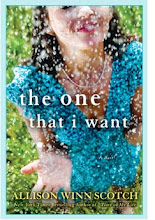
Today I'm over at Writer Unboxed talking about lifting my reading ban while writing in hopes of uncovering inspiration. (Though the good news is that since I wrote that blog post, I've reread what I've written of HAPPIEST DAYS and am quite pleased, which has lit the spark for me to keep writing - yay!)
Check it out!
Thursday, January 15, 2009


Wednesday, January 14, 2009
Links You'll Love
Two quick shout-outs today...first, congrats to friend and author Brenda Janowitz, whose essay on high-concept books graces the very prestigous pages of Publishers Weekly this week!
Find it here for her thoughts (and a lovely shout-out to yours truly) here: http://www.publishersweekly.com/article/CA6628065.html?industryid=48383
Second, I know we've talked about firing your agent before, and here, author and pal Amie Stuart shares her thoughts and experiences. Check it out:
http://southernfriedchicas.com/2009/01/12/the-low-down-dirty/
Find it here for her thoughts (and a lovely shout-out to yours truly) here: http://www.publishersweekl
Second, I know we've talked about firing your agent before, and here, author and pal Amie Stuart shares her thoughts and experiences. Check it out:
http://southernfriedchicas.com/2009/01/12/the-low-down-dirty/
Tuesday, January 13, 2009
Trimming the Fat
Question of the day: if you have a scene that's sagging a little (or a lot!) into exposition or could make a reader bored, do you chop it or do you beef it up/combine it with something more interesting? When is it worth saving?
Does that make sense?
How do you know when to cut it? Well, for me, I do my revisions in chunks. I think it's hard to gain perspective on what you've written until you can step away from it for a bit and then read it in conjunction with other pages/chapters. So I tend to revise about every 50 pages or so. When you do this (or read the entire me - however the revision process works for you), I think these moments of exposition really will stand out. And then, the key is to really ask yourself - and this is NOT an easy process because we can get very, very tied to every word we write - is this scene necessary? Is it honestly telling the readers something new? If I cut it, will the ms lose anything? Is there a more concise way to transmit this information? I think that often times, new fiction writers take a paragraph - or an entire scene - to connote what can be told in one or two sentences. Not that everything should be pared down, of course not. But those expository scene, well, yes. Trim them down to something more concise, and you usually won't lose anything...in fact, you'll probably beef up the scene by trimming the fat.
How do you know when to cut it? Well, for me, I do my revisions in chunks. I think it's hard to gain perspective on what you've written until you can step away from it for a bit and then read it in conjunction with other pages/chapters. So I tend to revise about every 50 pages or so. When you do this (or read the entire me - however the revision process works for you), I think these moments of exposition really will stand out. And then, the key is to really ask yourself - and this is NOT an easy process because we can get very, very tied to every word we write - is this scene necessary? Is it honestly telling the readers something new? If I cut it, will the ms lose anything? Is there a more concise way to transmit this information? I think that often times, new fiction writers take a paragraph - or an entire scene - to connote what can be told in one or two sentences. Not that everything should be pared down, of course not. But those expository scene, well, yes. Trim them down to something more concise, and you usually won't lose anything...in fact, you'll probably beef up the scene by trimming the fat.
Monday, January 12, 2009
How Many is Too Many
Question of the day: About how many different plot lines do you feel you can juggle before a story gets tangled? Do you think these plot lines need to be clearly related to each other?
Continuing with exploring scenes and chapter structure, I pulled this question from the comments section because it's a great place to start. The answer, for me, is that I don't know that I have a concrete number, but let's talk through it and see where we come up...
I think there is a very fine line between having too few things going on and thus boring the reader and having too much going on, such that the reader is thinking, "Seriously? This is TOO dramatic; this sort of craziness doesn't have one ounce of reality in it." I remember reading a book this summer, by an author whom I love (but shall go nameless), and there were just too many things going on. It seemed totally implausible that every character would have such complete and total drama in his or her life, and as a reader, it was a little bit exhausting. I kept thinking, "Really? Can't one thing go right for someone??" At the same time, of course, we've all read books on the flip side: without enough drama, there simply isn't enough momentum to keep us flipping the pages.
So...how much is enough without going overboard? Well, when I think about TOML (not that this is a perfect example, and just to be clear, I never want anyone to think that I'm ever saying that my writing is without flaws!), there were four or five MAIN plot lines going on. 1) the arc of her going back in time; 2) her attempts to reconcile with her old boyfriend (and forget her old husband); 3) her friend's infertility; 4) her mother's reappearance in her life; 5) her various issues at work leading to a promotion. Then there were subplots (and actually, maybe #3 above is a subplot, though it did shape a lot of Jillian's behavior): her bosses marriage, her boyfriend's novel, a few others here and there. I think, in considering my first novel, there were also a similar amount of main plot lines: work, family, health, love, friendship. For me, this is about all I can juggle.
In fact, right now, I'm about 60 pages into HAPPIEST DAYS, and I actually think I might have too much going on. I'll reassess once I've written the complete draft, but a good way for me to gauge this is that, because I keep so much of my novel in my head, I sometimes lose track of a plot...I actually forget that I need to weave it in. And if I'm dropping plots, it's likely that there is one too many in the air. (Forgive the extended juggling metaphor.)
Do all the plots have to be tied to each other? I think, in some way, yes. Even if it's tangential, but if not, you're almost telling short stories that happen to be in a novel together, right? (This is just my opinion, and I'm definitely game to hear from people who disagree.) But when you write a novel, it's important to remember that you're asking readers to follow an arc: your characters start one place and end up another. And if you're going to throw in a plot line that has nothing to do with a character's evolution (even in a remote, tangential way), what's the point for the reader? I dunno, just my opinion.
So guys, I'm curious to hear how many plots you juggle when writing...how many is too many?
Continuing with exploring scenes and chapter structure, I pulled this question from the comments section because it's a great place to start. The answer, for me, is that I don't know that I have a concrete number, but let's talk through it and see where we come up...
I think there is a very fine line between having too few things going on and thus boring the reader and having too much going on, such that the reader is thinking, "Seriously? This is TOO dramatic; this sort of craziness doesn't have one ounce of reality in it." I remember reading a book this summer, by an author whom I love (but shall go nameless), and there were just too many things going on. It seemed totally implausible that every character would have such complete and total drama in his or her life, and as a reader, it was a little bit exhausting. I kept thinking, "Really? Can't one thing go right for someone??" At the same time, of course, we've all read books on the flip side: without enough drama, there simply isn't enough momentum to keep us flipping the pages.
So...how much is enough without going overboard? Well, when I think about TOML (not that this is a perfect example, and just to be clear, I never want anyone to think that I'm ever saying that my writing is without flaws!), there were four or five MAIN plot lines going on. 1) the arc of her going back in time; 2) her attempts to reconcile with her old boyfriend (and forget her old husband); 3) her friend's infertility; 4) her mother's reappearance in her life; 5) her various issues at work leading to a promotion. Then there were subplots (and actually, maybe #3 above is a subplot, though it did shape a lot of Jillian's behavior): her bosses marriage, her boyfriend's novel, a few others here and there. I think, in considering my first novel, there were also a similar amount of main plot lines: work, family, health, love, friendship. For me, this is about all I can juggle.
In fact, right now, I'm about 60 pages into HAPPIEST DAYS, and I actually think I might have too much going on. I'll reassess once I've written the complete draft, but a good way for me to gauge this is that, because I keep so much of my novel in my head, I sometimes lose track of a plot...I actually forget that I need to weave it in. And if I'm dropping plots, it's likely that there is one too many in the air. (Forgive the extended juggling metaphor.)
Do all the plots have to be tied to each other? I think, in some way, yes. Even if it's tangential, but if not, you're almost telling short stories that happen to be in a novel together, right? (This is just my opinion, and I'm definitely game to hear from people who disagree.) But when you write a novel, it's important to remember that you're asking readers to follow an arc: your characters start one place and end up another. And if you're going to throw in a plot line that has nothing to do with a character's evolution (even in a remote, tangential way), what's the point for the reader? I dunno, just my opinion.
So guys, I'm curious to hear how many plots you juggle when writing...how many is too many?
Thursday, January 08, 2009
Establishing Structure
Question of the day: I'm wondering how to structure chapters. I DID start from the beginning and kept writing and writing and it's like one long stream of consciousness, sort of like Stephen King's Delores Claiborne. How do you go about structuring that first chapter and the rest to follow?
This is a great question because I think this is very much a learned skill, at least it was for me.
This is a great question because I think this is very much a learned skill, at least it was for me.
I think it is very, very common for first-time writers (and I say that with no condescension, because, as I said, I dealt with this very situation) to have more stream of consciousness writing than is necessary. In fact, exposition - too much of it - is a big reason why early manuscript go awry. Again, I speak from experience. Good fiction writing really minimizes exposition: you don't tell readers what you're trying to convey; you put your characters in situations in which they're conveying it for you. By considering this every time you write a scene, your chapters and how they unfold start to happen naturally. Let me explain.
Another rule is that I try not to have a scene address a stand-alone conflict. What I mean by this is that, even if it's a very small thing, I try to throw in two issues into one scene. This really gives the plot a sense of momentum and keeps the smoking-fast pace because there's never a down moment. For example, I wrote a scene today in Happiest Days in which my character assesses how to cope with the fact that her husband might want to move out of their small town. In mulling over the repercussions with her best friend, I worked in a quick bite about her friend's own marriage - the friend (who is separated) makes a quick comment about something that happened the previous night with her estranged husband. I don't linger over it, there's no need to, but it reminds readers as to what's going on with that plot line, moves the plot line forward, AND is pertinent to my heroine's own situation. Do you see what I mean? Keep as many things in the mix as possible, and your plot will fly by.
Another rule is that I try not to delve into a more than a paragraph or two consecutive of my character's inner-thoughts. This isn't hard and fast rule because sometimes, it's necessary to convey what she's thinking, things that simply CAN'T be conveyed via action - like when she's mulling over a memory and what it means to her - but these inner-thoughts have a way of veering into exposition territory, into telling-not-showing territory, and that's when - BAM -you lose readers because you're not offering any action.
I know that this sounds like a lot. But it does become second nature the more fiction you write.
So how does all of this lead to chapter structure? (I didn't forget your original question?) Well, for me at least, it leads to chapter structure because I'm always considering what action my characters now need to take - how can I keep the conflict going and the momentum moving forward? What's the next situation that they'd find themselves in to resolve their current conflict? It helps, sometimes, if I have sort of a running rotation of plot lines that I need to move forward. If you read TOML, you'll see that I'll address a work conflict, then a conflict with her mother, then a conflict with her boyfriend, etc, and then return to the work situation. (This doesn't happen on an exact rotation, but I never drop one ball for too long because not only will readers think, "Huh? I can't remember what happened so many pages ago!," but juggling these various plots keeps these scenes humming quickly forward.)
I know this was a lot of info, and I hope it makes sense! I think the key is to creating as much action and conflict as possible...and then your characters naturally place themselves in situations to get themselves to a different place...which, voila, is your next chapter.
Does this make sense to anyone??? Or have I confused you even further? I'm sure that others out there map out their chapters in a much more exacting way - care to share?
I know that this sounds like a lot. But it does become second nature the more fiction you write.
So how does all of this lead to chapter structure? (I didn't forget your original question?) Well, for me at least, it leads to chapter structure because I'm always considering what action my characters now need to take - how can I keep the conflict going and the momentum moving forward? What's the next situation that they'd find themselves in to resolve their current conflict? It helps, sometimes, if I have sort of a running rotation of plot lines that I need to move forward. If you read TOML, you'll see that I'll address a work conflict, then a conflict with her mother, then a conflict with her boyfriend, etc, and then return to the work situation. (This doesn't happen on an exact rotation, but I never drop one ball for too long because not only will readers think, "Huh? I can't remember what happened so many pages ago!," but juggling these various plots keeps these scenes humming quickly forward.)
I know this was a lot of info, and I hope it makes sense! I think the key is to creating as much action and conflict as possible...and then your characters naturally place themselves in situations to get themselves to a different place...which, voila, is your next chapter.
Does this make sense to anyone??? Or have I confused you even further? I'm sure that others out there map out their chapters in a much more exacting way - care to share?
Tuesday, January 06, 2009
New Toys!
Sorry the blog is late going up today...I got a new computer last night and have spent the better part of the evening and the morning getting adjusted. I made the switch from PC to Mac, on the recommendation of so many writer friends, and so far, there are some kinks to work out, but mostly, it's not such a big leap.
But it did get me thinking...as writers, our computers are really our lifelines. Almost literally. I mean, I spend probably 6 hours a day sitting in front of mine, and I have an entire community of friends and places that I pass those hours with. Writing can be a lonely existence but it doesn't have to be thanks to the internet.
So anyway, I started thinking about what tools and software I can't live without, since I am so tied to this beast. Obviously, Microsoft Word - goes without saying. Ditto my email, since I'm much likelier to email someone these days than actually pick up the phone and chat. (In fact, even though I have an office line, it almost never rings.) Beyond that, I love my Sony digital recorder, which I use for my phone interviews, and I will never be able to live without Napster. As some folks mentioned yesterday, I really try to delve into the heads of my characters...I start to think like them...and music is a BIG way that I do this. I absolutely adore Napster to Go, which gives me the ability to test-drive any and all songs that strike my fancy. (In fact, I didn't realize that I wouldn't be able to use Napster - or upload my Sony files - on a Mac, so I'm installing Parallels, which mimics the Windows application, precisely to have access to these applications. That's how much I love them.)
Other than that? Well, those are probably my can't-live-withouts on a day-to-day basis. But I'm sure that I'm missing out on some really awesome programs or applications...so I'd love to hear what yours are to maybe make my day pass a little quicker! (And to have more ways to procrastinate.) :) Any super-fun or handy app suggestions?
But it did get me thinking...as writers, our computers are really our lifelines. Almost literally. I mean, I spend probably 6 hours a day sitting in front of mine, and I have an entire community of friends and places that I pass those hours with. Writing can be a lonely existence but it doesn't have to be thanks to the internet.
So anyway, I started thinking about what tools and software I can't live without, since I am so tied to this beast. Obviously, Microsoft Word - goes without saying. Ditto my email, since I'm much likelier to email someone these days than actually pick up the phone and chat. (In fact, even though I have an office line, it almost never rings.) Beyond that, I love my Sony digital recorder, which I use for my phone interviews, and I will never be able to live without Napster. As some folks mentioned yesterday, I really try to delve into the heads of my characters...I start to think like them...and music is a BIG way that I do this. I absolutely adore Napster to Go, which gives me the ability to test-drive any and all songs that strike my fancy. (In fact, I didn't realize that I wouldn't be able to use Napster - or upload my Sony files - on a Mac, so I'm installing Parallels, which mimics the Windows application, precisely to have access to these applications. That's how much I love them.)
Other than that? Well, those are probably my can't-live-withouts on a day-to-day basis. But I'm sure that I'm missing out on some really awesome programs or applications...so I'd love to hear what yours are to maybe make my day pass a little quicker! (And to have more ways to procrastinate.) :) Any super-fun or handy app suggestions?
Monday, January 05, 2009
Bringing Your Characters to Life
Question of the day: Though I've taken classes with several authors in the past, I'm still learning the finer points of fiction and have a big gap in my knowledge when it comes to creating full, robust characters. How did you go about setting up your characters from the beginning? Did you figure out all of their attributes ahead of time, or did you let them form while you were writing the book?
Great question and particularly applicable to me right now, as I'm on about page 50 of The Happiest Days of My Life and am really focused on making these characters as three-dimensional as possible. I think I develop my characters in two parts: the first is before I put a word on page. Although this book, as well as Time of My Life, are very concept-driven - as in: BIG PLOT - a lot of the plot development, when I conceive the nugget of an idea - revolves around the primary characters. So, for example, when I came up with the idea for TOML, I also obviously had to come up with the character of Jillian, as everything about the book centers around her. Ditto the concept for Happiest Days. It revolves around a woman who might be a little too contended in her life, and without her, the book isn't possible.
So, I start with that skeleton. In the case of Tilly (the protagonist in Happiest Days), I considered her occupation, her marital status, her siblings, how her parents (and their history) shaped her, what her hobbies might be, what her emotional limitations might be, what her weaknesses (and strengths) are. So, that sounds like a lot.
But, I inevitably find as I'm writing that the characters still need to become more full-bodied. The little nuances about people that you really don't understand until you see them in action, if that makes sense. Sort of like if you see all the facets of a blind date on paper, but there are smaller things - but just as important things - that you can't pick up until you meet them out on a date. How they carry themselves, how they react to situations that might surprise you, personal tics that only come out through their story.
I dunno, at the risk of sounding totally lame, the characters, like us, are always a work in progress, and there are always going to be some critics who read the book and think that you didn't do enough with them...but, rest assured, I tried to breathe as much life into them as I could think of. The process becomes easier with every book because I understand how important the small quirks are. If you're stuck, I think it can be really helpful to look around at your friends and family (not that you base characters on them, but still), and consider their tics, their subtleties, and ensure that your characters have them as well.
Just my two cents. How do you guys go about and develop your characters? I'd love to hear!
Great question and particularly applicable to me right now, as I'm on about page 50 of The Happiest Days of My Life and am really focused on making these characters as three-dimensional as possible. I think I develop my characters in two parts: the first is before I put a word on page. Although this book, as well as Time of My Life, are very concept-driven - as in: BIG PLOT - a lot of the plot development, when I conceive the nugget of an idea - revolves around the primary characters. So, for example, when I came up with the idea for TOML, I also obviously had to come up with the character of Jillian, as everything about the book centers around her. Ditto the concept for Happiest Days. It revolves around a woman who might be a little too contended in her life, and without her, the book isn't possible.
So, I start with that skeleton. In the case of Tilly (the protagonist in Happiest Days), I considered her occupation, her marital status, her siblings, how her parents (and their history) shaped her, what her hobbies might be, what her emotional limitations might be, what her weaknesses (and strengths) are. So, that sounds like a lot.
But, I inevitably find as I'm writing that the characters still need to become more full-bodied. The little nuances about people that you really don't understand until you see them in action, if that makes sense. Sort of like if you see all the facets of a blind date on paper, but there are smaller things - but just as important things - that you can't pick up until you meet them out on a date. How they carry themselves, how they react to situations that might surprise you, personal tics that only come out through their story.
I dunno, at the risk of sounding totally lame, the characters, like us, are always a work in progress, and there are always going to be some critics who read the book and think that you didn't do enough with them...but, rest assured, I tried to breathe as much life into them as I could think of. The process becomes easier with every book because I understand how important the small quirks are. If you're stuck, I think it can be really helpful to look around at your friends and family (not that you base characters on them, but still), and consider their tics, their subtleties, and ensure that your characters have them as well.
Just my two cents. How do you guys go about and develop your characters? I'd love to hear!
Wednesday, December 31, 2008
Resolution Road
So...wow...it's that time of year again - the very last day! I can hardly believe how quickly time has passed, and much like my protagonist, Jillian, I often wish I could press the pause button to have a moment to step back and appreciate it all. But...since I can't...one thing I like to do, come the end of the year, is take a deep breath and reflect on both the milestones and the slip-ups from the previous 364 days, so I can better arm myself for the next 365.
As far as resolutions? Well, I'm sure that I have some - have mor e patience with my husband, eat one dessert fewer every night (I tend to sample one of everything in the house, sigh) - but they're not yet concrete. What really helps me is to assess the path of the prior year and see what changes I might like to implement, because without doing so, they're just sort of blind promises that are bound to fail.
So, that said, my past year has been pretty spectacular. It's felt like the sort of year that comes along only so often every lifetime, and part of me is a little nervous that I'll never top it. But then I think of the conversation my husband and I had before our daughter was born, the one in which he worried if he'd love our second child as much as our first - because we really, really loved our first - and now, we both look back on that and crack up because, of course we love her madly, and of course, just because you have one great thing happen to you (or one banner year), doesn't mean that it can't repeat itself!
I guess the key for me is to figure out how to replicate those results...and it really all boils down to writing a book that is as appealing as Time of My Life. And I'm doing my best. I'm 40 pages in, and I'm working like hell to make it all that TOML was, but ultimately, and this may simply be my resolution, I also have to let go the comparison-game. (Not unlike that first vs. second child thing.) It's hard. It's very, very hard. I reread passages and think, "Is this as snappy as TOML? Is this BETTER than TOML?," and then I get out of my head and out of my writing groove. So, yes, I think this may very well be my resolution because, as I've said here before, all I can do with this book is make it the best possible 300 pages that I have in me. I didn't write TOML with the intention of a future movie or of hitting the NY Times list. That these amazing things happened were just the cherry on top. Before they did happen, however, I was thrilled with and proud of the book...and that would have been enough for me.
So the lesson, in thinking through my year, and where I am at present, is that the big stuff is probably out of my control. What has to matter is what is enough for me, and that would be to set aside expectations that are now attached to me, and simply to write. Maybe this is the same goal as last year - I'll have to go back and find that post - but it seems like a worthy goal, nevertheless.
So you heard it here: if I ever blog about how I'm stuck because I feel paralyzed with the expectations of TOML on me - remind me: Just write the dang book already! As an author, that's what I should be doing all along.
I'd love to hear what your resolutions (work and non-work) are this year! Spill! And have a happy - and SAFE - new year!
As far as resolutions? Well, I'm sure that I have some - have mor
 e patience with my husband, eat one dessert fewer every night (I tend to sample one of everything in the house, sigh) - but they're not yet concrete. What really helps me is to assess the path of the prior year and see what changes I might like to implement, because without doing so, they're just sort of blind promises that are bound to fail.
So, that said, my past year has been pretty spectacular. It's felt like the sort of year that comes along only so often every lifetime, and part of me is a little nervous that I'll never top it. But then I think of the conversation my husband and I had before our daughter was born, the one in which he worried if he'd love our second child as much as our first - because we really, really loved our first - and now, we both look back on that and crack up because, of course we love her madly, and of course, just because you have one great thing happen to you (or one banner year), doesn't mean that it can't repeat itself!
I guess the key for me is to figure out how to replicate those results...and it really all boils down to writing a book that is as appealing as Time of My Life. And I'm doing my best. I'm 40 pages in, and I'm working like hell to make it all that TOML was, but ultimately, and this may simply be my resolution, I also have to let go the comparison-game. (Not unlike that first vs. second child thing.) It's hard. It's very, very hard. I reread passages and think, "Is this as snappy as TOML? Is this BETTER than TOML?," and then I get out of my head and out of my writing groove. So, yes, I think this may very well be my resolution because, as I've said here before, all I can do with this book is make it the best possible 300 pages that I have in me. I didn't write TOML with the intention of a future movie or of hitting the NY Times list. That these amazing things happened were just the cherry on top. Before they did happen, however, I was thrilled with and proud of the book...and that would have been enough for me.
So the lesson, in thinking through my year, and where I am at present, is that the big stuff is probably out of my control. What has to matter is what is enough for me, and that would be to set aside expectations that are now attached to me, and simply to write. Maybe this is the same goal as last year - I'll have to go back and find that post - but it seems like a worthy goal, nevertheless.
So you heard it here: if I ever blog about how I'm stuck because I feel paralyzed with the expectations of TOML on me - remind me: Just write the dang book already! As an author, that's what I should be doing all along.
I'd love to hear what your resolutions (work and non-work) are this year! Spill! And have a happy - and SAFE - new year!
Monday, December 29, 2008
Is Chick Lit the Kiss of Death?
Question of the Day: Is there a difference between "commercial women's fiction" and "chick lit"? I think the novel I'm writing could fit into either category; i.e., it's the funny/sad/triumphant story of three young women figuring out their spot in life (and running a marathon-- shout out to a fellow runner :). They're single and young in a city, albeit Pittsburgh rather than NYC. I've thought of it as "chick lit"-- I embrace the term, actually, but I know to many it carries a stigma. Plus, my story contains more Nikes than Manolo Blahniks, and I've heard that the Chick Lit trend peaked a few years ago. When I'm ready to pitch the book to an agent, which term do you think I should use? Does it matter? Do you deliberately avoid the "chick lit" categorization in your own writing?
Great question. (Or questions.) I'll start by addressing the first question: is there a difference between CL and commercial women's fiction? And the answer, in my mind, is slightly. But before I get into this, I want to say that I think they're both equally great and that the only people who really delineate between all of the various categories are INDUSTRY folks, not consumers, and at the end of the day, it's the consumers who matter. But, yeah, when pitching your agent, I suppose it matters how you categorize it, if only to boost its appeal to said agent. And then, once signed, it matters how your agent pitches it to editors and then, once bought, how the marketing and cover design people perceive it, because all of these interpretations help shape the final presentation of your book to the buying public...but...still, I don't think consumers walk into bookstores and think, "Gee, I want to buy a commercial women's fiction book today." Does that make sense? What I'm saying is that these categories matter, but they are not the holy grail.
Anyway, in my opinion, the difference between CL and CWF - and this is just the general perception, and again, I'm certainly not taking away from either - is that CL is slightly less weighty. Breezier, less grave subject matter, if you will. I don't even know that the married vs. single thing matters so much anymore - I think it's more about the overall plot and the issues it addresses. I also think that CWF can skew a little more literary, though this definitely isn't always true. Think of it this way: my first book, The Department of Lost and Found, was classified as CWF, though I've seen plenty of folks call it chick lit. I don't really care what people call it, as long as they buy it. :) But it was classified as CWF because of the gravity of its primary plot device: cancer, and because it was deemed slightly more literary than your classic beach read.
These days, certainly, CL gets a bad rap. The industry bought so many CL books a few years back that they oversaturated the market, and ended up publishing a lot of not-so-great reads, even though there were plenty of great ones published at the same time. And yes, there's still a market for it - just look at the trade paperback new release rack at your bookstore. But some agents will cringe at the term because so many insiders have said that the CL market is dead. I don't think it is. I think they've just repackaged a lot of these books - Emily Giffin, Jane Green - they're great writers who are called both CL and now, CWF, and really, does it matter? And do I write with one in mind? Definitely not. I write with the voice that I find suits my characters and my story best. That the industry has deemed this CWF is just fine with me because I adore my covers and the support I've gotten with marketing, etc, but I write what I write, as well as I can, the end.
But, that said, I have read a lot of editors saying that they're more apt to buy CWF (again, because of perception, whether or not they're the same thing as CL), so I might use this term in your query letter. Not because one is better than the other, in terms of writing (I just want to be clear on this, because I have plenty of friends whose work I admire who write CL), but because the industry is in such disarray right now, that I think agents might find any reason to pass on your query letter and the term CL might be it.
Of course, what REALLY matters in your query letter is a strong voice, an engaging plot and a few sentences that leave the agent wanting for more. The rest? Not nearly important.
What say you readers? How would you advise her?
Great question. (Or questions.) I'll start by addressing the first question: is there a difference between CL and commercial women's fiction? And the answer, in my mind, is slightly. But before I get into this, I want to say that I think they're both equally great and that the only people who really delineate between all of the various categories are INDUSTRY folks, not consumers, and at the end of the day, it's the consumers who matter. But, yeah, when pitching your agent, I suppose it matters how you categorize it, if only to boost its appeal to said agent. And then, once signed, it matters how your agent pitches it to editors and then, once bought, how the marketing and cover design people perceive it, because all of these interpretations help shape the final presentation of your book to the buying public...but...still, I don't think consumers walk into bookstores and think, "Gee, I want to buy a commercial women's fiction book today." Does that make sense? What I'm saying is that these categories matter, but they are not the holy grail.
Anyway, in my opinion, the difference between CL and CWF - and this is just the general perception, and again, I'm certainly not taking away from either - is that CL is slightly less weighty. Breezier, less grave subject matter, if you will. I don't even know that the married vs. single thing matters so much anymore - I think it's more about the overall plot and the issues it addresses. I also think that CWF can skew a little more literary, though this definitely isn't always true. Think of it this way: my first book, The Department of Lost and Found, was classified as CWF, though I've seen plenty of folks call it chick lit. I don't really care what people call it, as long as they buy it. :) But it was classified as CWF because of the gravity of its primary plot device: cancer, and because it was deemed slightly more literary than your classic beach read.
These days, certainly, CL gets a bad rap. The industry bought so many CL books a few years back that they oversaturated the market, and ended up publishing a lot of not-so-great reads, even though there were plenty of great ones published at the same time. And yes, there's still a market for it - just look at the trade paperback new release rack at your bookstore. But some agents will cringe at the term because so many insiders have said that the CL market is dead. I don't think it is. I think they've just repackaged a lot of these books - Emily Giffin, Jane Green - they're great writers who are called both CL and now, CWF, and really, does it matter? And do I write with one in mind? Definitely not. I write with the voice that I find suits my characters and my story best. That the industry has deemed this CWF is just fine with me because I adore my covers and the support I've gotten with marketing, etc, but I write what I write, as well as I can, the end.
But, that said, I have read a lot of editors saying that they're more apt to buy CWF (again, because of perception, whether or not they're the same thing as CL), so I might use this term in your query letter. Not because one is better than the other, in terms of writing (I just want to be clear on this, because I have plenty of friends whose work I admire who write CL), but because the industry is in such disarray right now, that I think agents might find any reason to pass on your query letter and the term CL might be it.
Of course, what REALLY matters in your query letter is a strong voice, an engaging plot and a few sentences that leave the agent wanting for more. The rest? Not nearly important.
What say you readers? How would you advise her?
Thursday, December 25, 2008
For Some Holiday Cheer
Check out the wonderful Larramie's (a frequent post on this blog) new blog called The Divining Wand. It's an incredibly kind, generous idea of a blog, and it's no surprise, since Larramie is much the same!
I love this concept and am sure you will too. Pass it along!
http://thediviningwand.blogspot.com/
I love this concept and am sure you will too. Pass it along!
http://thediviningwand.blogspot.com/
Wednesday, December 24, 2008
I'm Getting My Groove Back
Thanks to everyone who chimed in on yesterday's post. Very, very good thoughts, and I hope my post didn't come off as divisive or judge-y or condescending. I only meant it to provoke some good food for thought, and I think it achieved its goal. :)
So in other news in my life, I am so excited to report that I've taken the leap and started my next book. I'll be honest with you: those first few pages, well, really up to probably about 10k words, where the ms starts to feel substantial, are very, very difficult for me. Knowing the uphill battle that I face - banging out 80k words or so - is so daunting, even though I know I've done it before and know that I have it in me to do again. But still. I hate the onset. I can't imagine a time when I will ever like it. The blank page practically mocks me as I sit there trying to fill it up so that the words amount to something more than a few paragraphs.
But I returned home from vacation determined to just dive in...and so, I did. I just did it. And once I got going, it proved a lot easier than I remembered it would, even though, as I hit the groove, I also remembered it being pretty great when you hit your stride in your prose. So I wrote about 4k in two days, and I plan to (ideally) write at least 1-2k each work day from here until the finish line. I'll keep you posted. I've found that the only way for me to maintain my momentum is to just throw myself into the deep end and keep swimming until I'm done. So this ms will likely consume my every thought (and many blog posts!) for a while. I hope you don't mind. :)
So, with that said, it feels like it's going to be a pretty happy holiday weekend for me. I hope that yours is the same - optimism in this time when it might not be so easy to be optimistic, quality time with your family, nourishment to help restore whatever part of you needs to be restored.
Happy holidays! See you in a few days!
So in other news in my life, I am so excited to report that I've taken the leap and started my next book. I'll be honest with you: those first few pages, well, really up to probably about 10k words, where the ms starts to feel substantial, are very, very difficult for me. Knowing the uphill battle that I face - banging out 80k words or so - is so daunting, even though I know I've done it before and know that I have it in me to do again. But still. I hate the onset. I can't imagine a time when I will ever like it. The blank page practically mocks me as I sit there trying to fill it up so that the words amount to something more than a few paragraphs.
But I returned home from vacation determined to just dive in...and so, I did. I just did it. And once I got going, it proved a lot easier than I remembered it would, even though, as I hit the groove, I also remembered it being pretty great when you hit your stride in your prose. So I wrote about 4k in two days, and I plan to (ideally) write at least 1-2k each work day from here until the finish line. I'll keep you posted. I've found that the only way for me to maintain my momentum is to just throw myself into the deep end and keep swimming until I'm done. So this ms will likely consume my every thought (and many blog posts!) for a while. I hope you don't mind. :)
So, with that said, it feels like it's going to be a pretty happy holiday weekend for me. I hope that yours is the same - optimism in this time when it might not be so easy to be optimistic, quality time with your family, nourishment to help restore whatever part of you needs to be restored.
Happy holidays! See you in a few days!
Tuesday, December 23, 2008
So How Do You Know When You Suck (Or Just Haven't Made It)
I was reading a recent issue of EW (aka: my bible) on vacation, and saw this lovely interview with Matthew Weiner, who is the creator of the incredible show, Mad Men. I'm transcribing it below because I thought it opened up a really valuable discussion to have here at AA.
Here's what he said.
1) He realized he wasn't smart - yet. "I started looking at people whose careers I wanted - David Chase, Woody Allen - and saw that I was not on that path.)
2) He said no. "I turned down a contract at Becker, even though I had no other job. It proved that I was uncompromising. Or crazy."
3) He made stuff. "I wrote the Mad Men script to show what I could do."
4) He never gave up. "It takes hundreds of no's to get a yes. How many networks are there? That's how many no's I got."
5) He played nice with everyone. "My Mad Men script was given to AMC by my manager's former assistant. Taking your aggression out on anyone will always come back to bite you. Sometimes in the parking lot after the meeting."
So why did I take the time to post this interview? I thought that Weiner shares some pretty valuable tips on having the guts and survival instinct to hang in there for many years of moderate, though not showstopping success. But I also think his fourth point raises an interesting question that we don't often discuss here at AA, because I'm all about the positivity. But that question, and I hate to say it, but it's an important one, is: how do I know if these hundreds of rejections are simply part of the process or are a larger sign that I might not have what it takes?
Here's the truth: if you speak with agents and editors (and I have), all of them, when they're being honest, will tell you that a good many aspiring writers have no business hoping to move from aspiring to published. Obviously, writing is a subjective thing, and what is good to one person will certainly suck for another (just read any author's reviews and you'll see a wide range), but on the whole (and yes, there are exceptions, where universally, everyone says, how the hell did that get published), most published writers have a certain something that appeals. I don't know what it is. An innate knack? An innate voice? A very well-learned skill? It's really difficult to say, especially to say without coming off like a pompous ass, but again, the hard truth of this business, much like acting or any other artistic profession, is that not everyone is created equal. This is not a Montessori-like business where everyone is given and deserves a shot. (Says the mom who sends her kids to Montessori, so I'm certainly not knocking that educational method!)
How do you know if you have what it takes? That's where it gets tricky. Because I, for one, don't know the answer. Rejection, as noted above by Weiner, is so much a part of our business that it's difficult when to take something personally. I, of course, always tell you guys NOT to take stuff personally because, after all, this is a business. But never, ever, ever taking something to heart might mean that you're ignoring warning signs that, well, maybe this isn't the industry for you. I don't know. I know authors who have gotten 100s of rejections and finally landed an agent. I know authors who have gotten one yes at a publishing house after every other place rejected him/her. But I also know plenty of people who have never gotten that yes. Does it mean that they won't ever? No, of course not. But when (and why and how) do you draw the line? Because, let's be honest at the most pure level, some people are better simply writers than others. (Again, this feels very weird to say without coming off like an ass - and please know that I'm certainly not elevating myself here! I'm just opening up this discussion). How do you know if you're one of them? Again, tough call. I think being objective about your own work, as I've discussed in the past, is incredibly difficult, and sometimes, finding anyone who will be objective about your work and tell you the truth is incredibly difficult. Not to mention that again, many things are subjective, so one person's trash is another's treasure.
I don't really have any sagacious answers here. But I do think it's worth talking about. Certainly some people write for the pure pleasure of it, but others will chase the dream of being published for their entire lives, and if you do chase that dream...would you want to know if you just weren't going to cut it? Or alternatively, how DO YOU know that you weren't going to cut it? (I'm not saying that one poor manuscript won't give way to a better one - it happened in my case and has happened with countless writers I know. But yes, there are aspiring writers out there who are never going to leap the hurdle.) So how do you know?
Here's what he said.
1) He realized he wasn't smart - yet. "I started looking at people whose careers I wanted - David Chase, Woody Allen - and saw that I was not on that path.)
2) He said no. "I turned down a contract at Becker, even though I had no other job. It proved that I was uncompromising. Or crazy."
3) He made stuff. "I wrote the Mad Men script to show what I could do."
4) He never gave up. "It takes hundreds of no's to get a yes. How many networks are there? That's how many no's I got."
5) He played nice with everyone. "My Mad Men script was given to AMC by my manager's former assistant. Taking your aggression out on anyone will always come back to bite you. Sometimes in the parking lot after the meeting."
So why did I take the time to post this interview? I thought that Weiner shares some pretty valuable tips on having the guts and survival instinct to hang in there for many years of moderate, though not showstopping success. But I also think his fourth point raises an interesting question that we don't often discuss here at AA, because I'm all about the positivity. But that question, and I hate to say it, but it's an important one, is: how do I know if these hundreds of rejections are simply part of the process or are a larger sign that I might not have what it takes?
Here's the truth: if you speak with agents and editors (and I have), all of them, when they're being honest, will tell you that a good many aspiring writers have no business hoping to move from aspiring to published. Obviously, writing is a subjective thing, and what is good to one person will certainly suck for another (just read any author's reviews and you'll see a wide range), but on the whole (and yes, there are exceptions, where universally, everyone says, how the hell did that get published), most published writers have a certain something that appeals. I don't know what it is. An innate knack? An innate voice? A very well-learned skill? It's really difficult to say, especially to say without coming off like a pompous ass, but again, the hard truth of this business, much like acting or any other artistic profession, is that not everyone is created equal. This is not a Montessori-like business where everyone is given and deserves a shot. (Says the mom who sends her kids to Montessori, so I'm certainly not knocking that educational method!)
How do you know if you have what it takes? That's where it gets tricky. Because I, for one, don't know the answer. Rejection, as noted above by Weiner, is so much a part of our business that it's difficult when to take something personally. I, of course, always tell you guys NOT to take stuff personally because, after all, this is a business. But never, ever, ever taking something to heart might mean that you're ignoring warning signs that, well, maybe this isn't the industry for you. I don't know. I know authors who have gotten 100s of rejections and finally landed an agent. I know authors who have gotten one yes at a publishing house after every other place rejected him/her. But I also know plenty of people who have never gotten that yes. Does it mean that they won't ever? No, of course not. But when (and why and how) do you draw the line? Because, let's be honest at the most pure level, some people are better simply writers than others. (Again, this feels very weird to say without coming off like an ass - and please know that I'm certainly not elevating myself here! I'm just opening up this discussion). How do you know if you're one of them? Again, tough call. I think being objective about your own work, as I've discussed in the past, is incredibly difficult, and sometimes, finding anyone who will be objective about your work and tell you the truth is incredibly difficult. Not to mention that again, many things are subjective, so one person's trash is another's treasure.
I don't really have any sagacious answers here. But I do think it's worth talking about. Certainly some people write for the pure pleasure of it, but others will chase the dream of being published for their entire lives, and if you do chase that dream...would you want to know if you just weren't going to cut it? Or alternatively, how DO YOU know that you weren't going to cut it? (I'm not saying that one poor manuscript won't give way to a better one - it happened in my case and has happened with countless writers I know. But yes, there are aspiring writers out there who are never going to leap the hurdle.) So how do you know?
Monday, December 22, 2008
I'm Back!
I got home late last night from a WONDERFUL and much-needed break. I did not one iota of work and just enjoyed the weather (and my kids) for eight days straight. I could have stayed there forever. Alas, but real life beckoned.
I'd hoped to put up a real post today, but didn't get around to writing it over my break. I can't remember the last time I took a real break like that - no work, no nothing - and I think it did very good things for my brain space. I returned home ready to dive into the new book, rejuvenated and feeling pretty grateful for my lot in life.
So...more tomorrow! For now, I have a new book to start (and a lot of suitcases to unpack!).
I'd hoped to put up a real post today, but didn't get around to writing it over my break. I can't remember the last time I took a real break like that - no work, no nothing - and I think it did very good things for my brain space. I returned home ready to dive into the new book, rejuvenated and feeling pretty grateful for my lot in life.
So...more tomorrow! For now, I have a new book to start (and a lot of suitcases to unpack!).
Friday, December 12, 2008
I'm Outta Here But Not Leaving You Empty-Handed!
 At long last, I am off for vacation! Ahhh, beaches, warm breezes, two toddlers running around...er, okay, it might not be quite as relaxing as I'm imagining, but I'm going to try my damndest to chill out for the next week or so. Which means I won't be posting on the blog, barring any breaking news. But in the meantime, I'm leaving you with a fabu interview I did with my friend, Eileen Cook, whose blog is all sorts of hilarious and whose new YA book, What Would Emma Do, is a perfect last-minute gift purchase for any and all who qualify as teen-readers (this can include their parents, who have been known to devour YA books with the best of 'em).
 Here's a synopsis, and then Eileen answers some questions. I particularly love her answer to #2 because this is exactly what I've been saying here on Ask Allison!
Thou shalt not kiss thy best friend’s boyfriend…again….
There is no greater sin than kissing you best friend’s boyfriend. So when Emma breaks that golden rule, she knows she’s messed up big-time. Especially since she lives in the smallest town ever, where everyone knows everything about everyone else….and especially because she maybe kinda wants to do it again. Now her best friend isn’t speaking to her, her best guy friend is making things totally weird, and Emma is running full speed toward certain social disaster. This is so not the way senior year was supposed to go.
Time to pray for a minor miracle. Or maybe, just maybe, it’s time for Emma to stop trying to please everyone around her, and figure out what she wants for herself.
1. Was there a difference in the writing process between YA and adult? Did you like one better than the other?
My agent was the one who suggested that I try writing a YA. She felt that my voice would work well in that genre. I was unsure. It had been a long time since I was YA, and I wasn't sure if I had a story in me. I hunkered down with a large stack of popular YA books and what I discovered is that while the setting and the age of the characters is different the conflicts are very similar to adult novels. Plus, at long last I had a place to focus all my teenage angst. While I can't say that I enjoy one more than another- I do enjoy the high stakes that are inherent in any YA. Everything seems to matter so much more at that age and anything seems possible. You love more than anyone has ever loved. You hate with a passion never felt before. It was a lot of fun to jump into that character mindset.
2. This is your second book…any big lightbulb moments of learning that made this one easier to write than Unpredictable?
The largest surprise I had after Unpredictable came out was that the world kept spinning on its axis just as it had before. I had dreamed about being published for so long I was certain that somehow things would be radically different. No parades, no trumpets, no phone call from Oprah. Imagine my dismay. The silver lining was the realization that publishing isn't magic. It's a business. Others may have already realized this, but for me this was a lightbulb moment. This took the pressure off writing the second book as I approached it like a job. I set goals and timeline and was off to the races.
There is no greater sin than kissing you best friend’s boyfriend. So when Emma breaks that golden rule, she knows she’s messed up big-time. Especially since she lives in the smallest town ever, where everyone knows everything about everyone else….and especially because she maybe kinda wants to do it again. Now her best friend isn’t speaking to her, her best guy friend is making things totally weird, and Emma is running full speed toward certain social disaster. This is so not the way senior year was supposed to go.
Time to pray for a minor miracle. Or maybe, just maybe, it’s time for Emma to stop trying to please everyone around her, and figure out what she wants for herself.
1. Was there a difference in the writing process between YA and adult? Did you like one better than the other?
My agent was the one who suggested that I try writing a YA. She felt that my voice would work well in that genre. I was unsure. It had been a long time since I was YA, and I wasn't sure if I had a story in me. I hunkered down with a large stack of popular YA books and what I discovered is that while the setting and the age of the characters is different the conflicts are very similar to adult novels. Plus, at long last I had a place to focus all my teenage angst. While I can't say that I enjoy one more than another- I do enjoy the high stakes that are inherent in any YA. Everything seems to matter so much more at that age and anything seems possible. You love more than anyone has ever loved. You hate with a passion never felt before. It was a lot of fun to jump into that character mindset.
2. This is your second book…any big lightbulb moments of learning that made this one easier to write than Unpredictable?
The largest surprise I had after Unpredictable came out was that the world kept spinning on its axis just as it had before. I had dreamed about being published for so long I was certain that somehow things would be radically different. No parades, no trumpets, no phone call from Oprah. Imagine my dismay. The silver lining was the realization that publishing isn't magic. It's a business. Others may have already realized this, but for me this was a lightbulb moment. This took the pressure off writing the second book as I approached it like a job. I set goals and timeline and was off to the races.
3. What are you working on now?
I’m working on another YA, which is currently called Black and White. (Stay tuned the title may change.) It's a story of revenge, classic movies, friendship, and love. I’m having a lot of fun coming up with all sorts of nefarious plots for the revenge part. Turns out I have a very evil side. Who knew?
4. Is there somebody who convinced you that you have what it takes to be an author? If so, who?
Both of my parents are big readers. Weekly trips to the library were a part of our family routine and we’d come home with stacks of books. I’ve loved books and reading as long as I can remember. As soon as I understood that there people who got to make those stories up I knew that I wanted to do that. My parents saved an English homework assignment I did in second grade where the teacher wrote at the bottom “Someday I’m sure you will be an author!” When my first book came out my dad hunted down this teacher. She was over 90 years old and lived in a nursing home. We went out to visit her and my parents were hoping for a big meaningful moment- but she spent the whole time talking about her bunions.
5. What's your work environment like? Any rituals, totems, or must haves?
I love my office, but I write about half of the time there and the other half of the time wherever my laptop and I end up. When I’m stuck I tend to write better in public like a coffee shop or the library. If I am really stuck then I write by hand. I think I’ve convinced myself that if I’m touching the paper I must be closer to the story. I am aware that this is completely illogical- but it works for me so I go with it.
6. What do you do when you're not writing?
I like to knit and love the feel and color of yarn. I’ve bought enough that there could be a world wide sheep shortage and I would have enough stockpiled to last me the rest of my life. I’m a lazy knitter- I don’t like to do complicated things- thus I make a lot of socks and scarves.
7. Would you like to close with a writing tip?
Read- read a lot. You can learn so much about writing this way. Read books you like and books you hate. Break them down to see what works and what doesn’t. Underline or highlight passages/dialog you really like (assuming that this isn’t a library book). It isn’t about trying to write like someone else, it is about discovering the process of what makes a story work.
I’m working on another YA, which is currently called Black and White. (Stay tuned the title may change.) It's a story of revenge, classic movies, friendship, and love. I’m having a lot of fun coming up with all sorts of nefarious plots for the revenge part. Turns out I have a very evil side. Who knew?
4. Is there somebody who convinced you that you have what it takes to be an author? If so, who?
Both of my parents are big readers. Weekly trips to the library were a part of our family routine and we’d come home with stacks of books. I’ve loved books and reading as long as I can remember. As soon as I understood that there people who got to make those stories up I knew that I wanted to do that. My parents saved an English homework assignment I did in second grade where the teacher wrote at the bottom “Someday I’m sure you will be an author!” When my first book came out my dad hunted down this teacher. She was over 90 years old and lived in a nursing home. We went out to visit her and my parents were hoping for a big meaningful moment- but she spent the whole time talking about her bunions.
5. What's your work environment like? Any rituals, totems, or must haves?
I love my office, but I write about half of the time there and the other half of the time wherever my laptop and I end up. When I’m stuck I tend to write better in public like a coffee shop or the library. If I am really stuck then I write by hand. I think I’ve convinced myself that if I’m touching the paper I must be closer to the story. I am aware that this is completely illogical- but it works for me so I go with it.
6. What do you do when you're not writing?
I like to knit and love the feel and color of yarn. I’ve bought enough that there could be a world wide sheep shortage and I would have enough stockpiled to last me the rest of my life. I’m a lazy knitter- I don’t like to do complicated things- thus I make a lot of socks and scarves.
7. Would you like to close with a writing tip?
Read- read a lot. You can learn so much about writing this way. Read books you like and books you hate. Break them down to see what works and what doesn’t. Underline or highlight passages/dialog you really like (assuming that this isn’t a library book). It isn’t about trying to write like someone else, it is about discovering the process of what makes a story work.
Thursday, December 11, 2008
Why the Glass is Still Half-Full
So today, I'm over at Writer Unboxed talking about why I don't think that the gloom and doom of both the industry and the economy are entirely bad news for publishing. In fact, I think a few positives can come out of it. Warning: I know that not everyone is going to like what I have to say, and I'm open to healthy debate. No problems. :)
Check it out here: http://writerunboxed.com.
Check it out here: http://writerunboxed.com.
Tuesday, December 09, 2008
The Beginning is a Very Good Place to Start
My friend is slowly dipping her toe into fiction, after years in journalism, and posed the question: where do you start - at the beginning or do you jot down scenes and fill in the blanks as you go. Here is my answer to her, and I'd love to hear your answers as well!
I just saw this, and thanks again for picking up my book! As for me, I do start at the very beginning. (Though I know have Julie Andrews singing in my head!) I do this for a couple of reasons: 1) the first chapter of the book is maybe the most important, in terms of letting readers know everything they need to know about your lead character, and I've found, for me, that picking the exact precise moment of where to start the book helps set the stage for the rest of it. For example, and this might really clarify what I'm talking about: in the very first draft of The Department, I had 99 OTHER PAGES before the first page that you read now. Yikes! I had all of these scenes leading up to Natalie discovering the lump and getting her diagnosis, etc, but guess what? It turned out that all of these were unnecessary, and that I could take various ideas from those 99 pages and weave them into what is now the first chapter: BAM - there's a paragraph about the discovery of the lump, BAM, there's a paragraph about what a loser her boyfriend is, BAM, there a nugget about her job, etc. So once I realized how critical that first chapter was (and again, I've learned so much from writing that book!) in terms of stage setting, I tend to really focus on it a lot when I'm writing a book. A reader should immediately be brought into the action, and for me, to start elsewhere - another scene or whatever - might not ensure this immediacy because you'd have to work backwards in your writing (and thinking). If that makes sense. But again, this is just what works for me.
Another reason that I start at the beginning is the fact that I DO let my character speak to me. Which, until you've really been possessed by fiction, sounds incredibly hokey and eye-rolling-worthy. But I let them take me where they want to go - I don't create a master outline or an overall plan - and if I started with a difference scene, it tamper with the organic nature of my writing. Wow, does that sound ridiculous! What I mean is that my characters wander down their own path, and if I placed them in a scene smack dab in the middle of the path without knowing exactly what led them there, it might lack some sort of realistic cohesion. I think this is probably similar to what Stephen King does too (not that I'm comparing myself to him!), in that I have a general premise/situation, some lead characters, and then I go, go, go. (Note to AA readers: the Stephen King comment here was in reference to someone else's mention of him on the forum and what he states in his book, On Writing.)
So what say you readers? How do you tackle those first few steps of a new book?
I just saw this, and thanks again for picking up my book! As for me, I do start at the very beginning. (Though I know have Julie Andrews singing in my head!) I do this for a couple of reasons: 1) the first chapter of the book is maybe the most important, in terms of letting readers know everything they need to know about your lead character, and I've found, for me, that picking the exact precise moment of where to start the book helps set the stage for the rest of it. For example, and this might really clarify what I'm talking about: in the very first draft of The Department, I had 99 OTHER PAGES before the first page that you read now. Yikes! I had all of these scenes leading up to Natalie discovering the lump and getting her diagnosis, etc, but guess what? It turned out that all of these were unnecessary, and that I could take various ideas from those 99 pages and weave them into what is now the first chapter: BAM - there's a paragraph about the discovery of the lump, BAM, there's a paragraph about what a loser her boyfriend is, BAM, there a nugget about her job, etc. So once I realized how critical that first chapter was (and again, I've learned so much from writing that book!) in terms of stage setting, I tend to really focus on it a lot when I'm writing a book. A reader should immediately be brought into the action, and for me, to start elsewhere - another scene or whatever - might not ensure this immediacy because you'd have to work backwards in your writing (and thinking). If that makes sense. But again, this is just what works for me.
Another reason that I start at the beginning is the fact that I DO let my character speak to me. Which, until you've really been possessed by fiction, sounds incredibly hokey and eye-rolling-worthy. But I let them take me where they want to go - I don't create a master outline or an overall plan - and if I started with a difference scene, it tamper with the organic nature of my writing. Wow, does that sound ridiculous! What I mean is that my characters wander down their own path, and if I placed them in a scene smack dab in the middle of the path without knowing exactly what led them there, it might lack some sort of realistic cohesion. I think this is probably similar to what Stephen King does too (not that I'm comparing myself to him!), in that I have a general premise/situation, some lead characters, and then I go, go, go. (Note to AA readers: the Stephen King comment here was in reference to someone else's mention of him on the forum and what he states in his book, On Writing.)
So what say you readers? How do you tackle those first few steps of a new book?
Monday, December 08, 2008
'Tis the Season
Is anyone else finding is nearly impossible to get things done during this time of year? I have a major celeb profile due this week, and it is all I can do to crack open the document and eke out a few lousy sentences. It didn't used to be this way: in fact, I remember in years past, that December and early January were some of my busiest times (surprisingly), and maybe I just didn't have time to procrastinate, but wow, am I struggling to get off the bench these days.
I was thinking about this - my lack of motivation on this particular piece, which, incidentally, I should be loving, so it's not anything about this specific piece that has my ass dragging - and how I can jumpstart myself, when it occurred to me that this was an excellent topic for this blog. Because, it dawned on me, there is a very big difference between feeling unmotivated and thus not writing, and really and truly being blocked and thus not writing. I guess the end result is the same: a blank page, but the root of the problem can be very different.
I've found that in the past, when I've lacked motivation to tackle an article, it's often because I don't have enough information to really dive into. I need to fully and completely saturate myself with every possible angle on the subject before I am 100% confident in my writing. Which doesn't mean that I always DO this, it just means that I can definitely tell the difference in the ease with which the words flow if I am overprepared in my knowledge of my subject matter. The same holds true for this celeb piece. I was really stuck as to how to start it. I'd mentally drafted several intros, but I knew I could do better. Finally, after pouring over some past interviews of this celeb and rereading my own transcripts a few times, it came to me last night in the middle of the night. Aha! Yes! Now I'm psyched to sit down and write this baby because I know it will ring true. My preparation made that happen.
Now, alternatively, I think a lot of us get stuck with fiction, and get stuck in a way that little can be done to get us out of it. In these instances, sometimes I try to write anyway, but that's often just really depressing because the words and pages just suck. In these instances, sometimes, I step away from the work for a bit...I never stop thinking about it, but yeah, I give myself a chance to breath, to consider new angles and new obstacles for my characters, and almost inevitably, I work through my block. Of course, there's certainly something to be said for just keeping at it: fiction is a muscle that needs to be flexed, and often times, the more you flex it, the stronger it becomes...but not always. Sometimes, you just end up straining something.
So...this season, if you're finding yourself wholly unmotivated, maybe consider the cause. Are you inadequately prepared to write knowledgeably on the subject or are you just plain stuck? And if you've found yourself in my position, please do share your tips on breaking out of it? (Online shopping is certainly a good one!) :)
I was thinking about this - my lack of motivation on this particular piece, which, incidentally, I should be loving, so it's not anything about this specific piece that has my ass dragging - and how I can jumpstart myself, when it occurred to me that this was an excellent topic for this blog. Because, it dawned on me, there is a very big difference between feeling unmotivated and thus not writing, and really and truly being blocked and thus not writing. I guess the end result is the same: a blank page, but the root of the problem can be very different.
I've found that in the past, when I've lacked motivation to tackle an article, it's often because I don't have enough information to really dive into. I need to fully and completely saturate myself with every possible angle on the subject before I am 100% confident in my writing. Which doesn't mean that I always DO this, it just means that I can definitely tell the difference in the ease with which the words flow if I am overprepared in my knowledge of my subject matter. The same holds true for this celeb piece. I was really stuck as to how to start it. I'd mentally drafted several intros, but I knew I could do better. Finally, after pouring over some past interviews of this celeb and rereading my own transcripts a few times, it came to me last night in the middle of the night. Aha! Yes! Now I'm psyched to sit down and write this baby because I know it will ring true. My preparation made that happen.
Now, alternatively, I think a lot of us get stuck with fiction, and get stuck in a way that little can be done to get us out of it. In these instances, sometimes I try to write anyway, but that's often just really depressing because the words and pages just suck. In these instances, sometimes, I step away from the work for a bit...I never stop thinking about it, but yeah, I give myself a chance to breath, to consider new angles and new obstacles for my characters, and almost inevitably, I work through my block. Of course, there's certainly something to be said for just keeping at it: fiction is a muscle that needs to be flexed, and often times, the more you flex it, the stronger it becomes...but not always. Sometimes, you just end up straining something.
So...this season, if you're finding yourself wholly unmotivated, maybe consider the cause. Are you inadequately prepared to write knowledgeably on the subject or are you just plain stuck? And if you've found yourself in my position, please do share your tips on breaking out of it? (Online shopping is certainly a good one!) :)
Friday, December 05, 2008
I'm a Debutante!
Okay, not in real life. I grew up in Seattle, and yeah, there was a small Debutante ball, but it really wasn't much of a big deal out in the land of the crunchy granola-fied Pacific Northwest. But this weekend, I'm finally getting to have my coming out party!
Well, okay, not really. But sort of! I'm going to be featured as tomorrow's guest blogger on the Debutante Ball. If you're not familiar with the Debs, it's a grog of authors, all of whom make their debuts this year. The grog started a few years ago, and I was actually part of the initial class of Debutantes, but just couldn't swing the additional work load, so I turned my slot over to the wonderful Anna David. (Thus making me a Debutante drop-out? Ooh, that's sad!) But it's just a great place that's chock full of camaraderie, support and insight...so be sure to add it to your blogs to check out.
In the mean time, I'm not up until tomorrow, when I'll be talking about a book that changed my life (some of you long-term readers might already know what it is, but tune in anyway!), but head over there now to see what the fuss is about!
http://www.thedebutanteball.com/
Well, okay, not really. But sort of! I'm going to be featured as tomorrow's guest blogger on the Debutante Ball. If you're not familiar with the Debs, it's a grog of authors, all of whom make their debuts this year. The grog started a few years ago, and I was actually part of the initial class of Debutantes, but just couldn't swing the additional work load, so I turned my slot over to the wonderful Anna David. (Thus making me a Debutante drop-out? Ooh, that's sad!) But it's just a great place that's chock full of camaraderie, support and insight...so be sure to add it to your blogs to check out.
In the mean time, I'm not up until tomorrow, when I'll be talking about a book that changed my life (some of you long-term readers might already know what it is, but tune in anyway!), but head over there now to see what the fuss is about!
http://www.thedebutanteball.com/
Wednesday, December 03, 2008
Books As Gifts
As long as I can remember, I've loved to read. Way before I discovered that I had a knack for writing, in fact, I was a bookworm. My mother was a teacher who really fostered our love for reading, and even today, my brother and I are among the more voracious readers we know, and I'm trying to impart my love of books to my own children, who, fortunately, seem to be taking to it.
As many of you know, I'm sure, the publishing industry is taking some real hits these days. Of course, the entire country is taking some real hits these days, but the publishing industry has been on a slippery downward slide in the past few years because, unlike when I was growing up, there are so many other things to be doing besides reading: video games, the internet, TIVO (which I'm admittedly guilty of not being able to live without!). But this holiday season, there is no better way to give a present that will provide endless joy AND help out our industry.
The publishing houses have thus launched a campaign called "Books As Gifts," and when you think about it, it's so simple, it's hard to believe that they actually had to come up with a marketing scheme to go about this! But check out the below video. Pick out a book for a loved one this year, and you'll be in good company. In fact, my family and I aren't big gift-givers. On birthdays, we're more likely to get a phone call wishing us happy birthday than a box with a bow on it, but this season, I'm going to my local bookstore and am totally stocking up on books for everyone. I hope you'll do the same!
Check out the video here: http://www.youtube.com/watch?v=2OXs7tnP5eQ (I tried to embed it, but blogger won't let me.) And for a long list of book-giving ideas, check out this link: http://www.booksequalgifts.com.
What books are on your gift list this season?
As many of you know, I'm sure, the publishing industry is taking some real hits these days. Of course, the entire country is taking some real hits these days, but the publishing industry has been on a slippery downward slide in the past few years because, unlike when I was growing up, there are so many other things to be doing besides reading: video games, the internet, TIVO (which I'm admittedly guilty of not being able to live without!). But this holiday season, there is no better way to give a present that will provide endless joy AND help out our industry.
The publishing houses have thus launched a campaign called "Books As Gifts," and when you think about it, it's so simple, it's hard to believe that they actually had to come up with a marketing scheme to go about this! But check out the below video. Pick out a book for a loved one this year, and you'll be in good company. In fact, my family and I aren't big gift-givers. On birthdays, we're more likely to get a phone call wishing us happy birthday than a box with a bow on it, but this season, I'm going to my local bookstore and am totally stocking up on books for everyone. I hope you'll do the same!
Check out the video here: http://www.youtube.com/watch?v=2OXs7tnP5eQ (I tried to embed it, but blogger won't let me.) And for a long list of book-giving ideas, check out this link: http://www.booksequalgifts.com.
What books are on your gift list this season?
Monday, December 01, 2008
How Do You Set Your Goals?
So I recently interviewed a well-known actress, and when I asked her if she had a designated plan for her career, she said that, "no, she didn't, but that she always had goals. " What she meant by this was that she couldn't chart every single step in advance, but as she worked her way up, she always recalculated what her next aspiration was. I thought this seemed like really smart advice, especially because I tend to view my career steps similarly. When I first started out, my aspiration was to see my byline in a national magazine. Then, it became for editors to assign me articles rather than have me pitch them. Then it became a financial goal. From there, once I shifted into fiction, it became finishing my novel, then publication...and well, you get the idea. In other words, when I first started out, my goal wasn't to hit the Times list or to have my book adapted into a movie. It was these smaller steps that accelerated and led me to the big steps.
All of this is a long-winded way of saying that I've started thinking about what my goals are for the next step of my career. It seems like apt timing as I'm just about to start book #3, and I've been thinking a lot about what I hope to accomplish with it. The truth is that I do feel some pressure with it: I've never sold a book on a pitch, and while it's thrilling, it also means that I have no choice but to deliver with a capital D. So while I feel a tiny bit paralyzed by this pressure, I've decided that my only goal with this book has to be to make it better (in my mind and my satisfaction level) than my last one. That's all I can do. I can't make my goal to hit the Times list because so much of that is out of my control. I can't fervently wish that it gets adapted to a movie because that, too, has little to do with me. I can only put my head down and craft a book that I'm incredibly proud to have written. So that is my goal right now.
I'm also toying with the idea of attempting to adapt the screenplay (if and when it sells) because that truly will stretch me as a writer, and it seems like a great goal, in terms of continuing to learn what I'm capable of. So if it sells, that's a reasonable and good goal for me to keep in mind. But we'll see. Right now, the above feels like enough.
So tell me, what are your goals for the coming year? Big or small, they still count.
All of this is a long-winded way of saying that I've started thinking about what my goals are for the next step of my career. It seems like apt timing as I'm just about to start book #3, and I've been thinking a lot about what I hope to accomplish with it. The truth is that I do feel some pressure with it: I've never sold a book on a pitch, and while it's thrilling, it also means that I have no choice but to deliver with a capital D. So while I feel a tiny bit paralyzed by this pressure, I've decided that my only goal with this book has to be to make it better (in my mind and my satisfaction level) than my last one. That's all I can do. I can't make my goal to hit the Times list because so much of that is out of my control. I can't fervently wish that it gets adapted to a movie because that, too, has little to do with me. I can only put my head down and craft a book that I'm incredibly proud to have written. So that is my goal right now.
I'm also toying with the idea of attempting to adapt the screenplay (if and when it sells) because that truly will stretch me as a writer, and it seems like a great goal, in terms of continuing to learn what I'm capable of. So if it sells, that's a reasonable and good goal for me to keep in mind. But we'll see. Right now, the above feels like enough.
So tell me, what are your goals for the coming year? Big or small, they still count.
Subscribe to:
Posts (Atom)