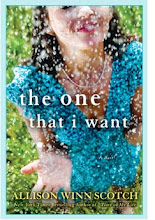
So today, I'm talking about finding the right idea for your novel and having it click. (And giving up on ideas that don't.) Check it out on Writer Unboxed.
And Happy New Year to those of you celebrating!
Thursday, September 13, 2007


Wednesday, September 12, 2007
Like Pulling Teeth
So, due to a variety of life-circumstances over the past week and a half including, but not limited to: a daughter who had to go to the hospital (she's fine), a son who has just moved to a big boy bed and who now seems to shun sleep time for play time at all hours, a nanny who was also hospitalized (different reasons, she's also fine, but I haven't had childcare all week - she's back today, hurrah!), a closing on a new house (an nearly all-day event, sigh), renovations and constructions plans for said house, furniture deliveries that didn't come at the appointed windows (of course!) and thus sucked up an entire day, various conferences and meetings at my son's new school, misplaced keys that left me locked out for the better half of a day, and looming and mounting magazine deadlines - I haven't been able to focus as much as I'd like to on my manuscript. Gee, go figure.
Last week, I was still relatively productive: I set a word count for myself each day, and somehow, come hell or high water, I got there despite various (see above) obstacles. This week? I'm floundering. Of course, trying to squeeze in my writing during Sesame Street or nap time (which, did I mention, is non-existent for my son right now?) doesn't help. But still...I hate not meeting my daily goal. So I force myself to write, and it's sort of like drawing blood from a stone.
So I'm curious what you guys do when life gets in the way and your brain just can't settle down: do you keep writing because it's a) a nice distraction (which it is) and b) some writing is better than nothing, or do you just toss in the towel and know that your energy is better served attending the obstacles that have been thrown in your path and returning to your work when you're feeling refreshed?
I can see arguments for both sides. If you forge on, you don't lose momentum, and I do think that even a few paragraphs per day is better than none. BUT, you also risk burning yourself out - I'll admit that I'm sort of dreading getting back to writing today because yesterday was so awful. What if I can't bust out of the funk? So you do risk worrying about that...
Hmmm, I dunno. But I bet that you guys do! :) Tell me, what are your writing strategies when life goes haywire and sitting down to your manuscript seems almost impossible?
Last week, I was still relatively productive: I set a word count for myself each day, and somehow, come hell or high water, I got there despite various (see above) obstacles. This week? I'm floundering. Of course, trying to squeeze in my writing during Sesame Street or nap time (which, did I mention, is non-existent for my son right now?) doesn't help. But still...I hate not meeting my daily goal. So I force myself to write, and it's sort of like drawing blood from a stone.
So I'm curious what you guys do when life gets in the way and your brain just can't settle down: do you keep writing because it's a) a nice distraction (which it is) and b) some writing is better than nothing, or do you just toss in the towel and know that your energy is better served attending the obstacles that have been thrown in your path and returning to your work when you're feeling refreshed?
I can see arguments for both sides. If you forge on, you don't lose momentum, and I do think that even a few paragraphs per day is better than none. BUT, you also risk burning yourself out - I'll admit that I'm sort of dreading getting back to writing today because yesterday was so awful. What if I can't bust out of the funk? So you do risk worrying about that...
Hmmm, I dunno. But I bet that you guys do! :) Tell me, what are your writing strategies when life goes haywire and sitting down to your manuscript seems almost impossible?
Monday, September 10, 2007
Help with a Story: Surviving the Holidays While Pregnant
Help! I never, ever troll for sources on my blog, but I'm truly desperate. I'm working on a story on surviving the holidays while pregnant, and I need some more real-life mom tips. You wouldn't think this would be so hard, but I'm having a very tough time getting unique, interesting tips on things such as travel, stress, shopping, entertaining and energy. If you have some ideas and would like to be quoted, please email me! allison@allisonwinn.com Pretty please?? Thank you!! (Or you can post below, and I'll get in touch with you directly.)
GCC Presents: Toni McGee Causey and Bobby Faye's Very (very, very, very) Bad Day
 As if the title isn't enough to make you buy this book, Publishers Weekly gave it a starred review and called it "hilarious." And this review in Book Reporter inspired me to shell out for my very own (fabulous) copy. Here's the gist, followed by Toni McGee Causey's answers to a few questions.
Bobbie Faye Sumrall knows that a day without disaster is a day in someone else's life. Criminals have kidnapped her good-for-nothing brother and are demanding her Contraband Queen tiara--the only thing of her mama's she inherited--as random. So Bobbie Faye has to outwit the police, organized crime, former boyfriends, and a hostage she never intended to take (but who turns out to be damn sexy!), in order to rescue her brother, keep custody of her niece, and get back in time to take her place as Queen in the Lake Charles Contraband Festival (think Mardi Gras, with more drinking and pirates).
Luckily, Bobbie Faye knows how to handle guns, outsmart angry mama bears, drive a speedboat, and get herself out of--and into--almost every kind of trouble. If only that pesky state police detective (who also happens to be a pissed-off ex-boyfriend) would stay out of her way . . .
Luckily, Bobbie Faye knows how to handle guns, outsmart angry mama bears, drive a speedboat, and get herself out of--and into--almost every kind of trouble. If only that pesky state police detective (who also happens to be a pissed-off ex-boyfriend) would stay out of her way . . .
1) What's the backstory behind your book?
Bobbie Faye was that rare story where the character just showed up whole, and about five minutes later, so did Trevor and Cam. I knew these people, inside and out, and knew what kind of long-term arcs they'd have. There was something so exciting about writing a kick-ass woman character, an action / comedy where the woman was capable and smart, even though she does have tons of disasters and obstacles and bad luck aiming her direction. I'd spent a lot of years in non-fiction and then screenwriting; there were some successes, but Bobbie Faye inspired me in a way no other story had.
2) What do you love most about writing fiction? What do you like least?
The daily writing is the most satisfying to me. Seriously--I love the process. I enjoy the brainstorming, character-building, world-building, plotting. I'm one of those weird people who also loves rewriting--it's where a story really takes shape for me.
The least satisfying part is probably after it's done (really done, after copy edits and galleys) and before it comes out, because there's this awful suspension of process. It's hard to concentrate on something new because there's promotional stuff to do and, and nothing can be done about the one that's about to come out, and it's a bit like holding your breath... for a month or so.
3) A lot of my blog readers are aspiring or new authors. How did you land your first book deal?
I started off years ago writing feature and staff articles for The State Times / Morning Advocate; from there, I wrote and edited for a regional magazine and sold to some national magazines. I wanted to get back into fiction, though, and went back to school, finished my degree and did (most of) and MFA in Screenwriting. Before I graduated, though, an agent in L.A. signed me and I spent some time doing the whole screenwriting gig. When I wrote Bobbie Faye, though, I knew I wanted to go back to the novel form, but went ahead and wrote it originally as a script to use as an outline. A friend read the script and handed it to a friend of hers, though I didn't realize at the time that this woman was a bestselling author (under a pen name). She called, asked if I was writing it as a novel; I said yes, and she pitched it to an editor friend of hers and suggested an agent. I told her that first time novelists don't sell on three chapters and a synopsis, but she proved me wrong. Before I knew what had happened, I'd signed with an agent and the editor had made an offer for that novel and the next two in a pre-emptive deal. It still boggles my mind: I'd spent years slogging it out in the trenches, though. At the point of the sale, I'd actually been writing just about twenty years from the point when I first published the non-fiction. It was incredible luck, that sequence of events, so I want to encourage people to keep trying, keep asking for feedback, keep handing your stuff to someone--all that hard work helps to create the opportunity for good luck to work for you.
4) I have a serious procrastination problem when it comes to tackling my fiction. What's your routine? How do you dive it? Do you have any rituals or necessary to-dos before or while you write?
I write mostly in the evening (and blogs are my worst procrastination problem). Evening's are just when I'm most creative, though I tried to fight that for years, and when our kids were little, evenings / nights writing took a heavy toll on my morning coherence in getting them ready for school. I don't really have any necessary to-dos... except maybe quiet / no interruptions. I'll mull for a while and then write in a burst. It took me years to get my family to understand that the writing part--sometimes even the more important part--was happening even when I wasn't banging away on the keyboard. If I'm staring off into space, that's usually when I'm doing the hardest part--brainstorming or arranging/finessing something.
Bobbie Faye was that rare story where the character just showed up whole, and about five minutes later, so did Trevor and Cam. I knew these people, inside and out, and knew what kind of long-term arcs they'd have. There was something so exciting about writing a kick-ass woman character, an action / comedy where the woman was capable and smart, even though she does have tons of disasters and obstacles and bad luck aiming her direction. I'd spent a lot of years in non-fiction and then screenwriting; there were some successes, but Bobbie Faye inspired me in a way no other story had.
2) What do you love most about writing fiction? What do you like least?
The daily writing is the most satisfying to me. Seriously--I love the process. I enjoy the brainstorming, character-building, world-building, plotting. I'm one of those weird people who also loves rewriting--it's where a story really takes shape for me.
The least satisfying part is probably after it's done (really done, after copy edits and galleys) and before it comes out, because there's this awful suspension of process. It's hard to concentrate on something new because there's promotional stuff to do and, and nothing can be done about the one that's about to come out, and it's a bit like holding your breath... for a month or so.
3) A lot of my blog readers are aspiring or new authors. How did you land your first book deal?
I started off years ago writing feature and staff articles for The State Times / Morning Advocate; from there, I wrote and edited for a regional magazine and sold to some national magazines. I wanted to get back into fiction, though, and went back to school, finished my degree and did (most of) and MFA in Screenwriting. Before I graduated, though, an agent in L.A. signed me and I spent some time doing the whole screenwriting gig. When I wrote Bobbie Faye, though, I knew I wanted to go back to the novel form, but went ahead and wrote it originally as a script to use as an outline. A friend read the script and handed it to a friend of hers, though I didn't realize at the time that this woman was a bestselling author (under a pen name). She called, asked if I was writing it as a novel; I said yes, and she pitched it to an editor friend of hers and suggested an agent. I told her that first time novelists don't sell on three chapters and a synopsis, but she proved me wrong. Before I knew what had happened, I'd signed with an agent and the editor had made an offer for that novel and the next two in a pre-emptive deal. It still boggles my mind: I'd spent years slogging it out in the trenches, though. At the point of the sale, I'd actually been writing just about twenty years from the point when I first published the non-fiction. It was incredible luck, that sequence of events, so I want to encourage people to keep trying, keep asking for feedback, keep handing your stuff to someone--all that hard work helps to create the opportunity for good luck to work for you.
4) I have a serious procrastination problem when it comes to tackling my fiction. What's your routine? How do you dive it? Do you have any rituals or necessary to-dos before or while you write?
I write mostly in the evening (and blogs are my worst procrastination problem). Evening's are just when I'm most creative, though I tried to fight that for years, and when our kids were little, evenings / nights writing took a heavy toll on my morning coherence in getting them ready for school. I don't really have any necessary to-dos... except maybe quiet / no interruptions. I'll mull for a while and then write in a burst. It took me years to get my family to understand that the writing part--sometimes even the more important part--was happening even when I wasn't banging away on the keyboard. If I'm staring off into space, that's usually when I'm doing the hardest part--brainstorming or arranging/finessing something.
Friday, September 07, 2007
The Early Bird Gets the Book
Question of the week: Congrats on your sale! Um, not to sound like an idiot, but what's a pre-empt?
You're not an idiot! A few people wrote me to ask this very question, and when I was starting out, I didn't know the answer either.
A pre-empt is when one publishers jumps in before all of the others and says, "I'll give you X amount of money to take this off the table and refuse other offers." The publisher thus "pre-empts" the other bidders.
I asked my agent all about accepting a pre-empt vs. going to auction, and she explained it thusly: with a pre-empt, the publisher will usually come in with close-to-their highest possible bid, let's say, for simple numbers purposes, 50k. If you were to hold an auction, the bids would start much lower, let's say, 10k. As people bid up and up, you may or may not reach the original pre-empt offer. You can also conduct a "best bids" auction, in which publishers don't necessarily bid "against" each other in the traditional sense, rather they all toss in their highest possible bids and hope that they come out on top. In our case, my new publisher came to us and said, we'll pay X, to which my agent said, "how about you pay X+Y and we'll take it off the table." (This was an editor I was dying to work with, and both my agent and I agreed it was worth it to take our chances.) The editor called back, and the deal was sealed.
So that is a pre-empt. Remember that I'm not an agent and this is just the best that I can figure it all out - I might have gotten some of the details wrong!
Anyone else out there gotten a pre-empt? If you have, why did you decide to go with it? And for those of you shopping around your ms or hoping to one day be published, which would you rather: a pre-empt or an auction? (You know, in a dream world! I should note, to for disclosure, that most books sell on one offer, not at auctions or pre-empts...I don't want to pass along misinformation here.)
You're not an idiot! A few people wrote me to ask this very question, and when I was starting out, I didn't know the answer either.
A pre-empt is when one publishers jumps in before all of the others and says, "I'll give you X amount of money to take this off the table and refuse other offers." The publisher thus "pre-empts" the other bidders.
I asked my agent all about accepting a pre-empt vs. going to auction, and she explained it thusly: with a pre-empt, the publisher will usually come in with close-to-their highest possible bid, let's say, for simple numbers purposes, 50k. If you were to hold an auction, the bids would start much lower, let's say, 10k. As people bid up and up, you may or may not reach the original pre-empt offer. You can also conduct a "best bids" auction, in which publishers don't necessarily bid "against" each other in the traditional sense, rather they all toss in their highest possible bids and hope that they come out on top. In our case, my new publisher came to us and said, we'll pay X, to which my agent said, "how about you pay X+Y and we'll take it off the table." (This was an editor I was dying to work with, and both my agent and I agreed it was worth it to take our chances.) The editor called back, and the deal was sealed.
So that is a pre-empt. Remember that I'm not an agent and this is just the best that I can figure it all out - I might have gotten some of the details wrong!
Anyone else out there gotten a pre-empt? If you have, why did you decide to go with it? And for those of you shopping around your ms or hoping to one day be published, which would you rather: a pre-empt or an auction? (You know, in a dream world! I should note, to for disclosure, that most books sell on one offer, not at auctions or pre-empts...I don't want to pass along misinformation here.)
Wednesday, September 05, 2007
Contests Here, Contests There...
Contests, contests everywhere!
Okay, so clearly, I'm reading a bit too much Dr. Seuss with my son, but you get the point.
Writer Unboxed is giving away a full set of Writer's Market guides worth over $150.00. As if the wonderful advice and prose isn't enough over there, so go check it out!
And the lovely Sara Hantz, whose YA debut The Second Virginity of Suzy Green was just released is throwing a blog party this week. Head over there to win free books, among other things, from a variety of guest bloggers. Ooh, and here's a little info on Suzy Green, which sounds hilarious!
"Suzy Green used to be one of the coolest nonconformist "almost-Goth" party girls in Australia. That was before her older sister Rosie died and her family moved to a new town. Not even her best friend would recognize her now. Gone are the Doc Martens and the attitude. All she wants is to be like Rosie—perfect. The new Suzy Green makes straight As, hangs with the in-crowd at her new school, and dates the hottest guy around. And since all her new friends belong to a virginity club, she joins, too. So what if she's not technically qualified? Nobody in town knows . . . until Ryan, Suzy's ex, turns up."
Hope some of you guys win!
Okay, so clearly, I'm reading a bit too much Dr. Seuss with my son, but you get the point.
Writer Unboxed is giving away a full set of Writer's Market guides worth over $150.00. As if the wonderful advice and prose isn't enough over there, so go check it out!
And the lovely Sara Hantz, whose YA debut The Second Virginity of Suzy Green was just released is throwing a blog party this week. Head over there to win free books, among other things, from a variety of guest bloggers. Ooh, and here's a little info on Suzy Green, which sounds hilarious!
"Suzy Green used to be one of the coolest nonconformist "almost-Goth" party girls in Australia. That was before her older sister Rosie died and her family moved to a new town. Not even her best friend would recognize her now. Gone are the Doc Martens and the attitude. All she wants is to be like Rosie—perfect. The new Suzy Green makes straight As, hangs with the in-crowd at her new school, and dates the hottest guy around. And since all her new friends belong to a virginity club, she joins, too. So what if she's not technically qualified? Nobody in town knows . . . until Ryan, Suzy's ex, turns up."
Hope some of you guys win!
Tuesday, September 04, 2007
So Here's Something Interesting
(Quick note: the Girlfriends' Cyber Circuit (GCC) was mentioned in Sunday's New York Times! Check out the article on author tours.)
So, as I noted last week, I'm back in the swing of writing my manuscript. I took a few months off as we shopped it around - I was able to sell it on the first 100 pages and a synopsis - and I dove back in about two weeks ago. And here's something I've discovered: I'm not so sure how much I actually like writing. Hmmm, interesting isn't it? :)
Let me clarify. I LOVE spending time with the characters in my head. I LOVE crafting obstacles and dialogue and all of that. But for some reason, even as my brain spins in the story - which these days, is almost a constant - I DREAD sitting down and writing. Weird, right??? I mean, I will do just about anything to procrastinate. I get into my office, so full of enthusiasm and ideas and bursting to put them on to the page, and then I open up the document, and I'm just sort of like, "ugh." So I surf every last gossip blog, and I check in on all of my writing forums, and if there's even a teeny-tiny thing that I need to buy, I'll cruise from website to website browsing.
The only way that I get anything done is that I set time deadlines for myself. I nervously eye the clock on the lower-right hand corner, and know that say, as soon as it flips to 10:30, I have to focus, come hell or high water. Once I start writing, I accelerate and all of the ideas snowball, and I'm always glad to have done it (and enjoy doing it too), but for me, I think it's the anticipation of the work ahead that I dread. Sort of like how some people can't stand to think of going to the gym, but once they're there, they dig it.
I actually recently interviewed Peter Hedges, the author of What's Eating Gilbert Grape and the director of the soon-to-be released movie, Dan in Real Life (so good, go see it when it comes out in Oct), and he said something similar. He was trying to wrap up his new novel and had taken a lot of time away from the book to work on the movie. And he said something like, (I'm paraphrasing here), "I always kick myself when I take time off from a manuscript because it's so hard to get back into it. I stare and it and wish that I could get back those months when I did nothing."
So hey, if an incredible writer like Hedges feels the way I do, I can't be that off my rocker, but tell me, do any of you guys feel the way I do? That sometimes, writing is a battle, albeit a necessary and even enjoyable one, but a battle all the same. Am I making sense? Or am I just weird and alone in this? :)
So, as I noted last week, I'm back in the swing of writing my manuscript. I took a few months off as we shopped it around - I was able to sell it on the first 100 pages and a synopsis - and I dove back in about two weeks ago. And here's something I've discovered: I'm not so sure how much I actually like writing. Hmmm, interesting isn't it? :)
Let me clarify. I LOVE spending time with the characters in my head. I LOVE crafting obstacles and dialogue and all of that. But for some reason, even as my brain spins in the story - which these days, is almost a constant - I DREAD sitting down and writing. Weird, right??? I mean, I will do just about anything to procrastinate. I get into my office, so full of enthusiasm and ideas and bursting to put them on to the page, and then I open up the document, and I'm just sort of like, "ugh." So I surf every last gossip blog, and I check in on all of my writing forums, and if there's even a teeny-tiny thing that I need to buy, I'll cruise from website to website browsing.
The only way that I get anything done is that I set time deadlines for myself. I nervously eye the clock on the lower-right hand corner, and know that say, as soon as it flips to 10:30, I have to focus, come hell or high water. Once I start writing, I accelerate and all of the ideas snowball, and I'm always glad to have done it (and enjoy doing it too), but for me, I think it's the anticipation of the work ahead that I dread. Sort of like how some people can't stand to think of going to the gym, but once they're there, they dig it.
I actually recently interviewed Peter Hedges, the author of What's Eating Gilbert Grape and the director of the soon-to-be released movie, Dan in Real Life (so good, go see it when it comes out in Oct), and he said something similar. He was trying to wrap up his new novel and had taken a lot of time away from the book to work on the movie. And he said something like, (I'm paraphrasing here), "I always kick myself when I take time off from a manuscript because it's so hard to get back into it. I stare and it and wish that I could get back those months when I did nothing."
So hey, if an incredible writer like Hedges feels the way I do, I can't be that off my rocker, but tell me, do any of you guys feel the way I do? That sometimes, writing is a battle, albeit a necessary and even enjoyable one, but a battle all the same. Am I making sense? Or am I just weird and alone in this? :)
Tuesday, August 28, 2007
Super-Duper, Awesomely Rad, Hyperly Cool News
Hee. I don't think I've used the word "rad" since I was thirteen, but this post calls for it.
I'm thrilled, THRILLED, to announce that we have sold my second novel, TIME OF MY LIFE, to Shaye Areheart, a Random House imprint, in a pre-empt. We're expecting a Fall 2008 publication, which means that I have to burrow my head in the figurative sand and get my arse in gear because, oh, I have 40k words to go, and a Nov 1st deadline to crank 'em out.
So, I imagine that I'll be talking a lot about my writing process in the next few weeks and all of the stuff that goes into getting a manuscript perfected and polished for publication. I'll also post about the sale process - how the whole thing went down and how, as you'll hear, you have to keep hustling and writing good stuff to stay publishable, even if you've already been published once. Establishing a long-term writing career is no easy road.
With that, I'm diving back into my ms (I took a little break to post this), and will probably check out until Labor Day. Though if I have anything else inspiring to add, I will!
In the meantime, check out my pal, Jen Singer's website, Mommasaid.net - which is an incredible network for moms who need a break and a laugh - and vote on her Wacky Wig contest. Jen's a strong face of cancer who won't let it kick her ass. Rock on!
I'm thrilled, THRILLED, to announce that we have sold my second novel, TIME OF MY LIFE, to Shaye Areheart, a Random House imprint, in a pre-empt. We're expecting a Fall 2008 publication, which means that I have to burrow my head in the figurative sand and get my arse in gear because, oh, I have 40k words to go, and a Nov 1st deadline to crank 'em out.
So, I imagine that I'll be talking a lot about my writing process in the next few weeks and all of the stuff that goes into getting a manuscript perfected and polished for publication. I'll also post about the sale process - how the whole thing went down and how, as you'll hear, you have to keep hustling and writing good stuff to stay publishable, even if you've already been published once. Establishing a long-term writing career is no easy road.
With that, I'm diving back into my ms (I took a little break to post this), and will probably check out until Labor Day. Though if I have anything else inspiring to add, I will!
In the meantime, check out my pal, Jen Singer's website, Mommasaid.net - which is an incredible network for moms who need a break and a laugh - and vote on her Wacky Wig contest. Jen's a strong face of cancer who won't let it kick her ass. Rock on!
Monday, August 27, 2007
GCC Presents: Laura Florand, Blame It On Paris
 Eleven o’clock on a Friday night. The seamy, sex-obsessed center of Paris. I balanced over a Turkish toilet in a tiny bistro, one stiletto heel propped against the wall to make some kind of writing table out of my knee, trying desperately not to touch anything around me as I wrote an invitation…. Thus begins BLAME IT ON PARIS, Laura Florand’s hilarious and moving true story of a French-American romance between two people, two families, and two cultures.
What does happen when you put a small-town Georgian in Paris and a handsome, sophisticated Parisian in small-town Georgia? Especially when two huge families, one French and the other American, decide it’s up to them to further this romance. The Parisian’s family wants Laura to learn how to prepare snails, while Laura’s family keeps serving Sébastien Mad Dog 20/20 as good wine. How will true love survive?
Today, I'm thrilled to host Laura Florand, author of Blame it On Paris, which Booklist calls "hilarious," and Publishers Weekly hails as "a frothy french connection."
Ready for my five questions with Laura? Here you go...
1) What’s the backstory behind your book?
Well, BLAME IT ON PARIS actually happened. It is the true story of one American and one handsome Parisian who fell for each other and the way their crazy families and even crazier cultures met, clashed, and—got along. You know that old Reese’s commercial, where the two people collide and one’s chocolate lands in another’s peanut butter? And it turns out to work much better than they suspected? It was like that, but everything that happened was so funny and yet so huge, I ended up telling the story.
2) It seems that a lot of readers confuse fiction with real life, assuming that a novel must be an autobiography of the author as well. How many elements of your real life are reflected in your book?
Well, BLAME IT ON PARIS actually happened. It is the true story of one American and one handsome Parisian who fell for each other and the way their crazy families and even crazier cultures met, clashed, and—got along. You know that old Reese’s commercial, where the two people collide and one’s chocolate lands in another’s peanut butter? And it turns out to work much better than they suspected? It was like that, but everything that happened was so funny and yet so huge, I ended up telling the story.
2) It seems that a lot of readers confuse fiction with real life, assuming that a novel must be an autobiography of the author as well. How many elements of your real life are reflected in your book?
Although nobody ever wants to believe me—they swear I must have exaggerated—this is a completely true story. Even my own editor didn’t quite believe me, I think, so it got published as a novel. Which leads to a very strange confusion of fiction and real life, if you ask me.
3) A lot of my blog readers are aspiring or new authors. How did you land your first book deal?
I worked very hard for a couple of decades (I started writing when I was nine) and studied the publishing world. Then I submitted a proposal. Yes, a proposal—despite all that research, I didn’t know memoirs were treated as novels and that I should submit the whole thing. A great agent took me on and encouraged me to finish it. When I finished it and it was much more comic and light-hearted I think than he was used to (this was a purely non-fiction agent), he referred me to a close colleague who loved it, and…she shopped it around. Et voilà. We went with Tor Forge.
4) I have a serious procrastination problem when it comes to tackling my fiction. What’s your routine? How do you dive it? Do you have any rituals or necessary to-dos before or while you write?
I have a 15 month old baby. I don’t really have much choice—I can either sit down and write or procrastinate my way right through her nap time. So I just jump straight in and go. In a way, it’s like having a constant deadline—those can be very effective.
5) Clearly, your book will be optioned for a multi-million dollar film deal! Who would you cast as the leads, if you were given creative control?
3) A lot of my blog readers are aspiring or new authors. How did you land your first book deal?
I worked very hard for a couple of decades (I started writing when I was nine) and studied the publishing world. Then I submitted a proposal. Yes, a proposal—despite all that research, I didn’t know memoirs were treated as novels and that I should submit the whole thing. A great agent took me on and encouraged me to finish it. When I finished it and it was much more comic and light-hearted I think than he was used to (this was a purely non-fiction agent), he referred me to a close colleague who loved it, and…she shopped it around. Et voilà. We went with Tor Forge.
4) I have a serious procrastination problem when it comes to tackling my fiction. What’s your routine? How do you dive it? Do you have any rituals or necessary to-dos before or while you write?
I have a 15 month old baby. I don’t really have much choice—I can either sit down and write or procrastinate my way right through her nap time. So I just jump straight in and go. In a way, it’s like having a constant deadline—those can be very effective.
5) Clearly, your book will be optioned for a multi-million dollar film deal! Who would you cast as the leads, if you were given creative control?
That’s always a tricky question, since my characters are real people and I have a hard time imagining anyone else in their shoes. I would like to go back in time and have Lauren Bacall play me, though. It’s a fantasy of mine to look and act like Lauren Bacall in To Have and Have Not or The Big Sleep. I suspect the director would choose someone with a much ditzier persona, alas.
Thursday, August 23, 2007
Finding a "Fresh" Angle
Question of the week: I was curious about some of the evergreen stories you've written because one of the "rules" of freelancing I've been told is that an article should have some kind of new angle to them, but these not all of yours are. So I was curious: is there a magic formula might be, absent a news hook.
Oh, if only! You know, I don't really have a brilliant answer for this, but I'll give it a shot. Yes, a lot of stories that I write and that magazines cover are indeed evergreen. And a lot of them are similar to others that you've read in the past or in other magazines. (Which is why newbie writers are so often convinced that a magazine "stole" their idea: in reality, it's just highly likely that someone else pitched a similar story or that the magazine was planning a similar story.) There's just no denying it.
What makes one pitch fresh and the other stale? Well, you already got the first aspect of it: news hooks. There's no better way to grab an editor's attention than by pointing out new studies or research that make the subject worthy of revisiting again.
But other than that, I really do believe that it comes down to packaging. Editors know that there are only so many topics and subjects out there, so I think that the best way to land an article is to come up with a creative way to package it. For example, I recently had a story run in Woman's Day called Just Do It. My editor had asked me for some new ideas, so I was brainstorming various things in my life that could be improved upon. (This is how I come up with a lot of my story ideas, btw.) I looked at my closet, and it made me want to cry, and I realized that I only had myself to blame for it: I'd been putting off organizing it for so long that it seemed almost unmanageable.
So, from here, I could have pitched a general, "Hey, let's do a story on organizing or let's do a story on procrastinating," but my editor would have said, "What's so interesting about that? What makes it any different than the gajillion other stories we've run like that?"
Instead, I came up with a creative way to cover the same-old subject. Thus, I broke the pitch (and the assigned story) down like this:
TASK THAT YOU HATE DOING
Why You Resist: Because it bores you to tears
Why We Insist: Because it will change your life, blah, blah, blah
Do you see how this one little twist made the subject matter so much more interesting? I really do think that's the key to landing evergreen stories, because, after all, news pegs can only take you so far.
But that's just my opinion. How do you guys land evergreens and what do you do to set yourself apart?
Oh, if only! You know, I don't really have a brilliant answer for this, but I'll give it a shot. Yes, a lot of stories that I write and that magazines cover are indeed evergreen. And a lot of them are similar to others that you've read in the past or in other magazines. (Which is why newbie writers are so often convinced that a magazine "stole" their idea: in reality, it's just highly likely that someone else pitched a similar story or that the magazine was planning a similar story.) There's just no denying it.
What makes one pitch fresh and the other stale? Well, you already got the first aspect of it: news hooks. There's no better way to grab an editor's attention than by pointing out new studies or research that make the subject worthy of revisiting again.
But other than that, I really do believe that it comes down to packaging. Editors know that there are only so many topics and subjects out there, so I think that the best way to land an article is to come up with a creative way to package it. For example, I recently had a story run in Woman's Day called Just Do It. My editor had asked me for some new ideas, so I was brainstorming various things in my life that could be improved upon. (This is how I come up with a lot of my story ideas, btw.) I looked at my closet, and it made me want to cry, and I realized that I only had myself to blame for it: I'd been putting off organizing it for so long that it seemed almost unmanageable.
So, from here, I could have pitched a general, "Hey, let's do a story on organizing or let's do a story on procrastinating," but my editor would have said, "What's so interesting about that? What makes it any different than the gajillion other stories we've run like that?"
Instead, I came up with a creative way to cover the same-old subject. Thus, I broke the pitch (and the assigned story) down like this:
TASK THAT YOU HATE DOING
Why You Resist: Because it bores you to tears
Why We Insist: Because it will change your life, blah, blah, blah
Do you see how this one little twist made the subject matter so much more interesting? I really do think that's the key to landing evergreen stories, because, after all, news pegs can only take you so far.
But that's just my opinion. How do you guys land evergreens and what do you do to set yourself apart?
Wednesday, August 22, 2007
When Lightening Strikes
Before I get into today's post, I HAD to link to this incredible review of The Department of Lost and Found. I was truly so touched and humbled by it, so I hope you take the time to click over. (Haven't bought the book? What are you waiting for?)
So, the other day, I was hungry for a new book. So hungry that I couldn't wait for Amazon to deliver. (I'm a Prime member, so normally, I press "order," and the books are here within two days.) After dropping my son off at camp, I mosey to Barnes and Noble, and grab Jonathan Tropper's How to Talk to a Widower.
Well, I start it that afternoon on the subway to a meeting, and by the time I turned off the light for some shut-eye, I was 200 pages deep. (It was so good that I let my son watch an extra episode of Dragon Tales, just so I could keep reading. The very model of good parenting, I know!)
I woke up the next morning, desperate to read more, toted it to the dog run, (bonus for the pooch: he also got extra play time because I was so absorbed), and then skipped out on some work to finish it, sadly turning the last few pages because I didn't want it to end. God, I miss that book.
Anyway, after I lovingly placed it on our bookshelf, I started thinking about what, for me, makes a book click. It's almost intangible, you know? I mean, every book I buy, I hope that this magic will happen, but it doesn't always, in fact, it doesn't often. Every last thing about this book worked for me. Mostly, I suppose, it was the voice: if I'm not digging the voice of the narrator, the rest of book is shot. But there are other things too - what I really appreciated about HTTTAW was how I could be cracking up in one moment, then welling up in the next. (Yes, I actually started crying in the dog run! How mortifying!) Its emotional resonance really impacted me. And the character's story arc was also totally believable. By the end, even though I suspected it was coming, I really felt like, "Yup, that could happen. Those changes not only work, they're gratifying to the reader."
It was everything I hope for as a reader, and what I aspire to as an author. Will it win the Pulitzer? Hell, no. But it was all that I ask for and more out of a book. I'm now off to order Tropper's back list and hope that he pulls out the same stops for his previous works. (And no, I don't know the guy, so I'm certainly not shilling for him out of obligation or anything like that!)
So...have you read any books recently that captured this magic?
So, the other day, I was hungry for a new book. So hungry that I couldn't wait for Amazon to deliver. (I'm a Prime member, so normally, I press "order," and the books are here within two days.) After dropping my son off at camp, I mosey to Barnes and Noble, and grab Jonathan Tropper's How to Talk to a Widower.
Well, I start it that afternoon on the subway to a meeting, and by the time I turned off the light for some shut-eye, I was 200 pages deep. (It was so good that I let my son watch an extra episode of Dragon Tales, just so I could keep reading. The very model of good parenting, I know!)
I woke up the next morning, desperate to read more, toted it to the dog run, (bonus for the pooch: he also got extra play time because I was so absorbed), and then skipped out on some work to finish it, sadly turning the last few pages because I didn't want it to end. God, I miss that book.
Anyway, after I lovingly placed it on our bookshelf, I started thinking about what, for me, makes a book click. It's almost intangible, you know? I mean, every book I buy, I hope that this magic will happen, but it doesn't always, in fact, it doesn't often. Every last thing about this book worked for me. Mostly, I suppose, it was the voice: if I'm not digging the voice of the narrator, the rest of book is shot. But there are other things too - what I really appreciated about HTTTAW was how I could be cracking up in one moment, then welling up in the next. (Yes, I actually started crying in the dog run! How mortifying!) Its emotional resonance really impacted me. And the character's story arc was also totally believable. By the end, even though I suspected it was coming, I really felt like, "Yup, that could happen. Those changes not only work, they're gratifying to the reader."
It was everything I hope for as a reader, and what I aspire to as an author. Will it win the Pulitzer? Hell, no. But it was all that I ask for and more out of a book. I'm now off to order Tropper's back list and hope that he pulls out the same stops for his previous works. (And no, I don't know the guy, so I'm certainly not shilling for him out of obligation or anything like that!)
So...have you read any books recently that captured this magic?
Monday, August 20, 2007
Conversation with Cindy: A Famous Blogger
So today, I have a little Q/A going on with one of my favorite bloggers, Cindy, from Conversations with Famous Writers. If you haven't checked out the site, do it asap - she manages to lure all sorts of fabulous and interesting authors to the site, and it's a must-read for me each week. Cindy is also the author of Thousand Dollars for a Kiss, a fun read set in the world of celebrity, and she took an unconventional route to getting published. Since I know so many aspiring writers check out this blog, I thought she might make for a bit of inspiration. Check it out!
1) You run one of my favorite blogs. What compelled you to start blogging and how did you attract such a big audience?
I started blogging for fun about celebrities in my (now defunct) gossip site, Conversations About Famous People. I got many, many hits every day, which was great fun but not satisfying to my soul, you know? It's not like I was doing something really positive by making fun of celebrities. It was bad karma.
I began Conversations with Famous Writers as a way to read and review and write about books and authors in an entertaining and casual way. I didn't want a stuffy, very literary type blog, I wanted to combine interesting, off beat interviews and inspire people to read really good books while getting to know the writers behind those books.
CAFP afforded me the opportunity to gather a big audience, some of which followed me to the book blog and helped make it successful. I still can't believe that this stay- at- home mom ran a successful gossip blog and reached over seven million viewers. Like, wow, millions of people read my work! I went to the E! channel in Los Angeles and did a screen test. It was exciting but not the direction I wanted to take my life in.
2) You interview a lot of well-known authors. Has any interview stood out as the best among others? How do you approach these authors? Anyone ever say no?
Jeannette Walls was super nice, she stands out as being one of the best. Jen Lancaster is lovely and hilarious. I adore Caroline Leavitt and Gayle Brandeis who I knew before I started my site. The fact that Pamela Anderson did an interview with me and linked to it on her website was huge for me. The majority of the authors are awesome and kind and grateful. Writers are generally speaking, a wonderful bunch.
I approach the authors through their PR people, some writers contact me directly. Paulina Porizkova wouldn't be interviewed for Model Summer and Angelina Jolie's manager said she wasn't giving interviews for her book Notes From My Travels. I was totally bummed!
Imagine me and Angelina doing an interview? We would become best friends forever and our kids could play together, we could get tattoos and were matching black clothes! She really missed out.
3) A lot of my blog readers are aspiring novelists. You refused to give up when it looked like a large publishing house wouldn't grab your manuscript...how did you then go about getting published?
I wrote two books and sent out hundreds and hundreds of query letters to agents. I received so many rejections that I seriously lost count of all of them. I could have wallpapered my whole house with those rejection letters.
When I wrote my third novel, A Thousand Dollars for a Kiss, I began the process all over again and of course the rejections trickled in. It was torture! I thought maybe I should self publish. I couldn't bear the thought of one more "no". I assumed that because I had a well known website and a built in audience of book buyers getting an agent would be easy. Not so.
At this time, Ephemera Bound got in touch with me to review their books. Instead of reviewing books, I asked if they would be interested in publishing my novel. I submitted it; they liked it and set me up with an editor. I was anxious.
4) What were the pros and cons of taking this route?
The positives aspects of going with a tiny publisher was that my book would be published in less than a year, I would work with an editor, I wouldn't need an agent, I would have a say in the cover art, the book would be available on Amazon.com, Barnes & Noble.com. I would finally have a published book that people could read. My dream of being a published author would come true. Fame and success were sure to follow! Visions of Prada and a new Infiniti FX 35 danced in my head.
The downside is a small publisher doesn't have a lot of marketing or advertising money, I did not get an advance, they didn't send out review copies to the big reviewers so my book was not widely exposed.
Places like Barnes & Noble, Costco, and Target have deals with the bigger publishers to have their books displayed and/or sold there but not with a small, relatively unknown publisher. Had I held out and found an agent who could have negotiated a great deal for me, my book would be in every book store and I'd be zooming around in my silver Infiniti wearing my True Religion jeans, lunching at The Ivy and shopping at Neiman Marcus.
5) What are you working on now?
I finished the sequel to A Thousand Dollars for a Kiss which is called Fifty Cents for Your Soul. It's about the celebrity obsessed character of Barrett and it features Marilyn Monroe. I'm plotting out the third book in my Hollywood series; this one will take place in the 60's with Janis Joplin and Jim Morrison. I love that whole era. I wish I could wear faded bell bottoms and daisies in my hair all the time. But with MAC Lipglass and YSL mascara of course.
I'm reviewing my beloved beauty products on Hello Dollface and interviewing writers on Conversations With Famous Writers. Lately on my blog, I'm featuring movie trailers and news of novels being made into films. My goal is to have my books made into movies and somehow develop other good books into films. Angelina and I will become BFF and she can also star in my movies and we could do charity work together. It's a win/win all around.
1) You run one of my favorite blogs. What compelled you to start blogging and how did you attract such a big audience?
I started blogging for fun about celebrities in my (now defunct) gossip site, Conversations About Famous People. I got many, many hits every day, which was great fun but not satisfying to my soul, you know? It's not like I was doing something really positive by making fun of celebrities. It was bad karma.
I began Conversations with Famous Writers as a way to read and review and write about books and authors in an entertaining and casual way. I didn't want a stuffy, very literary type blog, I wanted to combine interesting, off beat interviews and inspire people to read really good books while getting to know the writers behind those books.
CAFP afforded me the opportunity to gather a big audience, some of which followed me to the book blog and helped make it successful. I still can't believe that this stay- at- home mom ran a successful gossip blog and reached over seven million viewers. Like, wow, millions of people read my work! I went to the E! channel in Los Angeles and did a screen test. It was exciting but not the direction I wanted to take my life in.
2) You interview a lot of well-known authors. Has any interview stood out as the best among others? How do you approach these authors? Anyone ever say no?
Jeannette Walls was super nice, she stands out as being one of the best. Jen Lancaster is lovely and hilarious. I adore Caroline Leavitt and Gayle Brandeis who I knew before I started my site. The fact that Pamela Anderson did an interview with me and linked to it on her website was huge for me. The majority of the authors are awesome and kind and grateful. Writers are generally speaking, a wonderful bunch.
I approach the authors through their PR people, some writers contact me directly. Paulina Porizkova wouldn't be interviewed for Model Summer and Angelina Jolie's manager said she wasn't giving interviews for her book Notes From My Travels. I was totally bummed!
Imagine me and Angelina doing an interview? We would become best friends forever and our kids could play together, we could get tattoos and were matching black clothes! She really missed out.
3) A lot of my blog readers are aspiring novelists. You refused to give up when it looked like a large publishing house wouldn't grab your manuscript...how did you then go about getting published?
I wrote two books and sent out hundreds and hundreds of query letters to agents. I received so many rejections that I seriously lost count of all of them. I could have wallpapered my whole house with those rejection letters.
When I wrote my third novel, A Thousand Dollars for a Kiss, I began the process all over again and of course the rejections trickled in. It was torture! I thought maybe I should self publish. I couldn't bear the thought of one more "no". I assumed that because I had a well known website and a built in audience of book buyers getting an agent would be easy. Not so.
At this time, Ephemera Bound got in touch with me to review their books. Instead of reviewing books, I asked if they would be interested in publishing my novel. I submitted it; they liked it and set me up with an editor. I was anxious.
4) What were the pros and cons of taking this route?
The positives aspects of going with a tiny publisher was that my book would be published in less than a year, I would work with an editor, I wouldn't need an agent, I would have a say in the cover art, the book would be available on Amazon.com, Barnes & Noble.com. I would finally have a published book that people could read. My dream of being a published author would come true. Fame and success were sure to follow! Visions of Prada and a new Infiniti FX 35 danced in my head.
The downside is a small publisher doesn't have a lot of marketing or advertising money, I did not get an advance, they didn't send out review copies to the big reviewers so my book was not widely exposed.
Places like Barnes & Noble, Costco, and Target have deals with the bigger publishers to have their books displayed and/or sold there but not with a small, relatively unknown publisher. Had I held out and found an agent who could have negotiated a great deal for me, my book would be in every book store and I'd be zooming around in my silver Infiniti wearing my True Religion jeans, lunching at The Ivy and shopping at Neiman Marcus.
5) What are you working on now?
I finished the sequel to A Thousand Dollars for a Kiss which is called Fifty Cents for Your Soul. It's about the celebrity obsessed character of Barrett and it features Marilyn Monroe. I'm plotting out the third book in my Hollywood series; this one will take place in the 60's with Janis Joplin and Jim Morrison. I love that whole era. I wish I could wear faded bell bottoms and daisies in my hair all the time. But with MAC Lipglass and YSL mascara of course.
I'm reviewing my beloved beauty products on Hello Dollface and interviewing writers on Conversations With Famous Writers. Lately on my blog, I'm featuring movie trailers and news of novels being made into films. My goal is to have my books made into movies and somehow develop other good books into films. Angelina and I will become BFF and she can also star in my movies and we could do charity work together. It's a win/win all around.
Friday, August 17, 2007
We're Not Normal
So the other day, my husband was told "no" to something. And he was pissed. Annoyed and peeved too. And a little demoralized. You have understand: my husband is very, very good at what he does, which has lead to success, so rarely, does someone say, "Er, sorry, no thanks to that idea." (Of course, he hears "no" just plenty around our house. Hee.)
He came home and we chatted about it, and I said, "Look, you can't take it personally," and he said, "Of course I can! How can I not take it personally?" And I looked at him like he had ten heads because I'm so used to not taking anything personally in our business that I didn't see how on earth he could consider this personal.
So over dinner, I said, "Let's role play." (No you dirty birds, don't go there.)
He shrugged and said, "Fine."
"An editor told me today that my manuscript wasn't publishable....what would you say?"
"I'd say that he's an idiot," my husband replied.
"Exactly!" I answered, triumphant in my brilliance. "You wouldn't personalize it when it comes to my job, so you shouldn't personalize it when it comes to yours."
He begrudgingly admitted to a sliver of my brilliance and then we moved on. But later, it dawned on me: I think I'm the one with the abnormal reaction, not him. Of course it's rational to feel the sting of rejection rather than just coast past it; of course it's rational to be pissed and annoyed and a little demoralized. But I've been in this business for so long that my armor is basically impenetrable.
And I'll tell you what: I wouldn't have it any other way. While my husband might not get rejected very often in his line of work, in our line of work, it's inevitable. It doesn't stop just because you've landed national magazine stories or even published your first novel. And I've repeatedly said it on this blog, but I'll say it again: if you have a thin skin or take rejection personally, even if it might be slightly personal, this isn't the industry for you. Because you know, sure, every once in a while, that rejection just might be personal, but guess what? You don't have the luxury to consider that it might be, because, that, my friends, is a slippery-slope. If you spend time trying to sort through the intricacies of what all the various rejections mean - are they personal, are they not, do they hate you, do they hate the work? - you'll spend far too much energy and effort focused on the negatives and eventually, it will suck away at both your self-confidence and your writing.
Which is why I've developed an emotional moat: nothing's getting through to me unless I let it. And sure, that might not be normal, but it's what you need to get by as a writer. My husband's not a writer, so for him, sure, he can feel that sting, but honestly, I can't afford to. My ego and confidence would be bloodied on a daily basis.
So...what do you think? Are writers normal or not when it comes to rejection and how we cope with it?
He came home and we chatted about it, and I said, "Look, you can't take it personally," and he said, "Of course I can! How can I not take it personally?" And I looked at him like he had ten heads because I'm so used to not taking anything personally in our business that I didn't see how on earth he could consider this personal.
So over dinner, I said, "Let's role play." (No you dirty birds, don't go there.)
He shrugged and said, "Fine."
"An editor told me today that my manuscript wasn't publishable....what would you say?"
"I'd say that he's an idiot," my husband replied.
"Exactly!" I answered, triumphant in my brilliance. "You wouldn't personalize it when it comes to my job, so you shouldn't personalize it when it comes to yours."
He begrudgingly admitted to a sliver of my brilliance and then we moved on. But later, it dawned on me: I think I'm the one with the abnormal reaction, not him. Of course it's rational to feel the sting of rejection rather than just coast past it; of course it's rational to be pissed and annoyed and a little demoralized. But I've been in this business for so long that my armor is basically impenetrable.
And I'll tell you what: I wouldn't have it any other way. While my husband might not get rejected very often in his line of work, in our line of work, it's inevitable. It doesn't stop just because you've landed national magazine stories or even published your first novel. And I've repeatedly said it on this blog, but I'll say it again: if you have a thin skin or take rejection personally, even if it might be slightly personal, this isn't the industry for you. Because you know, sure, every once in a while, that rejection just might be personal, but guess what? You don't have the luxury to consider that it might be, because, that, my friends, is a slippery-slope. If you spend time trying to sort through the intricacies of what all the various rejections mean - are they personal, are they not, do they hate you, do they hate the work? - you'll spend far too much energy and effort focused on the negatives and eventually, it will suck away at both your self-confidence and your writing.
Which is why I've developed an emotional moat: nothing's getting through to me unless I let it. And sure, that might not be normal, but it's what you need to get by as a writer. My husband's not a writer, so for him, sure, he can feel that sting, but honestly, I can't afford to. My ego and confidence would be bloodied on a daily basis.
So...what do you think? Are writers normal or not when it comes to rejection and how we cope with it?
Wednesday, August 15, 2007
It Appears That I'm a Junkie
So I was straightening up our living room last week because our apartment is on the market, and really, all it ever feels like I do is straighten up our living room, but as I was doing so, I encountered masses and piles and stacks of magazines: some new, some old, many unread, frankly, many untouched. And while hints of my problem have danced around corners of my mind in the past, last week, it became unavoidably apparent: I am a magazine junkie, and it's time to quit. Or at least slow down.
So I counted. And it seems that I subscribe to about 20 magazines, which means, because a few of these are weeklies, that I'd have to read about one magazine a day per month to keep up. Which is just insane! I mean, I barely have time to take one shower a day, much less read that much per day. I do most of my mag reading in the gym, and even in a 45-60 minute workout, I can't get through an entire magazine (not to mention that I often grab mags there - or if I run on the treadmill, I don't read at all - which only contributes to my backlog), so it dawned on me last week that it was time for an intervention. Namely, as many of these mags send me note after note, begging for renewal, I'm going to have to just say no. Not this year. Not my $12. Not because I can't spare the $12. But because I can't take the clutter! I can't take the guilt of the magazine cover looking longingly up at me from my coffee table or my dining room chairs (more piles there) or my nightstand, crying, "Please read me!," and me promising that I will, knowing in the back of my mind that I really probably won't and it's just another obligation on my to-do list. So goodbye many of my old standbys that I've subscribed to for longer than I can remember. Goodbye. It was fun while it lasted. But to be honest, I'm not sure how much I'll miss some of you.
It has occurred to me, however, through this cleansing process, that there are a few magazines that I can't live without. And while I'm cutting back, I'm certainly not cutting myself off. (Egads! I'm a magazine writer for cryin' out loud! No way could I go or would I want to go cold turkey!) I'm whittling the list down to 12-15 or so vital mags - ones I actually look forward to getting. But if I had to choose just two or three? Well, I'd say that Women's Health and Entertainment Weekly will basically get a lifetime pass from me. I'll be 92 and still reading them. Fear not subscription departments - you'll always have my credit card!
So...how many mags do you subscribe to and which ones could you absolutely never give up?
So I counted. And it seems that I subscribe to about 20 magazines, which means, because a few of these are weeklies, that I'd have to read about one magazine a day per month to keep up. Which is just insane! I mean, I barely have time to take one shower a day, much less read that much per day. I do most of my mag reading in the gym, and even in a 45-60 minute workout, I can't get through an entire magazine (not to mention that I often grab mags there - or if I run on the treadmill, I don't read at all - which only contributes to my backlog), so it dawned on me last week that it was time for an intervention. Namely, as many of these mags send me note after note, begging for renewal, I'm going to have to just say no. Not this year. Not my $12. Not because I can't spare the $12. But because I can't take the clutter! I can't take the guilt of the magazine cover looking longingly up at me from my coffee table or my dining room chairs (more piles there) or my nightstand, crying, "Please read me!," and me promising that I will, knowing in the back of my mind that I really probably won't and it's just another obligation on my to-do list. So goodbye many of my old standbys that I've subscribed to for longer than I can remember. Goodbye. It was fun while it lasted. But to be honest, I'm not sure how much I'll miss some of you.
It has occurred to me, however, through this cleansing process, that there are a few magazines that I can't live without. And while I'm cutting back, I'm certainly not cutting myself off. (Egads! I'm a magazine writer for cryin' out loud! No way could I go or would I want to go cold turkey!) I'm whittling the list down to 12-15 or so vital mags - ones I actually look forward to getting. But if I had to choose just two or three? Well, I'd say that Women's Health and Entertainment Weekly will basically get a lifetime pass from me. I'll be 92 and still reading them. Fear not subscription departments - you'll always have my credit card!
So...how many mags do you subscribe to and which ones could you absolutely never give up?
Monday, August 13, 2007
Magazine Blogs
Question of the week: Are there any good blogs which specialize in writing magazine articles?
Well, for starters, have you searched the archives of my blog? I've tackled a lot of magazine-related questions here.
As far as ONLY handling magazine writing, I'm not sure. I'd definitely check out The Renegade Writer - while they're not limited to magazines, they have oodles of excellent advice about breaking into the industry, and their books can be invaluable.
And while it's not a blog, I think that Freelance Success is the best online tool for any writer. When I was just starting out, I gleaned SO MUCH knowledge on the forums that it's hard for me to even imagine the trajectory of my career if it hadn't been for FLX, and now, while I don't necessarily reap the same amounts of info (only because I'm more of a veteran), I try to contribute advice when I can and equally as valuable, have forged close friendships and a level of support that I couldn't do without. A few things about FLX: yes, you have to pay to join, as such you should. This weeds out spammers and people who aren't serious about their careers. Secondly, there are a lot of veterans on the boards who happily offer advice, but do cruise through the archives to make sure you're not asking a question that's been answered 100 times. Lastly, join in the discussion! The more you give, the more you'll get out of it.
So those are my thoughts. I'm sure that there are plenty of other blogs that specialize in mag writing, so readers, what are your suggestions?
Well, for starters, have you searched the archives of my blog? I've tackled a lot of magazine-related questions here.
As far as ONLY handling magazine writing, I'm not sure. I'd definitely check out The Renegade Writer - while they're not limited to magazines, they have oodles of excellent advice about breaking into the industry, and their books can be invaluable.
And while it's not a blog, I think that Freelance Success is the best online tool for any writer. When I was just starting out, I gleaned SO MUCH knowledge on the forums that it's hard for me to even imagine the trajectory of my career if it hadn't been for FLX, and now, while I don't necessarily reap the same amounts of info (only because I'm more of a veteran), I try to contribute advice when I can and equally as valuable, have forged close friendships and a level of support that I couldn't do without. A few things about FLX: yes, you have to pay to join, as such you should. This weeds out spammers and people who aren't serious about their careers. Secondly, there are a lot of veterans on the boards who happily offer advice, but do cruise through the archives to make sure you're not asking a question that's been answered 100 times. Lastly, join in the discussion! The more you give, the more you'll get out of it.
So those are my thoughts. I'm sure that there are plenty of other blogs that specialize in mag writing, so readers, what are your suggestions?
Thursday, August 09, 2007
Print Run Posturings
So, I was cruising the forums at Backspace, and stumbled upon this fabulous blog entry by best-selling author, Tess Gerritsen, in which she talks about the impact of print runs and what they mean for making the best-seller list. It's funny: before my book came out, all of my friends were like, "Oh, I can't wait to see you on the NY Times list!," and I'd just snicker because I knew it was such an impossibility. And as her blog indicates, yeah, it pretty much is. To make the best-seller list, you have to sell thousands per week. (I believe that 2k in hardcover is what I've read, though I might be wrong - correct me if so.)
From what I understand about print runs, which, btw, means how many books the publisher prints of your book (I know that's basic info, but some people might not know), the initial print run is basically based on how many pre-orders they have from their sales team. So - if the sales team has gone out there and sold the hell out of it, and Barnes and Noble wanted, say, 50,000 - your print run will sizeable. And this, when it comes to best-seller lists or really, even for your book to do well at all, is a tricky situation, sort of a self-fulfilling prophesy, if you will. Because if your print run is, say, 100,000, your book is going to be well-stocked in stores, so people will gravitate to it, simply because it will land in their hands, and because publishers will have a bigger incentive to buy co-op space, advertising, etc for it. But if, for some reason, the sales team screws the pooch, well, your book is screwed too because no matter how much promotion you do or if the buzz spreads like wildfire, if it's not in stores, it's simply not going to sell, much less reach the best-seller list. So the books with huge print runs are already given a huge leg up.
But - and this is where it gets interesting - these BIG books also have a lot more to lose, both for the author and the publisher. As Gerritsen notes on her blog, the books that have enormous print runs might have poor sell-throughs (the number of books sold compared the number of books printed), even though in total, they might have sold more than a book with a smaller run. Following? For example: a book with a 100,000 print run might sell 50,000, which is an okay sell-through, but a book with a 25,000 print run might sell 20,000, which is a much better return on the publisher's investment.
It's an interesting situation, and I don't know which I'd prefer. Probably the shot to at least make the best-seller list, but with these huge print runs comes a lot of pressure, and even though you have the machine of the publishing house behind you (which, incidentally, you really MUST have to reach the upper echelons of sales...I can't think of any book, barring perhaps, Sara Gruen's Water For Elephants, that took off without a HUGE publisher push and gobs of marketing/co-op money), you can certainly fall flat on your face. And the downside to that is that no one is going to give you a big advance again. In this industry, you don't get a lot of chances to prove yourself.
So which would you rather: start small and work your way up or start with a bang and hope to soar?
From what I understand about print runs, which, btw, means how many books the publisher prints of your book (I know that's basic info, but some people might not know), the initial print run is basically based on how many pre-orders they have from their sales team. So - if the sales team has gone out there and sold the hell out of it, and Barnes and Noble wanted, say, 50,000 - your print run will sizeable. And this, when it comes to best-seller lists or really, even for your book to do well at all, is a tricky situation, sort of a self-fulfilling prophesy, if you will. Because if your print run is, say, 100,000, your book is going to be well-stocked in stores, so people will gravitate to it, simply because it will land in their hands, and because publishers will have a bigger incentive to buy co-op space, advertising, etc for it. But if, for some reason, the sales team screws the pooch, well, your book is screwed too because no matter how much promotion you do or if the buzz spreads like wildfire, if it's not in stores, it's simply not going to sell, much less reach the best-seller list. So the books with huge print runs are already given a huge leg up.
But - and this is where it gets interesting - these BIG books also have a lot more to lose, both for the author and the publisher. As Gerritsen notes on her blog, the books that have enormous print runs might have poor sell-throughs (the number of books sold compared the number of books printed), even though in total, they might have sold more than a book with a smaller run. Following? For example: a book with a 100,000 print run might sell 50,000, which is an okay sell-through, but a book with a 25,000 print run might sell 20,000, which is a much better return on the publisher's investment.
It's an interesting situation, and I don't know which I'd prefer. Probably the shot to at least make the best-seller list, but with these huge print runs comes a lot of pressure, and even though you have the machine of the publishing house behind you (which, incidentally, you really MUST have to reach the upper echelons of sales...I can't think of any book, barring perhaps, Sara Gruen's Water For Elephants, that took off without a HUGE publisher push and gobs of marketing/co-op money), you can certainly fall flat on your face. And the downside to that is that no one is going to give you a big advance again. In this industry, you don't get a lot of chances to prove yourself.
So which would you rather: start small and work your way up or start with a bang and hope to soar?
Wednesday, August 08, 2007
Blah, Blah, Blurbs
So I'm chatting about blurbs - getting 'em, what they can do for you, what readers think of them - today on Writer Unboxed. Check it out!
I'll be back later this week to talk about print runs and best-seller lists.
I'll be back later this week to talk about print runs and best-seller lists.
Monday, August 06, 2007
GCC Presents: Ellen Meister and Secret Confessions of the Applewood PTA
 Girlfriend Cyber-Circuit time! Today, I'm thrilled to present Ellen Meister, whose laugh-out-loud Secret Confessions of the Applewood PTA premiered with a bang last year. And guess what? If you didn't check it out then, now's your chance to grab the paperback version.
Here's the juicy scoop: When a Hollywood location scout comes to Applewood, Long Island, and announces that the local elementary school might make the perfect backdrop for an upcoming George Clooney movie, the PTA's decorum crumbles like a cookie from last week's bake sale.
Enter Maddie, Ruth, and Lisa, three women who become the glue that holds the project together, forging a bond of friendship stronger than anyone could imagine. And not a moment too soon, as marriage woes, old flames, and scandalously embarrassing family members threaten to tear each of them apart. Is their powerful alliance strong enough to overcome the obstacles to getting the movie made in their town? And will their friendship be enough to mend their hearts and homes? Join them as they reach for the stars . . . and try to pull off a Hollywood ending of their own.
And now, Ellen answers five questions just for Ask Allison readers! Here ya go:
1) What's the backstory behind your book?
Back in 2000, I finally got the gumption to stop procrastinating and pursue my lifelong dream of writing a novel. I was determined to find the time to do it, even though I had three small children, one of whom wasn't yet in school full time. Only problem was that I didn't know what I wanted to write about.
My head was swimming with the notion when I attended the first PTA meeting of the year at my local elementary school. As I smiled, greeting all the other women with my best soccer mom persona, I thought about the fact that no one in the room knew I had this special dream. In fact, no one knew I had an inner life at all. Then it occurred to me that everyone there could be feeling something pretty similar. As soon as I had that thought, I knew I wanted to write about these types of women--to explore the pain, passion, heartache and joy hidden beneath facade of the perfect suburban housewife--and do it with humor and compassion.
From there I set out to construct a plot around an event that could affect the community as a whole and the women as individuals. Eventually, I got the idea to bring a Hollywood movie studio to their town, and select their schoolyard as a possible location for the filming of a George Clooney movie.
2) It seems that a lot of readers confuse fiction with real life, assuming that a novel must be an autobiography of the author as well. How many elements of your real life are reflected in your book?
This has been a big issue for me. Since I'm ON the PTA in a Long Island town and I WROTE about a PTA in a Long Island town, everyone in my community assumes the book is autobiographical. Alas, I can't seem to convince them otherwise! I have a lot of interesting conversations in the supermarket.
Truth is, if I wrote about my own life I'd bore the reader to death. All I do is take care my kids, laugh with my husband, and write. So I have to dig pretty deep into my imagination to find my stories and my characters.
3) A lot of my blog readers are aspiring or new authors. How did you land your first book deal?
Hard work, patience, and more than a little bit of luck! I worked hard on the book, hard on finding an agent, and hard on revisions. Still, it's such an insanely competitive market that I consider I consider myself lucky I found such a wonderful agent ... and an editor who was willing to take a chance on me.
4) I have a serious procrastination problem when it comes to tackling my fiction. What's your routine? How do you dive it? Do you have any rituals or necessary to-dos before or while you write?
I wrestle the procrastination bear, too. But I find a busy schedule is the thing that propels me to get off my butt and get it done.
5) Clearly, your book will be optioned for a multi-million dollar film deal! Who would you cast as the leads, if you were given creative control?
I've given this a good amount of thought over the past few years! As Maddie, the emotionally-needy ex-lawyer, I'd cast Amanda Peet, as I need someone who can do physical comedy and also be touching. Ruth Moss, my brash and bosomy protag, could be played by Virginia Madsen or Joely Fisher. Keith, Ruth's brain-damaged husband who makes inappropriate sexual remarks to every woman he sees, could be a great fun role. I'd love to see Paul Giamatti, Steve Carrell or Alec Baldwin do this. For modest and timid Lisa Slotnick, who suffers a relationship with an alcoholic mother, Laura Linney would be perfect. Maddie's sarcastic friend Beryl could be played by Janeane Garofalo or Rosie O'Donnell. And last, but most definitely not least, a certain someone who has still not called to thank me for the signed book I sent him, could do a cameo as himself.(George Clooney, are you reading this?)
Back in 2000, I finally got the gumption to stop procrastinating and pursue my lifelong dream of writing a novel. I was determined to find the time to do it, even though I had three small children, one of whom wasn't yet in school full time. Only problem was that I didn't know what I wanted to write about.
My head was swimming with the notion when I attended the first PTA meeting of the year at my local elementary school. As I smiled, greeting all the other women with my best soccer mom persona, I thought about the fact that no one in the room knew I had this special dream. In fact, no one knew I had an inner life at all. Then it occurred to me that everyone there could be feeling something pretty similar. As soon as I had that thought, I knew I wanted to write about these types of women--to explore the pain, passion, heartache and joy hidden beneath facade of the perfect suburban housewife--and do it with humor and compassion.
From there I set out to construct a plot around an event that could affect the community as a whole and the women as individuals. Eventually, I got the idea to bring a Hollywood movie studio to their town, and select their schoolyard as a possible location for the filming of a George Clooney movie.
2) It seems that a lot of readers confuse fiction with real life, assuming that a novel must be an autobiography of the author as well. How many elements of your real life are reflected in your book?
This has been a big issue for me. Since I'm ON the PTA in a Long Island town and I WROTE about a PTA in a Long Island town, everyone in my community assumes the book is autobiographical. Alas, I can't seem to convince them otherwise! I have a lot of interesting conversations in the supermarket.
Truth is, if I wrote about my own life I'd bore the reader to death. All I do is take care my kids, laugh with my husband, and write. So I have to dig pretty deep into my imagination to find my stories and my characters.
3) A lot of my blog readers are aspiring or new authors. How did you land your first book deal?
Hard work, patience, and more than a little bit of luck! I worked hard on the book, hard on finding an agent, and hard on revisions. Still, it's such an insanely competitive market that I consider I consider myself lucky I found such a wonderful agent ... and an editor who was willing to take a chance on me.
4) I have a serious procrastination problem when it comes to tackling my fiction. What's your routine? How do you dive it? Do you have any rituals or necessary to-dos before or while you write?
I wrestle the procrastination bear, too. But I find a busy schedule is the thing that propels me to get off my butt and get it done.
5) Clearly, your book will be optioned for a multi-million dollar film deal! Who would you cast as the leads, if you were given creative control?
I've given this a good amount of thought over the past few years! As Maddie, the emotionally-needy ex-lawyer, I'd cast Amanda Peet, as I need someone who can do physical comedy and also be touching. Ruth Moss, my brash and bosomy protag, could be played by Virginia Madsen or Joely Fisher. Keith, Ruth's brain-damaged husband who makes inappropriate sexual remarks to every woman he sees, could be a great fun role. I'd love to see Paul Giamatti, Steve Carrell or Alec Baldwin do this. For modest and timid Lisa Slotnick, who suffers a relationship with an alcoholic mother, Laura Linney would be perfect. Maddie's sarcastic friend Beryl could be played by Janeane Garofalo or Rosie O'Donnell. And last, but most definitely not least, a certain someone who has still not called to thank me for the signed book I sent him, could do a cameo as himself.(George Clooney, are you reading this?)
Thursday, August 02, 2007
On the Horizon
OK, here's my question - yes YA is hot now, but what are the forecasts for next year (with the thought that if I'm working on my YA now, it gets bought, and then takes 12-18 months to pub, will I have missed the boat)? I didn't see the end of chick lit until it was too late. Your thoughts, o wise one?
Hey Mia! For those of you who don't know the fabulous Mia King, who sent in this question, check out her wonderful blog. Of course, she's in Hawaii, so it's probably a lot easier to be fabulous and wonderful out there than it is anywhere else!
Oh geez, if I could answer this question, I'd have the million-dollar book deal, right? I think it's basically impossible to predict because, I mean, who can say what might resonate with the public. Did anyone foresee that a boy wizard become a worldwide phenomenon a few years ago? Probably not. Did anyone anticipate that paranormal vampires would recently take a bite out of the market? (Hey, give me the bad pun already!) I doubt it.
So..man...I dunno. I'm hoping that the trend toward commercial women's fiction continues - you know, women who want smart characters but still lively and diverting plots, and I have to believe that since there are so many intelligent, well-read women in our country, that this will always be a staple in the publishing industry. But the next big thing? I have no idea! (Of course, Mia, I know you were asking this hypothetically and would never write in anticipation of a trend, but it goes without saying that what you should do is write a good book - the best book you can, regardless of "what's hot," and then the rest will follow.)
But I wanted to post this because I bet that A LOT of readers have better ideas than I do! So what say you, oh wise readers? What's the next big thing?
Hey Mia! For those of you who don't know the fabulous Mia King, who sent in this question, check out her wonderful blog. Of course, she's in Hawaii, so it's probably a lot easier to be fabulous and wonderful out there than it is anywhere else!
Oh geez, if I could answer this question, I'd have the million-dollar book deal, right? I think it's basically impossible to predict because, I mean, who can say what might resonate with the public. Did anyone foresee that a boy wizard become a worldwide phenomenon a few years ago? Probably not. Did anyone anticipate that paranormal vampires would recently take a bite out of the market? (Hey, give me the bad pun already!) I doubt it.
So..man...I dunno. I'm hoping that the trend toward commercial women's fiction continues - you know, women who want smart characters but still lively and diverting plots, and I have to believe that since there are so many intelligent, well-read women in our country, that this will always be a staple in the publishing industry. But the next big thing? I have no idea! (Of course, Mia, I know you were asking this hypothetically and would never write in anticipation of a trend, but it goes without saying that what you should do is write a good book - the best book you can, regardless of "what's hot," and then the rest will follow.)
But I wanted to post this because I bet that A LOT of readers have better ideas than I do! So what say you, oh wise readers? What's the next big thing?
Wednesday, August 01, 2007
I'm Booked on Book Keeping!
I'm super-excited...today, I'm the featured new article on MediaBistro. (Okay, I'M not the article, but the article is all about moi.) Check it out in Book Keeping. I can't remember the entire interview exactly (and haven't yet seen the completed piece), but the general gist is my road to publication...and the interviewer asked a lot of questions, so I'm sure that there are more details there than I might have noted here.
Also, our dog, Pedro, is finally famous! We knew he had it in him. In fact, my husband, who is mildly (and perhaps clinically) nuts, has conceived an entire movie series around him in which Pedro becomes a dog vampire at night. (He calls it Count Barkula. Don't ask. I love him or else I'd flee.) But that's neither here nor there. The point is that GalleyCat will be using Pufro's (that's what my son calls him) picture to promote the Book Keeping article later today. Check it out!
So, does anyone else's beloved spouse do equally inane things...or is it just me? :)
Also, our dog, Pedro, is finally famous! We knew he had it in him. In fact, my husband, who is mildly (and perhaps clinically) nuts, has conceived an entire movie series around him in which Pedro becomes a dog vampire at night. (He calls it Count Barkula. Don't ask. I love him or else I'd flee.) But that's neither here nor there. The point is that GalleyCat will be using Pufro's (that's what my son calls him) picture to promote the Book Keeping article later today. Check it out!
So, does anyone else's beloved spouse do equally inane things...or is it just me? :)
Subscribe to:
Posts (Atom)