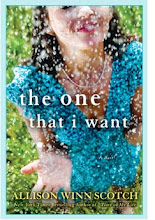
So has anyone been following American Idol? (Why, oh why am I publicly admitting to this???) I got sucked in this year thanks to the strike (nothing else to watch), despite not having watched in three or four seasons, and beyond the fact that I am slightly obsessed with David Cook, I am so tickled that the coronation song (chock full of those requisite "rainbows," etc) is called Time of My Life.
I was listening to it on virtual repeat on iTunes yesterday when I had what might have been the best professional day of my life: I got news from so many fronts that my head was nearly literally spinning - I still can't wrap my brain around everything, and I can't reveal all of the news (I know, I'm a tease - next week, for sure), but one thing that I can announce is that Random House sold the rights to Time of My Life in Australia, Spain and Germany, and beyond being awesome for a variety of reasons, these deals ensured that even before the book hits stores, I've sold out my advance. Which is so big, I can't even explain it.
But let me backtrack and try.
When you get an offer for your book, what you're getting is a lump sum of money upfront that is yours and yours to keep. You then spend the rest of your time trying to earn that money back for the publisher, and until you do (and there's a statistic out there which says that something like 4 out of 5 books - or a really high number like that - never will), you're not going to see another dime. Sure, royalties sound great, but for many writers, they're theoretical.
I'm not sure why the publishing industry is set up this way. Basically, when you're offered your advance, the sales and marketing team has done some research quantifying how many books they expect you to sell, how valued your book will be overseas, etc, but really, it's a crap shoot. This is why huge advances can be daunting: there is a very good risk that you'll never earn it back, but small advances can bring a different type of death knell: they mean tiny print runs and no exposure. I know that HarperCollins, for example, is exploring a different way of paying authors: no advance, higher royalties, and of course, a lot of authors aren't thrilled about this because it only benefits us (at least in the short-term) to get more money than we might have earned on royalties alone. But the publishing industry loses a lot of money, and really, objectively, it's easy to see why.
But I've digressed. My point here is that these foreign sales were so juicy that I've already earned out my advance. And I didn't realize it, but this is the biggest relief I could ever dream of. The pressure you feel once your book is out there in the world is enormous. But it's ever-present, so it's almost like you're unaware of it until you realize that there could be an absence of this pressure, that, in fact, I could sell nary a copy of this book and my publisher would still make money on it. And wow, knowing that? What a different experience this time around is going to be. I want to enjoy it, savor it now that there are no financial expectations to live up to. You forget about that when you're going through this process - really, you think the goal is just to sell your book to a publisher and have people read it, but that can't just be the goal. The goal, like it or not, has to be to be profitable. Or else your next advance will falter or worse, you won't get the chance to be published again.
Anyway, what can I say? I am flipping out. With relief. Relief from tension that I didn't even realize I felt. And I plan to continue to listen to David Cook's coronation song, cheesiness and all, the entire weekend, because really, this is the time of my life.
(And yes, more big news hopefully next week!)
Friday, May 23, 2008


Wednesday, May 21, 2008
GCC Presents: Maggie Marr and Secrets of The Hollywood Girls Club
 Today's GCC pick is The Secrets of The Hollywood Girls Club, which, as a closet US Weekly reader, is so up my alley! Seriously, this is the perfect beach book: well-written (just ask Booklist or Publishers Weekly), juicy, gossip-packed, faced-paced...need I say more? Probably not, so I'll just let Maggie Marr, the author, speak on the book's behalf. But before she does, here's a little more scoop on the book.
Maggie Marr’s first novel, Hollywood Girls Club, introduced us to four fabulous Hollywood heavyweights and best friends - Jessica, Celeste, Lydia, and Mary Anne. Now, in SECRETS OF THE HOLLYWOOD GIRLS CLUB, these high-powered women take on a new challenge-the Hollywood rumor mill. Those who fell in love with Marr’s witty writing and fast-paced plot will be eager to dive into this sequel which delves even deeper into the glamorous, treacherous Hollywood lifestyle.
Although she is one of the hottest actresses in Hollywood, Celeste is wondering how long she can maintain her success. With age creeping up and body parts sagging down, how will she maintain her “It Girl” status? Mary Anne, recently back in LA after a breakup in London, is helping to write Lydia’s latest movie called The Sexual Being. Of course, her bigger challenge will be avoiding her old flame, Holden Humphrey, who happens to be starring in it.
Lydia has recently started receiving mysterious notes that seem to be hinting toward a secret she’s kept buried for years. Not only that, Jessica, uber-agent to the stars and recent new mom, has just told Lydia that somebody has gotten their hands on a very compromising DVD that Celeste made with her ex-husband—how will she protect her friend (and the top earner for her production company)? Meanwhile, publicist Kiki Dee has gotten her hands on some of these secrets and is willing to do almost anything to keep her spot at the top of the Hollywood PR machine. Will the Hollywood Girls Club discover the source of the threats? Will Celeste give in to the Hollywood machine and undergo plastic surgery? Will Mary Anne and Holden find happiness with each other? And with so much going on, will Lydia’s latest movie ever be completed?
1) What’s the backstory behind your book?
Prior to becoming a full time writer, I was a motion picture agent for ICM. I worked full time repping writers and directors. So Hollywood is my home. I started hearing a character voice in my head and late at night when I couldn’t sleep or on the weekends, I would write down the story I was told. This story became the first draft of my first book Hollywood Girls Club. Secrets of The Hollywood Girls Club is the second book in the series and a continuation of the lives of these four fabulous women who live and work in Hollywood.
2) It seems that a lot of readers confuse fiction with real life, assuming that a novel must be an autobiography of the author as well. How many elements of your real life are reflected in your book?
I think my unconscious took a huge amount of my day to day life in entertainment and fictionalized it. As I write and then read the book, I see so many similarities to things I’ve seen, stories I’ve heard and people I know. But it wasn’t conscious.
3) A lot of my blog readers are aspiring or new authors. How did you land your first book deal?
As I said, I’d been writing for fun, in my spare time. It was my husband who convinced me to give four chapters to my friend and colleague (and now agent) at ICM. I gave her four chapters without my name on them, guessing she’d pass and then I could go on about my life repping my screenplay writer and directing clients. But instead she loved it. I finished the manuscript and when she took it out, there were two houses that wanted the book…so I ended up going with Crown. And suddenly, I was a writer.
4) I have a serious procrastination problem when it comes to tackling my fiction. What’s your routine? How do you dive it? Do you have any rituals or necessary to-dos before or while you write?
Let’s see. I love the mornings. I love to be at my computer by 7:30 or 8 am to get started. I have a goal of one chapter a day which for me is about 10 pages. Some days I make it, other days I don’t. But when I’m working on the first draft, whizzing along, I try for ten pages. I work in the morning until noonish and then I take a break and have lunch with my girls. I put them down for nap and write another two hours, from two to four. Usually I’m pretty shot by four pm. I might read or edit in the evening once the girls are in bed, but I don’t usually get much writing accomplished.
5) Clearly, your book will be optioned for a multi-million dollar film deal! Who would you cast as the leads, if you were given creative control?
Celeste could be played by Jessica Biehl…or an older version of Jessica Biehl
Lydia hmm…Jada Pinkett Smith
Jessica would be played by Carla Gugino
Mary Anne Meyers would be played by Bridget Moynihan
Monday, May 19, 2008
Complete and Total Pimpage of Laura Dave
 I am so super-excited to be hosting a Q/A today with bestselling author Laura Dave who penned London is the Best City in America and whose follow-up novel, The Divorce Party, is hitting stores today! Full disclosure: Laura is one of my favorite people in the world, outside my immediate family, but when we met, I was only a fan of her writing, not her person. But I can happily report that they are both of excellent quality.
Here's what happened: a few years ago, I read London, then read Laura's bio (complete with blond, beautiful pic) and noticed that we went to the same college. I was slightly intimidated by her pic and her writing acumen, but I sent her a note anyway, and she immediately wrote me back and said, "Hey, we should meet up." So we went out for coffee. Turns out that not only did we go to the same university, we were in the same sorority (I graduated just before she arrived - I'm old), and had a slew of things and friends in common. From there, she promptly endeared herself to me with her support, her kindness and her intelligence, and now, as I said, I am among her biggest fans.
Case in point - and this really demonstrates her level of generosity, both as a friend and a writer: when she heard about the premise of Time of My Life, she immediately emailed me and asked me for an early copy. I told her it was littered with typos and snafus, but she didn't care - she'd been dying to write or read a "what if" novel, so she wanted it and wanted it now! She printed up the 300 pages herself, read it on a plane ride, and emailed me to gush. (That's not the best part! Ha!) When we met up soon thereafter and she heard that my epigraph had fallen through (lyric rights didn't pan out), she offered me - insisted, really - that I use her favorite quote, one that she'd used in her very first (doomed - see below) novel. I hemmed and hedged because I didn't want to use a quote that she said, "changed her life!," but she is so generous and wonderful that she passed it over to me without a second thought, and now, there it is, on the first page of my book. And the book is the better for. So for that, I have Laura to thank.
And that story pretty much sums up the awesomeness that is Laura Dave. So please, rush out and support this fabulous author and person by picking up your own copy of The Divorce Party. And if you're in NYC, join her for her first reading tonight at the Barnes and Noble at Lincoln Center at 7:30! I'll be there with bells on.
And now, with no further introduction, Laura stops by to answer some of my questions:
1) You have one of the WORST writing-disaster stories I've ever heard - losing the first 200 pages of your first novel for good. Can you spill what happened and how you found the stomach to start over?
Spill is an apt word, sadly. I ordered a tall glass of ice water at a local coffee shop---and dropped the water right onto the keyboard, destroying my motherboard. For a while it looked like everything was lost—including my 200 page novel-in-progress. I had just moved back to New York, post graduate school, and was devastated. But, during that time, I went to the beach to watch fireworks with friends. I thought: the book is actually supposed to start here--with a brother and sister watching fireworks together. I began again. The first three pages of "London..." are the only carry-over from that first novel.
2) Before I knew you, I read your book and was so impressed by how precocious I thought your writing was. Can you tell us a bit more about your path to publication? Did you always set out to be a novelist?
I like being called precocious—thanks! Though, now, I am having a bad memory of my 1st grade teacher calling me precocious, and she wasn't trying to be nice, like you...Let's see. My path to publication was both very long and, at the same time, relatively easy. I always wanted to write, and was writing in some capacity since I was a very little girl. I majored in English at The University of Pennsylvania, where I wrote MANY bad short stories. Then, after college, I began following writing fellowships around the country: I lived in several small towns in my early twenties. I wrote and taught writing, and eventually went to grad school at the University of Virginia, where I wrote my ill-fated first book. Then I wrote "London..." A month after I finished, I went to a writers conference in Tennessee. I met my lovely agent there, and she sent out the book. Less than a week after, we had an offer.
3) I know that you have your MFA, and we've discussed on this blog whether or not getting an MFA is critical to furthering your writing career. Can you chime in on the debate?
It is definitely not critical. What is critical, I believe, is doing something to prove to yourself that you take your writing seriously. The more that you do that—the more that you make your writing a habitual part of your life—the better chance that you have of keeping at it. For some people, that commitment involves graduate school, for others it is getting up at 5 AM two days a week while your family sleeps. The key is finding a writing habit that works for you, and sticking to it.
4) This is your second time around…how is it different from your debut experience?
I am much more zen this time around. With a first book, the unknown is so overwhelming: no one warns you about that! While it is supposed to be so exciting, you are also at the whim of every single thing (good and bad) that happens over the course of publication. Or, at least, that was how I felt. This time around, I am rolling with it more, and enjoying it. I am most excited to head out on tour and see friends and readers around the country. That is the greatest.
5) How did you come up with the idea for The Divorce Party?
"The Divorce Party" started with a conversation I had with a friend about the hurricane of 1938, which ravaged Montauk, New York. Only a few houses survived. I began wondering about those houses—and what would be happening there today. That got me thinking about the parallel between physically building a home with someone and building a life with them. The novel focuses on two women: Maggie Mackenzie, and her future mother-in-law, Gwyn, who find themselves meeting for the first time the weekend that Gwyn and her husband announce they are divorcing after 35 years of marriage. Not the ideal time to meet your future in-laws, right? But it ends up being an exercise for both women in asking the question: when and how do you fight for your family?
6) I know that you researched a lot for the book, interviewing dozens of newly divorced women and such – did this change where you expected the book to go? How influenced were you by your findings?
Research is always crucial for me. I feel like if you are writing about a dentist, let's say, and you know two things about a dentist, you feel compelled to include both factoids. But if you know a hundred things, you only include what informs the novel—So with "The Divorce Party," I ended up doing a ton of research on the hurricane of 1938 (even though it only takes up 10 pages of the book), just to make sure that I knew far too much about the history infusing the book. In a similar way, I have two narrators: a commitment-shy 30 year old, and a 58-year-old in the process of ending a 35 year marriage. The first is more familiar territory to me than the second, so I spoke to many women who found themselves starting a new life after the end of a many decade-long relationship. The goal is that it helps me create a world, which feels whole and deep. I recently met an older woman, in a situation similar to my narrator's, who read an advance copy of the book. And she couldn't believe I was thirty. That felt like the best compliment.
7) What's the best part of being a published, full-time author? Now what's the worst?
I think the answer is actually one and the same. I have a lot of time to write, and I have a lot of time to write. There is no one to blame but myself when I sit down to watch "Friday Night Lights" and try to convince myself that it is "research" because it is so well-written.The good news is that fear is a HUGE motivator for me, especially because I remember all too clearly having 13 JOBS when I was working on "London..." I need only conjure up what a day during that period of time felt like, and I am racing toward my Mac.
8) Both of your books have been options for movies…what's the status of their development?
"The Divorce Party" was just optioned last month by Universal Studios and Echo Films, Jennifer Aniston and Kristin Hahn's new production company. I'm very excited about this. Everything seems to be moving along, and Gwyn Lurie--who also adapted my first book---is in the middle of writing the screenplay. She calls me and reads me scenes, which literally have me laughing out loud. As far as London, I don't know what is happening, beyond the fact that "London..." was re-optioned by Universal Studios last year, and Gwyn wrote a great screenplay. I hope we have good news on that front!
Friday, May 16, 2008
If You Love Books...
And don't we all, check out Jen A Miller's blog. Jen is a notable book reviewer (and the author of The Jersey Shore, Atlantic City to Cape May: Great Destinations: A Complete Guide), and for the past year, she's been reading (and blogging about) a book a week, and now, she's finished the (exhausting!) experiment, BUT, she's giving away a Word document of all of her posts. What a great way to find new-to-you books, just in time for summer!
Check it out here: bookaweekwithjen.blogspot.com!
And then, check out Jen's five picks for beach reading, as posted in the Philly Inky! I spy Trish Ryan! :)
Check it out here: bookaweekwithjen.blogspot.com!
And then, check out Jen's five picks for beach reading, as posted in the Philly Inky! I spy Trish Ryan! :)
Thursday, May 15, 2008
Rounding Out a Round-Up
Question of the Day: Please tell about your February WOMAN'S DAY article about saving time. 1)How does one go about writing an article that is mainly comments from readers? 2)Did you or a WD editor ask for their ideas on WD's website? 3)Did you query the idea of the article or did the editor suggest it to you?
FYI: the question is about this article that I wrote for Woman's Day.
And here are my answers:
1) This type of feature is called a round-up, I guess because it's a round-up of quotes. Frankly, these articles can be super-easy, but aren't always because, as you suggested, you have to find all sorts of sources and out-of-the-box quotes and ideas. How does one go about writing a story like this? You gather as many quotes as possible, then filter through them to see which are usable, then plonk them (often edited) into your piece. Because I often get way more answers than I need, I usually try to organize the emails as they come in: deleting (though not permanently) the ones that definitely won't fly, sticking the maybes in a folder designated for the particular magazine, and cutting and pasting the winner's quotes right into my document. When I start writing/editing the piece, I pare it down from there.
2) Did I get quotes from the WD website? Nope, these quotes and sources came directly from my contacts, friends, friends of friends, Profnet, etc. When you do a round-up, because your editors are always looking for "fresh" ideas and quotes, it's important to cast as wide a net as possible. Which is why these types of stories can appear deceivingly easy. Sure, you might get lucky with your direct contact list, but most often, you won't. And in this case, I didn't. I begged and pleaded and emailed everyone I knew and posted on PR sites, etc, until I had a fully fleshed-out story.
3) Did I come up with this idea or did an editor assign it? Hmmm, here's the funny thing: I wrote this piece, like, well over a year ago - maybe even 18 months ago- so to be honest, I can't remember! I *think* however, that I pitched it based on my own life, things that I'd found myself doing to shave off a few minutes in my day: I bought a more efficient hair-dryer; I'd read about some cream that slows down hair growth so you only have to shave your legs once a week and so on. And so from there - yes, it's coming back to me! - I pulled together four or five new products and ways that women were attempting to salvage their minutes and plopped them in a pitch.
Hey readers out there, for those of you who write round-ups, do you find them easier or harder than the standard straight reporting piece? I'm curious to hear preferences...
FYI: the question is about this article that I wrote for Woman's Day.
And here are my answers:
1) This type of feature is called a round-up, I guess because it's a round-up of quotes. Frankly, these articles can be super-easy, but aren't always because, as you suggested, you have to find all sorts of sources and out-of-the-box quotes and ideas. How does one go about writing a story like this? You gather as many quotes as possible, then filter through them to see which are usable, then plonk them (often edited) into your piece. Because I often get way more answers than I need, I usually try to organize the emails as they come in: deleting (though not permanently) the ones that definitely won't fly, sticking the maybes in a folder designated for the particular magazine, and cutting and pasting the winner's quotes right into my document. When I start writing/editing the piece, I pare it down from there.
2) Did I get quotes from the WD website? Nope, these quotes and sources came directly from my contacts, friends, friends of friends, Profnet, etc. When you do a round-up, because your editors are always looking for "fresh" ideas and quotes, it's important to cast as wide a net as possible. Which is why these types of stories can appear deceivingly easy. Sure, you might get lucky with your direct contact list, but most often, you won't. And in this case, I didn't. I begged and pleaded and emailed everyone I knew and posted on PR sites, etc, until I had a fully fleshed-out story.
3) Did I come up with this idea or did an editor assign it? Hmmm, here's the funny thing: I wrote this piece, like, well over a year ago - maybe even 18 months ago- so to be honest, I can't remember! I *think* however, that I pitched it based on my own life, things that I'd found myself doing to shave off a few minutes in my day: I bought a more efficient hair-dryer; I'd read about some cream that slows down hair growth so you only have to shave your legs once a week and so on. And so from there - yes, it's coming back to me! - I pulled together four or five new products and ways that women were attempting to salvage their minutes and plopped them in a pitch.
Hey readers out there, for those of you who write round-ups, do you find them easier or harder than the standard straight reporting piece? I'm curious to hear preferences...
Tuesday, May 13, 2008
Where Do You Draw The Line?
A few weeks ago, I got the inkling to start drafting an essay for a major national column. I had the perfect idea and started fleshing it out in my head as I strolled around the city, worked out on the Precor, tossed and turned awaiting sleep. I knew it was perfect for this notoriously hard-to-crack column, but I also knew that publishing it would come with a price. Namely, the essay was about an incident in my life that occurred almost a decade ago. Over the course of the years, the emotions have faded and most of the scars have healed themselves, and so, dragging the incident back up - in as public a forum as you can get - might have reopened a slew of entanglements that I'd worked hard to put behind me.
But still. I knew it was perfect. And I felt tugged in two directions: one, the one that as writers we often feel, that in some ways, we're voyeurs of the every day, and it's our job to expose that as lyrically as possible; and two, as simply me, who had struggled with this incident for many years, and who knew, at least the smarter part of me knew, that publishing a piece about it would open an enormous can of emotional worms for all parties involved.
After some wrestling, I opted not to forge ahead with the essay, recognizing, of course, that this personal decision flew in the face of a professional decision. I realized that I had another fitting - though maybe not quite as perfect - subject for this same column, and while this subject, too, exposes some personal laundry, it's laundry that I can handle being in the public domain. So I sat down and started writing, so far, it's not half bad. Maybe it will get accepted to this column, maybe it won't, but either way, it was the better decision for me and those who would have been affected by the other essay's publication.
All of this is a long way of opening up the discussion on what a lot of writers deal with: how much of ourselves are we willing to not just put on the page but put out in public? I've had chats with friends who say that they'll write about the happier times in their marriages, but never the bad ones: it would be too much a violation to their husbands. Or friends who will write about their kids but not their husbands. Or their parents but not their children. I, personally, will joke about my husband's annoying habits, but I'd never write an honest expose of the ups and downs our marriage, even though ours is a happy and solid union. It's just not something that I'd ever feel comfortable with other people examining. Why should I? And why should they?
I don't know: where do you draw the line? For me, it was just instinctive this time around. I wasn't willing to restart a conflict that all parties had seemingly gotten over. Publication simply wasn't - isn't - worth that to me. But it's a sliding scale, one that we all face every day, and I guess the best you can do is listen to your internal compass and hope for the best.
But still. I knew it was perfect. And I felt tugged in two directions: one, the one that as writers we often feel, that in some ways, we're voyeurs of the every day, and it's our job to expose that as lyrically as possible; and two, as simply me, who had struggled with this incident for many years, and who knew, at least the smarter part of me knew, that publishing a piece about it would open an enormous can of emotional worms for all parties involved.
After some wrestling, I opted not to forge ahead with the essay, recognizing, of course, that this personal decision flew in the face of a professional decision. I realized that I had another fitting - though maybe not quite as perfect - subject for this same column, and while this subject, too, exposes some personal laundry, it's laundry that I can handle being in the public domain. So I sat down and started writing, so far, it's not half bad. Maybe it will get accepted to this column, maybe it won't, but either way, it was the better decision for me and those who would have been affected by the other essay's publication.
All of this is a long way of opening up the discussion on what a lot of writers deal with: how much of ourselves are we willing to not just put on the page but put out in public? I've had chats with friends who say that they'll write about the happier times in their marriages, but never the bad ones: it would be too much a violation to their husbands. Or friends who will write about their kids but not their husbands. Or their parents but not their children. I, personally, will joke about my husband's annoying habits, but I'd never write an honest expose of the ups and downs our marriage, even though ours is a happy and solid union. It's just not something that I'd ever feel comfortable with other people examining. Why should I? And why should they?
I don't know: where do you draw the line? For me, it was just instinctive this time around. I wasn't willing to restart a conflict that all parties had seemingly gotten over. Publication simply wasn't - isn't - worth that to me. But it's a sliding scale, one that we all face every day, and I guess the best you can do is listen to your internal compass and hope for the best.
Monday, May 12, 2008
Tag! You're It!
So the fabu Alexa Young meme-ed me the other day, which, if I'm to understand this young-speak (and by that I mean the youth speak, not Alexa Young-speak), means that I've been tagged. (Alexa, a YA writer, took the time to explain this to geriatric moi, who, I should note, hasn't even hit the ripe old age of 35, but I guess that's just the way it rolls these days. Sigh. I'm so over the hill, even though I swear I can tell you who all the people are on The Hills, as well as name-drop several top 40 singers. Oh well. Such is life.)
Anyway, Alexa tagged me to do the following:
1. Pick up the nearest book.
2. Open to page 123.
3. Find the fifth sentence.
4. Post the next three sentences.
5. Tag five people and post a comment to the person who tagged you once you've posted your three sentences.
As it would happen, I was reading through the proof pages of Time of My Life when Alexa harked her call. So...here we go:
"Could she really have been here the whole time? I think, as I stare down at the handwriting, which is as familiar to me as my own. I'd asked my father this very question when I called to tell him about her correspondence, but he had no answers. He just hung mutely on the phone, stuttering his responses, as surprised as I was, I suppose that my mother hadn't needed a true escape; she just needed an escape from us."
And so, with that, I hereby tag the following five people!
1) Eileen Cook
2) Diana Peterfreund
3) Erin Zammett
4) Sarah Jio
5) Swishy Girl
Tag, you're it! Go!
Anyway, Alexa tagged me to do the following:
1. Pick up the nearest book.
2. Open to page 123.
3. Find the fifth sentence.
4. Post the next three sentences.
5. Tag five people and post a comment to the person who tagged you once you've posted your three sentences.
As it would happen, I was reading through the proof pages of Time of My Life when Alexa harked her call. So...here we go:
"Could she really have been here the whole time? I think, as I stare down at the handwriting, which is as familiar to me as my own. I'd asked my father this very question when I called to tell him about her correspondence, but he had no answers. He just hung mutely on the phone, stuttering his responses, as surprised as I was, I suppose that my mother hadn't needed a true escape; she just needed an escape from us."
And so, with that, I hereby tag the following five people!
1) Eileen Cook
2) Diana Peterfreund
3) Erin Zammett
4) Sarah Jio
5) Swishy Girl
Tag, you're it! Go!
Thursday, May 08, 2008
Galley Ho!
Today, I'm over at Writer Unboxed chatting about the pre-publication galley push that's planned for Time of My Life.
Check it out!
And while you're clicking around the web, don't miss Betty Confidential. BettyConfidential.com is a content and confidential networking community website focusing on women's life stages and interests. BettyConfidential.com offers a place for women to raise their voices, be heard, and express themselves about real "day-to-day" issues in a "room full of women" atmosphere. BettyConfidential.com was co-founded by bestselling author and television commentator Deborah Perry Piscione and Internet entrepreneur Shaun Marsh in March 2008. CNN's Soledad O'Brien serves as Chairman of the Advisory Board. The fabulous Manic Mommy also writes for them, which is more than enough reason to check it out!
Check it out!
And while you're clicking around the web, don't miss Betty Confidential. BettyConfidential.com is a content and confidential networking community website focusing on women's life stages and interests. BettyConfidential.com offers a place for women to raise their voices, be heard, and express themselves about real "day-to-day" issues in a "room full of women" atmosphere. BettyConfidential.com was co-founded by bestselling author and television commentator Deborah Perry Piscione and Internet entrepreneur Shaun Marsh in March 2008. CNN's Soledad O'Brien serves as Chairman of the Advisory Board. The fabulous Manic Mommy also writes for them, which is more than enough reason to check it out!
Tuesday, May 06, 2008
Great Summer Reads (By My Friends)
 It's impossible for me to wrap my brain around the fact that it's already May, but, indeed, life has sped forward without pause, and now that it's May, it means...spring reading! So here are a few great picks, all of which have been written by fabu writers whom I've been fortunate enough to get to know, for book clubs, your nightstand or the beach - wherever you find a second to lose yourself in a read!
1) Such a Pretty Fat: One Narcissist's Quest To Discover if Her Life Makes Her Ass LookBig, Or Why Pie is Not The Answer by Jen Lancaster. If you've read either of Jen's previous memoirs, you know that she is scathingly funny and this time, she turns the spotlight on herself as she trucks to the gym and puts herself on a diet, in an attempt to slim down. Jen sent me a copy of the book, and while I've been swamped, I've only be able to read the first few chapters, but needless to say, it is laugh-out-loud funny. Like, really laugh-out-loud funny. If you've ever wished a few pounds away, dragged your ass to the gym or tried to stuff yourself into skinny jeans, this book is for you. Check out more on Amazon.
 2) The Divorce Party by Laura Dave. I'll have more with Laura next week on the blog and full disclaimer, she is a very dear friend of mine, but for a little objectivity, I picked up her first book, London is the Best City in America, before I knew her and absolutely adored it. So I am sooooooo excited for her second book, which explores love and family dynamics when one young couple gets engaged and another couple, set to celebrate their 35th anniversary, throw themselves a divorce party instead. Kate Jacobs and Marisa de los Santos have raved about this book, and did I mention how excited I am to read it and for Laura? She is one of my favorite people - generous and kind and smart and lovely - and she deserves all of her success. Check out more on the book on Amazon. (Oh and yeah, Jennifer Aniston's production company optioned the rights to the movie!)
 3) Driving Sideways by Jess Riley. I met Jess through the blogosphere, and we endured the process of getting our debut novels sold and published together. So now I'm thrilled that hers is finally (almost!) here. This one, which follows the journey of Leigh Fielding, a recent recipient of a new kidney, as she treks across the country, sounds tailor-made for bookclubs and beaches reading - the perfect mix of poignant, funny and sharp. Check out more on Amazon.
 4) Moose: A Memoir of Fat Camp by Stephanie Klein.
 This one had me at the title...and then at the cover. Oh man, do I love this cover. Some of you might know Stephanie from her put-it-all-out-there blog,
  5) Frenemies by Alexa Young. This is a must-read if you dig YA or if you have someone running around your house who digs YA. Or who watches Gossip Girl because this is sooo the literary rival to the show...or to the books, if you want to get technical. Frenemies poses that lifelong, philosophical question, "What happens when two besties become full-blown worsties?," and for the answers and all the dish, you'll have to dive into the book. Alexa is a friend of mine, and I can certify her as officially awesome, so I'm sure that you (or your teen) won't be disappointed! More about it on Amazon.
So, go ahead and share, what's on your summer reading list?
Monday, May 05, 2008
So, Where Do I Sign?
Question of the day: I'm finishing up the work on a book and starting to think about looking for an agent and I have some questions. I assume that when you do finally find an agent, you sign some sort of contract with them? What kind of things are in the contract and what kinds of things should not be in the contract? I assume that in this type of situation their is the potential to sign your writing life away (just like with publishers) or am I just being paranoid? Any clarification would be helpful, thanks.
You are not being super-paranoid - this is a great question. Too few writers don't think about the fine print and can end up getting screwed as a result.
Every agent and agency handles contracts differently. Some (I'd venture to say most) agencies do indeed have standard contracts that they'll issue to you once you've been offered (and accepted!) representation. The clauses in the contract may include everything from stuff like the percentage fee that the agent receives to how they deal with foreign and film rights to how you can both remove yourself from the agreement. If you have any doubts about some of these clauses, I do suggest that you hire a lawyer - for one hour's fee, he or she can save you a lot of headache in the future. But basically, you should definitely ensure that you're not granting the rights to your agent for any and all future works and that there are clear terms on how to end the relationship. Agents are going to be inflexible on some things (i.e. their fee, which the industry standard dictates is 15%), but if anything is a real red flag and they won't waver, remember that having shady representation does no one any favors.
That said, there are plenty of agents - good, top agents - who operate with a gentleman's agreement. And this isn't necessarily indicative of whether or not they're legit. If this practice makes you uncomfortable, simply ask your future-agent to put it in writing: it won't be the first time he or she has been asked, trust me, and it shows good business acumen for you, your career, and your future.
So readers, what are some other contract red flags? What else can one expect to see in said paperwork?
You are not being super-paranoid - this is a great question. Too few writers don't think about the fine print and can end up getting screwed as a result.
Every agent and agency handles contracts differently. Some (I'd venture to say most) agencies do indeed have standard contracts that they'll issue to you once you've been offered (and accepted!) representation. The clauses in the contract may include everything from stuff like the percentage fee that the agent receives to how they deal with foreign and film rights to how you can both remove yourself from the agreement. If you have any doubts about some of these clauses, I do suggest that you hire a lawyer - for one hour's fee, he or she can save you a lot of headache in the future. But basically, you should definitely ensure that you're not granting the rights to your agent for any and all future works and that there are clear terms on how to end the relationship. Agents are going to be inflexible on some things (i.e. their fee, which the industry standard dictates is 15%), but if anything is a real red flag and they won't waver, remember that having shady representation does no one any favors.
That said, there are plenty of agents - good, top agents - who operate with a gentleman's agreement. And this isn't necessarily indicative of whether or not they're legit. If this practice makes you uncomfortable, simply ask your future-agent to put it in writing: it won't be the first time he or she has been asked, trust me, and it shows good business acumen for you, your career, and your future.
So readers, what are some other contract red flags? What else can one expect to see in said paperwork?
Friday, May 02, 2008
And The Winners Are...
So I held the big drawing last night for the I Spy contest! (Okay, so this involved me putting names into a bowl while my son watched Diego and pulling out four names...much less glamorous than it sounds.)
And here are our winners!
1) Jewels
2) Karen Lynch (who went so far as to send me a photo!)
3) Sarah White
4) Krisl
Congrats all! I promise to hold many more future contests as the pub date for Time of My Life approaches, so don't despair if you didn't win - more chances coming up soon. If you're one of the above winners, please email me at allison@allisonwinn.com b/c most of you entered with the blogger no-reply email addy, and I can't write you directly.
And in the meantime, if you're looking for free books, head over to Kerri Fivecoat-Campbell's blog. She's giving away a book a week, per each author whom she interviews. So not only will you get great writing/author info, you might get a freebie! Here's more info:
"I've got a great batch of authors lined up from Jen Miller, author of "The Jersey Shore" this coming Tuesday (5/7); John Grogan, author of the best-selling "Marley and Me" on 5/13 (and yes, he talks a little about the movie which will be released Christmas Day 2008); Lisbeth Levine, author of "The Big Book for Your Big Day" - a wedding book featured in People Magazine last week; and Sean Murphy, "The Time of New Weather" a Taos writer/teacher who won a Hemmingway Award for his first novel and also taught with Natalie Goldberg for a time....and many more!"
Check out Kerri's site here: www.kcwrite4u.blogspot.com and add it to your daily blog check!
And here are our winners!
1) Jewels
2) Karen Lynch (who went so far as to send me a photo!)
3) Sarah White
4) Krisl
Congrats all! I promise to hold many more future contests as the pub date for Time of My Life approaches, so don't despair if you didn't win - more chances coming up soon. If you're one of the above winners, please email me at allison@allisonwinn.com b/c most of you entered with the blogger no-reply email addy, and I can't write you directly.
And in the meantime, if you're looking for free books, head over to Kerri Fivecoat-Campbell's blog. She's giving away a book a week, per each author whom she interviews. So not only will you get great writing/author info, you might get a freebie! Here's more info:
"I've got a great batch of authors lined up from Jen Miller, author of "The Jersey Shore" this coming Tuesday (5/7); John Grogan, author of the best-selling "Marley and Me" on 5/13 (and yes, he talks a little about the movie which will be released Christmas Day 2008); Lisbeth Levine, author of "The Big Book for Your Big Day" - a wedding book featured in People Magazine last week; and Sean Murphy, "The Time of New Weather" a Taos writer/teacher who won a Hemmingway Award for his first novel and also taught with Natalie Goldberg for a time....and many more!"
Check out Kerri's site here: www.kcwrite4u.blogspot.com and add it to your daily blog check!
Thursday, May 01, 2008
GCC Presents: Sara Rosett and Getting Away is Deadly
 Winners of the I Spy contest will be posted tomorrow! Yay!
I love the premise of Sara Rosett's new novel, Getting Away is Deadly, for several reasons. One, I'm always up for a good mystery, especially when the heroine is pregnant (LOL!), two) Publishers Weekly calls it "sparkling," which is hardly faint praise, and three) the plot revolves around a murder in which someone is pushed on a subway platform, and as a rider on the NYC subway, I always, always think about this...someone pushing me over the tracks or how easy it would be to kill someone on the spot. (Yes, I'm evidently disturbed. Moving on...)
Anyway, here are some more specifics on Sara's book, and then, she answers my five usual questions for Ask Allison readers!
GETTING AWAY IS DEADLY is the third book in the mom lit mystery series about a military spouse who runs a professional organizing business.
It was the perfect vacation until murder rearranged the itinerary.
With swollen feet, pregnant Ellie joins the nation’s tourists in seeing the sights in Washington D.C. But a fatal incident at the Metro station convinces Ellie that something is rotten in the capital city. Should she do the safe thing and pack her bags? Not likely when too many people are telling lies, hiding secrets, and acting suspiciously. Luckily, Ellie Avery is just the right woman to clean up the most mysterious cases of murder—even if she has to brave the most dangerous byways in the corridors of power . . .
1) What’s the backstory behind your book?
I accompanied my husband, who is military pilot, when he went to Washington D.C. for two training classes and those trips inspired the book. I didn’t witness a fatal accident in a Metro station, but I couldn’t help thinking what dangerous places they were. And then I made the typical mystery writer leap—what if someone fell into the path of an incoming train? It would be a great place for a murder since there aren’t any guardrails to prevent someone from falling into a train’s path.
2) It seems that a lot of readers confuse fiction with real life, assuming that a novel must be an autobiography of the author as well. How many elements of your real life are reflected in your book?
This happens to me all the time! Just because I’m a military spouse and I write about a military spouse, doesn’t mean the book is autobiographical. Of course, I understand how people could make that leap, but I’ve never found a dead body or helped the police solve a crime, so you’d think, it would be pretty obvious that Ellie isn’t me! I use my experiences as a military spouse for background for the book. I’ve written about deployments and what it feels like to move to a new city. In Getting Away, I write about what it’s like to go on a sort-term training assignment with your spouse. He’s focused on work and you’re flitting around the city sight-seeing. It’s a fun experience, but not quite a vacation. I try to include details about being a military spouse and a mom. Real life often inspires some of those tidbits, but the mystery and mayhem is all made up.
3) A lot of my blog readers are aspiring or new authors. How did you land your first book deal?
I always wrote stories as a kid. They were very short, usually about one chapter. I realize now that I didn’t have any plot in those early stories! Anyway, I went to school and got an English degree, then I worked as a reporter at a few Air Force base newspapers and as a writer/researcher for a travel company. All the time I was working at these jobs, I was filing away ideas for stories and reading as much as I could. I finally started writing a draft of what would become the first Mom Zone Mystery, MOVING IS MURDER, about eight years ago. It took me about a year to complete the manuscript. I revised it, entered it in contests to get feedback, and then began querying agents. After a year, I find an agent and then it took her several months to sell my mystery. Kensington Books published MOVING IS MURDER in April 2006.
4) I have a serious procrastination problem when it comes to tackling my fiction. What’s your routine? How do you dive it? Do you have any rituals or necessary to-dos before or while you write?
I began writing during my kid’s naptime, which was wonderful training in getting down to work right away. No time to surf the Net or check email. I had thirty minutes to get some words down on paper and I had to write fast! Now my kids are in school and I can be a little more relaxed. I usually start at the beginning and write all the way through to the end before I go back and do a revisions, but I do look over what I wrote the day before when I first sit down. For some reason, going over what I’ve already written helps me get into it and before I know it I’m into the story again.
5) Clearly, your book will be optioned for a multi-million dollar film deal! Who would you cast as the leads, if you were given creative control?
This is always a bit of a stretch because I don’t think about movie stars as I’m writing, but I’ll give it a shot:
Ellie: Sandra Bullock—she’d be able to pull off the seriousness and the humor.
Mitch (Ellie’s husband): Val Kilmer—loved him in The Saint
Livvy (Ellie’s daughter): don’t know any actor this young—Livvy’s only 20 months old!
Tuesday, April 29, 2008
Why I Read - A Shout Out to Trish Ryan!
So I've explored the whole notion of why I write here on the blog, but given that today is Trish Ryan's pub day, I wanted to also explore the notion of why I read. Obviously I read to be entertained and to get sucked into a story that sticks like taffy on my emotional radar, but sometimes, I read because it educates me in ways that I didn't even realize I needed or wanted to be educated.
Cue: Trish's debut memoir, HE LOVES ME, HE LOVES ME NOT: A MEMOIR OF FINDING FAITH, HOPE, AND HAPPILY EVER AFTER.
A while back, Trish sent me a note asking if I'd take an advanced peek at her manuscript and if I liked what I read, if I would be comfortable blurbing the book. Now, Trish's memoir is not only about finding a man (something I could relate to), it's also about finding religion, specifically, Christianity (something I couldn't). I wrote Trish back and said, a) I'm Jewish and b) I'm not such a good Jew on top of that and c) the subjects of Jesus and God and all of that make me a little squirmy. But because Trish is a generous friend, I also said, "But, if you still want me to read knowing all of this, I'm happy to."
So the manuscript arrived, and I worried - because, as I said, Trish is a friend - that I would flip it open and find myself in the middle of the literary equivalent of The 700 Club. (And I mean NO disrespect to people who adore The 700 Club or anything similar...I just mean that it's so outside my bounds that I was worried about relating.) But lo and behold, I started reading, and then read some more, and finally, after two or three days, downed the entire manuscript with yes, a few squirmy moments that took me outside my comfort zone, but mostly with an entirely new view and perspective into Christianity, into Trish and even into my own spirituality, whatever that may be.
And I realized that I'd done both Trish and myself a disservice by prepackaging up her book into its "religion" box because really, this book, not unlike my own book which gets packaged up into a "cancer" box, was about much more than finding God. It was about how one woman found her way in the world, and at its heart, the underlying story or message, truly resonated with me, even though Trish's life - in some ways - so wildly differs from mine.
Oh, and yes, I gave her a blurb.
So...anyway...all of this is a long way of saying that sometimes, consider picking up a book that you've heard great things about, even if you don't think it's entirely up your alley. Stretching yourself (and your reading list) even a teeny bit might be just what you need to open your eyes a little wider and gain insight into your own world.
So tell me, what books in recent memory have surprised you, sucked you in when you didn't think they would?
Cue: Trish's debut memoir, HE LOVES ME, HE LOVES ME NOT: A MEMOIR OF FINDING FAITH, HOPE, AND HAPPILY EVER AFTER.
A while back, Trish sent me a note asking if I'd take an advanced peek at her manuscript and if I liked what I read, if I would be comfortable blurbing the book. Now, Trish's memoir is not only about finding a man (something I could relate to), it's also about finding religion, specifically, Christianity (something I couldn't). I wrote Trish back and said, a) I'm Jewish and b) I'm not such a good Jew on top of that and c) the subjects of Jesus and God and all of that make me a little squirmy. But because Trish is a generous friend, I also said, "But, if you still want me to read knowing all of this, I'm happy to."
So the manuscript arrived, and I worried - because, as I said, Trish is a friend - that I would flip it open and find myself in the middle of the literary equivalent of The 700 Club. (And I mean NO disrespect to people who adore The 700 Club or anything similar...I just mean that it's so outside my bounds that I was worried about relating.) But lo and behold, I started reading, and then read some more, and finally, after two or three days, downed the entire manuscript with yes, a few squirmy moments that took me outside my comfort zone, but mostly with an entirely new view and perspective into Christianity, into Trish and even into my own spirituality, whatever that may be.
And I realized that I'd done both Trish and myself a disservice by prepackaging up her book into its "religion" box because really, this book, not unlike my own book which gets packaged up into a "cancer" box, was about much more than finding God. It was about how one woman found her way in the world, and at its heart, the underlying story or message, truly resonated with me, even though Trish's life - in some ways - so wildly differs from mine.
Oh, and yes, I gave her a blurb.
So...anyway...all of this is a long way of saying that sometimes, consider picking up a book that you've heard great things about, even if you don't think it's entirely up your alley. Stretching yourself (and your reading list) even a teeny bit might be just what you need to open your eyes a little wider and gain insight into your own world.
So tell me, what books in recent memory have surprised you, sucked you in when you didn't think they would?
Monday, April 28, 2008
Hey Agent.....____ Or Get Off the Pot
Hey guys! Last day to enter into the I Spy contest! If you spotted the book anywhere over the weekend or online or wherever, post below to enter...
Question of the week: I had been working with an agent on a book proposal for awhile and it eventually fell through (due to lack of publisher interest). I am developing a second book idea, which I really like, but sent the proposal to her about a month ago and despite repeated follow ups have yet to hear back from her, either by email or phone. Does that mean she is just not interested and I should move on? What should I do?
Ah, that good old agent radio silence. What writer doesn't love that? (And chew his or her fingersnails down to the cuticle in the process of waiting?) For the record, I know of what you speak - not with my current agent, who is so fabu that she'd never dream of waiting more than a day or so to get back to me, which, incidentally, is one of the reasons I went with her - but with my agent before said fabu agent. Her seeming inability to return a phone call or an email was completely maddening, and ultimately led to the conversation in which we parted ways.
But, I've digressed. Enough empathizing from me, more advice, right?
Here's what I'd say to your specific situation. While a month in writer time is forever, a month in agent time really isn't that long. I'd give her two or so more weeks to get back to you. If you still haven't heard even a peep in your direction, I think that you are well within your rights to send her a very nice note (or give her a call, but it doesn't sound like she's easily reachable) flatly asking if she's still interested in this project and/or representing you.
In my case, with agent #1, who, like your agent, tried but failed to sell my first book, she was hemming and hawing and not responding to me because she had lost faith in me as a client. (I should note here that when I say "failed," I certainly don't blame her - I'm just using that word in the most literal of ways: she didn't sell the book. Turns out, in hindsight, that book was crap.) My agent was dodging me like we've all dodged romantic partners about whom we no longer felt romantic, but didn't know how to pull the ripcord. I have NO idea if your agent is over you, or if she's merely so busy that she can't respond to you, but either way, I think you deserve better. Maybe it's simply better communication with you or maybe it's that you need to find a better agent to suit your needs, one who still fully believes in your capabilities. I really don't know. And it sounds like you don't either. So until you have a discussion with her - awkward as it may be - you can't move on.
I've long said on this blog that agents need to be your advocates. You simply can't feel like the one person who is always supposed to have your back...doesn't. Much less doesn't even return your phone calls. In this case, it might simply be that you need to clarify with your agent what your needs are: that, if you're going to work together, that you'd like her to return your emails, and in turn, she might say, "no problem, but know that it takes me two months to read a proposal and respond." That's communication, and as long as both parties are cool with what they're hearing, you're good to move forward. But she also might say - and you need to be prepared for this - that she's NOT jazzed about this idea or whatnot.
And if she does, it's okay. You can and will recover. Really. Look at me. I did. I'm thrilled that my agent and I mutually agreed to ditch each other. It was seriously the best thing that happened to my career. Truly. Find an agent who always has your best interest in mind, and you'll already be better off than where your are now. Even if it sucks in the meantime.
Readers out there, ever been in this position or have any advice? Chime in!
Question of the week: I had been working with an agent on a book proposal for awhile and it eventually fell through (due to lack of publisher interest). I am developing a second book idea, which I really like, but sent the proposal to her about a month ago and despite repeated follow ups have yet to hear back from her, either by email or phone. Does that mean she is just not interested and I should move on? What should I do?
Ah, that good old agent radio silence. What writer doesn't love that? (And chew his or her fingersnails down to the cuticle in the process of waiting?) For the record, I know of what you speak - not with my current agent, who is so fabu that she'd never dream of waiting more than a day or so to get back to me, which, incidentally, is one of the reasons I went with her - but with my agent before said fabu agent. Her seeming inability to return a phone call or an email was completely maddening, and ultimately led to the conversation in which we parted ways.
But, I've digressed. Enough empathizing from me, more advice, right?
Here's what I'd say to your specific situation. While a month in writer time is forever, a month in agent time really isn't that long. I'd give her two or so more weeks to get back to you. If you still haven't heard even a peep in your direction, I think that you are well within your rights to send her a very nice note (or give her a call, but it doesn't sound like she's easily reachable) flatly asking if she's still interested in this project and/or representing you.
In my case, with agent #1, who, like your agent, tried but failed to sell my first book, she was hemming and hawing and not responding to me because she had lost faith in me as a client. (I should note here that when I say "failed," I certainly don't blame her - I'm just using that word in the most literal of ways: she didn't sell the book. Turns out, in hindsight, that book was crap.) My agent was dodging me like we've all dodged romantic partners about whom we no longer felt romantic, but didn't know how to pull the ripcord. I have NO idea if your agent is over you, or if she's merely so busy that she can't respond to you, but either way, I think you deserve better. Maybe it's simply better communication with you or maybe it's that you need to find a better agent to suit your needs, one who still fully believes in your capabilities. I really don't know. And it sounds like you don't either. So until you have a discussion with her - awkward as it may be - you can't move on.
I've long said on this blog that agents need to be your advocates. You simply can't feel like the one person who is always supposed to have your back...doesn't. Much less doesn't even return your phone calls. In this case, it might simply be that you need to clarify with your agent what your needs are: that, if you're going to work together, that you'd like her to return your emails, and in turn, she might say, "no problem, but know that it takes me two months to read a proposal and respond." That's communication, and as long as both parties are cool with what they're hearing, you're good to move forward. But she also might say - and you need to be prepared for this - that she's NOT jazzed about this idea or whatnot.
And if she does, it's okay. You can and will recover. Really. Look at me. I did. I'm thrilled that my agent and I mutually agreed to ditch each other. It was seriously the best thing that happened to my career. Truly. Find an agent who always has your best interest in mind, and you'll already be better off than where your are now. Even if it sucks in the meantime.
Readers out there, ever been in this position or have any advice? Chime in!
Friday, April 25, 2008
Adventures in Book Signing
Update: right now, the odds of winning a $25 gift certificate on Amazon are pretty good - I think they're running at about 75%!! Doesn't anyone else out there wanna win? (I do realize that most people do their book shopping over the weekend...) Remember, just enter a comment below at any point before Monday as to where you spied The Department on sale, and voila, you're entered!
Anyway, so I spent the week canvassing NYC and signing stock in just about every bookstore in the city. (I think I missed two of them - apologies to folks who live in Tribeca and/or near the Borders on 32nd and 2nd. Both stores are in way too random places for me to get there.) And for the most part, it was a lovely experience. Booksellers are nearly always happy to have an author pop in, though I suspect in NYC, they're fairly used to it. They're gracious and warm and excited for your book, and try to thoughtfully place the sticker where it won't obscure the title and all of that.
But at one particular store, I had a less than wonderful experience, at least initially. I looked and looked for the book on the front shelves - called co-op space - for which my publisher, Avon, has paid handsomely and for which I am greatly appreciative. But it wasn't there. I approached a bookseller who already seemed annoyed that I asked her for information, despite the fact that she was at the "information" desk. She looked on the computer and told me that yes, they had a lot in stock, but after vaguely looking around for them in the same place that I had, she sort of shrugged her shoulders and was like, "I don't know what to tell you." When I very, very nicely suggested that I *thought* they were supposed to be displayed on the front tables, per my publisher paying for it, she sneered at me (seriously) and said, "That doesn't necessarily happen at our store."
Huh.
I started to very graciously protest (and was turning beet red in the process), but fortunately, a manager came over and asked if he could help. When aforementioned bookseller explained the situation, the manager directed her to "Cindy."* Aforementioned bookseller then walked up to a woman and asked her who "Cindy" was, and it turned out that this very woman - the one aforementioned bookseller approached - was "Cindy."
*Names changed to protect the innocent.
I sort-of did an internal chuckle and figured this bookseller was new and just trying to disguise her inexperience by being a know-it-all, though, it turns out, she knew, in fact, very little.
Anyway, I proceeded to the top floor, where I found 15 copies, and where another lovely, lovely bookseller rushed over to me, just as I was grabbing them to sign, to tell me that he had been directed to move them downstairs to the front table as soon as I signed them.
So - moral of the story? Speak up! Ask! Even if it's embarrassing, and you wonder if you're in the wrong! I'm sure that this isn't the only store which had inadvertently tucked the book away in the back, but I'm glad that at the very least, I remedied this one situation.
And, I should say, these lessons are certainly not just limited to my book signing experiences! You all know that here at Ask Allison, I encourage asking questions - even if you think they're silly - so if you have one about the way things work in our crazy industry, don't be shy! Post them in the comments section or email me directly. I'm always happy to try my best to help.
And in the meantime - enter into my contest!! Don't forget to spy the book this weekend at your local bookstore - or request it from your seller if they don't have it - and then come back here and post about it! (Or even better, send me a pic, and I'll post it on the blog!)
Happy weekend!
Anyway, so I spent the week canvassing NYC and signing stock in just about every bookstore in the city. (I think I missed two of them - apologies to folks who live in Tribeca and/or near the Borders on 32nd and 2nd. Both stores are in way too random places for me to get there.) And for the most part, it was a lovely experience. Booksellers are nearly always happy to have an author pop in, though I suspect in NYC, they're fairly used to it. They're gracious and warm and excited for your book, and try to thoughtfully place the sticker where it won't obscure the title and all of that.
But at one particular store, I had a less than wonderful experience, at least initially. I looked and looked for the book on the front shelves - called co-op space - for which my publisher, Avon, has paid handsomely and for which I am greatly appreciative. But it wasn't there. I approached a bookseller who already seemed annoyed that I asked her for information, despite the fact that she was at the "information" desk. She looked on the computer and told me that yes, they had a lot in stock, but after vaguely looking around for them in the same place that I had, she sort of shrugged her shoulders and was like, "I don't know what to tell you." When I very, very nicely suggested that I *thought* they were supposed to be displayed on the front tables, per my publisher paying for it, she sneered at me (seriously) and said, "That doesn't necessarily happen at our store."
Huh.
I started to very graciously protest (and was turning beet red in the process), but fortunately, a manager came over and asked if he could help. When aforementioned bookseller explained the situation, the manager directed her to "Cindy."* Aforementioned bookseller then walked up to a woman and asked her who "Cindy" was, and it turned out that this very woman - the one aforementioned bookseller approached - was "Cindy."
*Names changed to protect the innocent.
I sort-of did an internal chuckle and figured this bookseller was new and just trying to disguise her inexperience by being a know-it-all, though, it turns out, she knew, in fact, very little.
Anyway, I proceeded to the top floor, where I found 15 copies, and where another lovely, lovely bookseller rushed over to me, just as I was grabbing them to sign, to tell me that he had been directed to move them downstairs to the front table as soon as I signed them.
So - moral of the story? Speak up! Ask! Even if it's embarrassing, and you wonder if you're in the wrong! I'm sure that this isn't the only store which had inadvertently tucked the book away in the back, but I'm glad that at the very least, I remedied this one situation.
And, I should say, these lessons are certainly not just limited to my book signing experiences! You all know that here at Ask Allison, I encourage asking questions - even if you think they're silly - so if you have one about the way things work in our crazy industry, don't be shy! Post them in the comments section or email me directly. I'm always happy to try my best to help.
And in the meantime - enter into my contest!! Don't forget to spy the book this weekend at your local bookstore - or request it from your seller if they don't have it - and then come back here and post about it! (Or even better, send me a pic, and I'll post it on the blog!)
Happy weekend!
Wednesday, April 23, 2008
I Spy!
So I ran around the city yesterday signing stock and am headed out to sign more today. I figure that this is one easy, if tiring way, to try to make a little dent in the competitive book market...maybe if someone sees the "autographed copy," she'll be more likely to pick up the book to read the back, and from there, buy it. And, as we all know, stats show that autographed copies do sell well.
Another thing I've noticed, just from email feedback, is that people are DEFINITELY more inclined to buy a paperback vs. hardcover. Before I got serious about supporting author friends, I remember feeling this way too, but I'd sort of forgotten about it, to be honest. But yeah, it's a much easier sell this time around. TIME OF MY LIFE is coming out in hardcover, but my publisher is doing a super-big push with it, and I feel confident that with their backing, I won't have to plead with my personal email address book to ensure sales! LOL! A lot of authors like the prestige of being published in hardcover but in terms of pure sales, there is zero doubt in my mind that paperback is an easier route, at least for the unproven writer.
So we're still keeping this contest going all week - don't forget! To recap: post where you spotted the book - I saw it on the front shelves at two Barnes and Nobles and one Borders, all on the Upper West Side of NYC - and you'll be entered for the chance to win a $25 Amazon gift certificate! So come on and post!
Another thing I've noticed, just from email feedback, is that people are DEFINITELY more inclined to buy a paperback vs. hardcover. Before I got serious about supporting author friends, I remember feeling this way too, but I'd sort of forgotten about it, to be honest. But yeah, it's a much easier sell this time around. TIME OF MY LIFE is coming out in hardcover, but my publisher is doing a super-big push with it, and I feel confident that with their backing, I won't have to plead with my personal email address book to ensure sales! LOL! A lot of authors like the prestige of being published in hardcover but in terms of pure sales, there is zero doubt in my mind that paperback is an easier route, at least for the unproven writer.
So we're still keeping this contest going all week - don't forget! To recap: post where you spotted the book - I saw it on the front shelves at two Barnes and Nobles and one Borders, all on the Upper West Side of NYC - and you'll be entered for the chance to win a $25 Amazon gift certificate! So come on and post!
Tuesday, April 22, 2008
Where's Waldo? And I'm Giving Away Stuff!
Or, in this case, where's The Department?
So, in case you're just tuning in, today marks the release of the paperback of The Department of Lost and Found! The always awesome Trish Ryan, whose own book is out NEXT WEEK (more on that next week!), was cool enough to email me yesterday to say that not only did she spot the book in the Borders at the Detroit airport (which is so awesome because those stores take a limited selection, and to be honest, I never thought mine would be among them!), but she proceeded to snap a picture of it, and in doing so, nabbed the interest of two shoppers and convinced them to BUY IT!! Yes, Trish is a rock star.
Which got me to thinking...
Because I live in NYC and am not capable of teleporting, I obviously can't spy the book out and about the country. So...let's play a little game here at Ask Allison. Let's all rush out to the bookstores (yes, right now!), and come back here and post where you saw the book. If you can snap a picture and send it to me, even better! In return, I'll randomly choose four people who post their results and reward them with $25 gift certificates to Amazon...which, if you're doing the math, means essentially, that you'll make a profit on purchasing the book! (Should you choose to purchase it, that is.)
So, to recap: spot the book at your local store, snap a pic (if possible), post about where you saw it/the experience, and enter to win a gift certificate! I'll put all the names in a hat and draw from there, and I'll let this run through the end of the week.
Who's in? This should be fun!
So, in case you're just tuning in, today marks the release of the paperback of The Department of Lost and Found! The always awesome Trish Ryan, whose own book is out NEXT WEEK (more on that next week!), was cool enough to email me yesterday to say that not only did she spot the book in the Borders at the Detroit airport (which is so awesome because those stores take a limited selection, and to be honest, I never thought mine would be among them!), but she proceeded to snap a picture of it, and in doing so, nabbed the interest of two shoppers and convinced them to BUY IT!! Yes, Trish is a rock star.
Which got me to thinking...
Because I live in NYC and am not capable of teleporting, I obviously can't spy the book out and about the country. So...let's play a little game here at Ask Allison. Let's all rush out to the bookstores (yes, right now!), and come back here and post where you saw the book. If you can snap a picture and send it to me, even better! In return, I'll randomly choose four people who post their results and reward them with $25 gift certificates to Amazon...which, if you're doing the math, means essentially, that you'll make a profit on purchasing the book! (Should you choose to purchase it, that is.)
So, to recap: spot the book at your local store, snap a pic (if possible), post about where you saw it/the experience, and enter to win a gift certificate! I'll put all the names in a hat and draw from there, and I'll let this run through the end of the week.
Who's in? This should be fun!
Monday, April 21, 2008
Pre-Game Day
 So tomorrow, I'm hoping that you'll all bum rush your local bookstore and pick up a copy of the paperback edition of The Department of Lost and Found. I know that a lot of people don't like to buy hardcover books, especially from unknown writers, but most folks are willing to splurge on the $14 paperback ($11 on Amazon!!), so I hope that you will too! (And please spread the word far and wide, via blog, email or just plain old word of mouth.)
Publishing is an interesting business, which I've surely noted before. And what many non-authors don't realize is that the first two weeks (or so) of your book's release can make or break its success. So when the hardcover came out, I implored all of my friends to plunk down their credit cards asap, but a lot of them looked at me blankly and didn't really get the urgency. Here's the thing though: your publisher places all of its cards (and co-op money) into those first few weeks. If the book sells well, they'll continue to support it, and if it does so-so, then that support goes out the window and moves on to some other author who will pin all of his or her hopes on those first critical two weeks all over again.
I recently emailed with best-selling author Joshilyn Jackson, who has written, among other things, the fabulous The Girl Who Stopped Swimming, to let her know that I'd be picking up a copy of her book, and she emailed me back right away, thanking me for purchasing it "the first week," because, to paraphrase her, "we all know how much that first week matters." This is coming from a huge best-selling author, so it seems that no one is immune from these concerns.
Interesting stuff, right?
All of this is a very long-winded way of me imploring you to head out tomorrow or stop by Amazon and pick up a copy!
Thursday, April 17, 2008
Jen A. Miller is a Jack(stress) of All Trades
 Hmmm, what's the feminine version of "Jack?" I'm not sure, but regardless, Jen A. Miller is it. So I'm psyched to host her here on Ask Allison because there is nothing that this gal can't tackle. Case in point: her new book, The Jersey Shore: Atlantic City to Cape May, just hit bookshelves, and when she's not busy penning guide books, she's reviewing other authors' books for major magazines and newspapers like The Philadelphia Inquirer. Oh, and she still finds time to write articles for some heavy hitting national mags and complete 10-mile races. I know, I'd hate her too if she weren't such a fabulous person and friend.
Here, Jen stops by to answer a few questions on everything from how she got her start to whether or not she feels guilty over slamming a book. After you're done reading, check out her two blogs; Down the Shore With Jen and Book a Week With Jen, (which, incidentally, means that she's reading a book a week, not that you can book a week with her in person!).
1) Best I know – and correct me if I'm wrong – you're not a travel writer, so how did you land a gig writing a book all about the Jersey Shore? Did you go to them or did they come to you? From there, what happened?
I'm not a travel writer in the sense of "hey, Jen, we're going to send you to a location and you write about it" sense of the term -- well, not all the time though I do some of that now. My speciality became writing about my own backyard because of location and, quite frankly, money. One of my first freelance gigs was writing articles about South Jersey people and places for SJ Magazine [http://www.sjmagazine.net/]. I was writing about things I knew, and things that were within short driving range. I eventually became editor of that magazine, and really found this area, which is where I grew up, fascinating.
One of my favorite assignments was putting their annual "best of" feature because it was so fun to read about and write about what people told me were the best. After editing the magazine for about a year, I went freelance, and continued to write about my area -- Philadelphia for USAirways Magazine, New Jersey for New Jersey Monthly, Bust, The New York Times. It seemed so much easier to write about things that were in my area -- I could drive to there, interview people, take notes, and then drive home. It was cheaper, too! And fascinating. People started recognizing my name and would feed me information. I never knew you could 'hunt' the Jersey devil, or visit Walt Whitman's tomb.
As I wrote more about New Jersey, I learned more, and the cycle kept going. The shore also has a special meaning for me and my family. We've been vacationing there since, well, before I was born -- my grandfather started taking the kids down when my mom was little. I spent my summers up until college, and it remained this place where, even then, I knew life was a little easier, a little more casual, and always involved the beach. I wrote pieces about it here and there, and I was pitching a lot of articles about the sort of re-birth of Atlantic City when I read a market guide on Freelance Success that Countryman press was looking for guidebooks. I wrote the editor a quick note seeing if she would be interested in a book on Atlantic City, and she said maybe -- the area needed to be bigger for the book. So I thought about regions and looked at what would fit with AC. The answer was simple, at least for me: the South Jersey Shore. That's where most people in Philadelphia and the surrounding suburbs go on vacation. They go down the shore, and that region has created its sort of own identity. Plus, I couldn't find another book that catered just to that area. So I pitched that, and they accepted.
2) I remember that you had some tight deadlines. Any tips to help readers crank out to meet their deadlines? What did you do when you absolutely felt like you couldn't face the computer for another second?
I did and I didn't. I had the contract for about a year, but the problem with the shore is it's not a year round kind of place. Aside from Atlantic City, I really only had a four month research window. So I spent some time in the library before the spring/summer season to get the history portions done, did as much Atlantic City research as I could, and as the early days of spring rolled around, started heading down on weekends since most places open up on weekends after Easter. After that, it was a sprint.
Someone gave me the advice to set up magazine deadlines since that's how I was used to writing. So I made a chart and gave myself word count goals, daily and weekly so that if I was doing research one day and couldn't write, I could at least hit the weekly total. I made a mistake and estimated too many words for the book, which was a blessing in disguise because I not only caught myself up but was ahead by August -- which left me with a month to fill in the gaps and fine tune the manuscript. When I couldn't face the computer another second, I didn't. I stopped. I've learned my breaking point, and if I keep trying to go past it, I get frustrated, and nothing works. I spent a lot of time writing after dinner, which I rarely do. I would reset my brain by making myself another cup of coffee and go until I couldn't go anymore. And then I'd stop.
3) You've really built a stupendous platform, something that we're always chatting about here on AA. Can you give us some insight as to how you did that?
My platform, at least for this book, came from what interested me. It was with me from the start of my writing career, and once I realized it was there, I turned it into a book. I don't know if everyone has that advantage. As I start trying to build the platform for what should be my second book, I'm doing the same thing: writing magazine articles on the topic. This works out in a few ways. First, it lets me know if I really want to write about the topic. If I can't get through two articles without wanting to throw my hands in the air, then I shouldn't be writing a book about it. It also allows me to start research and get paid for it instead of doing the research for the proposal on spec. It also starts building a network of contacts that I can use for the eventual book. Finally, it will show an agent/editor samples of my writing in that topic. Voila, platform.I did this with the Jersey Shore book as well, but without realizing it. It's weird trying to recreate that happy accident!On another note, I think my shore blog at downtheshorewithjen.blogspot.com has really lifted that platform to another level. It kept me into the shore loop even though the book was done, and I'm writing a lot of magazine articles NOW about the shore, not only because of the book, but because editors as well as readers are finding my stuff. It's an ever growing circle!
4) How critical is it these days for a non-fiction writer to have a platform BEFORE the sale of a book?
I think it's necessary, yes. It doesn't have to mean that you've written 20 articles on the topic and are hired by scores of groups to speak in the topic, but you should have some experience working in it. It lets you test the waters as a writer first. I pitched a lot of books I didn't have a platform on, and I'm glad I didn't get any of them. You spend so much time with a subject in a non-fiction book. I think you have to love it to make it through because writing a non-fiction book -- ESPECIALLY a travel guide -- takes so much work that you better love what you're writing about. I think the greatest evidence of that, for me, was that when the book was turned in, edited and ready to print and I wanted to get away for a break, where did I go? The Jersey shore.
5) You're also a fairly prominent book reviewer. How does someone break into the review market, whether it's books, movies, tv, etc.
Persistance. It took me about four years to get my first review in the Philadelphia Inquirer. I've just started reviewing for a woman's magazine, and that took a year and a half. It's tedious sometimes, but for me it's been worth it. Book reviewing was never a big financial part of my freelance life, but I still carved time out of my day to work on it anyway because I loved it. And I think it's paying off.
6) Do you ever feel guilty over panning a book? J Just curious to get inside the mind of a reviewer!
Absolutely. No matter how bad the book, someone has put a lot of time and effort into writing it, and a lot of money's been spent producing it. But I work for the readers, not the author, so it's my job to tell the readers whether a book is worth their $20 or not. That being said, I have asked to be let out of a review if it's really bad since there are plenty of good books that I could review instead. But sometimes a book's going to be talked about anyway, and it's my job to tell the readers what I think. I also have a better sense of what I like, so I won't take on reviews of, say, Jennifer Weiner's latest book. If I didn't like the previous books, why would I tackle the new one? That kind of thing.
Wednesday, April 16, 2008
Calling All Future GCC-ers!
The Girlfriend Cyber Circuit, a virtual tour for female authors, currently has openings. If you're a published author with a blog you might be eligible. Here's the link with more information:
http://www.karingillespie.com/page0014.html
Contact Karin Gillespie at kgillespie@knology.net if interested!
http://www.karingillespie.com/page0014.html
Contact Karin Gillespie at kgillespie@knology.net if interested!
Tuesday, April 15, 2008
Meanwhile, Across the Pond...
Question of the week: Can you explain what happens at the London Book Fair? It seems it's all I've been reading about this week.
Um, sure, if I can! I'm not sure that I have a complete understanding of the entire situation, but I'll do my best. The London Book Fair, along with the Frankfurt Fair, are the two biggest forums in which publishers sell foreign rights to, well, foreign publishers! From what I understand, here's what happens:
A publisher, in my case, the Shaye Areheart imprint at Random House, starts generating buzz about a book to foreign publishing houses long before the actual fair. Book sales are often all about buzz, so they try to get as much momentum going into the fair as possible. Once at the fair, they sit down with various representatives and contacts and push the book even more. Though a lot of deals used to happen at the actual fair, these days, from what I understand, most of what happens is an attempt to generate enthusiasm and excitement, and the actual offers for the books come about in the subsequent weeks. Which means, for sure, I'm biting down my nails in anticipation.
(Also, having attending BEA last year (Book Expo America), I can tell you that from what I imagine, LBF is really whirlwind of socializing, networking and hobnobbing. It's also really freaking tiring. I was completely wiped out after one day at the event.)
That said, foreign rights sales can happen at any time, which is exactly what happened for The Department. I'd just get a random out-of-the-blue email from someone at Harper's subsidiary dept saying, "We're thrilled we got an offer from X...do you accept?" And duh, obviously, I always did! But don't be fooled into thinking that foreign sales will make you rich: most of these deals are for probably (this is based on nothing scientific, only an estimated guess) less than 20k, and most for much less than that. AND, unless you've earned back your advance, you won't see a dime: they just get added into the overall tally of your sales and earnings until you've crossed that lucrative line.
So tell me, anyone else have inside scoop on LBF? Or foreign rights insights in general?
Um, sure, if I can! I'm not sure that I have a complete understanding of the entire situation, but I'll do my best. The London Book Fair, along with the Frankfurt Fair, are the two biggest forums in which publishers sell foreign rights to, well, foreign publishers! From what I understand, here's what happens:
A publisher, in my case, the Shaye Areheart imprint at Random House, starts generating buzz about a book to foreign publishing houses long before the actual fair. Book sales are often all about buzz, so they try to get as much momentum going into the fair as possible. Once at the fair, they sit down with various representatives and contacts and push the book even more. Though a lot of deals used to happen at the actual fair, these days, from what I understand, most of what happens is an attempt to generate enthusiasm and excitement, and the actual offers for the books come about in the subsequent weeks. Which means, for sure, I'm biting down my nails in anticipation.
(Also, having attending BEA last year (Book Expo America), I can tell you that from what I imagine, LBF is really whirlwind of socializing, networking and hobnobbing. It's also really freaking tiring. I was completely wiped out after one day at the event.)
That said, foreign rights sales can happen at any time, which is exactly what happened for The Department. I'd just get a random out-of-the-blue email from someone at Harper's subsidiary dept saying, "We're thrilled we got an offer from X...do you accept?" And duh, obviously, I always did! But don't be fooled into thinking that foreign sales will make you rich: most of these deals are for probably (this is based on nothing scientific, only an estimated guess) less than 20k, and most for much less than that. AND, unless you've earned back your advance, you won't see a dime: they just get added into the overall tally of your sales and earnings until you've crossed that lucrative line.
So tell me, anyone else have inside scoop on LBF? Or foreign rights insights in general?
Monday, April 14, 2008
Theo Pauline Nestor Sleeps Alone in a King-Size Bed
 Today, I am so super-excited to bring you Theo Pauline Nestor, author of the newly released memoir (okay, as of tomorrow), How to Sleep Alone in a King-Size Bed.
I am not what you would call a classic memoir reader. What I mean by that is that if I'm in Barnes and Noble, I rarely drift to the non-fiction table and instead wander over to the novels. (And I do sometimes feel that some memoir subjects are less fascinating than the authors might have deemed themselves...geez, though it feels lousy to say that.) That said, there are a lot of upcoming memoirs that I'm truly psyched about including, but not limited to Jen Lancaster's Such a Pretty Fat, Trish Ryan's He Loves Me, He Loves Me Not, and Stephanie Klein's Moose, but most often, yeah, I'm a fiction type of gal. But I was sent a galley of Theo's book, which chronicles her divorce and her subsequent recovery, and though most galleys I receive go unread, for whatever reason, I was drawn to this one, and as soon as I read the first chapter, I was sucked in for the long-haul.
The reason, for me, that this book was so readable is because it's not "memoir-y," and by that I mean, yes, this is a true slice of the author's life, but it also reads as smoothly as a novel. I wanted to get to that final chapter and uncover the ending just as I do any fictional creation. I've never been divorced, never even been close to divorce, but this was a universal story about how one woman struggles through the muck and finds her way, and that message resonated with me, regardless of my exact life circumstance. What also made this memoir so intriguing is that it is one of several that got its roots in the NY Times's Modern Love column, which isn't an easy gig to land in and of itself.
So, whew, without further ado, I'm thrilled to have Theo here today to answer a few questions for Ask Allison readers. After reading the Q/A, head out and grab her book. I don't think you'll be disappointed! For more on Theo, check out her website.
1) The germ of this book started out as a Modern Love column. As you drafted that essay, did you ever think, “Oh, this is a much bigger story?”
I actually extracted material from a larger (frankly, rambling) piece to create the 1800-word Modern Love column. In the first days of my divorce, I found every day was full of terribly profound moments, and even though I had no intention of writing a memoir about my divorce, I kept taking notes. Some time after the column was out, I started to realize that what I was writing was becoming a book.
2) Can you tell us how indeed it evolved from a column to a memoir? Was it seamless or, as I’d imagine, a little tougher than it sounds?
The essay that appeared in Modern Love describes the sudden end of my marriage and then an overview of the pain and shock I felt in the first few months after our split up. I knew I couldn't use the article as it was because it covered too quickly the crucial time frame that held a great deal of my story, but I did end up taking the break-up scene from the essay, expanding it and using it as the opening chapter of the book.
However, publishing the essay in the New York Times helped the article evolve into a book in many ways. First, I received an enormous number of emails from readers of the column and their letters gave me a lot of good ideas for the book. Also, the fact that the essay had been published in such a popular column helped get publishers interested in the project while it was still a proposal.
3) I know that you’ve also published fiction. Did it ever occur to you to fictionalize your story and instead write a novel? Especially these days when memoirists are really held up to a lot of scrutiny re: accuracy.
I didn’t want to write a novel, partly because I could hear the voice of this book even before I knew what all it would cover. I knew it was a memoirist’s voice, one that said to the reader: Listen, this is true. In one moment I was married and in the next I wasn’t. I was afraid and angry and sad and then I was hopeful and tired and happy. I thought it would be a voice that would earn the trust of readers, especially those going through a divorce themselves.
4) If I were to write a memoir (which I never will!), I’d always be concerned about portraying other people fairly and accurately, and you did indeed mention this in the acknowledgments, in terms of your ex-husband. Were you ever tempted to downplay what really happened out of concern over upsetting others and if not, how did you get over this?
I wanted to write this book without mentioning that my marriage ended because of my husband’s gambling addiction. I had no desire to reveal that to the world. I didn’t want to do anything to hurt (or frankly, anger) him and my purpose in writing a memoir about my divorce was not to “tell all the dirt” but to share my experience with transitioning suddenly from being married to being divorced. The trouble was the story didn’t make any sense without the reason why we split. I tried multiple times to write it without the gambling in there, and it never worked. People who are reasonably happy (we were) don’t split up overnight unless something big has happened and when I wrote about the split up without including the reason, it seemed like either 1) I was being overly coy or 2) we split up because my husband had an affair (or something worse…although I’m not sure what that would be). So, what I decided to do was include the gambling but write just the minimum about it. I also tried to offset that information by including scenes in the book that showed what a good person my ex-person is despite his addiction. Still, it’s not easy.
5) What I loved about your book is that to me, it read like a novel. How did you decide which stories to include, which aspects of your divorce and post-divorce life to highlight, and which to discard? Was this an instinctive process or is this where an editor really helps you out?
At first I wrote from instinct, but as I drafted the proposal for the book, I tried to think of which of the experiences I went through in this post-divorce period were universal because I wanted to write a book that readers who’d been through divorce would relate to and find helpful. During this process, I read self-help books and talked to friends about their divorces and then returning to my own experience, I picked out the events and experiences that seemed endemic to the divorce process--telling friends and random acquaintances, looking for work, dealing with depression, helping kids through their anger and grief, rebuilding life as a single person and even falling in love again.
6) I know that I found my novel’s release to be the most nerve-wracking aspect of the entire process, and I imagine it’s even more so when it’s such a personal book. You’re right on the cusp of publication: can you tell us how that feels?
Sometimes, I think I’m okay and then I realize I’m really nervous. Oddly, it’s not so much that strangers and friends are going to read personal details of my life. For some reason, I don’t really think about that. I just want the book to do well out there in the world. It’s sort of like I’m sending my youngest child off to kindergarten.
7) You also teach memoir writing at the University of Washington . What are the three (or so) biggest tips for memoir writers to keep in mind as they go about turning their own histories into books?
1) Be patient with yourself. Throughout every stage of the memoir writing process, you will feel internal resistance. It is very scary to tell the truth about your experience and expect that you’ll need to keep giving yourself permission to do so.
2) Learn everything you can about story telling. Study the craft of fiction writing. Character development, plot, theme---all those things that make a novel work are present in memoirs. An excellent book about shaping your story into a memoir is Your Life as Story by Tristine Rainer. I highly recommend it.
3) Don’t hold back. When you’re writing you’ll no doubt think oh I can’t write this. Everyone I know will leave me and I will die penniless and alone. Yes, maybe, but that might happen anyway, but in the meantime, there’s a reason why you came to the page and that reason is you need to tell Your Story. Once you have it down, if it still scares you terribly that you’ve written all this crazy stuff, you can tear it up if you want. But the words unwritten, they might be the greatest danger of all. Some call it regret.
Subscribe to:
Posts (Atom)