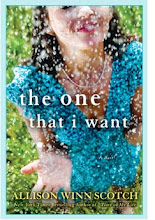
All of this talk about backstory has me thinking about my next next book. I’ve given myself a May 1st deadline to come up with the concept because for whatever reason, I tend to write best over the spring and summer (random, I know!, but I also write best when I’m in my running routine, and I’m a fair weather runner – you won’t catch me out there in long underwear and gloves), so I know that I need to get crackin’.
For me, a book begins with a character and her backstory. Whether or not I fully integrate this backstory into the actual plot is one thing, but I’ve found that it’s easiest for me to hit the ground running (I guess both figuratively and literally!) when I have a full understanding of my protagonist - who she is, where she is in her life and where she’d like to go. A lot of the plot pieces fall into place as I write – I’m not the type of writer who lays everything out from the get-go – but as long as I have a full-bodied concept of my character’s backstory, I’m set.
For example, here’s how Time of My Life came about. I was chatting with one of my closest friends, who happened to be on vacation in a city where an ex-boyfriend currently lives. She and I were having one of those conversations that you can only have with your dearest confidantes, one in which she said, “I’m here and I’m so weirded out. I mean, what if I run into him? And I can’t stop thinking about what would have happened if we hadn’t broken up.” I concurred about the weirdness, having just visited a city of one of my ex-boyfriends, and we proceeded to talk about our various life decisions and how different - for better or worse - things could have been if these decisions had been tweaked. Then, eventually, we hung up, and I went for a run. As I circled the reservoir in Central Park, our words lingered in my head, and I was instantly struck with my character, Jillian. She came to me immediately, and I had a complete understanding of where she was in her life, why she was so discontent, and how she was haunted by her “what ifs.” (I've always been fascinated by this concept: how small changes can change the entire outcome of your life - if, say, I hadn't joined the gym at which I met my husband.) So I came home and wrote what are now the first 15 pages, sent them to my agent, and voila, a book was born. My vision of Jillian never wavered from that first moment because I understood her so completely. (I should note: I didn’t understand her because I share her sentiments, only that I could understand how she had gotten to where she'd gotten.) The rest of the book was up in the air – I had a general idea of what I wanted to do but the details fell into place as I went. But my character’s backstory held steady, and for me, that is what made this book.
For more backstories, check out Backstory.com. Maybe you’ll find some inspiration. But in the meantime, keep your ears open: you never know what will spark you next story idea.
Tuesday, March 25, 2008


Monday, March 24, 2008
Backed Up With Backstory
Question of the week: I'm currently working on my second manuscript in the mystery/suspense genre, but I'm having difficulty with the back story. How important or relevant is the back story? I find that the back story really slows down the first 50 pages of my manuscript, then it takes off after the murder takes place. What can I do for this?
Ugh. Backstory. The downfall of so many writers.
I've told this story on here right? The story of how the very first draft of The Department had an additional 99 pages (yes, 99) that my agent read and said, "Why do you need this? Everything in these pages can be cut, and you can open the book on page 100." And she was right: I was able to open with a diary entry that gave readers everything they needed to know about where my character was in her life and where she was headed.
That, to me, pretty much sums up how I feel about backstory and how it can really, really bog down a book. Plots need to be in perpetual motion - they always need to be moving the reader forward (especially, I should note, if this is the second in a series - some readers will already be in the know and will quickly find themselves bored with regurgitation of the facts). When you spend 50 (or in my case, 99) pages catching the reader up to the present, you've wasted precious space - and reader attention - when you should be able to start your book immediately in the present.
Another example (and I'm not trying to pimp this, I just think it's a good example of what I'm talking about): read the first chapter of Time of My Life. I learned my lesson with The Department, and I wasn't about to axe 99 pages again. (Oh, the agony!) In this one chapter, the reader learns everything she needs to know about the protagonist to move ahead. You learn, very succinctly, that she's in a tepid marriage, that she longs for days gone by, that she misses her job, that she's insecure about motherhood, that she's insecure about just about everything...well, you get the point. Sure, I could have spent the first five chapters citing various scenarios and crafting scenes to convey all of the above, but a better way is to hit the ground running: find a way to fill the reader in on all of this info in as short a span and as few pages as possible. Don't forget that you can always do quick flashbacks via your character (which I do in TOML) as the book progresses. But it would be, in my opinion, a big mistake to get bogged down in this from the get-go. A classic mistake, but a mistake nevertheless.
But what say you, readers? Have you ever gotten bogged down in backstory and if so, how did you fix it? Or how do you avoid this trap in the first place?
Ugh. Backstory. The downfall of so many writers.
I've told this story on here right? The story of how the very first draft of The Department had an additional 99 pages (yes, 99) that my agent read and said, "Why do you need this? Everything in these pages can be cut, and you can open the book on page 100." And she was right: I was able to open with a diary entry that gave readers everything they needed to know about where my character was in her life and where she was headed.
That, to me, pretty much sums up how I feel about backstory and how it can really, really bog down a book. Plots need to be in perpetual motion - they always need to be moving the reader forward (especially, I should note, if this is the second in a series - some readers will already be in the know and will quickly find themselves bored with regurgitation of the facts). When you spend 50 (or in my case, 99) pages catching the reader up to the present, you've wasted precious space - and reader attention - when you should be able to start your book immediately in the present.
Another example (and I'm not trying to pimp this, I just think it's a good example of what I'm talking about): read the first chapter of Time of My Life. I learned my lesson with The Department, and I wasn't about to axe 99 pages again. (Oh, the agony!) In this one chapter, the reader learns everything she needs to know about the protagonist to move ahead. You learn, very succinctly, that she's in a tepid marriage, that she longs for days gone by, that she misses her job, that she's insecure about motherhood, that she's insecure about just about everything...well, you get the point. Sure, I could have spent the first five chapters citing various scenarios and crafting scenes to convey all of the above, but a better way is to hit the ground running: find a way to fill the reader in on all of this info in as short a span and as few pages as possible. Don't forget that you can always do quick flashbacks via your character (which I do in TOML) as the book progresses. But it would be, in my opinion, a big mistake to get bogged down in this from the get-go. A classic mistake, but a mistake nevertheless.
But what say you, readers? Have you ever gotten bogged down in backstory and if so, how did you fix it? Or how do you avoid this trap in the first place?
Thursday, March 20, 2008
Get Going with the Grunt Work
***Don't forget to add your name to my mailing list on the below left! I promise to only send you a note when something really important happens. I swear!***
So I was googling Jodi Picoult the other day (thanks for the tip, Kristyn!), and started reading an interview with her that detailed her road to (overwhelming) success. It turns out that just like the rest of us, Ms. Picoult was once a nobody - someone with a day job that she didn't particularly love and someone who ran home at night and tucked in her kids and then started writing. What I found most interesting about the entire article was this quote:
"'Writing,' she says, offering me a slice of home-baked lemon and buttermilk sponge cake, 'is total grunt work. A lot of people think it's all about sitting and waiting for the muse. I don't buy that. It's a job. There are days when I really want to write, days when I don't. Every day I sit down and write. You can always edit something bad. You can't edit something blank. That has always been my mantra.'"
And the reason I loved it is because of late, I've had so many people tell me that they've written half of their manuscript and that's it, or really have a great idea for a novel but haven't started, or feel stuck and can't motivate to write...(people tend to mention these things once you've been published, trust me), and I always sort of want to shake them and say, "If you don't at least attempt to write it, you'll have nothing! You may as well try, because you can't end up any worse than where you are now - with nothing!" (And I'm not referring to any Ask Allison readers! These are all people in my real life, so don't worry!) Of course, it would be wildly inappropriate to shake said people at my son's school or at a dinner party or whatnot, but the overall point is true, and Picoult really drives this point home.
Look, writing can be total grunt work. It's not always - and often isn't - fun. There are times when I'm working on a manuscript when the last thing in the world that I want to do is actually write. But if I don't write...I'm left with nothing. That blank page doesn't fill up by itself. And since I'm the only one who can fill it - and really, that's the goal of this whole deal, to fill up enough pages until I've told a good story - I better get going. Even if every cell in my body is telling me to find yet another way to procrastinate. I had half a manuscript sitting on my computer for two years until I finally finished it. And it wasn't until I finished it that my career as a novelist started going somewhere. Because until I did - until you do - there's simply no place to go. Period.
Something is always better than nothing. Even if it's one page. Even if it's 15 minutes a day. You can manage that. It's a drop in the bucket.
So if you're stalled, remember that Jodi Picoult, just like the rest of us, starts with a blank page, and she has to work her way out of that hole. If she didn't try, she'd be left with nothing...and so too will you.
So I was googling Jodi Picoult the other day (thanks for the tip, Kristyn!), and started reading an interview with her that detailed her road to (overwhelming) success. It turns out that just like the rest of us, Ms. Picoult was once a nobody - someone with a day job that she didn't particularly love and someone who ran home at night and tucked in her kids and then started writing. What I found most interesting about the entire article was this quote:
"'Writing,' she says, offering me a slice of home-baked lemon and buttermilk sponge cake, 'is total grunt work. A lot of people think it's all about sitting and waiting for the muse. I don't buy that. It's a job. There are days when I really want to write, days when I don't. Every day I sit down and write. You can always edit something bad. You can't edit something blank. That has always been my mantra.'"
And the reason I loved it is because of late, I've had so many people tell me that they've written half of their manuscript and that's it, or really have a great idea for a novel but haven't started, or feel stuck and can't motivate to write...(people tend to mention these things once you've been published, trust me), and I always sort of want to shake them and say, "If you don't at least attempt to write it, you'll have nothing! You may as well try, because you can't end up any worse than where you are now - with nothing!" (And I'm not referring to any Ask Allison readers! These are all people in my real life, so don't worry!) Of course, it would be wildly inappropriate to shake said people at my son's school or at a dinner party or whatnot, but the overall point is true, and Picoult really drives this point home.
Look, writing can be total grunt work. It's not always - and often isn't - fun. There are times when I'm working on a manuscript when the last thing in the world that I want to do is actually write. But if I don't write...I'm left with nothing. That blank page doesn't fill up by itself. And since I'm the only one who can fill it - and really, that's the goal of this whole deal, to fill up enough pages until I've told a good story - I better get going. Even if every cell in my body is telling me to find yet another way to procrastinate. I had half a manuscript sitting on my computer for two years until I finally finished it. And it wasn't until I finished it that my career as a novelist started going somewhere. Because until I did - until you do - there's simply no place to go. Period.
Something is always better than nothing. Even if it's one page. Even if it's 15 minutes a day. You can manage that. It's a drop in the bucket.
So if you're stalled, remember that Jodi Picoult, just like the rest of us, starts with a blank page, and she has to work her way out of that hole. If she didn't try, she'd be left with nothing...and so too will you.
Tuesday, March 18, 2008
The Countdown Begins
I looked at the calendar today and couldn't believe it: I'm less than seven months out from publication. Which might sound like a really long time, but in the publishing world, it's not. It's really, really not. In fact, I just sent in my copy edits (for those of you unfamiliar with the process, this is an excruciating process in which you receive a hard copy of your manuscript with red pencil all over every tiny grammatical error or non-literal word use or typo...in other words, NOT FUN!), and I should be getting galleys fairly soon. Yikes! And with galleys, so begins the big promo push.
So now, I'm engaged in that age-old debate: do I or do I not hire an outside publicist? Every single published author I've ever met has encountered this question, and even though I've been through the process before, I'm still as confused as ever. The thing is this: outside publicists are very, very costly and the truth is that you can't really quantify what exactly they do for your sales. And one of the reasons that you can't quantify this is because no one in the industry really has any freakin' idea as to what sells books. Well, sure, co-op space does (the space at the front of the store where new books are presented - publishers pay for that) and a large print run often does too because it increases visibility (though having a huge print run can also backfire), but other than that? No one really knows. A friend recently asked me if getting reviewed in Redbook, Marie Claire, etc, really helped boost sales, and I could only say, "I have no idea! In theory, I'd think so, but I have no concrete proof of this." And it's true...I'm not entirely convinced that reviews boost sales except in huge named places like People.
That said, of course you still want to receive this exposure, and thus, I'm right back into the do-I-hire-someone-else debate. I'm really excited because my in-house team is evidently doing a lot for both me and the book...but still. You hate to wake up one week after your publication date and think, "If only..." And I did feel that way with The Department, for sure, and by that point, there was little more that could be done.
Frankly, I'm not convinced that your book can do really well if you don't have a healthy print run. (Exceptions aside, which we discussed a few weeks ago.) I really believe, as do a lot of other writer friends, that if your book isn't saturating the market, it doesn't matter how many reviews you have: you're screwed. So I'm also having that chicken-egg debate: what if I hire a publicist and I have a crap print run? Then what? But maybe this publicist can get me some great clips and placements, which might excite the sales team enough to do a hard sell and thus increase my print run? (Print runs are usually based on how many books the sales team has initially sold to stores.)
Argh. Who the hell knows? It's all a toss-up, and for me, that only adds to the stress of the decision.
In the meantime, one thing that I know DOES work is emailing directly with readers. So, if you're interested, please sign up to be notified about my latest news. (I promise I'll only send a note when it's important!) See that box to your left? Yeah, enter your name there. Thanks!
So readers and authors who have BTDT, what do you think is the best thing an author can do to promote herself? Anyone hired an outside publicist and found it worth the money?
So now, I'm engaged in that age-old debate: do I or do I not hire an outside publicist? Every single published author I've ever met has encountered this question, and even though I've been through the process before, I'm still as confused as ever. The thing is this: outside publicists are very, very costly and the truth is that you can't really quantify what exactly they do for your sales. And one of the reasons that you can't quantify this is because no one in the industry really has any freakin' idea as to what sells books. Well, sure, co-op space does (the space at the front of the store where new books are presented - publishers pay for that) and a large print run often does too because it increases visibility (though having a huge print run can also backfire), but other than that? No one really knows. A friend recently asked me if getting reviewed in Redbook, Marie Claire, etc, really helped boost sales, and I could only say, "I have no idea! In theory, I'd think so, but I have no concrete proof of this." And it's true...I'm not entirely convinced that reviews boost sales except in huge named places like People.
That said, of course you still want to receive this exposure, and thus, I'm right back into the do-I-hire-someone-else debate. I'm really excited because my in-house team is evidently doing a lot for both me and the book...but still. You hate to wake up one week after your publication date and think, "If only..." And I did feel that way with The Department, for sure, and by that point, there was little more that could be done.
Frankly, I'm not convinced that your book can do really well if you don't have a healthy print run. (Exceptions aside, which we discussed a few weeks ago.) I really believe, as do a lot of other writer friends, that if your book isn't saturating the market, it doesn't matter how many reviews you have: you're screwed. So I'm also having that chicken-egg debate: what if I hire a publicist and I have a crap print run? Then what? But maybe this publicist can get me some great clips and placements, which might excite the sales team enough to do a hard sell and thus increase my print run? (Print runs are usually based on how many books the sales team has initially sold to stores.)
Argh. Who the hell knows? It's all a toss-up, and for me, that only adds to the stress of the decision.
In the meantime, one thing that I know DOES work is emailing directly with readers. So, if you're interested, please sign up to be notified about my latest news. (I promise I'll only send a note when it's important!) See that box to your left? Yeah, enter your name there. Thanks!
So readers and authors who have BTDT, what do you think is the best thing an author can do to promote herself? Anyone hired an outside publicist and found it worth the money?
Monday, March 17, 2008
Climbing the Platform, Part Deux
Question of the day: Would you consider the fiction equivalent to platform building akin to attending conferences or networking in genre specific group, for instance RWA, or entering writing contests, short story, first chapter, etc? In those instances, do you have to walk a fine line between the value and exposure of those experiences against allowing those venues to keep you from finishing the novel, or the query, to ultimately get you published?
Building a platform, whether in the fiction or non-fiction arena, is all about name-recognition, something that will set you apart from the thousands of others who do exactly what you do - i.e., write a decent-good book on a specific subject or in a specific genre - and that will give a publisher reason to choose you over the thousands of others. As far as fiction goes, as I mentioned before, having a strong platform isn't as necessary as in non-fiction: the average debut novelist probably isn't a household name, but if you are one, or if your name is at least recognizable in some circles, certainly, this will help your cause.
I'm sure that being a member of RWA and the like will help you network, which will undoubtedly help your career (and as I noted last week, having writer friends is invaluable), but I'm not sure that this is part of a "platform" in the truest definition of the word. Landing your short stories in notable journals or winning/placing in contests is...sort of. What these credits really mean is not so much that you'll sell more books because people know your name but that you're a better writer than most aspiring writers, and chances are, you'll be taken more seriously from the query letter on up.
If you're serious about pursuing your fiction - and most of you are - I do think the best thing you can do is write the best possible book and not worry about the rest. Enter contests and land short stories if they fit into your game plan, but as you noted in your question, they can distract from your ultimate goal, which write an incredible book and then sell it. There are enough landmines to worry about in this industry - don't complicate it if you don't have to. (Non-fiction is an entirely different ballgame. Then you can sweat it because yeah, you have to.)
But what say you readers? If you're aiming to be a published fiction writer, have you built your platform? If so, how? And if not, why?
(P.S. - I hope this post is coherent. I'm unthinkably exhausted from the weekend, and I'm not sure if I'm making sense!)
Building a platform, whether in the fiction or non-fiction arena, is all about name-recognition, something that will set you apart from the thousands of others who do exactly what you do - i.e., write a decent-good book on a specific subject or in a specific genre - and that will give a publisher reason to choose you over the thousands of others. As far as fiction goes, as I mentioned before, having a strong platform isn't as necessary as in non-fiction: the average debut novelist probably isn't a household name, but if you are one, or if your name is at least recognizable in some circles, certainly, this will help your cause.
I'm sure that being a member of RWA and the like will help you network, which will undoubtedly help your career (and as I noted last week, having writer friends is invaluable), but I'm not sure that this is part of a "platform" in the truest definition of the word. Landing your short stories in notable journals or winning/placing in contests is...sort of. What these credits really mean is not so much that you'll sell more books because people know your name but that you're a better writer than most aspiring writers, and chances are, you'll be taken more seriously from the query letter on up.
If you're serious about pursuing your fiction - and most of you are - I do think the best thing you can do is write the best possible book and not worry about the rest. Enter contests and land short stories if they fit into your game plan, but as you noted in your question, they can distract from your ultimate goal, which write an incredible book and then sell it. There are enough landmines to worry about in this industry - don't complicate it if you don't have to. (Non-fiction is an entirely different ballgame. Then you can sweat it because yeah, you have to.)
But what say you readers? If you're aiming to be a published fiction writer, have you built your platform? If so, how? And if not, why?
(P.S. - I hope this post is coherent. I'm unthinkably exhausted from the weekend, and I'm not sure if I'm making sense!)
Thursday, March 13, 2008
Getting By With a Little Help
...From my friends.
Today's post is over on Writer Unboxed and is all about why I think it's so important to surround yourself with writer pals. While we're on the subject, thanks to ALL OF YOU who have become one of my networks of support. I always appreciate your comments, insights and humor!
Today's post is over on Writer Unboxed and is all about why I think it's so important to surround yourself with writer pals. While we're on the subject, thanks to ALL OF YOU who have become one of my networks of support. I always appreciate your comments, insights and humor!
Wednesday, March 12, 2008
More Great Blogs
I just received a note letting me know that Ask Allison has been named one of the top 100 blogs for freelancers. Whoohoo! I'm so excited because that's the goal here: to give a little bit of perspective from someone who has BTDT.
I know that you guys are always looking for new and better resources, so if you want to check out the list and find some new blogs and sites to peruse, here ya go:
http://www.businesscreditcards.com/bootstrapper/the-top-100-freelancer-blogs/.
I know that you guys are always looking for new and better resources, so if you want to check out the list and find some new blogs and sites to peruse, here ya go:
http://www.businesscreditcards.com/bootstrapper/the-top-100-freelancer-blogs/.
Tuesday, March 11, 2008
Goodbye Dear Friends
You have been with me through thick and thin - literally - through two pregnancies; through the conception and drafting and publication of one, nearly two, books; through fall and winter and spring (though I tend to lose contact a bit over the summer); through, well, just about everything.
But our relationship is well, literally beginning to thin. It's fraying and stained and frankly, unsightly. I suspect that people are starting to comment.
So it's with much sorrow that I'm saying goodbye. I've loved you so, so much and you've been of great support.
Goodbye my beloved Gap Kids velour sweatpants. For the past six years, you've provided unimaginable amounts of comfort. But your waistbands have popped and your legs are gnarly, and well, it's all gotten a little embarrassing.
So while I love you dearly, it's time to look for something new. As I case the racks of J.Crew and yes, Gap Kids (always return to the place of your first love), know that I'll think of you fondly and smile.
(Hey readers, where do you get your favorite lounge wear? As you can tell, I'm in need of an upgrade, but I need a 30" inseam and everything other than kids wear and J.Crew petites is too long!)
But our relationship is well, literally beginning to thin. It's fraying and stained and frankly, unsightly. I suspect that people are starting to comment.
So it's with much sorrow that I'm saying goodbye. I've loved you so, so much and you've been of great support.
Goodbye my beloved Gap Kids velour sweatpants. For the past six years, you've provided unimaginable amounts of comfort. But your waistbands have popped and your legs are gnarly, and well, it's all gotten a little embarrassing.
So while I love you dearly, it's time to look for something new. As I case the racks of J.Crew and yes, Gap Kids (always return to the place of your first love), know that I'll think of you fondly and smile.
(Hey readers, where do you get your favorite lounge wear? As you can tell, I'm in need of an upgrade, but I need a 30" inseam and everything other than kids wear and J.Crew petites is too long!)
Monday, March 10, 2008
The Truth Behind The Myths
Lately, I've been running headfirst into all kinds of questions and people who seem to totally not get how this industry works or what life is like as a full-time writer. I don't blame (or begrudge) some of these people or comments...I mean, I get how you can be pretty clueless about my job if you've never dipped your toe in this arena, but still....If I'm told one more time by a person with no writing experience or background whatsoever that "I want to do what you do - work from home and make money - how do I do it?," my head is going to explode.
So, to that end, I reveal my top five myths (and truths) about publishing. Have some others? Weigh in on the comments section.
1) This job is a piece of cake/a dime a dozen/insert cliche that implies lack of ass-busting work and a dash of talent. I am, I like to think and verified by those around me, a very easy-going gal. Not a lot ruffles my feathers. But so help me God, if one more friend of a friend of a friend (no, not you dear Ask Allison readers, whom I know are at least moderately invested in your careers) writes me or calls me or stops me at some social function and says, "Ooh, how can I get in on that," as if any old Joe can do what I do...well, as stated above, head meet explosion. The truth is that there aren't a lot of industries with higher failure rates (and lower success rates), and just because you have an idea for a book or 30 pages somewhere in the dredges of your hard drive, that doesn't mean squat. It certainly doesn't qualify you to assume that what I do is easy, nor that you could just slide in and assume my career as your own. UGH. Pet peeve.
2) That Oprah Will Love My Book. Even my dear mother, whom I love to pieces, suggested at some point that, "now, all I need to do is get The Department on Oprah." Well, mom, (and everyone else!), DUH! Wouldn't that be lovely? Of course it would! But Oprah (and the Today Show, etc) are but pipe dreams for the average lot of us, so let's just be happy with the kudos and press we do receive and stop pretending that the world's most influential television figure would even care a flying fig about us. 'Kay?
3) That Film Rights are a Given. Most writers fantasize about Julia Roberts and George Clooney or Reese Witherspoon embodying their characters. (Well, they might fantasize about Clooney for entirely other reasons as well.) Most writers will be sorely disappointed. The truth is that selling a book is damn hard. Selling the movie rights is damn harder. Actually getting the movie made is damn near impossible. Sort of like making the all-star team and then being selected as MVP. It happens. (And I hope it happens to me and in the near future.) But you can't - and shouldn't - spend a hell of a lot of time worrying and/or dreaming about it.
4) That Selling Your Book = Financially Loaded. The average fiction book advance hovers in the four-digits. I have no idea why people assume that when you land a book deal, you're also on the way to easy street...but people do. I can't tell you the number of off-hand comments I get. The truth is that - while this isn't a scientific number or anything like that - I'd venture to say that 95% of first-time published writers keep their day jobs. My advance was significantly higher than the average first-timer's, and after my agent's cut and taxes...I kept right on writing for my other clients.
5) That Writers Lead Lives of Leisure. True, I do wear sweatpants just about every day. (A habit I've tried in vain to break but just can't! Summer can't get here fast enough so I can at least switch over to shorts.) But I work damn hard. In my early days, my husband called this "hustling." I had so many balls in the air that I nearly had whiplash, but in trying to establish myself, I had no other option. These days, I've slowed down a bit due to a variety of reasons, not least my two kids, but that doesn't mean that I still don't hit the ground running. I have no idea why people think writers are lazy - maybe it's the sweatpants or the failure rate? - but to them, I say, "Try my job for a month, and then report back to me." Oh yeah, see #1. Good luck with that.
So, to that end, I reveal my top five myths (and truths) about publishing. Have some others? Weigh in on the comments section.
1) This job is a piece of cake/a dime a dozen/insert cliche that implies lack of ass-busting work and a dash of talent. I am, I like to think and verified by those around me, a very easy-going gal. Not a lot ruffles my feathers. But so help me God, if one more friend of a friend of a friend (no, not you dear Ask Allison readers, whom I know are at least moderately invested in your careers) writes me or calls me or stops me at some social function and says, "Ooh, how can I get in on that," as if any old Joe can do what I do...well, as stated above, head meet explosion. The truth is that there aren't a lot of industries with higher failure rates (and lower success rates), and just because you have an idea for a book or 30 pages somewhere in the dredges of your hard drive, that doesn't mean squat. It certainly doesn't qualify you to assume that what I do is easy, nor that you could just slide in and assume my career as your own. UGH. Pet peeve.
2) That Oprah Will Love My Book. Even my dear mother, whom I love to pieces, suggested at some point that, "now, all I need to do is get The Department on Oprah." Well, mom, (and everyone else!), DUH! Wouldn't that be lovely? Of course it would! But Oprah (and the Today Show, etc) are but pipe dreams for the average lot of us, so let's just be happy with the kudos and press we do receive and stop pretending that the world's most influential television figure would even care a flying fig about us. 'Kay?
3) That Film Rights are a Given. Most writers fantasize about Julia Roberts and George Clooney or Reese Witherspoon embodying their characters. (Well, they might fantasize about Clooney for entirely other reasons as well.) Most writers will be sorely disappointed. The truth is that selling a book is damn hard. Selling the movie rights is damn harder. Actually getting the movie made is damn near impossible. Sort of like making the all-star team and then being selected as MVP. It happens. (And I hope it happens to me and in the near future.) But you can't - and shouldn't - spend a hell of a lot of time worrying and/or dreaming about it.
4) That Selling Your Book = Financially Loaded. The average fiction book advance hovers in the four-digits. I have no idea why people assume that when you land a book deal, you're also on the way to easy street...but people do. I can't tell you the number of off-hand comments I get. The truth is that - while this isn't a scientific number or anything like that - I'd venture to say that 95% of first-time published writers keep their day jobs. My advance was significantly higher than the average first-timer's, and after my agent's cut and taxes...I kept right on writing for my other clients.
5) That Writers Lead Lives of Leisure. True, I do wear sweatpants just about every day. (A habit I've tried in vain to break but just can't! Summer can't get here fast enough so I can at least switch over to shorts.) But I work damn hard. In my early days, my husband called this "hustling." I had so many balls in the air that I nearly had whiplash, but in trying to establish myself, I had no other option. These days, I've slowed down a bit due to a variety of reasons, not least my two kids, but that doesn't mean that I still don't hit the ground running. I have no idea why people think writers are lazy - maybe it's the sweatpants or the failure rate? - but to them, I say, "Try my job for a month, and then report back to me." Oh yeah, see #1. Good luck with that.
Thursday, March 06, 2008
Working Without a Net
Or a contract that is...
Question of the week: Do you always ask for a contract if the publisher doesn't mention it in your initial contacts? What if they say 'no!' Update to this question: I haven't received the contract despite an impending deadline...what should I do?
Truth told, in recent years, I've never worked for a magazine or client who hasn't offered a contract, but yes, if one isn't mentioned in the initial email or phone exchange, I would simply ask, "When can I expect the contract, as I'd like to get started on this right away." This implies that a) you have the expectation of establishing proof of assignment and terms of said assignment and b) you're still eager to tackle it but won't tackle it without documentation.
If they say "no?" I'd walk away. Because if someone firmly refuses to give you contract, even something loose like putting the terms in an email, then I'd think the publication or editor was dodgy.
That said, I certainly have started working on assignments before I'd received the actual contract, but only for clients with whom I have an established relationship. For example, I write often for a certain magazine that has very tight turn-around times and requires hard-to-nab interviews. I've been writing for this client for years: there is no doubt that they'll pay me and pay me promptly. By the time the editor gets the contract request into whomever processes the contract, I'd have long missed my chance to nail down my sources. SO. In this case, I move ahead, knowing full-well that everything is on the up-and-up. Some writers won't do this. Some insist on waiting for the written contract, and I understand why they do this, but for me, it works best to be flexible and make certain exceptions.
In your case, however, this is a first-time client (as elaborated on in the email), so I'd never proceed until something materialized. Now, with a looming deadline, I'd send her another note or better yet, pick up the phone and say something sweet yet pointed, along the lines of, "You know how excited I am about this project but I simply can't proceed without a contract. As you may know, my deadline is imminent, so in order to complete this on time, please let me know when I can expect the contract." If your editor still hedges, I'd take it as a much bigger sign of problems to come with this publication, and I'd walk.
Readers, what say you? Do you work without contracts, and if so, have you ever gotten burned?
Question of the week: Do you always ask for a contract if the publisher doesn't mention it in your initial contacts? What if they say 'no!' Update to this question: I haven't received the contract despite an impending deadline...what should I do?
Truth told, in recent years, I've never worked for a magazine or client who hasn't offered a contract, but yes, if one isn't mentioned in the initial email or phone exchange, I would simply ask, "When can I expect the contract, as I'd like to get started on this right away." This implies that a) you have the expectation of establishing proof of assignment and terms of said assignment and b) you're still eager to tackle it but won't tackle it without documentation.
If they say "no?" I'd walk away. Because if someone firmly refuses to give you contract, even something loose like putting the terms in an email, then I'd think the publication or editor was dodgy.
That said, I certainly have started working on assignments before I'd received the actual contract, but only for clients with whom I have an established relationship. For example, I write often for a certain magazine that has very tight turn-around times and requires hard-to-nab interviews. I've been writing for this client for years: there is no doubt that they'll pay me and pay me promptly. By the time the editor gets the contract request into whomever processes the contract, I'd have long missed my chance to nail down my sources. SO. In this case, I move ahead, knowing full-well that everything is on the up-and-up. Some writers won't do this. Some insist on waiting for the written contract, and I understand why they do this, but for me, it works best to be flexible and make certain exceptions.
In your case, however, this is a first-time client (as elaborated on in the email), so I'd never proceed until something materialized. Now, with a looming deadline, I'd send her another note or better yet, pick up the phone and say something sweet yet pointed, along the lines of, "You know how excited I am about this project but I simply can't proceed without a contract. As you may know, my deadline is imminent, so in order to complete this on time, please let me know when I can expect the contract." If your editor still hedges, I'd take it as a much bigger sign of problems to come with this publication, and I'd walk.
Readers, what say you? Do you work without contracts, and if so, have you ever gotten burned?
Wednesday, March 05, 2008
BTDT (Been There, Done That)
Someone recently asked me what my best advice is for newbie writers, and I wanted to inhale and ask her how long she had. I've been doing this for a long time, or at least what feels like a long time, and the truth is that there's no better experience than on-the-job training. I mean, there is no doubt that some of my lessons have been learned the hard way and frankly, that sort of lesson is invaluable...sort of like how I believe that kids have to pull themselves up from their bootstraps to really grow into themselves...but that doesn't mean that I can't pass on what I believe is my best advice. So here goes.
1) Develop a THICK - we're talking industrial-grade - skin. I was born with too much self-confidence. This, at times, has proven disastrous when I refused to acknowledge that a boyfriend (or two) might be trying to break up with me or other such scenarios. However, it has proven to be among my best assets in this industry. I honestly couldn't give two figs if a pitch or an article gets rejected. Their loss, I think. No matter how brilliant you are, you will get rejected and often in this line of work. If you don't have the stomach for it - and there's no shame in that at all (in fact, you'd be a lot wiser than I am), find something else to do.
2) Be aggressive. I'm reminded of that old cheer from summer camp: "BE AGGRESSIVE, Be, Be, aggressive. B-e-a-g-g-r-e-s-s-i-v-e. Aggressive!" You get the point. No one gets ahead in the freelance world by lobbing off on email to an editor and hoping that he/she will respond. Follow up. Follow up again. If you get a nibble, even if it's not a bite, keep pursuing it. Too many writers, in my opinion, treat editors as if they are Gods, so don't use common sense when it comes to establishing themselves. In any other line of work, you'd go after that promotion or that new job. The same is true here.
3) Be Impeccable. Too many freelancers make mistakes and their editors are there to fill in the gaps. They notice. They notice misspellings, fact errors, missed deadlines. There are too many others writers who are willing to slide into your place, and if an editor thinks you're second rate, you're also history.
4) Don't Be Afraid to Suck. Yes, this is a complete contradiction to #3. But in this case, I'm referring to fiction, not magazines. With fiction, it's entirely okay to explore your capabilities because often, you're only writing for yourself. Experiment with different voices, different points-of-view, different characters. Some will work, some won't. Nothing's wrong with abandoning your manuscript if it's crap. Chances are you learned something along the way and you'll be better for it the next time out.
5) Listen to Criticism With Open Ears (and an Open Mind). Nothing irritates me more than writers who don't think that they can get better. (Okay, that's not true, a lot of things irritate me more, but you get my point.) If you're lucky enough to have someone take enough interest in your work to offer constructive criticism, you'd be wise to shrug off your ego (get over it already!), digest the advice and then apply it to your work. Being pig-headed about it might soothe that ego, but it won't land you a book deal.
So I think those are my top tips. There are dozens of others, of course, but that's a starting point. Now it's your chance to chime in. What is your best advice to pass along to other writers?
1) Develop a THICK - we're talking industrial-grade - skin. I was born with too much self-confidence. This, at times, has proven disastrous when I refused to acknowledge that a boyfriend (or two) might be trying to break up with me or other such scenarios. However, it has proven to be among my best assets in this industry. I honestly couldn't give two figs if a pitch or an article gets rejected. Their loss, I think. No matter how brilliant you are, you will get rejected and often in this line of work. If you don't have the stomach for it - and there's no shame in that at all (in fact, you'd be a lot wiser than I am), find something else to do.
2) Be aggressive. I'm reminded of that old cheer from summer camp: "BE AGGRESSIVE, Be, Be, aggressive. B-e-a-g-g-r-e-s-s-i-v-e. Aggressive!" You get the point. No one gets ahead in the freelance world by lobbing off on email to an editor and hoping that he/she will respond. Follow up. Follow up again. If you get a nibble, even if it's not a bite, keep pursuing it. Too many writers, in my opinion, treat editors as if they are Gods, so don't use common sense when it comes to establishing themselves. In any other line of work, you'd go after that promotion or that new job. The same is true here.
3) Be Impeccable. Too many freelancers make mistakes and their editors are there to fill in the gaps. They notice. They notice misspellings, fact errors, missed deadlines. There are too many others writers who are willing to slide into your place, and if an editor thinks you're second rate, you're also history.
4) Don't Be Afraid to Suck. Yes, this is a complete contradiction to #3. But in this case, I'm referring to fiction, not magazines. With fiction, it's entirely okay to explore your capabilities because often, you're only writing for yourself. Experiment with different voices, different points-of-view, different characters. Some will work, some won't. Nothing's wrong with abandoning your manuscript if it's crap. Chances are you learned something along the way and you'll be better for it the next time out.
5) Listen to Criticism With Open Ears (and an Open Mind). Nothing irritates me more than writers who don't think that they can get better. (Okay, that's not true, a lot of things irritate me more, but you get my point.) If you're lucky enough to have someone take enough interest in your work to offer constructive criticism, you'd be wise to shrug off your ego (get over it already!), digest the advice and then apply it to your work. Being pig-headed about it might soothe that ego, but it won't land you a book deal.
So I think those are my top tips. There are dozens of others, of course, but that's a starting point. Now it's your chance to chime in. What is your best advice to pass along to other writers?
Monday, March 03, 2008
Climbing the Platform
So I posted something last week about whether or not you should have your agent land you magazine pieces, and my answer to said question was no, almost universally. But it was mentioned in the comments section that one reader was told by a perspective agent to wait to pitch magazines until she'd sold her book, the thinking being that as a soon-to-be published writer, she'd have an easier time landing gigs.
I wanted to take a second to talk about why I think this is terrible advice and why having a platform is so critical to selling a book these days. (Courtney - please note that this post totally isn't aimed at you! I just think it raised an interesting topic that I wanted to elaborate on!)
To begin with: platform: defined as a presence, ideally national, at which you are recognized in your area of expertise (maybe you're an master florist or more likely, a famous doctor) or your work (maybe your byline is in every magazine known to man).
Establishing a platform certainly raises the chicken or the egg conundrum: how on earth are you supposed to get famous if you need to be famous to get famous in the first place? Follow? In simpler terms - a lot of aspiring writers worry (partially justifiably) that they need some name recognition to get published but getting published in the first place is what will give them the name recognition. Chicken. Egg.
And that's the problem I have with the advice that sparked this whole post. These days, like it or not, it is incredibly hard to land a book deal. That's just the truth. If you're aiming to publish non-fiction (self-help, etc), you'll have almost an impossible time of it without a platform or without a co-author who has a platform. So to wait to aim for magazines until after you've landed a book deal...well, you might be waiting until you're old and withered because it likely won't happen. While a platform isn't as critical for nabbing a fiction deal (and maybe a memoir deal, though it certainly helps to be famous), it can still help immeasurably. Did the fact that I am relatively well-known in the magazine world land me my first deal? No. The manuscript did. Did it help boost my advance significantly? Without a doubt. My publisher was paying me for my connections and for the fact that I might gain more national exposure than someone who hadn't written for all of these magazines.
Building a platform isn't easy. But I think that's a discussion for another day. And one worth having. But to wait until your platform comes to you...well, foot meet trigger, and pull.
What say you readers? Has your platform (or lack thereof) helped or hindered you in your quest for publication?
I wanted to take a second to talk about why I think this is terrible advice and why having a platform is so critical to selling a book these days. (Courtney - please note that this post totally isn't aimed at you! I just think it raised an interesting topic that I wanted to elaborate on!)
To begin with: platform: defined as a presence, ideally national, at which you are recognized in your area of expertise (maybe you're an master florist or more likely, a famous doctor) or your work (maybe your byline is in every magazine known to man).
Establishing a platform certainly raises the chicken or the egg conundrum: how on earth are you supposed to get famous if you need to be famous to get famous in the first place? Follow? In simpler terms - a lot of aspiring writers worry (partially justifiably) that they need some name recognition to get published but getting published in the first place is what will give them the name recognition. Chicken. Egg.
And that's the problem I have with the advice that sparked this whole post. These days, like it or not, it is incredibly hard to land a book deal. That's just the truth. If you're aiming to publish non-fiction (self-help, etc), you'll have almost an impossible time of it without a platform or without a co-author who has a platform. So to wait to aim for magazines until after you've landed a book deal...well, you might be waiting until you're old and withered because it likely won't happen. While a platform isn't as critical for nabbing a fiction deal (and maybe a memoir deal, though it certainly helps to be famous), it can still help immeasurably. Did the fact that I am relatively well-known in the magazine world land me my first deal? No. The manuscript did. Did it help boost my advance significantly? Without a doubt. My publisher was paying me for my connections and for the fact that I might gain more national exposure than someone who hadn't written for all of these magazines.
Building a platform isn't easy. But I think that's a discussion for another day. And one worth having. But to wait until your platform comes to you...well, foot meet trigger, and pull.
What say you readers? Has your platform (or lack thereof) helped or hindered you in your quest for publication?
Thursday, February 28, 2008
Motivation, Where Are You???
So there's been some discussion on a writers' board I frequent about motivation and how to stay interested and energized day in and day out with your writing. I thought this was a fantastic discussion for the blog because I feel like I'm smacked with ennui several times a year, and I know that I'm not alone in this.
For me, the best way to deal with the blahs is to branch out into something new. In this sense, writing is no different than any other job - everyone needs to change things up every now and then. That's honestly why I started writing fiction: I just got tired of the constant deadlines of the magazine work and writing piece after piece on subjects that I already knew about. What I loved most about magazine writing when I first started out was that I was learning so damn much. I mean, if you write about a variety of subjects and interview enough experts, you're bound to soak up reams of info yourself...but after a while, especially to maximize your time to money ratio, you tend to cover similar subjects over and over...and well, that's just not the best way to feed your brain, though it does help feed your bank account.
So, I started writing fiction in my off-hours. Turned out that initially, I wasn't so great at it. But it didn't matter! It energized me, made me fall back in love with writing, and that energy carried over to my magazine assignments, which I returned to with a renewed vigor.
But now, having just been given the official sign off on Time of My Life (my editor deemed it, "perfect!"), I'm faced with diving back into the grind, and lemme tell you, it's not coming easily. I have enough time to now tackle more work but I'm dragging my feet because I'm waiting for something to jump out and inspire me. Maybe it's my next book? I dunno: I'm brainstorming ideas, but I've found that brainstorming doesn't work best for me - I just need to be struck like lightening with an idea and characters, so...eh...that's not filling too much of my time. I'm staying busy with celebrity stuff and various mag work here and there...but still, I'm weighted down with that weird feeling of being both antsy and bored.
Normally, I'd take a day or two off and kick around to renew my enthusiasm - and in many cases, I think this is exactly what works - play hooky, do something you love, take a walk - and you'll return to your computer raring to go. But in my case, I'm not sure. Honestly, I think that maybe on solution is to return to work full-blast: I find that when I'm working on a ton of stuff, I have less time to think about being bored, and thus, voila, I am less bored and more stimulated by what I'm doing.
But...eh....I don't know. I'm guessing that I haven't fully laid my characters from Time of My Life to rest, and once I've fully gestated that book, I'll be fired up to move on to something bigger and better. (Which, in the meantime, means I have a lot of time for twiddling my thumbs.)
So what do you guys do when either daily or more long-term blahs hit?
For me, the best way to deal with the blahs is to branch out into something new. In this sense, writing is no different than any other job - everyone needs to change things up every now and then. That's honestly why I started writing fiction: I just got tired of the constant deadlines of the magazine work and writing piece after piece on subjects that I already knew about. What I loved most about magazine writing when I first started out was that I was learning so damn much. I mean, if you write about a variety of subjects and interview enough experts, you're bound to soak up reams of info yourself...but after a while, especially to maximize your time to money ratio, you tend to cover similar subjects over and over...and well, that's just not the best way to feed your brain, though it does help feed your bank account.
So, I started writing fiction in my off-hours. Turned out that initially, I wasn't so great at it. But it didn't matter! It energized me, made me fall back in love with writing, and that energy carried over to my magazine assignments, which I returned to with a renewed vigor.
But now, having just been given the official sign off on Time of My Life (my editor deemed it, "perfect!"), I'm faced with diving back into the grind, and lemme tell you, it's not coming easily. I have enough time to now tackle more work but I'm dragging my feet because I'm waiting for something to jump out and inspire me. Maybe it's my next book? I dunno: I'm brainstorming ideas, but I've found that brainstorming doesn't work best for me - I just need to be struck like lightening with an idea and characters, so...eh...that's not filling too much of my time. I'm staying busy with celebrity stuff and various mag work here and there...but still, I'm weighted down with that weird feeling of being both antsy and bored.
Normally, I'd take a day or two off and kick around to renew my enthusiasm - and in many cases, I think this is exactly what works - play hooky, do something you love, take a walk - and you'll return to your computer raring to go. But in my case, I'm not sure. Honestly, I think that maybe on solution is to return to work full-blast: I find that when I'm working on a ton of stuff, I have less time to think about being bored, and thus, voila, I am less bored and more stimulated by what I'm doing.
But...eh....I don't know. I'm guessing that I haven't fully laid my characters from Time of My Life to rest, and once I've fully gestated that book, I'll be fired up to move on to something bigger and better. (Which, in the meantime, means I have a lot of time for twiddling my thumbs.)
So what do you guys do when either daily or more long-term blahs hit?
Wednesday, February 27, 2008
Paperback!
So...if you didn't feel like shelling out for the 24 bucks for the hardcover version of The Department, now's your chance to pre-order the paperback, which will be out in late April.
Snap it up from Amazon now! Come on...it's only $11! (And yes, there's a cover change which I will discuss on the blog in the future, so no, you're not looking at the wrong book.)
Snap it up from Amazon now! Come on...it's only $11! (And yes, there's a cover change which I will discuss on the blog in the future, so no, you're not looking at the wrong book.)
Tuesday, February 26, 2008
Which Comes First: The Agent or The Article?
Question of the day: when I pitch a query to a magazine, is it helpful to have my agent do it for me? I.e., is it more likely to get accepted if it comes from her?
My immediate gut answer to this is a resounding "no." I've written probably somewhere in the hundreds of articles and never once has my agent pitched one for me. The reasons for this are several: 1) most magazine articles pay, at most, several thousand dollars (the bigger magazines usually pay about $2 a word, and few places assign more than 2000 words these days, and rarely do you even get 2000 words), so really, it's not worth your agent's time to nab a couple hundred dollars from these pieces. 2) There is absolutely no reason for your agent to be your go-between. Editors aren't interested in dealing with a middleman: they want to deal directly with a polished, professional, fun, breezy writer - adding your agent into the mix just complicates things. 3) As I alluded to in #2, agents are unnecessary in this process: what lands you an assignment is coming up with a unique, kick-ass idea, crafting that into a wonderful query, then emailing it to the appropriate editor. An agent can't help you do any of the above better than you can on your own.
That said, I *do* think an agent (and/or your publicist) can help open doors when it comes to the biggies: The New Yorker, The Atlantic, even something like Modern Love in the NY Times (though I know people who have been published in that column by simply emailing in their essay, and I also know others who succeeded with the help of their publicist). Unlike the service magazines like SELF or GLAMOUR or whatnot, these magazines are harder to break into than the toughest NYC private school (which these days, can be harder to get into than Harvard...seriously), and having an agent demonstrates (fairly or not) that you're already a cut above some other writers. (And I don't mean to imply that service magazines aren't hard to break into. They are. I tried for years to crack GLAMOUR and did a joy dance when I finally did. I only mean that there's a leap, in terms of exclusivity, from these huge national magazines to the even more upper-tier, more literary mags.)
So, for the most part, my long answer to your short question is that no, you don't need your agent to land you a gig. Save that 15% for a celebratory gift when your query gets accepted.
What say you, readers? Ever used an agent to land you an article?
My immediate gut answer to this is a resounding "no." I've written probably somewhere in the hundreds of articles and never once has my agent pitched one for me. The reasons for this are several: 1) most magazine articles pay, at most, several thousand dollars (the bigger magazines usually pay about $2 a word, and few places assign more than 2000 words these days, and rarely do you even get 2000 words), so really, it's not worth your agent's time to nab a couple hundred dollars from these pieces. 2) There is absolutely no reason for your agent to be your go-between. Editors aren't interested in dealing with a middleman: they want to deal directly with a polished, professional, fun, breezy writer - adding your agent into the mix just complicates things. 3) As I alluded to in #2, agents are unnecessary in this process: what lands you an assignment is coming up with a unique, kick-ass idea, crafting that into a wonderful query, then emailing it to the appropriate editor. An agent can't help you do any of the above better than you can on your own.
That said, I *do* think an agent (and/or your publicist) can help open doors when it comes to the biggies: The New Yorker, The Atlantic, even something like Modern Love in the NY Times (though I know people who have been published in that column by simply emailing in their essay, and I also know others who succeeded with the help of their publicist). Unlike the service magazines like SELF or GLAMOUR or whatnot, these magazines are harder to break into than the toughest NYC private school (which these days, can be harder to get into than Harvard...seriously), and having an agent demonstrates (fairly or not) that you're already a cut above some other writers. (And I don't mean to imply that service magazines aren't hard to break into. They are. I tried for years to crack GLAMOUR and did a joy dance when I finally did. I only mean that there's a leap, in terms of exclusivity, from these huge national magazines to the even more upper-tier, more literary mags.)
So, for the most part, my long answer to your short question is that no, you don't need your agent to land you a gig. Save that 15% for a celebratory gift when your query gets accepted.
What say you, readers? Ever used an agent to land you an article?
Monday, February 25, 2008
Oscars...
Admin note: I have just a few more questions to burn through and answer on here, so now is a good time to send any questions my way. I'm looking for new things to blog about these days, so don't be shy! allison@allisonwinn.com
So I'm watching the world's most boring red carpet and Oscar ceremony (though Jon Stewart is actually cracking me up, so at least there's that), and am pretty brain-dead from the weekend, so I'm not sure that I have anything insightful to post.
But I will say that several book adaptations are up for Oscars, and this sparked a discussion tonight with my husband, who couldn't believe that when a movie's film rights get picked up, that's it's not an automatic cool million dollar pay-off. He said something along the lines of, "But without the writers, there would be no movie!"
To which, I'm like, "Duh. Sweetie, welcome to the writer's strike of '07...go walk the picket line!"
Anyhoo, as I mentioned to him, the real bonus of getting your book turned into film is the fact that you'll reap royalties up the booty. Sure, that initial payoff is fabulous, (I think on average, these pick-ups are probably in the six figures - correct me if I'm wrong - but it's usually just a one-time pay out), but the royalties and sales of the book go on forever. And that, at least metaphorically, is priceless. (Even though it's anything but.)
Okay, sorry for the mindless post. I'm back to watching the awards to see who assess who's the worst-dressed, and this year, for the first time in so long, there are a lot to choose from.
So I'm watching the world's most boring red carpet and Oscar ceremony (though Jon Stewart is actually cracking me up, so at least there's that), and am pretty brain-dead from the weekend, so I'm not sure that I have anything insightful to post.
But I will say that several book adaptations are up for Oscars, and this sparked a discussion tonight with my husband, who couldn't believe that when a movie's film rights get picked up, that's it's not an automatic cool million dollar pay-off. He said something along the lines of, "But without the writers, there would be no movie!"
To which, I'm like, "Duh. Sweetie, welcome to the writer's strike of '07...go walk the picket line!"
Anyhoo, as I mentioned to him, the real bonus of getting your book turned into film is the fact that you'll reap royalties up the booty. Sure, that initial payoff is fabulous, (I think on average, these pick-ups are probably in the six figures - correct me if I'm wrong - but it's usually just a one-time pay out), but the royalties and sales of the book go on forever. And that, at least metaphorically, is priceless. (Even though it's anything but.)
Okay, sorry for the mindless post. I'm back to watching the awards to see who assess who's the worst-dressed, and this year, for the first time in so long, there are a lot to choose from.
Friday, February 22, 2008
On the Mommy Track
Question of the day: A personal question, if you don't mind: everyone says that when you have a baby you can pretty much forget about writing for the first year or two, but it looks like you're handling it fine. How do you do it?
Wow, I had no idea that everyone says this, and if everyone does say that, I think it's a big old bag of hooey that might give women a reason to toss out their figurative pens when a baby comes along.
For me, a funny thing happened on the way to motherhood: I became more productive than I was pre-kids. Frankly, I can't even remember what I did with my time pre-kids. Seriously. I sometimes say to my husband, "What did we do? I mean, really, how did we fill our time??" I'm sure we found some way to fill it, but the sense of urgency wasn't there. For example, I'm writing this blog post right now because I'm eyeing the clock and see that I have exactly one hour before my nanny leaves, and I sure as hell better get every last thing done that I need to get done before dinner/bath/bedtime happens. Which is a long-winded way of saying that because I have fewer hours for my work during the day, I tend to make more of them than when I had as many hours as I wanted.
So I don't buy this theory that you can't write once you have kids. In fact, I just interviewed a TV actress who said that having kids has made her all the more creative because it's opened her heart and mind in so many ways, illuminating all sorts of things that she previously missed in the world. And I concur completely.
Look, there's no doubt that kids can take over all aspects of your life if you let them (or if you want them too). I'm not one of those moms who wants them too. I love my kids more than ANYTHING on the planet, but I still need to feed other parts of myself, so...I have help when I need it (a la, my sitter), and I pour every last thing into those hours that I can. Whether or not you can afford help, there are often ways to get a repreive during the day: organize a neighborhood sitting system with four other moms, in which each of you watches the others' kids one day a week, freeing up three days for your work. Ask a family member to drop in several times a week. Hire a high schooler on the cheap.
To buy into the theory that you can't devote time to the inner-writer in you just because you're a mom (or dad) really sells everyone (and everything) short: you, your kids, and finally, your work.
So all you moms (or dads!) out there, tell me, has motherhood made you more or less productive?
Wow, I had no idea that everyone says this, and if everyone does say that, I think it's a big old bag of hooey that might give women a reason to toss out their figurative pens when a baby comes along.
For me, a funny thing happened on the way to motherhood: I became more productive than I was pre-kids. Frankly, I can't even remember what I did with my time pre-kids. Seriously. I sometimes say to my husband, "What did we do? I mean, really, how did we fill our time??" I'm sure we found some way to fill it, but the sense of urgency wasn't there. For example, I'm writing this blog post right now because I'm eyeing the clock and see that I have exactly one hour before my nanny leaves, and I sure as hell better get every last thing done that I need to get done before dinner/bath/bedtime happens. Which is a long-winded way of saying that because I have fewer hours for my work during the day, I tend to make more of them than when I had as many hours as I wanted.
So I don't buy this theory that you can't write once you have kids. In fact, I just interviewed a TV actress who said that having kids has made her all the more creative because it's opened her heart and mind in so many ways, illuminating all sorts of things that she previously missed in the world. And I concur completely.
Look, there's no doubt that kids can take over all aspects of your life if you let them (or if you want them too). I'm not one of those moms who wants them too. I love my kids more than ANYTHING on the planet, but I still need to feed other parts of myself, so...I have help when I need it (a la, my sitter), and I pour every last thing into those hours that I can. Whether or not you can afford help, there are often ways to get a repreive during the day: organize a neighborhood sitting system with four other moms, in which each of you watches the others' kids one day a week, freeing up three days for your work. Ask a family member to drop in several times a week. Hire a high schooler on the cheap.
To buy into the theory that you can't devote time to the inner-writer in you just because you're a mom (or dad) really sells everyone (and everything) short: you, your kids, and finally, your work.
So all you moms (or dads!) out there, tell me, has motherhood made you more or less productive?
Wednesday, February 20, 2008
I've Got Nothing But LOVE for Julie Buxbaum
 So today I have a fabulous Q/A with Julie Buxbaum, whose debut novel, The Opposite of Love, is receiving a lot of attention and praise, all deserved. I wanted to interview Julie for the blog because like so many Ask Allison readers, she had a day job - she was a lawyer - before taking the leap to write a novel. And not only did she write a novel, she wrote a huge novel...and I don't mean in terms of pages, I mean in terms of advance and buzz. To cap it off, Julie is a wonderful, generous person, and it's impossible not to root for her! I hope you enjoy her answers as much as I did.
Here's a bit about the book:
When successful twenty-nine-year-old Manhattan attorney Emily Haxby ends her happy relationship just as her boyfriend is on the verge of proposing, she can’t explain to even her closest friends why she did it. Somewhere beneath her sense of fun, her bravado, and her independent exterior, Emily knows that her breakup with Andrew has less to do with him and more to do with...her. “You’re your own worst enemy,” her best friend Jess tells her. “It’s like you get pleasure out of breaking your own heart.”
As the holiday season looms and Emily contemplates whether she made a huge mistake, the rest of her world begins to unravel: she is assigned to a multimillion-dollar lawsuit where she must defend the very values she detests by a boss who can’t keep his hands to himself; her Grandpa Jack, a charming, feisty octogenarian and the person she cares most about in the world, is losing it, while her emotionally distant father has left her to cope with this alone; and underneath it all, fading memories of her deceased mother continue to remind her that love doesn’t last forever. How this brave, original young heroine finally decides to take control of her life and face the fears that have long haunted her is the great achievement of Julie Buxbaum’s marvelous first novel.
And here are Julie's answers to my questions:
1) You quit your job as a lawyer to become a writer. Have you always dreamt of being a writer and the law just side-tracked you for a few years?
I had always dreamed of one day writing a book, but for some reason didn't really consider novelist as a potential "career" choice. It took feeling completely unfulfilled as a lawyer to think seriously about how I wanted to spend all of that time--that 90% of my waking life--that was currently being wasted at a job I hated. As soon as I realized that there was nothing stopping me from pursuing my dream other than my own fear, I decided to take the leap. I have to admit that looking back, it was a crazy thing to do--just quitting cold turkey to write, when I hadn't really written anything before--but somehow, it turned out to be the best decision I've ever made.
2) When you quit, did you have a Plan B? If so, how long did you give yourself to succeed?
I didn't really have a Plan B. But I did decide when I quit the law that I had to be okay with the possibility that I could spend a year writing a book that would end up just being a pile of paper that lived in my drawer for the rest of my life. I figured regardless of what happened, the experience of writing my first novel itself would be worth it. Once I started writing, though, I became completely hooked, so I think even if I hadn't sold the THE OPPOSITE OF LOVE as quickly as I did, I would have found a way to feed the habit. I probably would have started temping as a lawyer, or maybe found some sort of part time gig, so that I could keep writing. I can't imagine a life now that didn't include finding time to write.
3) Tell me how you went about writing the book…did you quit your job, then sit down the next day and, voila, a novel?
My last day of work was a Friday, and I started working on the book that Monday. Sadly, it wasn't voila, novel, though that would have been great. My writing experience had lots of fits and starts: some great writing days, some days where I thought I should just give up and go back to my life as a lawyer, some tears, and every once in a great while that wonderful feeling that I was doing exactly what I was supposed to be doing.
4) Do you outline your plot and the book? I know a lot of writers do this…and I don't, because I like to let my characters take me where they want to take me. But part of me wonders if I'm missing out on this huge breakthrough because I neglect the outline!
I outlined for about two weeks, when I first started writing, but I was off outline within three days. The only thing that remained standing from my original conception of the novel was the opening scene and the ending. I am not formally outlining the second book because I agree with you. If you feel beholden to an outline, then your characters can't take you where they want to go, and for me that has been the most fun (and the biggest surprise) of novel writing!
5) Your book is everywhere! (Including a huge poster in the Barnes and Noble by me!) Have you been actively involved in the promotion or did Dial mostly come up with the promotional/advertising plan for you?
Thanks! I can't tell you how happy it makes me to hear that you have been seeing it around. One of these days you'll probably catch me shamelessly taking a picture of that Barnes & Noble window! I have to say I've been incredibly lucky to have the support of Dial behind me. They've done a great job with the promotional/advertising side of things. At the same time, I think it's important to do my best to get out there and promote THE OPPOSITE OF LOVE. Admittedly, that's scary and often outside my comfort zone, but I don't want to later regret not giving my book every opportunity. It sort of feels like having a child in a way.
6) A lot of writers, myself included, have found that the actual publication of the book to be the most nerve-wracking of the entire experience. Have you found this to be true? How do you deal with the pressure?
Absolutely! I didn't realize until recently how it is both utterly terrifying and thrilling to release a book out into the world. My New Year's resolution was to not ruin this experience for myself by stressing out too much. But the truth is some days I feel intense pressure, which I realize is silly and entirely self-created because I am not even sure I could articulate what I feel pressure about. On the other hand, I've been making time to just sit back and enjoy and revel in the excitement of it all. This is a once in a lifetime thing--a literal dream come true--and I'd hate to look back and kick myself for only dwelling on the nerve-wracking parts.
7) I know that you're working on book #2…we've been talking about improving your work and evolving as a writer a lot on the blog…are you doing anything differently this time around?
I fully agree with what you've been saying about making sure you are constantly evolving as a writer. I am very proud of THE OPPOSITE OF LOVE, but I sincerely hope I look back on it years from now and think about how far I've come. With my second novel, I'm trying to be more ambitious and less scared of taking risks as a writer. My process hasn't changed, but I find I am much tougher on myself this time around, which I think is a good thing.
Tuesday, February 19, 2008
On Improvement, Part Two
So last week's post on Writer Unboxed generated some interesting comments and good food for thought. Not least because I spent the holiday weekend pouring through a new book, the kind of book that you can't believe you've been reading for hours because it seems like time stood still while you were flipping each page and the kind of book that you stay up waaaaaay past your bedtime to "just read one more chapter." The book was Barefoot by Elin Hilderbrandt, and man, I just loved it. (FYI: I don't know Elin, nor do I know her agent, editor, publicist or anyone even remotely connected to her, so I'm not just saying this to pimp her book! I really and truly loved it.)
Anyway, for those of you who didn't read my post last week, the general summary is this: first stabs at novels often suck, even if you don't see this at the time, and as a writer, even a published one, you should always strive to boost your writing each and every time you step up to the plate. I sincerely feel like Time of My Life makes leaps and bounds over The Department, and well, I don't even want to think of how crappy my (unpublished) book was before that. And Suzanne, a blog reader, posted an interesting comment - or interesting to me at least - was how she rarely heard published authors saying that they could improve their work. I guess the assumption is that getting published is enough.
Maybe for some authors it is. I think we could all name a few authors who churn out books year in year out in which the names are changed and maybe the plot is slightly varied, but more or less, the author hasn't cracked his or her success code. Hey, it works for him or her, and I don't have any problem with this.
But for me, I mean, what's the point of writing - whether you're working on your still-unpublished novel or your follow-up to your bestseller - if you're not trying to one-up your skill set each time? I think that this is where we, as writers, ideally all stand on the same ground, regardless of where you are in your writing aspirations and success. Look, it sucks when your first (or second) novel doesn't land an agent or doesn't nab a publisher, but I have enormous respect for people who can dust themselves off and say, "The experience was part of this ride; this career isn't a horizontal line; next time at the plate, I might swing and actually get a hit."
All of which leads me back to Barefoot. I read it on the recommendation of someone (I can't remember who now, because I sent a friend a note thanking her for the suggestion and it turned out she hadn't suggested it...so...if whomever recommended it is out there, thank you!), and I'm now interested in going back and reading Hilderbrand's other books (she's written six). And I'm curious to see if I can tell the difference between the first one and the sixth...because I hope that if I'm ever able to eke out six novels, that readers will be able to note the difference in quality in mine. That, to me, is what marks a successful writing career, and that, to me, is a big part of what this is all about. (That said, if all of her books are as good as Barefoot, I seriously might show up on her doorstep, kneel at her feet and ask her for her secrets!)
So tell me, have you read debut novels and been blown away by future books by the same writer? Or is this whole learning curve that I subscribe to overblown? Maybe you're just born with the ability to be a good writer and if so, each and every time you knock it out of the park? (As you can tell, I have a lot of thoughts and questions on this subject!)
Anyway, for those of you who didn't read my post last week, the general summary is this: first stabs at novels often suck, even if you don't see this at the time, and as a writer, even a published one, you should always strive to boost your writing each and every time you step up to the plate. I sincerely feel like Time of My Life makes leaps and bounds over The Department, and well, I don't even want to think of how crappy my (unpublished) book was before that. And Suzanne, a blog reader, posted an interesting comment - or interesting to me at least - was how she rarely heard published authors saying that they could improve their work. I guess the assumption is that getting published is enough.
Maybe for some authors it is. I think we could all name a few authors who churn out books year in year out in which the names are changed and maybe the plot is slightly varied, but more or less, the author hasn't cracked his or her success code. Hey, it works for him or her, and I don't have any problem with this.
But for me, I mean, what's the point of writing - whether you're working on your still-unpublished novel or your follow-up to your bestseller - if you're not trying to one-up your skill set each time? I think that this is where we, as writers, ideally all stand on the same ground, regardless of where you are in your writing aspirations and success. Look, it sucks when your first (or second) novel doesn't land an agent or doesn't nab a publisher, but I have enormous respect for people who can dust themselves off and say, "The experience was part of this ride; this career isn't a horizontal line; next time at the plate, I might swing and actually get a hit."
All of which leads me back to Barefoot. I read it on the recommendation of someone (I can't remember who now, because I sent a friend a note thanking her for the suggestion and it turned out she hadn't suggested it...so...if whomever recommended it is out there, thank you!), and I'm now interested in going back and reading Hilderbrand's other books (she's written six). And I'm curious to see if I can tell the difference between the first one and the sixth...because I hope that if I'm ever able to eke out six novels, that readers will be able to note the difference in quality in mine. That, to me, is what marks a successful writing career, and that, to me, is a big part of what this is all about. (That said, if all of her books are as good as Barefoot, I seriously might show up on her doorstep, kneel at her feet and ask her for her secrets!)
So tell me, have you read debut novels and been blown away by future books by the same writer? Or is this whole learning curve that I subscribe to overblown? Maybe you're just born with the ability to be a good writer and if so, each and every time you knock it out of the park? (As you can tell, I have a lot of thoughts and questions on this subject!)
Thursday, February 14, 2008
On Improvement
I'm over at Writer Unboxed today talking about the endless room for improvement when it comes to our writing and why, if possible, you shouldn't be discouraged if you don't sell your manuscript. (Tall task, I know!)
Check it out here...
Check it out here...
Wednesday, February 13, 2008
GCC Presents: Jenny Gardiner and Sleeping With Ward Cleaver
 I know that I've been covering a lot of books recently, but hey, there are a lot of new good ones coming out, so...with that said, I'm really excited to host Jenny Gardiner, a new member of the GCC today, not least because I think her book, Sleeping with Ward Cleaver, might have one of the best titles this year. When I picture it, I actually picture sleeping with Wally Cleaver, which is a little bit disturbing, but nevertheless, the title certainly lodges in your mind and stays there. :) More seriously, the themes of this book echo similar themes as in Time of My Life, and I'm really looking forward to reading it. Sounds like it will resonate with a lot of women. Here's the synopsis:
Claire Doolittle is not a happy camper. The married mother of five seems to have lost her way in life. Swept off her feet years earlier by Mr. Right, she’s dismayed that husband Jack has turned into Mr. Always Right, and the only sweeping happening in her life involves a broom and a dustpan. Jack’s officious, perfunctory way has left fun, spontaneity and laughter at the doorstep, and Claire is beginning to wonder if she’s actually married to a modern-day version of Ward Cleaver, the stuff-shirted father figure from Leave it to Beaver sitcom fame.
Worse yet, she’s so bogged down by her overwhelming life and so turned off by the idea of getting it on with her stodgy father-figure of a husband, she’s simply blocked out all of her memories of the Claire-who-used-to-be. Cue a former fiancé, who re-enters her life when she desperately needs to figure out who she was, who she is, and who she wants to be. And if she wants to salvage her sagging marriage, or fall back on her old fiancé, who’s wooing her with promises of what could have been. Throw in a predatory hottie from Jack’s office who’s set her sights on Claire’s ho-hum husband, and you’ve got the recipe for a mid-life crisis of epic proportions.
Jenny Gardiner’s novel, winner of Dorchester Publishing’s American Title III contest, is sure to lure you into the mundane yet compelling world of Claire Doolittle and will leave you cheering for her marriage.
Here, Jenny drops by to answer a few of my standard questions:
1) What's the backstory behind your book?
I've always liked to watch people, I love to observe, pay attention to what is going on in their lives and what motivates them. And I couldn't help but notice that so many women who I remember from their wedding days, so full of hope and optimism, had settled into more of a daily grind in their marriages--life, work, kids all get in the way of sustaining that level of positive emotions you experience when you first get married. We were starting to see marriages fail, which is always so sad.
And at the same time I was really interested to see how so many women became empowered as they approached middle-age. All of a sudden their kids are getting older and more self-sufficient. Many had left jobs behind to raise their kids, so found themselves in the position of having to reinvent themselves. Sometimes having to reinvent yourself is a really awesome gift, really. It forces you to explore what it is you want out of life, what it is you think is missing.
And at the same time I started noticing this difference with women and men at that point in life--while women seemed to be blossoming, men seemed to become more set in their ways. It's ripe for conflict, in that regard.
It made me think that many men really do become Ward Cleaver-like. And I don't know about you, but the idea of sleeping with Ward Cleaver isn't really so appealing LOL. Hence the title came to me, and with all of these musings swimming about my head, I started working on this idea, and the next thing you know I had a book!
2) It seems that a lot of readers confuse fiction with real life, assuming that a novel must be an autobiography of the author as well. How many elements of your real life are reflected in your book?
There's no doubt that my sarcastic voice is the thread running through the book--I've injected that into my protagonist's head. But generally-speaking, I sort of compiled all of those things that I'd heard sitting around over drinks with girlfriends--all those enormous chasms that occur between men and women once kids come along, and incorporated them into a composite marriage. I do, however, have a parrot who poops all over my house and it makes me CRAZY!
3) A lot of my blog readers are aspiring or new authors. How did you land your first book deal?
I followed an unconventional path to publication. I'd entered the American Title III contest in the hopes of expediting getting my book in front of an editor's eyes. In general, I think entering contests is a good idea--it helps to get feedback (albeit sometimes not the most useful feedback). And if you do well enough, it *can* expedite getting your writing in front of an editor or agent, which is a pretty nice thing.
Much to my surprise my book was chosen as a finalist in the contest. For the six months following that, I had to hunker down and become a marketing maven, spending many, many hours online especially, trying to enlist support for my book in the contest from all sorts of crazy angles. Little did I know I would be laying the groundwork for marketing/publicizing my book. I was just busy trying to stay in the contest, and because of the nature of the contest, and it was sort of before contests started becoming fairly ubiquitous, people were generally pretty enthusiastic about backing me--they felt somewhat vested in the process.
In the meantime, I had prior to all of this been talking back and forth with a lovely agent who had kind of taken me under his wing. We'd been batting about some book ideas, tried to flesh things out, but he was very busy and things kept being sidelined. But ultimately he facilitated my signing with my agent, as he thought we'd be a good match-up, which we have been. At around this time is when I won the contest, which meant that I won a book deal--hugely thrilling and I just didn't realize how lucky I was that on top of all of that, I had built up a potential readership along the way.
4) I have a serious procrastination problem when it comes to tackling my fiction. What's your routine? How do you dive in? Do you have any rituals or necessary to-dos before or while you write?
When not in publicity mode I like to start writing early. I'm up before dawn, to the gym and home by 7, then we get the kids up and going, fed, lunched, to school. I come home and sit down to write then, *usually*. Sometimes I'll divert to yoga instead! I do my best writing and my best concentrating in the morning. Plus, it's far easier to do when the kids are at school, because once school's out I am driving all over the place to their various sports practices, activities, etc.
I do tend to be a pressure writer, however, and when I'm facing my deadlines, I will just hunker down and write until my brain is fried. Sometimes that means writing into the middle of the night.
I have three awesome places at home in which to write. In nice weather, I hang out with my laptop on a porch swing on the front porch. When it's cold, I sit in the living room in front of a fire. And my husband just bought me this really cozy sort of fainting couch, which is tucked away in a room where the noises of our lives -(i.e. all of my pets, the kids, the TV, the phone, etc)- can't invade my brain quite so readily.
5) Clearly, your book will be optioned for a multi-million dollar film deal! Who would you cast as the leads, if you were given creative control?
It has to be an actress with some meat on her bones and who hasn't been bo-toxed to within an inch of her life. She has to have so lifelines on her face. I sorta like Kate Winslett or Laura Linney maybe. Oooh, maybe Emma Thompson? She'd be great! I'm trying to work on the love interest...Matt Damon has the "look"--like sort of Ward-ish but also handsome. I could see him morphing from black and white to technicolor LOL.
I do tend to be a pressure writer, however, and when I'm facing my deadlines, I will just hunker down and write until my brain is fried. Sometimes that means writing into the middle of the night.
I have three awesome places at home in which to write. In nice weather, I hang out with my laptop on a porch swing on the front porch. When it's cold, I sit in the living room in front of a fire. And my husband just bought me this really cozy sort of fainting couch, which is tucked away in a room where the noises of our lives -(i.e. all of my pets, the kids, the TV, the phone, etc)- can't invade my brain quite so readily.
5) Clearly, your book will be optioned for a multi-million dollar film deal! Who would you cast as the leads, if you were given creative control?
It has to be an actress with some meat on her bones and who hasn't been bo-toxed to within an inch of her life. She has to have so lifelines on her face. I sorta like Kate Winslett or Laura Linney maybe. Oooh, maybe Emma Thompson? She'd be great! I'm trying to work on the love interest...Matt Damon has the "look"--like sort of Ward-ish but also handsome. I could see him morphing from black and white to technicolor LOL.
Monday, February 11, 2008
Q/A with Eileen Cook
 So I am just tickled pink because today I have a Q/A with one of my favorite bloggers, Eileen Cook. If you don't check out Eileen's blog, Just My Type, you should because it brings a daily dose of funny, and I adore it. Eileen's debut novel, Unpredictable, was released last week, so I asked her if I could host her here on Ask Allison because I knew that it would be an enlightening and hilarious Q/A, and she didn't disappoint. Oh, and here's a little scoop on the book, which you can order here from Amazon.
Sophie Kintock isn't crazy, she just wants her guy back. And posing as a psychic to give his new girlfriend a face reading designed to break them up isn't going overboard, is it? Don't answer that. Faking psychic powers turns out to be easy and fun, especially after a few lessons from Nick, the cute (if a bit nerdy) skeptic, who knows all the tricks of the trade. But her readings do a lot more than she could have predicted, and soon Sophie needs to figure out whether the answers lie in the stars-or in herself.
1) Where did the idea of Unpredictable come from? A lot of people mistakefiction for real life, but I take it you're not a credited psychic in reallife?
Alas- I do not have a secret life as a psychic. My husband belongs to a group called CSICOP (Center for Scientific Investigation of Claims of the Paranormal.) Are you picturing a bunch of really smart people wearing t-shirts with math jokes on them that you can’t understand? Perfect. It’s a group of skeptics that use science to investigate everything from alien abductions to the Loch Ness monster. I went with him to a conference dealing with how psychic ability can be faked. At first I thought how I could turn this to my advantage and start a new career as a psychic to the stars as a way to leverage myself into A-list parties, but I found myself going back to one question. I knew how to fake psychic skills, but I still wanted to know WHY someone would do it. Playing with that question was the beginning of the story that became Unpredictable.
2) Tell me how you got published. A lot of aspiring writers read the blog -they'd love to take inspiration from you!
I've always wanted to be a writer. My parents were both big readers and passed on the book passion to me. When I was old enough to understand the concept that someone got to be the person to write those stories I knew what I wanted to do. I took courses , went to conferences and wrote as much as possible. I was reluctant to send things out until one writing teacher asked me "well do you think publishers are just going to show up at your f*&%ing door on their own?” It was hard to argue with that kind of logic. I started to send things off and had some sales (and LOTS of rejections.) I wrote two books before Unpredictable. They're unpublished and should stay that way. People are sometimes surprised- but I didn't have any super secret publishing contacts. My agent (the wonderful Rachel Vater) found my query in the slush pile. She's a great business partner. She sold the book to Berkley and foreign rights in Russia, Germany and France. Film Rights were picked up by New Line Cinema.
3) What's your best writing/publishing tip for aspiring writers?
Read. Read a lot. Read a range of things so that you can see how different writers and different genres work. My other piece of advice is that writing with the goal of publication is a rough ride, lots of rejection, lots of emotional ups and downs. If you don't like the actual process of writing I would suggest taking up some other pursuit. Knitting is good. WIth knitting you get a sweater and no one sends you a letter that says:
Dear Knitter- Thank you for the opportunity to review your sweater. Unfortunately it is not to our taste. Other people may like your sweater, but we sure didn't.
4) What the most unpredictable thing about the publishing industry?
There are predictable things about publishing? A wise writer friend recently told me "writing is a craft, publishing is a casino." Truer words were never spoken. There are so many factors that lead to success in this industry (print runs, distribution, trends) - however the only one in your control is the writing. Despite a few short freak outs along the way I'm doing my best to keep focused on the writing.
5) Do you believe in psychic abilities? Ever have a psychic moment?
1) Where did the idea of Unpredictable come from? A lot of people mistakefiction for real life, but I take it you're not a credited psychic in reallife?
Alas- I do not have a secret life as a psychic. My husband belongs to a group called CSICOP (Center for Scientific Investigation of Claims of the Paranormal.) Are you picturing a bunch of really smart people wearing t-shirts with math jokes on them that you can’t understand? Perfect. It’s a group of skeptics that use science to investigate everything from alien abductions to the Loch Ness monster. I went with him to a conference dealing with how psychic ability can be faked. At first I thought how I could turn this to my advantage and start a new career as a psychic to the stars as a way to leverage myself into A-list parties, but I found myself going back to one question. I knew how to fake psychic skills, but I still wanted to know WHY someone would do it. Playing with that question was the beginning of the story that became Unpredictable.
2) Tell me how you got published. A lot of aspiring writers read the blog -they'd love to take inspiration from you!
I've always wanted to be a writer. My parents were both big readers and passed on the book passion to me. When I was old enough to understand the concept that someone got to be the person to write those stories I knew what I wanted to do. I took courses , went to conferences and wrote as much as possible. I was reluctant to send things out until one writing teacher asked me "well do you think publishers are just going to show up at your f*&%ing door on their own?” It was hard to argue with that kind of logic. I started to send things off and had some sales (and LOTS of rejections.) I wrote two books before Unpredictable. They're unpublished and should stay that way. People are sometimes surprised- but I didn't have any super secret publishing contacts. My agent (the wonderful Rachel Vater) found my query in the slush pile. She's a great business partner. She sold the book to Berkley and foreign rights in Russia, Germany and France. Film Rights were picked up by New Line Cinema.
3) What's your best writing/publishing tip for aspiring writers?
Read. Read a lot. Read a range of things so that you can see how different writers and different genres work. My other piece of advice is that writing with the goal of publication is a rough ride, lots of rejection, lots of emotional ups and downs. If you don't like the actual process of writing I would suggest taking up some other pursuit. Knitting is good. WIth knitting you get a sweater and no one sends you a letter that says:
Dear Knitter- Thank you for the opportunity to review your sweater. Unfortunately it is not to our taste. Other people may like your sweater, but we sure didn't.
4) What the most unpredictable thing about the publishing industry?
There are predictable things about publishing? A wise writer friend recently told me "writing is a craft, publishing is a casino." Truer words were never spoken. There are so many factors that lead to success in this industry (print runs, distribution, trends) - however the only one in your control is the writing. Despite a few short freak outs along the way I'm doing my best to keep focused on the writing.
5) Do you believe in psychic abilities? Ever have a psychic moment?
I want to believe in psychics- does that count? I love the idea of being able to have super-human abilities. I also would love to be able to fly superhero style (except for the fact that I would look really bad in those Spandex suits). I think that sometimes in our desire to find something out of this world- we overlook what is right in front of us . We're so busy playing with tarot cards we miss the real magic- how you feel when you fall in love at first sight or finding a killer pair of shoes- IN YOUR SIZE.
6) I love your blog -so chock full of random tidbits that crack me up.Where do you find them all? What sorts of things tickle your funny bone?
I have this theory that strange news finds me not the other way around. I tend to click around the internet until something catches my attention. One of the most interesting thing has been as the popularity of the blog has grown now people are starting to send me things. You know it's going to be a good day when you open your email and there is a subject line "Ransomed Jesus Video- Must See." I come from a family that has always had humor as a part of everyday life- from bad corny jokes (yes Dad I'm talking to you) to dry sarcasm. I love writers like Meg Cabot or Dorothy Parker who are able to put a fresh spin on something by using humor.
7) Your blog has thriving and healthy traffic. Any words of advice tosomeone starting out on how to build a blog audience?
A blog is a lot of work, if you want to grow an audience you have to make a commitment to posting regularly. I also advise people to look at what is the purpose of their blog. Your blog for example has great writer's advice, it gives people a reason to come back. I couldn't offer writer's advice as I don't know what I'm doing, I decided to stick with funny. To give people a place to stop by for a quick laugh in the middle of their day.
6) I love your blog -so chock full of random tidbits that crack me up.Where do you find them all? What sorts of things tickle your funny bone?
I have this theory that strange news finds me not the other way around. I tend to click around the internet until something catches my attention. One of the most interesting thing has been as the popularity of the blog has grown now people are starting to send me things. You know it's going to be a good day when you open your email and there is a subject line "Ransomed Jesus Video- Must See." I come from a family that has always had humor as a part of everyday life- from bad corny jokes (yes Dad I'm talking to you) to dry sarcasm. I love writers like Meg Cabot or Dorothy Parker who are able to put a fresh spin on something by using humor.
7) Your blog has thriving and healthy traffic. Any words of advice tosomeone starting out on how to build a blog audience?
A blog is a lot of work, if you want to grow an audience you have to make a commitment to posting regularly. I also advise people to look at what is the purpose of their blog. Your blog for example has great writer's advice, it gives people a reason to come back. I couldn't offer writer's advice as I don't know what I'm doing, I decided to stick with funny. To give people a place to stop by for a quick laugh in the middle of their day.
Friday, February 08, 2008
But Wait, There's More!
Thanks again, everyone, for your enthusiasm for my new cover. I'm still in love with it, even one day later, which is a good sign.
So, because so many of you guys are excited for the book, I posted an excerpt - the entire first chapter - on my site today.
Check it out: http://allisonwinn.com/resources/TOMLexcerpt.html, and I really, really hope you enjoy it and that it lives up to the cover promise!
So, because so many of you guys are excited for the book, I posted an excerpt - the entire first chapter - on my site today.
Check it out: http://allisonwinn.com/resources/TOMLexcerpt.html, and I really, really hope you enjoy it and that it lives up to the cover promise!
Thursday, February 07, 2008
Under Cover
So, I don't care what people say, you can sooooo judge a book by its cover. Or at least I do. I'm sure that I've passed up a ton of great books because their covers didn't grab me, but I guess that's my loss. (Or really, the author's loss because he or she didn't get the sale.) But I am a total sucker for a good, clean, grabby cover - if it nabs my attention, I'll likely pick it up, and if I pick it up and read the back and it sounds appealing, bam, I'll buy it.

So, it's with GREAT excitement that I received the cover for Time of My Life today. Because I LOVE IT!!! This is totally a book that I would reach for in the bookstore, and I'm just over the moon about it. While it's not a literal interpretation of an anecdote from the book, it really does convey the spirit of the words inside, and that's really what a good cover should do.
Swoon. Check it out! I'm in love!
Wednesday, February 06, 2008
Get Connected!
As a writer, the person or thing that I spend the most time with in my life is my computer. Sad, isn't it? That I spend more time with this inanimate object than anything else in my life? Man, that's a really heavy realization.
Anyhoo, my entire existence is basically on this thing, which is why (and no, this isn't a paid endorsement or anything) I plunked down $15 a month or so for Connected.com, which backs-up my system every night. Because if my computer decides to break up with me, at least it can't wipe me out when it leaves me.
Which gets me to thinking. I'm so reliant on technology these days, and I'd love to hear what programs you guys can't live without, both as writers and outside the writing world. Professionally, as I said, Connected is critical for me, and personally, I'm addicted to Napster. I was never a big iTunes fan because you can't transfer songs to non-iPod players, so I was a Napster fan from the start - I pay $15 a month for unlimited song access and downloading, and man, I make the most of it. I guess I could also call this a professional tool because whenever I have a block, I usually fire up some music to help me over the hump.
So tell me, what are the programs and computer tools that you can't live without? (Microsoft Word goes without saying!). :)
Anyhoo, my entire existence is basically on this thing, which is why (and no, this isn't a paid endorsement or anything) I plunked down $15 a month or so for Connected.com, which backs-up my system every night. Because if my computer decides to break up with me, at least it can't wipe me out when it leaves me.
Which gets me to thinking. I'm so reliant on technology these days, and I'd love to hear what programs you guys can't live without, both as writers and outside the writing world. Professionally, as I said, Connected is critical for me, and personally, I'm addicted to Napster. I was never a big iTunes fan because you can't transfer songs to non-iPod players, so I was a Napster fan from the start - I pay $15 a month for unlimited song access and downloading, and man, I make the most of it. I guess I could also call this a professional tool because whenever I have a block, I usually fire up some music to help me over the hump.
So tell me, what are the programs and computer tools that you can't live without? (Microsoft Word goes without saying!). :)
Monday, February 04, 2008
Well, Basically, We're Screwed
(Admin note: Blogger's spellcheck isn't working, and I'm typing on a new laptop and not used to the keyboard, so if you see misspellings, just ignore them! Thanks!)
So I had drinks last week with a very good author friend of mine, one whom I befriended after reading her first novel and sending her a note telling her how much I adored it. Turns out that we went to the same college and were in the same sorority, only, ahem, I'm a few years "wiser" (let's not say older, 'kay?) than her, so we never knew each other.
Anyway, we were sipping our drinks (okay, our teas - that's how lame we are these days - tea, not drinks), and I asked her if she's nervous about the upcoming release of her next book. Not that she should be nervous - her first book did really well and was published to much acclaim. But you know, just nervous in general because having a book published is nervewracking, period.
Her: "So nervous."
Me: Why? You've been through this before.
Her: Exactly. That's why I'm nervous. Because basically, I know that I'm screwed. (Though she might have said something fouler than "screwed." I'm paraphrasing.)
And I couldn't help but crack up. because I knew exactly what she was talking about.
Here's the thing about publishing: it is so super-exciting to have your work in print. Hell, you busted your ASS off to get it there, and it's no small accomplishment to have done so. But once you're there, you find out that writing a break-out book is nearly impossible, often -no, almost always - to no fault of your own. Which is totally fine. Not everyone needs or wants to be a best-seller. But the advance of your next book is based on the sales of your last one, so if you really want to bring home the figurative bacon (or just quit the day job), quite frankly, those sales do matter a whole damn lot. Which is why my friend and I got such a good chuckle out of her statement.
The bottom line, as I mentioned above, is that barring Oprah or The Today Show or something else major happening, your book is likely to float along at midlist, neither too high nor too low, and unless the publisher decides to push the hell out of your book (which they might - you'll know that long before your book hits stores), it's an uphill battle for eyeballs. (In my opinion, a review in People and/or EW can also really boost sales.) My friend and I tried to name a few books that really took off without expectation (i.e, without that publisher push and money behind it), and the list is short. I know that both Emily Giffin's first book and The Nanny Diaries didn't sell for huge advances and yes, they became best-sellers, and lately, the Memory Keeper's Daughter comes to mind as one that just skyrocketed in paperback. I'm sure that I'm missing others - dozens of them - but these books are the exception, not the rule.
So what does all of this mean? Hell if I know! I'm just passing on some insights from the trenches. I really, really don't want to sound like I'm complaining. I'm just stating the facts. It would be nice to think that writing the book is most of the work, but, in fact, that's just the beginning. Which isn't meant to be discouraging - you know that here at Ask Allison, I'm all for positivity! - just realistic. This book business is a tough gig, no two ways about it.
So any other break-out books you guys can think of that come to mind? I'm talking about books that really took off without a six-figure advance and the promotion and print run to guarantee a best-seller. Eat, Pray, Love, maybe?
So I had drinks last week with a very good author friend of mine, one whom I befriended after reading her first novel and sending her a note telling her how much I adored it. Turns out that we went to the same college and were in the same sorority, only, ahem, I'm a few years "wiser" (let's not say older, 'kay?) than her, so we never knew each other.
Anyway, we were sipping our drinks (okay, our teas - that's how lame we are these days - tea, not drinks), and I asked her if she's nervous about the upcoming release of her next book. Not that she should be nervous - her first book did really well and was published to much acclaim. But you know, just nervous in general because having a book published is nervewracking, period.
Her: "So nervous."
Me: Why? You've been through this before.
Her: Exactly. That's why I'm nervous. Because basically, I know that I'm screwed. (Though she might have said something fouler than "screwed." I'm paraphrasing.)
And I couldn't help but crack up. because I knew exactly what she was talking about.
Here's the thing about publishing: it is so super-exciting to have your work in print. Hell, you busted your ASS off to get it there, and it's no small accomplishment to have done so. But once you're there, you find out that writing a break-out book is nearly impossible, often -no, almost always - to no fault of your own. Which is totally fine. Not everyone needs or wants to be a best-seller. But the advance of your next book is based on the sales of your last one, so if you really want to bring home the figurative bacon (or just quit the day job), quite frankly, those sales do matter a whole damn lot. Which is why my friend and I got such a good chuckle out of her statement.
The bottom line, as I mentioned above, is that barring Oprah or The Today Show or something else major happening, your book is likely to float along at midlist, neither too high nor too low, and unless the publisher decides to push the hell out of your book (which they might - you'll know that long before your book hits stores), it's an uphill battle for eyeballs. (In my opinion, a review in People and/or EW can also really boost sales.) My friend and I tried to name a few books that really took off without expectation (i.e, without that publisher push and money behind it), and the list is short. I know that both Emily Giffin's first book and The Nanny Diaries didn't sell for huge advances and yes, they became best-sellers, and lately, the Memory Keeper's Daughter comes to mind as one that just skyrocketed in paperback. I'm sure that I'm missing others - dozens of them - but these books are the exception, not the rule.
So what does all of this mean? Hell if I know! I'm just passing on some insights from the trenches. I really, really don't want to sound like I'm complaining. I'm just stating the facts. It would be nice to think that writing the book is most of the work, but, in fact, that's just the beginning. Which isn't meant to be discouraging - you know that here at Ask Allison, I'm all for positivity! - just realistic. This book business is a tough gig, no two ways about it.
So any other break-out books you guys can think of that come to mind? I'm talking about books that really took off without a six-figure advance and the promotion and print run to guarantee a best-seller. Eat, Pray, Love, maybe?
Friday, February 01, 2008
GCC Presents: Karen Neches and Earthly Pleasures
 So I'm totally fascinated with the concept of today's GCC book, Earthly Pleasures. Of late, as I've mentioned on this blog, I've been contempating those big WHY questions - why are we here, what is our purpose, and of course, religion and God and all of that plays into it. So it's easy to see why I'd be drawn into the description of this book, which was a Notable Book Sense February pick and which Publishers Weekly called "smart, funny and appealingly unorthodox."
Here's the scoop:
Welcome to Heaven. Use your Wishberry to hustle up whatever you want. Have an online chat with God. Visit the attractions such as Retail Rapture, Wrath of God miniature golf and Nocturnal Theater, where nightly dreams are translated to film.
Your greeter might just be Skye Sebring who will advises her newly dead clients on what to expect now that they’re expired. “Heaven is like a Corona Beer commercial” she assures her charges. “It’s all about contentment.”
So different than Earth where chaos reigns. Unfortunately for Skye, she’s been chosen to live her first life. She’s required to attend Earth 101 classes, which teach all of the world’s greatest philosophies through five Beatle songs.
Skye has no interest in Earthly pursuits, until lawyer Ryan Blaine briefly becomes her client after a motorcycle accident. Just as they are getting to know each other, he is revived and sent back to Earth.
She follows his life via the TV channel “Earthly Pleasures” but discovers he has a wife as well as a big secret. Why then does he call a show for the lovelorn to talk about the lost love of his life?
In Earthly Pleasures (Simon and Schuster, February 2008, $14) great love can transcend the dimensions, narrowing the vast difference between Heaven and Earth.
Your greeter might just be Skye Sebring who will advises her newly dead clients on what to expect now that they’re expired. “Heaven is like a Corona Beer commercial” she assures her charges. “It’s all about contentment.”
So different than Earth where chaos reigns. Unfortunately for Skye, she’s been chosen to live her first life. She’s required to attend Earth 101 classes, which teach all of the world’s greatest philosophies through five Beatle songs.
Skye has no interest in Earthly pursuits, until lawyer Ryan Blaine briefly becomes her client after a motorcycle accident. Just as they are getting to know each other, he is revived and sent back to Earth.
She follows his life via the TV channel “Earthly Pleasures” but discovers he has a wife as well as a big secret. Why then does he call a show for the lovelorn to talk about the lost love of his life?
In Earthly Pleasures (Simon and Schuster, February 2008, $14) great love can transcend the dimensions, narrowing the vast difference between Heaven and Earth.
How great does this sound?? So, so great. Anyway, as always, we're lucky enough to have Karen stop by to answer a few of my usual questions. Read on for more... (and LOL at her obsession with gum - don't we all have weird piccidillos like that?)....
1) What’s the backstory behind your book?
I had this sudden thought: Lovely Bones meets Bridget Jones. , I was so excited, I felt like I’d discovered how to turn rocks into gold. Then I spoke with a publicist who said, “What a horrific notion.” Too late. I was already 70,000 words in. My agent hated it. My editor wanted to use it for kindling. I almost gave up on it. I cursed the novel many times but now it’s my favorite.
2) It seems that a lot of readers confuse fiction with real life, assuming that a novel must be an autobiography of the author as well. How many elements of your real life are reflected in your book?
I wrote this novel while I was still in a honeymoon haze. (I got married after having been single for 20 plus years.) It’s kind of a soul mate scenario: A greeter in Heaven falls in love with a mortal on Earth. I clearly had love on the brain when I wrote it.
3) A lot of my blog readers are aspiring or new authors. How did you land your first book deal?
I was VERY lucky. My first novel, Bet Your Bottom Dollar, was only the second novel I’d attempted. I’d gotten a lot of positive feedback at writers’ conferences so I queried widely and landed an agent after only a couple of weeks. After a few revisions, she sold it and it ended up being a lead title for Simon and Schuster.
4) I have a serious procrastination problem when it comes to tackling my fiction. What’s your routine? How do you dive it? Do you have any rituals or necessary to-dos before or while you write?
I have to chew Extra Watermelon gum when I write. I used to chew a weird flavor called boysenberry but Wrigley discontinued that flavor so I had a hellish week training myself to like watermelon. Now I’m hooked.
5) Clearly, your book will be optioned for a multi-million dollar film deal! Who would you cast as the leads, if you were given creative control?
Kate Hudson as my main character, Skye Sebring because she has a sunny, angelic look. Matthew McConaughey as her love interest, Ryan because he’s so good with Kate and Ryan can be cocky at times. One of the main characters is a 85-year old black woman named Caroline and I’d like to Cicely Tyson in that role (with appropriate make up of course.) God, who is female in my novel, would have to be played by Bette Midler, becasue she never takes herself to seriously.
I had this sudden thought: Lovely Bones meets Bridget Jones. , I was so excited, I felt like I’d discovered how to turn rocks into gold. Then I spoke with a publicist who said, “What a horrific notion.” Too late. I was already 70,000 words in. My agent hated it. My editor wanted to use it for kindling. I almost gave up on it. I cursed the novel many times but now it’s my favorite.
2) It seems that a lot of readers confuse fiction with real life, assuming that a novel must be an autobiography of the author as well. How many elements of your real life are reflected in your book?
I wrote this novel while I was still in a honeymoon haze. (I got married after having been single for 20 plus years.) It’s kind of a soul mate scenario: A greeter in Heaven falls in love with a mortal on Earth. I clearly had love on the brain when I wrote it.
3) A lot of my blog readers are aspiring or new authors. How did you land your first book deal?
I was VERY lucky. My first novel, Bet Your Bottom Dollar, was only the second novel I’d attempted. I’d gotten a lot of positive feedback at writers’ conferences so I queried widely and landed an agent after only a couple of weeks. After a few revisions, she sold it and it ended up being a lead title for Simon and Schuster.
4) I have a serious procrastination problem when it comes to tackling my fiction. What’s your routine? How do you dive it? Do you have any rituals or necessary to-dos before or while you write?
I have to chew Extra Watermelon gum when I write. I used to chew a weird flavor called boysenberry but Wrigley discontinued that flavor so I had a hellish week training myself to like watermelon. Now I’m hooked.
5) Clearly, your book will be optioned for a multi-million dollar film deal! Who would you cast as the leads, if you were given creative control?
Kate Hudson as my main character, Skye Sebring because she has a sunny, angelic look. Matthew McConaughey as her love interest, Ryan because he’s so good with Kate and Ryan can be cocky at times. One of the main characters is a 85-year old black woman named Caroline and I’d like to Cicely Tyson in that role (with appropriate make up of course.) God, who is female in my novel, would have to be played by Bette Midler, becasue she never takes herself to seriously.
Wednesday, January 30, 2008
The Thin Line Between Love and Hate
Question of the day: I've been very frustrated with my agent. We started working together almost a year ago, and nothing is getting done. She rarely returns my calls and emails--I hear from her once every few months. She is constantly putting me on the back burner for her other clients--it's frustrating. I understand I'm a new writer, and haven't made her any money yet, but I still expect some respect. We haven't even approached publishers yet. But she has a lot of contacts, great credits to her name and is respected throughout the publishing community so I hate to say anything. She is a big time agent and I'm lucky to have her. It just seems like she's lost interest in my work, and at this point, I'm not sure what I should do. Thoughts?
Ugh. I always hate hearing stories of how writers are mistreated by agents because a) I think it gives agents an unfairly bad reputation when many of them are responsive and generous, and b) I hate hearing how writers think that they're powerless when situations such as these do arise. (And yes, arise they do.)
So, that said, the first thing I'd try to do, if possible, is get your agent on the phone and explain how you've been feeling. She might not have any idea that you feel neglected, etc, even though it sounds like you're well-within your rights to feel that way. Alternatively, she might tell you that she's just not as excited about your work, which would really suck, but at least then, you wouldn't be in limbo and you could make a decision as to how to move on.
Barring that, I'd do the same thing via email (if you can't get her on the phone). It sound like, in essence, she's holding your work and your career hostage, and while it's always scary for authors to do, you should take the reigns to the situation. Having a negligent agent is worse than having to start looking for a new one.
Unfortunately, a lot of writers fail to understand this. In our industry, agents are the Revered Ones, the Demi-Gods, the Holders of All Power and Truths, and I've always felt that this line of thinking does writers such an injustice. YOU are responsible for your career, so if YOU'RE not being served in the manner in which you believe you deserve to be, find a way to remedy it. Agents, when true advocates for you (like mine is), are amazing resources, and it's always better to have someone in your corner than not...but if your agent is MIA or is only in your corner symbolically, then frankly, you're stranded in that corner by yourself anyway, whether or not you technically have "representation." Go out there and find someone who will go to the mats for you. You deserve nothing less.
Anyone else ever been in this situation? How do you feel about the balance of power between agents and writers?
Tuesday, January 29, 2008
Book Promo Day!
So today, I have to make mention of a few newly released books that you should get your hands on. The first, The Opposite of Love, was written by Julie Buxbaum, who has since become a friend but that's not the reason I'm mentioning it! Really! I've been psyched about this book since I first read about the sale on Publishers Marketplace. I even sent the description to my agent and said, "Doesn't this book sound kick-ass?" Cut to a while ago when I receive an email from Julie asking if I'll take a look at the book for a blurb. Now, normally I turn down blurb requests when I'm working on my own manuscript because I find that my voice can be easily swayed when I read something else (this first started showing up when I was a kid and was obsessed with Stephen King...even the way that I'd talk to myself would evolve into his "voice," not my own...which, if you've ever read Stephen King, you know can be more than a little disturbing!). But I was so freakin' psyched to get my hands on this hot little book that I made an exception. The galley arrived a few days later, and I finished it 48 hours later.
And then, of course, I happily blurbed it because as a fan of smart women's fiction, it was right up my alley. (Of course, this is ignoring the fact that I actually FORGOT to send her the intended blurb for like, two weeks, and Julie was totally sweet and gracious that I blew past her deadline.)
This book is getting A LOT of promotion. You'll see it everywhere, I promise. From what I've read, the print run is big - big enough to push it to best-seller status (as I've mentioned in the past, if you don't have a big print run, you ain't hitting those lists), and I have to say, Julie is just a fantastic person, and I'm thrilled for her. So check it out if you're a fan of women's fiction.
The second book I want to mention is The Liars Diary by Patry Francis.
Here’s the scoop on the book: “Jeanne Cross’s contented suburban life gets a jolt of energy from the arrival of Ali Mather, the stunning new music teacher at the local high school. With a magnetic personality and looks to match, Ali draws attention from all quarters, including Jeanne’s husband and son. Nonetheless, Jeanne and Ali develop a deep friendship based on their mutual vulnerabilities and long-held secrets that Ali has been recording in her diary. The diary also holds a key to something darker: Ali’s suspicion that someone has been entering her house when she is not at home. Soon their friendship will be shattered by violence—and Jeanne will find herself facing impossible choices in order to protect the people she loves.”
I don't know Patry personally, but we're members of the same writing organization, Backspace, and it was recently announced that Patry was diagnosed with an aggressive form of cancer, and thus would be unable to promote the book herself. So...a cry went out to bloggers 'round the universe to pitch in and promote it for her. She's the mom to four kids and is fighting the hell out of her cancer, so my admiration for her is a thousand-fold. Check out her website for more.
And finally, while we're on the subject of book promotion, Amazon now has a link up to Time of My Life! How cool is that? So...you know...if you want to get a jump on any pre-ordering, now's the time. :) So readers out there, heard of either of these books or are you excited for any forthcoming releases?
And then, of course, I happily blurbed it because as a fan of smart women's fiction, it was right up my alley. (Of course, this is ignoring the fact that I actually FORGOT to send her the intended blurb for like, two weeks, and Julie was totally sweet and gracious that I blew past her deadline.)
This book is getting A LOT of promotion. You'll see it everywhere, I promise. From what I've read, the print run is big - big enough to push it to best-seller status (as I've mentioned in the past, if you don't have a big print run, you ain't hitting those lists), and I have to say, Julie is just a fantastic person, and I'm thrilled for her. So check it out if you're a fan of women's fiction.
The second book I want to mention is The Liars Diary by Patry Francis.
Here’s the scoop on the book: “Jeanne Cross’s contented suburban life gets a jolt of energy from the arrival of Ali Mather, the stunning new music teacher at the local high school. With a magnetic personality and looks to match, Ali draws attention from all quarters, including Jeanne’s husband and son. Nonetheless, Jeanne and Ali develop a deep friendship based on their mutual vulnerabilities and long-held secrets that Ali has been recording in her diary. The diary also holds a key to something darker: Ali’s suspicion that someone has been entering her house when she is not at home. Soon their friendship will be shattered by violence—and Jeanne will find herself facing impossible choices in order to protect the people she loves.”
I don't know Patry personally, but we're members of the same writing organization, Backspace, and it was recently announced that Patry was diagnosed with an aggressive form of cancer, and thus would be unable to promote the book herself. So...a cry went out to bloggers 'round the universe to pitch in and promote it for her. She's the mom to four kids and is fighting the hell out of her cancer, so my admiration for her is a thousand-fold. Check out her website for more.
And finally, while we're on the subject of book promotion, Amazon now has a link up to Time of My Life! How cool is that? So...you know...if you want to get a jump on any pre-ordering, now's the time. :) So readers out there, heard of either of these books or are you excited for any forthcoming releases?
Monday, January 28, 2008
I'm Back!
Sorry for the week of silence, but, oy. The same day/night that we moved, my son came down with the stomach flu that is sweeping NYC, and well, our new place - if you smell hard enough - now slightly smells of barf. Lovely. And my daughter woke up with it yesterday. Add in sleepless nights (why do kids seem to puke only between the hours of 12-7 AM?), a dog who has let us just how he feels about our new house by occasional poops on the floor, and all of the other chaos that comes along with moving, and go figure, I haven't had a chance to blog.
But the good news is that my Time Warner guy kicked ass, so my internet has been up and running! Hey, silver lining and all of that.
Anyhoo, this is simply my way of saying that I'll be more actively blogging this week and from here on out....I'm just too brain-dead to do it today.
But the good news is that my Time Warner guy kicked ass, so my internet has been up and running! Hey, silver lining and all of that.
Anyhoo, this is simply my way of saying that I'll be more actively blogging this week and from here on out....I'm just too brain-dead to do it today.
Subscribe to:
Posts (Atom)