Here's one I don't think you've answered... how much lead time do you usually get before your deadline? Some of my editors (at websites and smaller publications) have assigned stories and set a deadline for less than two weeks later. I'm happy to get the assignment and can usually rearrange my schedule to make it work, but I feel bad asking my sources to rearrange their schedules on short notice to meet my deadline (it reflects poorly on me because they may think I've put it off until the 11th hour). Plus, sometimes I send in the story and the editor emails me back a month later asking for rewrites. Umm... if you don't have any sense of urgency in publishing it, why should I rush to write it? I'm guessing other writers have grappled with this issue, too!
ARGH!! I typed out a long response to this only to have my computer freeze and require a total shut-down. ARGH!! I'm trying this again.
Deadlines will vary wildly depending on how organized your editor is, if she had a last minute story fall through, how often the magazine/website is published, etc. That said, I'd guess that my average lead time is about three weeks to a month, which is perfect for me, as far as my planning purposes. But I do sometimes get really fast turn-around assignments - say, a week or so lead time - and on the flip side, I often get evergreen pieces that don't need to be handed in for two months.
Whenever I have a rush request for a source, I say something like the following: "I was just handed a last-minute assignment for X magazine, and unfortunately, I need to turn this around by Friday. I know that this is very last minute, but if there's any way that you would have time to talk in the next day, I'd so appreciate it. If not, I completely understand." That way, the source knows that I'm not disorganized, and it also gives lets him know that he needs to hop to it.
If you *do* get a rush deadline, don't forget that you can always ask your editor for more time. You'd be surprised how accommodating editors will be, especially if the story isn't yet schedule. (Though if it's a rush, it probably is.) As far as why editors give you these tight deadlines, then don't get back to you for a month with edits? Ugh. It happens ALL the TIME. And yep, it's annoying. I imagine it's because the story has to wind its way through the entire editorial team, but still, it's annoying. And something for which I have solution, only empathy. :)
So readers, what's your average deadline time, how do you ask sources for rush requests, and do you find editors flexible with deadlines?
Monday, March 26, 2007


Friday, March 23, 2007
Mulling Memoirs
What made you decide to turn your experience with your friend’s death into a novel, rather than write a memoir? I’m working on a memoir project, but I keep wondering if it wouldn’t be a better read as a novel based on my experiences. It might be a cop-out though, because then I could change names to protect the guilty.
Funny - I never once considered writing my life story.
For several reasons: 1) my life story isn't that interesting. These days, memoirs have to have a very strong hook to them to sell. Sure, everyone thinks they have a story to tell, but it's sort of akin to how you think your dreams are totally interesting and weird, and then when you relay them to friends, their eyes glaze over. Publishers aren't interested in your memoir unless you're like, the person who discovered the cure for AIDS in her basement or something. 2) I have no interest in putting my friend's struggle with cancer up for public consumption in the way that a memoir would. Really, that's her story to tell, and I'm not the one to tell it. And, getting back to point A, losing a close friend to cancer isn't such a unique story that I think publishers would be chomping at the bit for a memoir. At least, not as I could write it. Maybe if I had a more exotic life, and this was just one facet, then sure, but not as of now. 3) These days, you better be damn sure that every last word in your memoir is truthful (see: Frey, James), and I wasn't at all interested in telling a factual story. What I love about writing fiction is that I can pull something completely out of my imagination and find a way to make it work. I get to breathe in experiences through my characters that I've never had the opportunity to explore in my real life, and for me, that's exhilarating. The "creating something from nothing" is probably what I enjoy most about the process of fiction, and since writing a memoir offers none of this, I ain't interested.
Though...hmmm....it should would be fun to run fear into the hearts of my ex-boyfriends when the project was announced. On second thought.... :)
So, what say you readers? Why do you choose fiction over memoirs or vice versa?
Wednesday, March 21, 2007
The Cream of the Crop
Why do you think it is that some magazine writers, are more successful than the majority of magazine writers, both financially and career wise? Whenever I read about professional writers doing well, I find myself grabbing one of my cats and weeping with envy into their fur. Or I have to go and do something drastic, like weed the garden or clean behind the cooker, to get rid of my angst at not being able to be a successful writer. Throw into that, I live in the UK (horribly low pay rates) and it's enough to make the management track at the supermarket look tempting. :) I know the usual advice is 'ditch the not-so-profitable mags and go for higher paying ones' but how can you do that when you need the former to pay the bills? Is it just lack of faith on my part? A lack of faith that the bills won't get paid if I ditch the low-profit mags? Or that the more profitable magazines will take one look at my work and say: 'get back to the trades honey, you ain't cut out for this world.'
Okay, this is a big, sweeping question that I'll do my best to answer, but I'm not sure that there are indeed concrete answers to it. And that's because there are a lot of intangibles that lead to success in this business, in my opinion, not the least of which is luck. Yep, luck. Look, I'm not going to dispute that I can write a kick-ass article, because I can. And yeah, I think I'm a decent fiction writer too, but I'm not so pompous as to assume that part of the reason that I've had more success than some other writers isn't due to dumb luck. I landed a big ghostwriting gig right at the start of my freelancing career (The Knot Book of Wedding Flowers), and yes, arguably, it was my writing skills that landed me that gig, but it was also timing and sheer luck. That I happened to be getting married at the time they were looking for a writer. That I happened to pitch them a story idea at this very same time. That I'd previously happened to be hired to ghostwrite for some celebrities and the Knot wanted someone who was interested in weddings, as well as who had ghostwriting experience, etc, etc, etc. So they hired me. And from there, I landed my first national story in Bride's. It was one of my first pitches, actually. So yeah, I definitely think that some of this was due to sheer luck. Lucky me.
Now. There are many who will argue that you make your own luck, and I am among those many. (This, incidentally, is a big theme in TDLF.) I'm not sitting at home rubbing rabbits' feet, hoping that good things will happen to me. I'm going out there and creating every. possible. opportunity. in order for some of this good fortune to come my way. That means querying, querying, querying. It means being open to opportunities that you wouldn't necessarily originally be interested in. It means admitting that there might be room for improvement in your writing and seeking out classes or critique groups to bolster you.
One of the underlying commonalities that all successful writers share, I believe, is that they're a) persistent and b) unsinkable. Which means that no matter how often they're rejected, they'll keep at it, and they don't let all of these dings to their armor get them down. There's no crying in publishing. Okay, that's not true. There's plenty of crying in publishing, but there's no drowning in your tears. Because there are too many other writers who won't drown, and no one will miss you if you do. Rejection is a matter of fact in our industry, and the writers who make it are the ones who don't take it personally and who use it to push themselves higher.
So what does all of this add up to? Keep at it, keep at it, keep at it. What's your other option? Quitting? If quitting is an option, then I'd say - and I don't mean this rudely at all, only as advice to people who waver in this industry - that writing probably isn't a career for you. Because there are too many other things for you to do and be good at and be happy at than to bog yourself down in a writing career that you'd be okay walking away from. I once had an acting teacher tell me the same thing: if can think of anything else you want to do with your life, then do that, not this, and I think the same thing applies to writing. And if you can't think of anything else, then hang in there! Timing, persistence and skills will often pay off in the end.
So readers, what do you think separate the successful writers from the rest?
Tuesday, March 20, 2007
Motivation vs. Procrastination
I still don't get how you can freelance full time, write fiction, have two kids, maintain a house, promote your book, have a social life, go to the gym...and not go insane. I'm incredibly bad at time management. Do you think about time management or do you do this stuff effortlessly?How do you keep yourself motivated? Keep yourself from procrastinating?
Aw, thanks, but I'm really not a superhero or anything. As I've mentioned before, I'm hyper-organized. But I also know my limits, as well as how long things will take me. This took a long time to figure out...there have certainly been points in my career when I felt overwhelmed (or bored) because I put too many (or too few) eggs in my basket. And I think this is knowledge that can only come from experience - you have to test your own limits and see what washes out.
How do I not go insane? Well, I have fabulous child care to begin with. Again, not to repeat myself here, but I treat my job the same way that a mom who goes into an office does, and in that sense, I have a nanny Mon-Fri. Now, I spend a decent amount of that time with my kids anyway - for example, the baby can't go with my son to some of his classes, so I chill with her during those times...that's the beauty of working from home, but there's no doubt that during most of the week, I can peel off to "go to work" and get stuff done. There is NO CHANCE I could be as productive as I am without good child care, and I make no apologies for that. I also liberally employ the use of the word "no." This is something that a lot of women struggle with, and you know what? I've just come to realize that my time is too valuable, so I now say "no" to plenty of things, both work and social, that I might have begrudgingly dragged my heels to (and on) in the past. I highly recommend it - it's freed up a lot of time and mental space.
And to be honest, my social life isn't that rocking. :) I have my girl's (or is that girls'?) night dinners once a month (which are so much fun, it's like being back in college), and my husband and I have dinners out with friends or on our own over the weekends, but other than that, it's emails and occasional phone calls with friends. But I think that might be more a symptom of having two young kids than anything else. I'm sure that other parents out there can relate. I mean, given the choice, which would I rather: go out and drink a cocktail that will inevitably only make me sleepy or just go to sleep, period? I think you know the answer.
How do I stay motivated? I'm not always, to tell you the truth. Sometimes I'll just blow off days entirely because I can't seem to click away from PerezHilton.com. But what really helps is changing up what I'm working on. As I said last week, I've adored magazine writing in the past, but in the past year or so, I've found myself less interested, and thus my motivation to both query and write these pieces was really flagging. So, knowing this, I've taken the past few months to refocus on fiction, as well as my promotional work for TDLF. As with any job, switching up your tasks often helps relight your fire. And yes, I do procrastinate. But what helps is setting time limits for myself. Saying, "Okay, you can surf celebrity gossip sites until 10:30 AM, but then you have to write for an hour. After that, you can go back to surfing." Living by the clock really helps me - sort of like dieting - it allows me to "cheat," but also forces me to get back to business.
So what helps you guys stay motivated and kick your rears in gear?
Monday, March 19, 2007
Examining Essays
WIP Update: Yahoo! I wrapped up the first half of my WIP yesterday and fired it off to my agent, who said she's going to read it asap. I'm in the fortunate position of being able to query publishers on proposal, so she's going to read and we'll then talk strategy - if she likes it, we'll assess when to send it out, etc. Yay! So relieved. How are your WIPs coming along?
I have been freelancing for my local newspaper for more than 5 years. I've also had approximately a dozen articles published in The Indianapolis Star. (See links below for a few articles.) I would like to advance to the next level, magazines. I am a medical assistant in a group practice and I have nearly 25 years in the health care field. I have been considering personal essays in mainstream magazines and/or articles for trades. What are my chances? How should I proceed?
I've discussed essays in the past (so you might want to search the archives), but it's tough to make a living on essay writing alone. There just aren't a lot of outlets, much less well-paying outlets for them. And whether or not you place an essay is so subjective, you'd really be leaving your career up to a lot of luck and chance.
That said, you obviously have writing chops, so I'd recommend two things: 1) using your medical background to pitch service articles to magazines. You'll probably get steadier work this way, especially since you have a certain expertise. 2) Send out essays because, really, you have nothing to lose, but don't count on them to become a primary source of income. Again, there are thousands of essay writers out there, and so few places that essays run that the math just isn't in your favor, in terms of landing multiple and frequent assignments. That said, of course, someone has to land these slots, so give it a shot!
So, what say you readers? Are essays as hard to place as I think?
Friday, March 16, 2007
Finding the Right Balance
Random thought of the day: my husband has the flu. The knock-you-on-your-ass type of flu. I feel sorry for him, I do, and I've been playing nurse maid in an effort to get him back to health. But let me ask you...why is it that men are such whiners when they're sick??? I mean, again, I realize that he's sick, but is all of the melodrama necessary?? Must he act like he is at death's literal door? If I had the flu, life would go on: I'd still have to make my son dinner and I'd still have to make sure that the dog got out for his two poops a day and I'd still have to nurse my daughter, etc, etc, etc. And frankly, I'd probably do it without much complaining. So, dear readers, let me ask you...why are men incapable of this? (She said, all the while truly taking a tad bit of pity on her husband whose complexion right now is the color of my walls.)
Question of the day: When you were writing magazine articles (at your busiest), how many articles did you have "in the works" at one time? I'm in a position now where I have 4 articles that I'm working on and possibly a 5th (still for the trade magazine, but they keep upping my pay, so I can't complain). I'm allowing about a week per article, which includes research, interviews, writing. Is this about right or am I allowing too much time per article?
I think this is an "it all depends" answer. When I was at my busiest, I was also often really stressed and too harried for my own good...there were times when I'd have three deadlines a week, feature deadlines, I should note, and I felt like you could tug a string, and I'd come completely undone.
So, what I think you need to do is figure out what pace works best for both you and your bottom line. For example, writing four FOBs a month probably isn't going to tax you but it also might not pay the bills. Writing four features might. These days (when I'm not working on fiction), I like to have about one feature deadline a week - that's a good pace for me because I always have something in the works, but I'm not so harried that I feel like I can't get my errands done or make it to the gym. It also assures a steady flow of decent-sized checks.
Another factor to consider: even if you're writing FOBs OR features, how much time does each article take you? Some editors might require 5 sources for an FOB, which means that your per-hour rate for this story might be next to nothing, while you could write a feature on a subject for which you're well-versed in a few hours. One thing that I did learn along the way is that I had to stop taking on subjects about which I knew nothing. The learning curve was just too high, and that cost me both time and money. So what I'd suggest is that you figure out what you think you should be earning per hour, then pitch and select assignments accordingly.
Does that help? How many stories do you guys like to be working on at one time?
Thursday, March 15, 2007
Considering Credentials
You seem to be a freelancer at heart. I'm sorry I'm new to your blog, I feel as if I missed a lot. What led you do write a novel? Is freelancing and having clips a prerequisite to getting published?
Having clips and freelancing are definitely NOT prerequisites to getting your novel published. While I don't have stats or anything concrete to reference, I'm certain that there are a good deal of debut authors out there who have never been published in the magazine world at all. The only prerequisite to being published is that you write a good book. As we've chatted about before on the blog, I'm sure that my magazine experience did help me land the deal that I did, for sure. No doubt about it. It showed publishing houses that I was a pro and could handle deadlines, revisions and all of the craziness that might come my way. But was it the reason that my book sold? Nah. Because if that were the case, my first book would have sold too. And it didn't. :)
Funny that you mention that I'm a freelancer at heart because while this has definitely been true in the past, I'm now more interested in focusing on fiction. I'm paring back my freelance assignments to really hone my second book, and I'd like to reach a place where I continue to selectively choose my mag assignments but also produce on novel a year (or so).
What led me to write a novel? A few things: one, it provided a really cathartic outlet for my grief in losing one of my best friends to breast cancer, but two, and this speaks to the above point, I was ready for a break from the monotony of magazine writing. Don't get me wrong: I adore my editors and really dig a lot of the assignments that come my way, but if you speak to a lot of long-term mag writers, many of them will tell you the same thing - that after a while, you run out of subjects that really hold your interest because you feel like you've covered just about everything. The stories I still enjoy are those in which I'm learning something, and if it's just the same-old, same-old, it gets dull, as with any job. Fiction allowed me to explore new skills and new writing territory, and I found it - and continue to find it - really exhilarating.
So readers, why do you write fiction? And is being published prior to writing a novel imperative?
Wednesday, March 14, 2007
Aiming for the Stars
I was encouraged by an editor who liked my writing style to pitch a department piece to break into the mag (I don't have many clips beyond the small pubs for which I'm on staff as an editor). Assuming all goes well and I dazzle her (which I plan to!), I will definitely follow up with additional story ideas. My question is should I prepare 3-5 more FOB pitches, or go for the big one and pitch a feature or two (she handles both)? In other words, is nailing one short assignment enough to prove myself worthy of feature consideration? And if I decide to pitch another section of the mag, will it help to name-drop that I recently worked with this editor even if the piece hasn't run yet?
Two good questions here. For the first, I'm inclined to say that it doesn't matter: you should pitch the ideas that you think are strongest, or hell, why not pitch them all? If you're dying to break into features asap and have a great story idea, go for it; once she knows your name, you'll at least get a more attentive answer. Will she assign it? I'd say that if it's a good fit for her, she probably would. That said, there's really no way to know, so I wouldn't consider this an either/or thing: pitch everything because proving yourself to an editor is an on-going process, and just because you'd rather write features doesn't mean that you shouldn't (or can't) be writing FOBs along the way. Does that make sense?
As far as writing for another section of the mag, this is how I handle things. I usually ask the editor I'm working with if she is the appropriate editor to pitch X to. If she's not, she almost always gives me the name of the editor who is, and I can then say to this editor, "So-and-so suggested that I contact you about TK story idea." It gives me an in without being presumptuous. Of course, if your experience with your current editor is positive, I don't think it will harm you to name-drop, but it's always nice to have said editor's permission to do so. (But again, I really don't think it's that big of a deal.) Besides, your current editor might just put in a good word for you with the new editor, which is always a good thing.
So, how do you guys handle moving from FOBs to features? Is one story enough to make the transition?
Tuesday, March 13, 2007
How to Find a Good Editor
I’m ready to send queries to agents for my first novel. The novel is as tight as I can make it but I need someone v. cheap to correct the grammar, punctuation etc… (English isn’t my first language.) Would you have suggestions on how to go about this?
The only way to find a reputable editor is to ask around. Which is why I'm posting this for you! :)
If folks out there have worked with a good editor, please let this reader know.
That said, while I'm certainly not advocating that you send in your ms with errors, I do think that agents will give you the benefit of the doubt if they find an errant comma or misspelling. Just so you don't have a total heart attack if you find a period out of place after sending it in. Hell, even after my ms was bought and read (and corrected) by dozens of people, we still found errors in the galley. So yes, get it as tight as you possibly can, but most importantly, get the writing as tight as you possibly can. That's really what an agent will look for.
Know a good editor? Pass it along here.
Monday, March 12, 2007
Hey Editor - Where the Hell Are You??
WIP update: I'm thrilled to report that I hit page 150 on Friday. Not just thrilled to hit that page, but because I've really pulled together the first half of the book and think it's all really clicking now. This week, I'm going to revise these pages again - I have a few sections that I still want to strengthen - and get it in shape to pass to my agent when she's back in town on Friday. How goes your work?
Question of the day: What do you make of editors who express interest in an essay or query and then go MIA? I had an editor commission a piece last fall with a fairly short turn-around time. I beat the deadline, then never heard from her. I keep following up every month or so asking about getting a kill fee or getting it published, but she always says she'll check with the other editors and that she'd love to get more queries from me, but I never get a definitive answer when I query with other projects or ask about the status on my old article. When is it time to write her off and submit the article elsewhere?
Ugh, isn't this the worst?? Okay, here's what I'd do.
First of all, it's important to remember that editors do not hold all the power. It's easy to be intimidated by them because yes, they are the gate-keepers and do ultimately determine whether or not you're published, but at the end of the day, they're people, just like us. Really. When I first started out, I, too, was cowed by their presence, but now that many of these editors have become friends, I really can state with authority that while I love 'em, they're certainly not on a higher plane than we are.
So remember that.
With that in mind, I'd send this editor an email saying, "I'm so glad that you expressed interested in my story, however, since I haven't yet been paid and since you haven't yet confirmed that you'll be running it, please let me know if you intend to use said story, as it's a timely piece, and I'd like to place it elsewhere if not. Please let me know by X date." This gives both of you a deadline - her, to make a decision, and you, to move on.
Now, if she had already paid you, it would be a different situation. Once you've been paid, they've fulfilled their end of the contract...they're not under any obligation to actually publish the piece. I can recall several time when I've actually been paid in full and never had the article run. That's just what happens in the magazine world when hot topics suddenly become cold and vice versa.
Good luck. I hope you get both paid and a published story!
So readers, what would you do in this position? And what have you done when you've found yourself in this position?
Friday, March 09, 2007
Dear Editor: Is This a Clip?
I've read (or think I've read) about new writers using letters to the editor as published clips. What's your take on this? Is this a legitimate practice, or one of those new writer pipe dreams?
Noooooo!!! Don't do this.
Letters to the editor are in no way true clips. True clips are articles that you've researched and written and for which someone has contracted you (and should be paying you as well, but I know that some writers will write for free - a practice I really disagree with - but won't argue here). LTTE are not. If anything, sending your published letter to the editor only sends a clear signal that you haven't been published elsewhere or don't have anything better to offer. If LTTE counted as published clips, then everyone from my grandmother to a second-grader could be considered a published author, and sorry, they're not.
Please. Do. Not. Do. This.
Thursday, March 08, 2007
I'm Unboxed Again!
Thanks to everyone who emailed or posted questions! I'm so excited to get back to answering them...and if you haven't sent one my way but have a conundrum, go ahead and press "send!"
Today's post is at Writer Unboxed, where I'm now a monthly contributor. It's all about separating fact from fiction when working on your novel and how writing something that is too close to home might come bite you in the ass. Check it out.
Back tomorrow with more answers to your wonderful questions!
Wednesday, March 07, 2007
Who Has Questions?
Because I might have answers....
I can't believe it, but I've burned through every last question that you wise folks have asked. So either a) I've taught you everything you need to know or b) the students have become the masters and you no longer need me. :)
That said, if you're lurking out there and need something answered, send it my way! That's what keeps this blog rolling. Don't be intimidated - I'm nice, really!
Tuesday, March 06, 2007
Getting a Feel for Film Rights
Can you discuss how film rights work? Do you have a different agent who handles them? What are the chances that film rights sell?
Ah, film rights, the ultimate dream of most writers out there. (Until they wreck your vision of it by casting Colin Farrell when you were more thinking Tom Hanks.)
Film rights are tough on several counts: 1) they're not always an easy sell. We have some things in the work for TDLF - and we've had some other things in the work for a looooong time - and who knows what will pan out. You can't pin your hopes on selling film rights. (If and when something pans out for me, you guys will be the first, well, the second after my husband, to know.) 2) Even if you sell those rights - usually in an option format, meaning they "option" the rights to your book for a certain amount of time but aren't under any obligation to actually make the film - there's still a slim chance that you'll ever see your work on the silver screen. Why that is, I'm not entirely sure, but I'm guessing that studios and production companies don't mind shelling out money to retain the possibility that they might want to make the movie, but when push comes to shove, they don't want to shell out to make the actual movie. And there are a variety of factors that go into this: landing the right actors, whether or not your demographic will show up at the theaters, whether or not execs think the story will sell, etc.
As far as agents, no, I don't have a separate agent who handles film rights, but MY agent has an agent who handles film rights. How it works is this: film agents can pick and choose which projects they want to represent, much like a literary agent can. Only this time, I'm not the one shopping the book, my agent is. So she farms it out to film agents she thinks are good matches, and then it's in their hands as to whether they say yes or no. My agent does deal with production companies more directly, however. They come to her and say, "Hey, I'm interested in TDLF; can you send it my way?," and she does.
So that's how it all works. Questions? Thoughts? Something I left out?
Monday, March 05, 2007
What I'm Doing Now to Pay Off Later
WIP update: I'm really happy with my progress - up to page 117 on my revise, and my goal last week was only page 100, so I'm ahead of the game. This week, I want to finish revising up to page 150 (where my draft ends), and then hopefully crank out another 10-20 new pages. The goal is to be at about page 175+ by the time my agent returns from her honeymoon. We'll see. So...how goes it with your WIPs?
A few people wrote me to ask what sort of PR stuff I'm doing right now for the book. I know that I glazed over this in a post last week, so I thought I'd elaborate. From what I understand, a lot of the PR work really will come once the book is released - going around to a lot of bookstores and introducing myself (with the hopes that this might draw attn from the staff to the book), signing stock, doing interviews that my agent says will inevitably happen, and I dunno what else. But I've steeled myself to be supremely stressed and busy. Blech.
Right now, here's what I have going on, in terms of the PR stuff: I have a bunch of Q/As for blogs and websites that I have to put some thought into and answer (thanks to anyone who has asked! I'm flattered and grateful); I'm redesigning my website with a professional (as opposed to the half-assed job that I created myself), so that's going to take some time this week, and I'm hoping to have it up soon; I'm writing the Reading Group Guide that HarperCollins offers on their site for book clubs; I'm brainstorming essay ideas and drafts for my publicist to submit to a variety of places such as the Lives column in the NY Times Magazine; I'm busy reaching out to libraries, readers and breast cancer causes on places such as MySpace and via their own blogs, etc; I'm putting the finishing touches on an essay that I wrote about my friendship with Lizzie for the June issue of Fitness; I'm checking in with writers I know who read the galley to see if they've been able to place any reviews in shorter-lead mags/sites/newspapers.
Hmmm, I'm sure that there's more, but those are the things that spring to mind right now...
Authors out there, what did you to at this stage (a few months out) to help your own PR plan?
Friday, March 02, 2007
When the Mail Ain't Coming
Have you seen this article? http://gawker.com/news/magazines/do-magazines-invent-letters-hell-yes-239670.php What do you think?
Hmmm, yes, I had seen it because it was the talk of several forums I frequent. For those of you who haven't or who are too lazy to click on the link, Gawker is reporting that a lot of magazines invent their letters. I'm one of the few freelancers who has never worked on staff anywhere, so I can't speak with certainty about the veracity of this, but some of the writers I know said that this isn't that unusual of a practice.
Which, I guess, leads me to ask: why??? I mean, if magazines aren't getting enough reader letters, maybe they should take this as a sign that readers don't care so much about the letters section and axe it altogether. It seems odd to me that they'd go through the effort of fabricating an entire section - a section that largely depends on their readers - rather than realize that maybe readers just don't give a damn.
I also certainly think that this expose (for lack of a better word) undermines the already sketchy leg of authority on which some magazines stand. What does this mean? Well, it's fairly well-known in the freelancing circles that a few magazines (which I won't name) make up quotes and sources when they can't find ones that suit their purposes. (Note: I don't write for any of these magazines, partially because of this reason, so please don't leap to judgment about any and all mags...my editors, including mags such as Women's Health, Self, Parents, Cooking Light, Woman's Day, Family Circle, Hallmark, etc, all put the stories through a rigorous fact-checking process.) As a writer, I can almost always tell when a quote has been made up...they're the ones you read and think, "I can't believe that they found a half-Asian, one-quarter Hawaiian 33 year-old mother of triplets who lives in Wichita, KS and is a former beauty queen who happens to have an IQ over 200 yet has found herself homeless after burning through her inheritance from both parents who died in a freak lightening accident." And the story just happens to be on racially-mixed moms of multiples who live in the Midwest and whose good fortune turned around on a dime. Okay, I'm exaggerating, but you get my point. If a quote is really, really, really too good to be true, in a few magazines, unfortunately, it is.
In fact, I remember a friend was trolling for quotes from parents who would go on record saying that their sex life had gotten hotter after their kids were born. Ha! Every person wrote her back and said, "er, you're kidding, right??" And she knew it was a total joke because how on earth was she going to find the maybe one person who thought that newborns were a turn-on, but her editor insisted that these people were out there. So my poor friend kept searching and searching to no avail. Now, I have no idea what happened with that story, but if it were being written for a few of the mags that invent quotes (which it wasn't), the editor might have just pulled Jane Smith, she who finds spit-up and sleepless nights arousing, out of thin air.
So...getting back to the original question. What do I think of the fact that magazines make up letters? Well, I just think it further undermines the idea that journalists are all too often happy to play fast and loose with the truth. 95% of us aren't.
So what do you guys think of the Gawker piece? Am I jumping to conclusions about its implications?
Thursday, March 01, 2007
When a Source Wants a Preview
I'm curious how you handle sources who want to see the final version of a story before it goes to print. I've had one particular source who has been really insistant on it, and I don't know what to tell him.
Ugh, isn't it the worst when sources become pests? (Most don't, however, and are nothing but helpful and lovely.) I had one who would just NOT leave me alone, and finally, I had to send him a very curt email telling him to take up whatever else he needed with my editor. And I then blocked his email addy.
Source requests to see the final article actually aren't that unusual - they often don't understand that it's not within our right to show it to them. So, when a source asks me to email them the copy, I always simply tell them that while I can't do that, what will happen is that a fact-checker will be in touch to go over any and all pertinent quotes, and that they can rest assured that they'll have a chance to review what they said. I empathize, I do. I just did an interview about TDLF, and I'm 100% certain that I said a few things that will make me sound like an idiot, as I stumbled my way through some answers. But that doesn't mean that I (or a source) get to impose some sort of control over the story or the editorial process.
If your source isn't placated by the old "fact-checker will be in touch" route, I suggest you simply refer him to your editor, telling him you don't have permission to share the story, but the editor might be able to help. Let your editor do the dirty work - it's not your obligation to do so.
So readers, how do you handle pushy sources?
Wednesday, February 28, 2007
Booking Book Tours
Hey peeps - just wanted to give a plug to my friend, Kristy Kiernan, whose book, Catching Genius, goes on sale next week!! Yahoo!! For more on the book, check out Larramie's Seize a Daisy blog this week.
I've had a lot of people write to ask if I'm doing a book tour, so I thought I'd pass along some info that I've gleaned about book tours.
It's interesting, just after the comment, "You have to get on Oprah!," (Well, gee, really??? Doesn't every author on the planet - save for one or two - want to get on Oprah?? Not as easy to do as people seem to think.), people say, "So, are you going on a tour?"
So here's the deal with book tours: publishing houses rarely pay for debut authors to go on tour. There are definitely exceptions, such as my fab friend, Laura Dave, but for the most part, the house isn't going to shell out money for an unproven author. Which actually makes a lot of sense to me. I mean, who is going to show up to buy a signed book from someone whom they've never heard of? And to further this point, how many of you guys would show up for a book signing of a random Joe Schmo? Actually, how many of you guys go to book signings period? See where I'm going with this? The numbers aren't high.
That said, debut authors often have signings in places where they know they can generate a decent crowd, and to that end, I am doing a small tour, albeit in cities where I have built-in connections. My publicist told me that bookstores really don't want to waste their time if you can wrangle 50 people to show, so that's our barometer. But the publisher doesn't pay for my travel, I do. I'm fortunate to be in a position where I can do this, but some authors can't, and so they don't. And truthfully, I don't really think this is a big ding in their promotional plans. The jury is out on if tours really bolster sales - a lot of authors and publicists don't think they do - so touring is really a question of how motivated you are. One way that a tour may help is that when an author visits a city, the publicist (if she's good) will alert all the media outlets and you might get a lot of coverage in the papers and such. I believe that this is how a few of my author friends hit bestseller lists in various cities that they visited.
So...how effective do you think touring is? And why is the tour-question so common?
Tuesday, February 27, 2007
Promotional Pushes
I was wondering if your freelancing/networking with mags, and writing for Redbook helped get you there? Is this something that maybe an agent, or a publicity person does after the book has sold--do you have a publicity person or is it up to you to promote the book? Does a publicity person or do you contact the mag and pitch your book to them? Do you do this for other mags so they can blurb/publish something about your novel in order to get the word more out?
A couple of different questions here and a couple of different answers, so let's break it down.
In terms of Redbook (in case you didn't see the news last week, TDLF was selected as Redbook's Book Club pick for the month of May), the peeps at Harper handled this entirely. I've been lucky enough to have a stellar team of people working behind the scenes to garner publicity for the book, and in this case, the subsidiary rights folks - the same people who manage foreign rights - are the all-stars responsible for selling first serial rights to Redbook. I feel particularly fortunate because it seems like it's really rare to read excerpts from novels in mags these days, so my hat is really off to the subsidiary rights dept at Harper. Did my experience writing for Redbook help? I really don't think so. My editor is currently on maternity leave, and while I did shoot an email to the book editor there, I don't know her and I didn't hear back from her...so I really think this was just a happy accident: that I've written for them in the past and that they selected my book.
And the reviews in Cosmo, Marie Claire and a few others also really had nothing to do with me. They all had to do with a) I guess the fact that the book will appeal to the demographics of these various magazines and b) the fact that I really have a super-duper team at Harper and a fantabulous agent who also helped with the PR by calling various editors and writers whom she knows.
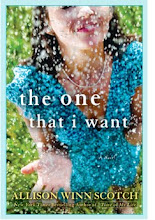
How does this all work? Well, we got the galleys back in December. And from there, the folks at Harper sent out a blanket mailing to all of the long-lead editors. (Newspapers and weeklies, with the exception of People and EW, all get copies of actual books when we get them in a month or so. People and EW got galleys.) My publicist then follows up, follows up, follows up. And hopefully, one or more editors bite. We've been very fortunate in the coverage we've received, and I really don't know why, other than to say that I guess the book is connecting on some level and to credit my savvy team once again. They put together a good Q/A with me and a sharp press release, and this must have made the book pop out among the hundreds of other submissions that these editors receive. Oh, and props to the art dept too because the cover is getting a lot of positive feedback, and as consumers, not just writers, we know that covers help sell (and evidently, move galleys to the top of an editor's stack).
Now, that said, certainly, my connections at other magazines have helped. For example, I've written for Fitness before, and my lovely editor there read the book (and enjoyed it!), and asked me to write an essay for the mag to coincide with the release. (Right now, it's slated for the May issue, but I have a sneaking suspicion that it might get bumped to June.)
And, as any author will tell you, even when your publicist is fabulous, the onus still falls on you much of the time. So I've been doing Q/As with websites and blogs, and yes, following up with a lot of my own editors to garner even more attention and mentions. Because ultimately, my publicist has a slew of other books to promote, and I only have mine. End of story.
Make sense?Monday, February 26, 2007
Progress?
So...how are we doing with our WIPs? I'm happy to report that I'm now up to page 75 on mine, which is exactly where I wanted and needed to be to date. My agent is leaving on her fabu-honeymoon, and I've promised her the first half of the book (about 150 pages) when she returns. So, as of now, I have about three weeks to revise/rewrite/overhaul the remaining 75 pages. And I think that's totally do-able. My goal is to have gotten to page 100 (at least) by the end of this week.
What is yours?
I'm sorry I'm not answering a question today. I am SOOO farking tired. (Yes, farking is my feeble attempt to curb my swearing, as my two-year old now repeats every. single. thing. we say, and it's high time that my husband and I clean up our language. I, however, am much more successful than he is at this, and I live in fear of what my son might blurt out on his first day of preschool in September. Thus, my attempt to get my husband to swap in non-swear words for similar sounding, but much worse, actual swear words.) Anyway, I went to the gym late last night, and as a result, I couldn't get to sleep, despite the Oscar's best attempts to put me to sleep. Wow, was that a boring ceremony or what?? I was up almost the entire night - hearing my horrid upstairs neighbors tromp about (despite REPEATED!!!!! notes and discussion asking them to be a little more aware of the fact that they sound like 6000 pound elephants) and then hearing various people shovel snow off the sidewalk in the middle of the night. WHY??? I ask you, was that necessary?? Then, to top if off, I absolutely could NOT get this random song from Music and Lyrics (that, yes, my husband was kind enough to see with me) out of my head, and I played it on repeat in my mind over and over while I tossed and turned. (Side note: I actually sort of dig this song, but Hugh Grant, as delicious as he is, is not a singer born.)
Anyway, the long and the short of it is that I'm pooped. So no question today. But if you have more questions, please do send them my way. A few people mentioned that they didn't know how to email me, so here's my addy: allison@allisonwinn.com
Subscribe to:
Posts (Atom)