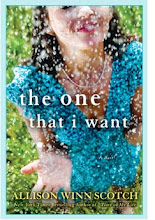
I was cruising through some blogs the other day, when I came across this post on Tammie's site, which is all about how music influences her characters and her writing. And I asked her if I could raise that subject here because I think it's such a cool and relevant point.
I'm a big music-phile. (Is that a word? Probably not.) I'm completely and hopelessly addicted to my Napster to Go subscription and always devote at least a bit of time each day seeking out new bands and singers who strike literal chords within me. So after reading Tammie's post, I took some time to think about how music influenced my own writing and scene setting, as well as how much it's influenced my own life. I'm sort of someone who - at the risk of sounding like Ally McBeal (yipes!), has always had various soundtracks for my life, contingent on my mood or what phase I was currently in. More so than melody, I've always related to lyrics, and if the lyrics impact me in some way, you can bet that the song will be on rotation in my house for months or years to come. Right now, I'm sort of in this self-evaluation phase, and I'm digging melodic mid-tempo singers like Chantal Kreviazuk, Sara Bareilles, Mandy Moore, Mat Kearney, Brandi Carlile and the like. I listen to their songs and get lost in them, as if they're personally speaking to me.
And in some ways, I very much do the same with my characters. My heroine, Jillian, in Time of My Life is helplessly lost between two lives and two loves, and desperately trying to find her way back to what feels right, and so, when I hear Vanessa Carlton's "Home," it resonates and helps me dig into Jillian's mindset - it really transports me to the scenes in which Jill's trying to figure out what feels like "home." Ditto Ben Fold's "The Luckiest", which is all about how someone comes to appreciate how fortunate he is for the love he has in his life. And Five for Fighting's "The Riddle" speaks to Jillian's love for her child, even when she doesn't quite know her place in the world. I could go on like this for days: Dashboard Confessional's Stolen, Mandy Moore's "Most of Me," Snow Patrol's "Open Your Eyes," The Weepies' "The World Spins Madly On," even "Skid Row," from Little Shop of Horrors, which sounds random I know, but every time they launch into the last verse:
Someone show me a way to get out of here,
'Cause I constantly pray I'll get out of here.
Please won't somebody say I'll get out of here,
Someone gimme my shot or I'll rot here.
Show me how and I will I'll get out of here,
I'll start climbing up hill and get out of here,
Someone tell me I still can get out of here,
Someone tell Lady Luck that I'm stuck here.
Gee it sure would be swell to get out of here,
Bid the gutter farewell to get out of here,
I'd move heaven and hell to get out of Skid,
I'd give I don't know what to get out of Skid,
But a hell of a lot to get out of Skid,
People tell me there's not a way out of Skid,
But believe me I've got to get out of Skid row.
I'm always moved by the tenacity behind the lyrics and the fight in the voices behind them, and damn if it doesn't give both me and my characters a kick in the butt. (Yes, I love show tunes, so what?) :)
So, I'm always looking for music suggestions. Who or what inspires both you and your writing? Oh, and Happy Thanksgiving!!
Wednesday, November 21, 2007


Monday, November 19, 2007
Stuck in the Stone Age
Question of the week: Why do some agents insist sending queries by snail mail with a SASE? It seems so old fashioned not to mention wasteful in a few different ways. I recently sent a query letter, synopsis, 75 pages of my story, SASE etc. only to have it ultimately rejected. A trip to the post office, the cost of postage, not to mention printing out all those pages could easily have been avoided if I could simply send it all via email. So...what's up? In an age where we all are trying to conserve (gas, ink, paper, time, stamps) this practice seems archaic and old school.
Just a quick update to last week's post: I am officially in like with Facebook, much more so than MySpace. For promotional purposes, MySpace definitely wins - I'm "friends" with hundreds of people whom I really don't know, and I can blast out a note to all of them if need be. But on a more personal level, I'm really enjoying Facebook - I've found friends from high school and life whom I'm happy to be back in touch with, and what I like most about the site is how it alerts you to all of their updates - when they've added new pictures, when they've connected with someone new (and who that person is) - so I'm always kept in the loop about their pages and yes, their lives. I dunno. I think it's pretty cool. It doesn't serve a promotional purpose for me at all, but hey, so what?
Anyhoo, on to the above question. You know, I don't have the foggiest idea why agents still insist on the SASE or why, quite frankly, anyone would insist on receiving snail mail queries. Actually, that's not true: I'm sure that for some agents, it's much easier to read these queries while on the train or the bus or whatever, and why should they have to go through the trouble of sifting through their already clogged inbox and then printing any queries that grab their attention? I do, I suppose, understand the practicality of it.
But that said, yes, it seems completely archaic and outdated, and for me, at least, it was also a criteria with which I eliminated agents while in my agent hunt. I wanted someone efficient, on the cutting edge, and who used email just as often as I did (which, um, is always and for everything), so whether it seems reasonable or not, I didn't submit (with one exception) to any agents who refused email queries and required that dreaded SASE. (I do realize, of course, that just because someone requires snail mail queries doesn't mean that he or she isn't hyperly-efficient, but I think you get my idea. I'm just saying that I wanted someone who I felt would be most compatible with me and my working style...I hope that makes sense.) Before you jump up and down and say, "But everyone says that they don't accept email queries," let me interject that yes, I know that agents say this, but for the most part, they say this because they don't want to be inundated with queries, not because they won't accept them. Yes, it might annoy a few, but the vast majority of those who list "no email queries" on Agent Query or wherever will, indeed, take 'em.
Which means that you can kiss that pesky SASE goodbye.
(Btw, please do realize that everything I post on this blog is my opinion and mine alone. Well, okay, I do have some writer friends who usually agree with me, but what I mean to say is that you are welcome to disagree and discard my advice. I know that at times, I'd read Miss Snark and completely disagree with her, and hey, that's cool. It didn't take away from what she was trying to do and how she was trying to help people. I hope blog readers here understand this and feel the same.)
Anyway, so...did you guys query with SASEs? And why do you think that agents still insist on using snail mail?
Just a quick update to last week's post: I am officially in like with Facebook, much more so than MySpace. For promotional purposes, MySpace definitely wins - I'm "friends" with hundreds of people whom I really don't know, and I can blast out a note to all of them if need be. But on a more personal level, I'm really enjoying Facebook - I've found friends from high school and life whom I'm happy to be back in touch with, and what I like most about the site is how it alerts you to all of their updates - when they've added new pictures, when they've connected with someone new (and who that person is) - so I'm always kept in the loop about their pages and yes, their lives. I dunno. I think it's pretty cool. It doesn't serve a promotional purpose for me at all, but hey, so what?
Anyhoo, on to the above question. You know, I don't have the foggiest idea why agents still insist on the SASE or why, quite frankly, anyone would insist on receiving snail mail queries. Actually, that's not true: I'm sure that for some agents, it's much easier to read these queries while on the train or the bus or whatever, and why should they have to go through the trouble of sifting through their already clogged inbox and then printing any queries that grab their attention? I do, I suppose, understand the practicality of it.
But that said, yes, it seems completely archaic and outdated, and for me, at least, it was also a criteria with which I eliminated agents while in my agent hunt. I wanted someone efficient, on the cutting edge, and who used email just as often as I did (which, um, is always and for everything), so whether it seems reasonable or not, I didn't submit (with one exception) to any agents who refused email queries and required that dreaded SASE. (I do realize, of course, that just because someone requires snail mail queries doesn't mean that he or she isn't hyperly-efficient, but I think you get my idea. I'm just saying that I wanted someone who I felt would be most compatible with me and my working style...I hope that makes sense.) Before you jump up and down and say, "But everyone says that they don't accept email queries," let me interject that yes, I know that agents say this, but for the most part, they say this because they don't want to be inundated with queries, not because they won't accept them. Yes, it might annoy a few, but the vast majority of those who list "no email queries" on Agent Query or wherever will, indeed, take 'em.
Which means that you can kiss that pesky SASE goodbye.
(Btw, please do realize that everything I post on this blog is my opinion and mine alone. Well, okay, I do have some writer friends who usually agree with me, but what I mean to say is that you are welcome to disagree and discard my advice. I know that at times, I'd read Miss Snark and completely disagree with her, and hey, that's cool. It didn't take away from what she was trying to do and how she was trying to help people. I hope blog readers here understand this and feel the same.)
Anyway, so...did you guys query with SASEs? And why do you think that agents still insist on using snail mail?
Thursday, November 15, 2007
Reach Out and Friend Someone
So I spent the better part of yesterday tooling around on Facebook, at the behest of some writer friends. This? Was a mistake. Because once I started, I couldn't stop: it was like that poor girl in Silence of the Lambs trapped in that damn hole. That was me in Facebook. I desperately wanted to claw my way out but knew that it was to no avail.
So there went yesterday.
It got me thinking: I'm now on Facebook (friend me!), MySpace and LinkedIn. And honestly, though they sure are a hell of a way to procrastinate - tracking down old friends, spying on other ones - I dunno, are these honestly good marketing or writing tools? I dunno. You tell me. I'm genuinely curious to hear what, if anything, you guys have gotten out of them. MySpace - well, I can see that b/c I have hundreds of "friends," and I suppose if I had to blast something out about my book, then that would be cool. LinkedIn has been a superfun way to reconnect with old friends, and I suppose that Facebook is much the same. (I mean, seriously, if you're my friend in real life, do you have to now be my friend online? Because that's pretty much who makes up my "friend" list on Facebook!)
But other than that, what do you guys use these sites for? And if you're on Facebook, can you explain what your favorite parts of your profile are??? I feel like I spent the entire day trying to figure out how to add things, what things to add, etc, etc, etc, and it only made me more bananas than when I started!
Enlighten me on all of this, please!
So there went yesterday.
It got me thinking: I'm now on Facebook (friend me!), MySpace and LinkedIn. And honestly, though they sure are a hell of a way to procrastinate - tracking down old friends, spying on other ones - I dunno, are these honestly good marketing or writing tools? I dunno. You tell me. I'm genuinely curious to hear what, if anything, you guys have gotten out of them. MySpace - well, I can see that b/c I have hundreds of "friends," and I suppose if I had to blast something out about my book, then that would be cool. LinkedIn has been a superfun way to reconnect with old friends, and I suppose that Facebook is much the same. (I mean, seriously, if you're my friend in real life, do you have to now be my friend online? Because that's pretty much who makes up my "friend" list on Facebook!)
But other than that, what do you guys use these sites for? And if you're on Facebook, can you explain what your favorite parts of your profile are??? I feel like I spent the entire day trying to figure out how to add things, what things to add, etc, etc, etc, and it only made me more bananas than when I started!
Enlighten me on all of this, please!
Wednesday, November 14, 2007
Breaking In
Question of the week: I have some steady work from my former employer and other smaller titles, but I'd like to build relationships with some Conde Nast, Time Inc, etc. titles. What's the best way to begin building these relationships? How do I best make those introductions and let them know I'm available and would like to serve them? Do I need to spend much of my time working on solid queries and sending those out? Or do such editors even regard unsolicited queries? Your thoughts would be appreciated!
I get similar questions a lot, and the first thing I always say is to search the archives of the blog...I offered a lot of advice on breaking in last year when I answered questions daily.
But, because I don't mind repeating myself (just ask my husband!), I'll say this again: there really isn't a secret formula to breaking into the national markets. It sounds like you already have some clips, which should put you on your way, and now, I'd spend some serious time crafting very detailed, well-researched pitches. Those are the only way to break in. Yes, editors read unsolicited pitches all the time, but if you pitch them crap - poorly researched or poorly written - ideas, they'll likely ignore any follow ups or future pitches. I don't mean to imply that you get one shot and you're out because that's certainly not the case, but you know that phrase, "You never get a second chance to make a first impression?" Yeah, well, keep that in mind as you pitch.
I realize that this might make the process sound daunting and fray your already fraying nerves. And I don't mean to at all. But what I'm trying to impart is that good and targeted queries are the only and the best way to break in (barring having worked a magazine previously and/or having really strong connections), so it would be wise to take your time with them. Dig around for new studies or new trends and pack your queries with information that might make an editor take five extra seconds from her already harried day and think, "Oh, wow, this is a writer and an idea that I should give some consideration too."
If she writes you back and says, "Good idea but not for us," take that as now open lines of communication. Keep pitching her. Keep following up with her. The ONLY way that you're going to nudge your way in the door is with persistence. I think I've said this on the blog before, but I once had to follow up to a pitch three times before I heard anything from the editor, and when I finally did, I landed my first feature at SELF.
As far as letters of introduction to the big nationals? Well, unless you have competitive and/or national clips - i.e. unless you write for their competitors - I think this is a waste of time. Too many people are willing to do the upfront work and craft good query letters, and if you were an editor, who would you rather assign to - someone who took the time to put together a query that demonstrated their skills or someone who sent off a generic introduction letter. (I don't mean to say that intro letters never work. They do, and I use them these days, but I do think that you have to be established in the industry for them to garner any attention or weight.)
I've also said this before (search the archives), but FOBs are a fabulous place to break in. Editors are more willing to take a chance on a new writer when the assignment is only 250 words rather than 2000.
So, that's my breaking in advice. Anyone out there have other tips? Or disagree with me? (Hey, you can!)
I get similar questions a lot, and the first thing I always say is to search the archives of the blog...I offered a lot of advice on breaking in last year when I answered questions daily.
But, because I don't mind repeating myself (just ask my husband!), I'll say this again: there really isn't a secret formula to breaking into the national markets. It sounds like you already have some clips, which should put you on your way, and now, I'd spend some serious time crafting very detailed, well-researched pitches. Those are the only way to break in. Yes, editors read unsolicited pitches all the time, but if you pitch them crap - poorly researched or poorly written - ideas, they'll likely ignore any follow ups or future pitches. I don't mean to imply that you get one shot and you're out because that's certainly not the case, but you know that phrase, "You never get a second chance to make a first impression?" Yeah, well, keep that in mind as you pitch.
I realize that this might make the process sound daunting and fray your already fraying nerves. And I don't mean to at all. But what I'm trying to impart is that good and targeted queries are the only and the best way to break in (barring having worked a magazine previously and/or having really strong connections), so it would be wise to take your time with them. Dig around for new studies or new trends and pack your queries with information that might make an editor take five extra seconds from her already harried day and think, "Oh, wow, this is a writer and an idea that I should give some consideration too."
If she writes you back and says, "Good idea but not for us," take that as now open lines of communication. Keep pitching her. Keep following up with her. The ONLY way that you're going to nudge your way in the door is with persistence. I think I've said this on the blog before, but I once had to follow up to a pitch three times before I heard anything from the editor, and when I finally did, I landed my first feature at SELF.
As far as letters of introduction to the big nationals? Well, unless you have competitive and/or national clips - i.e. unless you write for their competitors - I think this is a waste of time. Too many people are willing to do the upfront work and craft good query letters, and if you were an editor, who would you rather assign to - someone who took the time to put together a query that demonstrated their skills or someone who sent off a generic introduction letter. (I don't mean to say that intro letters never work. They do, and I use them these days, but I do think that you have to be established in the industry for them to garner any attention or weight.)
I've also said this before (search the archives), but FOBs are a fabulous place to break in. Editors are more willing to take a chance on a new writer when the assignment is only 250 words rather than 2000.
So, that's my breaking in advice. Anyone out there have other tips? Or disagree with me? (Hey, you can!)
Monday, November 12, 2007
Why You Should Care
I already noted last week why I care about the strike, but I wanted to pass on this great blog entry from Erik Sherman on why, if you're a freelance writer, you should care too.
Smells Like Something's Burning
On one of my writers' boards, we've been chatting about burn out, and the thread has been so fascinating as writer after writer tip-toes forward, raising his or her figurative hand and says, "Um, yeah, me too."
I think that people assume that freelance writing is a thrill-a-minute...after all, you get to pick and choose your assignments, you work for yourself, you set your own hours, etc. But the reality is far different. In fact, many full-time writers take on any and all assignments in order to sustain themselves, and while in theory, we should be setting our own hours, we're so overburdened with work (or stress) that we work nearly all the time. Not to mention develop a pesky problem with saying "no," even when we are overworked because we always fear that the famine is never too far from the feast.
I know of what I speak.
I hit my first serious bout of burn out when my son, now 3, was about five months old, so, I guess that was about two and half years ago. I didn't take that much time off when I had him, not because I couldn't do so financially, but because I found myself a little bit bored and looking for some stimulation when he was a newborn and all he did was sleep or nurse all day...and that left me with not a whole lot to do other than change his diaper, pop out a boob or watch TV. So I got back in the saddle pretty quickly, and then, bam! A few months later, I looked at all of my assignments with boat loads of resentment. So I downshifted a bit - started querying less and reevaluating what my long-term goals were - and that's when I started really honing my fiction, which I took to with passion that I had long lost for my magazine assignments.
And I discovered that I wasn't burned out on writing. I was burned out on the writing that I had done for the past five or so years. After I wrapped TDLF, I picked up the pace on magazine work again...I'm someone who likes to stay busy, and this seemed like the best way to fill that void. But now, several years later, once again, I'm facing a serious rash of burn out, so again, I'm trying to flex different muscles with the fiction thing and taking my magazine work in different directions: doing more celebrity interviews because I think they're a hoot, hand-picking assignments that really get my cerebral juices flowing, and yes, saying no to work that I know will render me brain-dead. (I should note, however, that I didn't make the same mistake twice: that after my daughter was born, I did make sure to take some necessary time off, even if it was just to hang around and nurse in front of the TV because I knew that this downtime would pay off, in terms of my level of interest in my work, in the future.)
It's a tricky balance: finding enough work to sustain me and finding the right work to do just that, but not taking on so much that I'm pissed off just thinking about my to-do list or am forced to spend my nights crouched over my computer when I should be snuggling up with my husband and watching 30 Rock. (Tangent: who saw last week's episode? Seriously? That post-Kenneth's party scene?? Was it not the funniest thing on TV in ages????)
Anyway, have any of you guys dealt with burn out? If so, how have you coped?
I think that people assume that freelance writing is a thrill-a-minute...after all, you get to pick and choose your assignments, you work for yourself, you set your own hours, etc. But the reality is far different. In fact, many full-time writers take on any and all assignments in order to sustain themselves, and while in theory, we should be setting our own hours, we're so overburdened with work (or stress) that we work nearly all the time. Not to mention develop a pesky problem with saying "no," even when we are overworked because we always fear that the famine is never too far from the feast.
I know of what I speak.
I hit my first serious bout of burn out when my son, now 3, was about five months old, so, I guess that was about two and half years ago. I didn't take that much time off when I had him, not because I couldn't do so financially, but because I found myself a little bit bored and looking for some stimulation when he was a newborn and all he did was sleep or nurse all day...and that left me with not a whole lot to do other than change his diaper, pop out a boob or watch TV. So I got back in the saddle pretty quickly, and then, bam! A few months later, I looked at all of my assignments with boat loads of resentment. So I downshifted a bit - started querying less and reevaluating what my long-term goals were - and that's when I started really honing my fiction, which I took to with passion that I had long lost for my magazine assignments.
And I discovered that I wasn't burned out on writing. I was burned out on the writing that I had done for the past five or so years. After I wrapped TDLF, I picked up the pace on magazine work again...I'm someone who likes to stay busy, and this seemed like the best way to fill that void. But now, several years later, once again, I'm facing a serious rash of burn out, so again, I'm trying to flex different muscles with the fiction thing and taking my magazine work in different directions: doing more celebrity interviews because I think they're a hoot, hand-picking assignments that really get my cerebral juices flowing, and yes, saying no to work that I know will render me brain-dead. (I should note, however, that I didn't make the same mistake twice: that after my daughter was born, I did make sure to take some necessary time off, even if it was just to hang around and nurse in front of the TV because I knew that this downtime would pay off, in terms of my level of interest in my work, in the future.)
It's a tricky balance: finding enough work to sustain me and finding the right work to do just that, but not taking on so much that I'm pissed off just thinking about my to-do list or am forced to spend my nights crouched over my computer when I should be snuggling up with my husband and watching 30 Rock. (Tangent: who saw last week's episode? Seriously? That post-Kenneth's party scene?? Was it not the funniest thing on TV in ages????)
Anyway, have any of you guys dealt with burn out? If so, how have you coped?
Friday, November 09, 2007
GCC Presents: Jackie Kessler and The Road to Hell
 Today I'm so excited to present my pal, Jackie Kessler, and her book, The Road to Hell. I met Jackie a few years ago over at Backspace, and she's an awesome all-around person, so I'm thrilled for her success. Even better, this week, she's holding a contest for her book and you, dear readers, can win prizes. Yes, prizes! Check out the "Hit the Road" section of her website.
Okay, get your mind off of prizes, and take a quick sec to read a bit more about the book...
1) What the Hell is HELL ON EARTH?
That’s the series I’m writing, published by Kensington/Zebra Books. The first book, HELL’S BELLES, is about a succubus named Jezebel who runs away from Hell, hides on Earth as an exotic dancer, and learns the hard way about true love. Sex, strippers, demons—what’s not to like? The second book, THE ROAD TO HELL, is about how Jezebel—now the human Jesse Harris—has to return to Hell to save the lives of those she loves…and somehow make sure it’s not a one-way trip. (If she’d known love was this tough, she never would have turned her back on lust.)
2) What's the backstory behind your book?
It's the second book in the Hell on Earth series, and the second in a three-book contract. So not too much backstory there. Just me meeting my deadline. :)
3) It seems that a lot of readers confuse fiction with real life, assuming that a novel must be an autobiography of the author as well. How many elements of your real life are reflected in your book?
Hee. If I were a demon, and Jezebel were Jewish, we'd be the same person.
Except she dances better than I do. And there's no way in Hell (or Earth) that I would ever strip in public. Eek!
4) A lot of my blog readers are aspiring or new authors. How did you land your first book deal?
My first published book, HELL'S BELLES, is actually the third novel that I've written. I took the fantasy that I adore from my first book and the tone that seems to work well for me from the second book and merged them to come up with an urban fantasy/paranormal romance for HELL'S BELLES -- a sassy narrator in a story that's dark and sexy and humorous. I wrote HELL'S BELLES fast -- three months, start to finish (it's like I was possessed) -- and then I queried agents. I really got lucky; instead of the triple-digit rejections I'd gotten for my first novel, or the 40+ rejections I'd gotten for my second novel, I got five offers of representation, within a matter of three weeks. So I selected my agent, and then he sold HELL'S BELLES a week later in a pre-emptive three-book deal to Kensington. Woot!
5) I have a serious procrastination problem when it comes to tackling my fiction. What¹s your routine? How do you dive it? Do you have any rituals or necessary to-dos before or while you write?
Here's how my usual day looks: Write, write, write, get kids and husband ready for school/work, write, write, write, do my day job, lunch/write, do my day job, pick kids up and get dinner ready, family time, get kids to bed, write, write, spend time with Loving Husband, write, write, write, collapse into bed. Repeat. (At times, "write" is loosely defined as "ego surfing" and other Internet activities.)
6) Clearly, your book will be optioned for a multi-million dollar film deal. Who would you cast as the leads, if you were given creative control?
Clearly! :) Let's see. Matt Damon as Paul, the love interest. Or any other character he wants to be. ((fans self)) Maybe Ben Affleck as Roman, the slimy club owner. I'd been thinking of Eva Longoria for Jezebel/Jesse, but I'm really open on her role -- as long as she's played by a petite actress (Jesse is five-foot-four).
Thursday, November 08, 2007
Why Can't We All Just Get Along
Today, I'm over at Writer Unboxed talking about writerly karma and wondering why we all just can't be happy for each other's success...
Check it out!
Check it out!
Tuesday, November 06, 2007
Why I Care
So I'm a little bit obsessed with the writers' strike. I'm not quite sure why, but I am. I check out DeadlineHollywoodDaily.com about 10 times a day, and I'm trying to stay on top of who is taking what position.
I think that I must be so fascinated by it all because it cuts so close to home. I'm not a television or movie writer (honestly, when anyone asks me if I'm interested in drafting the screenplays of my own books, I just laugh because I have no idea how to do that), but I am a writer, and that, I think, unifies us all. And the fact that the studios and moguls are trying to undercut the value of what these writers give to them just sickens me.
I tried explaining all of this to my husband last night, my husband who has more of the "mogul" mentality given his line of work, and at first, he sort of laughed me off, saying, "Well, of course the studios want to make as much money as they can. It's a business decision." And yeah, of course the studios do want to. Obviously. But then I said, "Okay, so let's say HarperCollins (my current publisher) wanted to put my book online - or wherever - and wanted to generate profits from this but didn't want to give me anything for it. Me. The writer of the book. How would you feel about that?" And because my husband is a good husband and because he fights for every last ounce of respect and every last penny that he believes that I have due, he paused and thought about it, and suddenly, things were a little murkier for him.
And I guess that's why I'm so caught up in the situation: it hits pretty close to home. I hope it's resolved quickly and fairly and that the writers, who are the ones with the vision and who create something from nothing for the studios in the first place, are handed their due.
In other news, I'm over at Monica Bhide's blog today doing a Q/A. Monica is an awesome food writer with a new blog that fun and interesting and insightful, so check it out!
Anyone else following the strike or is it just little old me?
I think that I must be so fascinated by it all because it cuts so close to home. I'm not a television or movie writer (honestly, when anyone asks me if I'm interested in drafting the screenplays of my own books, I just laugh because I have no idea how to do that), but I am a writer, and that, I think, unifies us all. And the fact that the studios and moguls are trying to undercut the value of what these writers give to them just sickens me.
I tried explaining all of this to my husband last night, my husband who has more of the "mogul" mentality given his line of work, and at first, he sort of laughed me off, saying, "Well, of course the studios want to make as much money as they can. It's a business decision." And yeah, of course the studios do want to. Obviously. But then I said, "Okay, so let's say HarperCollins (my current publisher) wanted to put my book online - or wherever - and wanted to generate profits from this but didn't want to give me anything for it. Me. The writer of the book. How would you feel about that?" And because my husband is a good husband and because he fights for every last ounce of respect and every last penny that he believes that I have due, he paused and thought about it, and suddenly, things were a little murkier for him.
And I guess that's why I'm so caught up in the situation: it hits pretty close to home. I hope it's resolved quickly and fairly and that the writers, who are the ones with the vision and who create something from nothing for the studios in the first place, are handed their due.
In other news, I'm over at Monica Bhide's blog today doing a Q/A. Monica is an awesome food writer with a new blog that fun and interesting and insightful, so check it out!
Anyone else following the strike or is it just little old me?
Monday, November 05, 2007
One Strike and You're Out!
Over the weekend, I was reading a television forum that I frequent, and a slew of the posters were up in arms over the impending writers' strike. Not only were they furious that the writers were threatening to walk out, they were certain that if they - these posters in a silly forum about television ratings, many of whom frequently pepper their posts with misspellings and grammatical errors - could do a better job penning TV episodes than the current hired scribes.
Comments were posted along the lines of, "Come on, how hard can it be to write a sitcom?" Or, "God, anyone can be a writer, I mean, we all here could do their jobs."
To that I say: A. BIG. FAT. HA!
Now, because I just lurk in this forum and have no desire to join in the fray with some of these crazies, I didn't respond, but you can bet that my blood was boiling. Beyond the fact that I fully support the writers in their walkout, these comments just reiterated how the general public too often views our profession. Why is it that just about every person thinks that he or she could be a writer? Why is it that just about every person is certain that he or she could crank out a novel (as if!), be a freelance magazine writer (dream on!), or pen a successful television show or movie (even I don't kid myself about that one!)?
Here's the thing: just because you literally know how to write does not mean that you literally know how to write well. There is a huge distinction there, and one that so many people, too many people fail to understand. Including these idiots in that forum. Crafting a novel or breaking into the magazine world is hard f-ing work, and guess what? I'm also going to go on record to say that you have to have some innate talent to be able to do so. I'm not suggesting that I'm Hemingway or Ayn Rand or anyone like that: I'm not. But I'm also going to put it out there and say that not everyone can write well, and maybe that's a horrible thing to say and maybe it's not particularly pc, but just because you think that you have a novel in you (not you, dear Ask Allison readers, "you" meaning the general population) doesn't mean that, in fact, you do. And even if you defy the odds and actually write that novel (something that 99% of people do not), it doesn't mean that this book will be good. (With the understanding that "good" is subjective, and certainly, some people read my stuff and think that it's crap, and that's totally cool. But you get my point.)
Can you tell that I'm pissed? I am. Writers are too often discounted and thought of as second-class citizens, as if somehow, we have the job that the rest of the world could be doing if they only felt like it, and the truth is...this just couldn't be further from the truth. Which is part of the motivation behind the WGA strike: they're sick and tired of not getting the respect they deserve (as well as the money they deserve), and to them, I say, "hurrah." Does the strike suck? You betcha. Beyond the fact that come late-winter, my TV addiction is going to take a serious blow, the strike has affected potential personal projects, and I'm barely even connected to the industry. Hundreds of thousands of people will lose income and jobs, and all around, it sucks.
But the WGA writers are tired of being thought of as replaceable. And after reading some of the posts on the web this weekend, I can't blame them.
So, what say you? Why does everyone think that they can do our jobs for us? What do you think about the impending strike?
Comments were posted along the lines of, "Come on, how hard can it be to write a sitcom?" Or, "God, anyone can be a writer, I mean, we all here could do their jobs."
To that I say: A. BIG. FAT. HA!
Now, because I just lurk in this forum and have no desire to join in the fray with some of these crazies, I didn't respond, but you can bet that my blood was boiling. Beyond the fact that I fully support the writers in their walkout, these comments just reiterated how the general public too often views our profession. Why is it that just about every person thinks that he or she could be a writer? Why is it that just about every person is certain that he or she could crank out a novel (as if!), be a freelance magazine writer (dream on!), or pen a successful television show or movie (even I don't kid myself about that one!)?
Here's the thing: just because you literally know how to write does not mean that you literally know how to write well. There is a huge distinction there, and one that so many people, too many people fail to understand. Including these idiots in that forum. Crafting a novel or breaking into the magazine world is hard f-ing work, and guess what? I'm also going to go on record to say that you have to have some innate talent to be able to do so. I'm not suggesting that I'm Hemingway or Ayn Rand or anyone like that: I'm not. But I'm also going to put it out there and say that not everyone can write well, and maybe that's a horrible thing to say and maybe it's not particularly pc, but just because you think that you have a novel in you (not you, dear Ask Allison readers, "you" meaning the general population) doesn't mean that, in fact, you do. And even if you defy the odds and actually write that novel (something that 99% of people do not), it doesn't mean that this book will be good. (With the understanding that "good" is subjective, and certainly, some people read my stuff and think that it's crap, and that's totally cool. But you get my point.)
Can you tell that I'm pissed? I am. Writers are too often discounted and thought of as second-class citizens, as if somehow, we have the job that the rest of the world could be doing if they only felt like it, and the truth is...this just couldn't be further from the truth. Which is part of the motivation behind the WGA strike: they're sick and tired of not getting the respect they deserve (as well as the money they deserve), and to them, I say, "hurrah." Does the strike suck? You betcha. Beyond the fact that come late-winter, my TV addiction is going to take a serious blow, the strike has affected potential personal projects, and I'm barely even connected to the industry. Hundreds of thousands of people will lose income and jobs, and all around, it sucks.
But the WGA writers are tired of being thought of as replaceable. And after reading some of the posts on the web this weekend, I can't blame them.
So, what say you? Why does everyone think that they can do our jobs for us? What do you think about the impending strike?
Thursday, November 01, 2007
Writing for Websites
Question of the week: I was just wondering if you might know about writing for the websites of various magazines. For example, parents.com; is it easier to get something accepted for their website than for their mag? Any idea what they pay?
I don't have specifics on parents.com, but I will offer some general thoughts on writing for websites. In a nutshell, I think they're a fabulous way to build your clip file. Most websites turn over content a lot faster than a monthly magazine would, so they're always on the lookout for new ideas, and because there is a lesser sense of permanence on the site, I think they're more willing to take a chance on a new-to-them writer than a big, established magazine might be.
As far as pay, in my experience, websites do pay less than big magazines (i.e. parents.com vs. Parents mag, though that's just an example and nothing concrete because again, I have no idea what parents.com pays, and I'm sure that it varies per writer and per assignment), in terms of per word, but that doesn't mean that they aren't very worth your while. I used to do A LOT of web writing, and let me tell you, my hourly rate almost always came out higher than when I wrote for magazines.
Think of it this way: a magazine pays you $1 a word for 1,000 words, but between all the editing and interviews, you put in, say, 10 hours. You're making $100 an hour.
A website might pay you 50 cents per word for 1000 words, but the editing will likely be less consuming, at the very least. So even though you've started off with a lower baseline, if you put in, say 4 hours, you're actually making more per hour ($125..and I used to make a lot more per hour) than you would at the magazine.
So readers, what say you? Do you enjoy writing for websites? Have you found them easier to crack?
I don't have specifics on parents.com, but I will offer some general thoughts on writing for websites. In a nutshell, I think they're a fabulous way to build your clip file. Most websites turn over content a lot faster than a monthly magazine would, so they're always on the lookout for new ideas, and because there is a lesser sense of permanence on the site, I think they're more willing to take a chance on a new-to-them writer than a big, established magazine might be.
As far as pay, in my experience, websites do pay less than big magazines (i.e. parents.com vs. Parents mag, though that's just an example and nothing concrete because again, I have no idea what parents.com pays, and I'm sure that it varies per writer and per assignment), in terms of per word, but that doesn't mean that they aren't very worth your while. I used to do A LOT of web writing, and let me tell you, my hourly rate almost always came out higher than when I wrote for magazines.
Think of it this way: a magazine pays you $1 a word for 1,000 words, but between all the editing and interviews, you put in, say, 10 hours. You're making $100 an hour.
A website might pay you 50 cents per word for 1000 words, but the editing will likely be less consuming, at the very least. So even though you've started off with a lower baseline, if you put in, say 4 hours, you're actually making more per hour ($125..and I used to make a lot more per hour) than you would at the magazine.
So readers, what say you? Do you enjoy writing for websites? Have you found them easier to crack?
Tuesday, October 30, 2007
The Story Behind My Story
For some reason, I got a bunch of emails last week asking how I got my start as a writer, so I thought I'd give you my backstory which, I think, is a good example of how luck, persistence and truly hard work all came together fortuitously and granted me a career.
I was always a writer, but I didn't always intend to be a writer, if that makes sense. In college, people suggested that I pursue it, but it just sounded so dang impossible. I mean, who makes money writing??? It sounded insane. So I dipped my toe in a variety of other careers (PR, acting (to this day, I have my SAG card!), internet ventures), and finally, writing came to me, not vice versa.
About seven years ago, just after the bubble burst on the whole internet boom, I was toiling at a start-up which I co-ran, focusing on our pr and marketing, basically, creating press kits, writing web copy, establishing partnerships with other sites, etc. When we sold the site (for peanuts), a lot of our partners asked me to continue doing their web copy and press releases, and voila, my freelancing career was born. I wasn't quite sure about working full-time for myself, however, so I applied for a writing position at a well-known PR company, but by the time they called and eventually offered me the job, I'd realized that I'd be bananas NOT to attempt the freelancing thing. And somehow, by the grace of God, I got the PR firm to agree to also hire me on a freelance basis - paying me for three days of work per week. (There is a point to this background, hang in there.)
As luck would have it, part of my job at this PR firm was ghostwriting for celebrity clients. While the PR work paid my bills, I still felt unfulfilled, so, because I was getting married, I pitched The Knot a story idea for their website. I don't think this was my first query ever, but it was one of them, certainly. As further luck would have it, they were looking for someone with ghostwriting experience to pen a book for them, and though I still can't believe this, they hired me. (I did have to submit sample chapters and all of that.)
The experience itself was less than ideal, however, it opened all sorts of doors for me because my very next pitch was to Bride's, who assigned me a story immediately, and just like that, I'd landed my first national assignment. Wow! Who knew it was so easy? Right? Right???
Er, wrong. I landed another feature at another big magazine, and when I returned home from my honeymoon, was unceremoniously told that it was being killed. No offers for a rewrite, no second chances. And then, came a dry spell.
I can't remember how long this dry spell lasted, but I'd venture that it was another six months until I landed any other type of assignment (beyond my usual PR stuff). But I hung in there, despite the hundreds of rejections that dinged my inbox. I pitched story ideas like no one has ever pitched story ideas: juggling dozens of them at a time. One editor rejects it? I sent it right out to someone else. I kept on top of research and studies and trends, and if anything remotely pinged for me, off it went to an editor.
Eventually, I started breaking in with FOBs and at various websites, like women.com (now ivillage.com). I made myself invaluable to my editors and became genuine friends with many of them. But I never stopped working at 150 miles per hour. I turned in work early; I kept pitching; I let editors know that I was available to do just about anything for them, big or small, menial or not. (Er, that sounds dirty, but you know what I mean.) And now, seven years later, I have a career. Yes, it takes that long - okay, maybe I hit this about two years ago - to firmly entrench yourself.
I wish that I could promise that there were easier paths. I wish that I could say that there are secret handshakes to open hidden doors. But there aren't. I got lucky - The Knot needed someone, and I was in the right place and the right time, but from there, I earned it. There are thousands of aspiring writers out there, if not more. Keep putting one foot in front of the other and keep knocking on doors. If you do so, sooner or later, you'll likely distinguish yourself and one (or more) of these doors will open to greet you.
I was always a writer, but I didn't always intend to be a writer, if that makes sense. In college, people suggested that I pursue it, but it just sounded so dang impossible. I mean, who makes money writing??? It sounded insane. So I dipped my toe in a variety of other careers (PR, acting (to this day, I have my SAG card!), internet ventures), and finally, writing came to me, not vice versa.
About seven years ago, just after the bubble burst on the whole internet boom, I was toiling at a start-up which I co-ran, focusing on our pr and marketing, basically, creating press kits, writing web copy, establishing partnerships with other sites, etc. When we sold the site (for peanuts), a lot of our partners asked me to continue doing their web copy and press releases, and voila, my freelancing career was born. I wasn't quite sure about working full-time for myself, however, so I applied for a writing position at a well-known PR company, but by the time they called and eventually offered me the job, I'd realized that I'd be bananas NOT to attempt the freelancing thing. And somehow, by the grace of God, I got the PR firm to agree to also hire me on a freelance basis - paying me for three days of work per week. (There is a point to this background, hang in there.)
As luck would have it, part of my job at this PR firm was ghostwriting for celebrity clients. While the PR work paid my bills, I still felt unfulfilled, so, because I was getting married, I pitched The Knot a story idea for their website. I don't think this was my first query ever, but it was one of them, certainly. As further luck would have it, they were looking for someone with ghostwriting experience to pen a book for them, and though I still can't believe this, they hired me. (I did have to submit sample chapters and all of that.)
The experience itself was less than ideal, however, it opened all sorts of doors for me because my very next pitch was to Bride's, who assigned me a story immediately, and just like that, I'd landed my first national assignment. Wow! Who knew it was so easy? Right? Right???
Er, wrong. I landed another feature at another big magazine, and when I returned home from my honeymoon, was unceremoniously told that it was being killed. No offers for a rewrite, no second chances. And then, came a dry spell.
I can't remember how long this dry spell lasted, but I'd venture that it was another six months until I landed any other type of assignment (beyond my usual PR stuff). But I hung in there, despite the hundreds of rejections that dinged my inbox. I pitched story ideas like no one has ever pitched story ideas: juggling dozens of them at a time. One editor rejects it? I sent it right out to someone else. I kept on top of research and studies and trends, and if anything remotely pinged for me, off it went to an editor.
Eventually, I started breaking in with FOBs and at various websites, like women.com (now ivillage.com). I made myself invaluable to my editors and became genuine friends with many of them. But I never stopped working at 150 miles per hour. I turned in work early; I kept pitching; I let editors know that I was available to do just about anything for them, big or small, menial or not. (Er, that sounds dirty, but you know what I mean.) And now, seven years later, I have a career. Yes, it takes that long - okay, maybe I hit this about two years ago - to firmly entrench yourself.
I wish that I could promise that there were easier paths. I wish that I could say that there are secret handshakes to open hidden doors. But there aren't. I got lucky - The Knot needed someone, and I was in the right place and the right time, but from there, I earned it. There are thousands of aspiring writers out there, if not more. Keep putting one foot in front of the other and keep knocking on doors. If you do so, sooner or later, you'll likely distinguish yourself and one (or more) of these doors will open to greet you.
Monday, October 29, 2007
GCC Presents: Jana DeLeon and Unlucky
 You know, my husband has long told me that I should write a book that deals with gambling or poker or something along those lines (actually, "a woman with gambling addiction" was what he threw at me, as if that's supposed to somehow give me a plot or purpose, but ahem, I digress), and the good news is, that since I know nothing about any of these things, I can now tell him that the book has already been written: Jana DeLeon's Unlucky. I totally love this premise, here's the scoop:
Her luck’s so bad it’s a crime.
Everyone in Royal Flush, Louisiana, knows Mallory Devereaux is a walking disaster. At least now she’s found a way to take advantage of her chronic bad luck: by “cooling” cards on her uncle’s casino boat. As long as the crooks invited to his special poker tournament don’t win their money back, she’ll get a cut of the profit.
But Mal isn’t the only one working some major mojo. There’s a dark-eyed dealer sending her looks steamier than the bayou in August. Turns out he’s an undercover agent named Jake Randoll, and for a Yank, he’s pretty darn smart. Smart enough to enlist her help to catch a money launderer. As they race to untangle a web of decades-old lies and secrets amid a gathering of criminals, Mallory can’t help hoping her luck’s about to change….
Everyone in Royal Flush, Louisiana, knows Mallory Devereaux is a walking disaster. At least now she’s found a way to take advantage of her chronic bad luck: by “cooling” cards on her uncle’s casino boat. As long as the crooks invited to his special poker tournament don’t win their money back, she’ll get a cut of the profit.
But Mal isn’t the only one working some major mojo. There’s a dark-eyed dealer sending her looks steamier than the bayou in August. Turns out he’s an undercover agent named Jake Randoll, and for a Yank, he’s pretty darn smart. Smart enough to enlist her help to catch a money launderer. As they race to untangle a web of decades-old lies and secrets amid a gathering of criminals, Mallory can’t help hoping her luck’s about to change….
Today, we're lucky enough (ha! I didn't even do that intentionally) to have Jana weigh in with some answers to my five usual questions...
1) What's the backstory behind your book?
My husband and I got married in Vegas in 2000. Before we left, I studied and studied blackjack combinations, determined to beat the house. Unfortunately, I have absolutely, positively NO LUCK. In fact, my luck is so bad that when I sit down at a table, not only don't I win, everyone else starts losing too. So I came up with Mallory Devereaux, the unluckiest woman in the world, who needs to make some money fast and decides to do it by "cooling" cards at a poker tournament of criminals.
2) What do you love most about writing fiction? What do you like least?
2) What do you love most about writing fiction? What do you like least?
The fan letters/emails are definitely the best. All the waiting you do as an author (waiting to hear on proposals, waiting to hear on sales) is definitely the worst.
3) A lot of my blog readers are aspiring or new authors. How did you land your first book deal?
3) A lot of my blog readers are aspiring or new authors. How did you land your first book deal?
I did it the old-fashioned way. I wrote the book, edited the ever-living heck out of it, queried agents, got/accepted an offer for representation, got a list of edits from my agent (13 pages – yikes), made revisions, my agent submitted and we got an offer.
4) I have a serious procrastination problem when it comes to tackling my fiction. What's your routine? How do you dive it? Do you have any rituals or necessary to-dos before or while you write?
4) I have a serious procrastination problem when it comes to tackling my fiction. What's your routine? How do you dive it? Do you have any rituals or necessary to-dos before or while you write?
I write first thing in the morning before I go to the day job. That way if other things happen during the day (ie bad work day, bad Chinese for lunch) I've already gotten my pages in and don't have to feel guilty for taking a night off. If I feel fine and get a second wind, I'll write some more at night after dinner. My drive comes from the desire to constantly improve my place as an author. I don't have any rituals, per se, but I love to write in cafes and work in the same one every week.
5) Clearly, your book will be optioned for a multi-million dollar film deal! Who would you cast as the leads, if you were given creative control?
5) Clearly, your book will be optioned for a multi-million dollar film deal! Who would you cast as the leads, if you were given creative control?
I would love someone like Eva Mendes to play the heroine. I think she's sexy in a fun way and could totally pull of a Cajun girl. For the hero, I'm thinking David Duchovny because I always loved him in the X-Files.
Friday, October 26, 2007
Dressing on the Side
(Admin note: I know that I have a lot of outstanding emails to reply to...apologies, I'll get to them soon!)
So, it appears that I'm in a rut. Well, is it a rut? I'm not sure. Considering that I've been in it for oh, the past five years or so...I'm don't know if that qualifies. I suspect that some of you work-from-homers can relate: I'm in a dressing rut. Most days, I slog on my gym clothes when I get out of bed, figuring that at some point, I will indeed hit the gym, so why bother changing twice? Makes sense, right? Which means that I spend my days comfortable, but not exactly presentable. (Again, I'm certain that some of you out there know exactly of what I speak.) It's to the point now where, when I do jazz myself up, my doormen are always surprised, like, "Wow, you really clean up nicely!" Which leads me to question just how unimpressive I must look the rest of the time.
I've noticed, too, that when I take my son to school in the morning, most moms aren't in their Nike running shorts and their Adidas sweatshirts...unless, of course, they're headed to the gym. So while I might blend in there, the truth is, that I'm not always headed to the gym. I'm just dressed that way. Which I don't exactly announce, but doesn't make me feel any better, right? :)
So I've started making a bit more effort - you know, swap out the sweats unless I'm actually going to be sweating, and sprucing up the closet a bit. Showering before 8:00pm tends to help too. And I've informed my husband that I'm doing a bit of wardrobe revamping (and the wise man said "go forth and do what damage you must,") because I've noticed something: while I might not be as comfy in front of my computer without my beloved track pants, I actually feel a bit better about myself, as if a polished wardrobe might mean a more polished me. Now, I'm trying to motivate to the gym as soon as I drop my son off at school, so I actually shower in the morning and look reasonably put together the day through. We'll see how long that sticks.
But I'm curious about all you writers out there: which do you prefer? Comfort or polish? It's so easy to slip further and further into the former, but don't you feel like you're losing a bit when you do so? After years of slippage, I'm trying to claw my way out.
So, it appears that I'm in a rut. Well, is it a rut? I'm not sure. Considering that I've been in it for oh, the past five years or so...I'm don't know if that qualifies. I suspect that some of you work-from-homers can relate: I'm in a dressing rut. Most days, I slog on my gym clothes when I get out of bed, figuring that at some point, I will indeed hit the gym, so why bother changing twice? Makes sense, right? Which means that I spend my days comfortable, but not exactly presentable. (Again, I'm certain that some of you out there know exactly of what I speak.) It's to the point now where, when I do jazz myself up, my doormen are always surprised, like, "Wow, you really clean up nicely!" Which leads me to question just how unimpressive I must look the rest of the time.
I've noticed, too, that when I take my son to school in the morning, most moms aren't in their Nike running shorts and their Adidas sweatshirts...unless, of course, they're headed to the gym. So while I might blend in there, the truth is, that I'm not always headed to the gym. I'm just dressed that way. Which I don't exactly announce, but doesn't make me feel any better, right? :)
So I've started making a bit more effort - you know, swap out the sweats unless I'm actually going to be sweating, and sprucing up the closet a bit. Showering before 8:00pm tends to help too. And I've informed my husband that I'm doing a bit of wardrobe revamping (and the wise man said "go forth and do what damage you must,") because I've noticed something: while I might not be as comfy in front of my computer without my beloved track pants, I actually feel a bit better about myself, as if a polished wardrobe might mean a more polished me. Now, I'm trying to motivate to the gym as soon as I drop my son off at school, so I actually shower in the morning and look reasonably put together the day through. We'll see how long that sticks.
But I'm curious about all you writers out there: which do you prefer? Comfort or polish? It's so easy to slip further and further into the former, but don't you feel like you're losing a bit when you do so? After years of slippage, I'm trying to claw my way out.
Wednesday, October 24, 2007
Pimp Your Favorite
Question of the week, sent in by the wonderful Kvetch: I read your blog all time and I'm curious if you could recommend some other writers/authors blogs as well. I know you have a long blog-roll, and I've clicked around but would love a little direction.
The truth is that I don't know many other than what is on my blog rolls, so if you readers out there have good ones, post 'em below!
Speaking of other blogs, check out fellow author Sarah Jio's blog. She's a prolific magazine writer who also just happens to have interviewed moi today! :)
The truth is that I don't know many other than what is on my blog rolls, so if you readers out there have good ones, post 'em below!
Speaking of other blogs, check out fellow author Sarah Jio's blog. She's a prolific magazine writer who also just happens to have interviewed moi today! :)
Monday, October 22, 2007
Behind the Curtain: Jen A. Miller, book reviewer
Nearly every writer worries about reviews - hoping for the best, expecting the worst, cursing the negative ones, fully believing the positive ones. :) Okay, maybe not quite, but getting reviewed can be agonizing, so it's with much joy that today, I'm lucky enough to present a wonderful book reviewer, Jen A. Miller, who writes about books for a slew of mags and papers, including the Philadelphia Inquirer, Poets and Writers, and US Airways Magazine, among others.
Next year, Jen crosses to the dark side (and the hunter becomes the hunted!) to become an author herself (an author of books, I should say, as she already scribes for plenty of magazines and papers), when her first book, The South Jersey Shore, Atlantic City through Cape May: Great Destinations, is published. She also maintains two blogs, so check 'em out: Book a Week and Down the Shore with Jen, which is a taste of her forthcoming book, all about the Jersey Shore.
Here, a few reviewer insights:
1) How did you get into book reviewing? How could someone break in if he or she is interested?
I've always been a reader, and I reviewed books for my college newspaper. I've also been reading book reviews in the Philadelphia Inquirer since I was in seventh grade, so when I came home after graduation, I pitched myself as a reviewer. Didn't get very far! I then went on testing out a few careers, and when I started freelancing, one of my first niches was author profiles. I built relationships with magazines and PR people so that, not only was I writing about authors, but I was also gaining access to book catalogues and galleys. I pitched the Inquirer book editor again -- four years later -- and was assigned a review not too long after that.
Book reviewing for newspapers, I think, is not easy. Not only are a lot of people trying to do it, but the space for reviews is constantly shrinking. Someone who is interested in reviewing can try their local alternative weekly, or a book website to start. Or they can start blogging reviews on their own (even though I've been reviewing books for over a year, I still do this at bookaweekwithjen.blogspot.com -- new project, but fun outlet for book writing). This way, they can show editors that they know what they're doing.
2) Who are some of your favorite authors?
Caroline Knapp had a real gift for non-fiction writing. She wrote a few books that were blends of memoir and research. Unfortunately, she passed away in 2002, but I keep going back to her books -- I even wrote an essay about 'Pack of Two," which is about dogs, for the September 2007 issue of Paste Magazine. I don't read a lot of fiction, but I'm always eager to read anything new by Elin Hilderbrand and Ian Sansom -- his Mobile Library Series is a hoot.
3) If you see a book on the horizon that you're interested in, do you pitch it or can you request that you review it?
I'm usually so busy with freelancing (and this summer, writing my book) that I can't keep track of new books like I used to -- it's more I look at whatever galleys come in the mail. But if there's something I really want to review, I'll send an email to an editor (whichever I think the book would be better for) asking if I can review it. I just did this with a magazine. I was on vacation, but wanted to be the first to 'put her name in the hat' for this book. And it worked.
4) What do you take into account when reviewing a book? I.e., even if you didn't love it, do you consider that other readers might and highlight its strengths?
I try to gauge the overall effect of the book because, even if one aspect of the book is lacking (word choice, sentence structure, even point of view), the book can still be powerful and worth reading. I'm also pickier now in what I review. I know I don't like overly flowery prose, so I don't review books like that. I'm not a chick lit or a mystery fan, so I don't review those titles -- it's not fair to the authors, or the readers.
5) What happens if you're assigned a book you really dislike? Or suspect that you might dislike?
I don't like writing negative reviews. I'm human, and even if the book is bad, someone still slaved over every word in that book. That being said, my allegiance isn't to the author. It's to the publication where I review, and to the readers, so if the book's a stinker, I will say so. That being said, I don't always review a book I don't like, even if an editor assigned it to me. This just happened -- my editor sent me a book he thought I would like. I couldn't even make it through the third chapter, so I emailed him and asked him if I could review something else. He didn't have a problem with that because, as he said, real estate for book reviews is so limited that he didn't want to waste space on a bad book.
But sometimes I will go ahead with a negative review, for one of two reasons:
1. Even if the book is bad, the reader can still learn something from the review. I just turned in a review of a biography that I thought was terrible. It was about a fascinating person, but the book was very poorly written. However, I felt that the readers would learn something about this fascinating person through the snapshot of the review, so I went ahead with the assignment.
2. It's an anticipated book. My first review for the Philadelphia Inquirer was the follow up work by someone whose first novel was a well-received best seller. I liked the first book, and I knew a lot of people were looking forward to book number two which was, well, seriously lacking a lot of what made the first book a gem. It was my job to alert readers that this second book might not be worth their $24, which is why I went ahead with the assignment.
6) Book reviews are getting cut from newspapers left and right. Why do you think this is? What are some of your favorite resources for readers who seek out reviews?
I think that a lot of this comes down to dollars. Publishers aren't spending as many in newspapers as they were before. If you look at your local paper, you'll probably see a weekly home and garden or food section. Why? Because businesses support those sections with ads. You won't find that with books. But that's not saying there isn't good literary criticism going on. You only have to go to book sites like bookslut.com or beatrice.com to see that.
Readers can also go to the blog of the National Book Critics Circle, Critical Mass, at http://bookcriticscircle.blogspot.com/. And I'm not just saying that because I'm a member. The blog links to industry news, and to reviews written by members. It's a great way for readers to see what reviewers from all over the country are saying. I'm also keeping tabs on the new Barnes & Noble Review. It'll be interesting to see how that goes over.
7) I know that you have your own book coming out...are you concerned about your own reviews? :) Or do you know, as a reviewer, that everything is subjective and you have to try to roll with the punches?
Yes! It's scary putting something -- anything -- out there. I don't know how many reviews I'll get in the traditional book review sense since it's a travel guide, but that's not stopping anyone from picking it up, reading it and saying, "well, she didn't cover My Favorite Pizza Parlor, so this book is crap." It's scary, but I understand that I can't please everyone all the time. Remind me of that if I get a negative review!
Next year, Jen crosses to the dark side (and the hunter becomes the hunted!) to become an author herself (an author of books, I should say, as she already scribes for plenty of magazines and papers), when her first book, The South Jersey Shore, Atlantic City through Cape May: Great Destinations, is published. She also maintains two blogs, so check 'em out: Book a Week and Down the Shore with Jen, which is a taste of her forthcoming book, all about the Jersey Shore.
Here, a few reviewer insights:
1) How did you get into book reviewing? How could someone break in if he or she is interested?
I've always been a reader, and I reviewed books for my college newspaper. I've also been reading book reviews in the Philadelphia Inquirer since I was in seventh grade, so when I came home after graduation, I pitched myself as a reviewer. Didn't get very far! I then went on testing out a few careers, and when I started freelancing, one of my first niches was author profiles. I built relationships with magazines and PR people so that, not only was I writing about authors, but I was also gaining access to book catalogues and galleys. I pitched the Inquirer book editor again -- four years later -- and was assigned a review not too long after that.
Book reviewing for newspapers, I think, is not easy. Not only are a lot of people trying to do it, but the space for reviews is constantly shrinking. Someone who is interested in reviewing can try their local alternative weekly, or a book website to start. Or they can start blogging reviews on their own (even though I've been reviewing books for over a year, I still do this at bookaweekwithjen.blogspot.com -- new project, but fun outlet for book writing). This way, they can show editors that they know what they're doing.
2) Who are some of your favorite authors?
Caroline Knapp had a real gift for non-fiction writing. She wrote a few books that were blends of memoir and research. Unfortunately, she passed away in 2002, but I keep going back to her books -- I even wrote an essay about 'Pack of Two," which is about dogs, for the September 2007 issue of Paste Magazine. I don't read a lot of fiction, but I'm always eager to read anything new by Elin Hilderbrand and Ian Sansom -- his Mobile Library Series is a hoot.
3) If you see a book on the horizon that you're interested in, do you pitch it or can you request that you review it?
I'm usually so busy with freelancing (and this summer, writing my book) that I can't keep track of new books like I used to -- it's more I look at whatever galleys come in the mail. But if there's something I really want to review, I'll send an email to an editor (whichever I think the book would be better for) asking if I can review it. I just did this with a magazine. I was on vacation, but wanted to be the first to 'put her name in the hat' for this book. And it worked.
4) What do you take into account when reviewing a book? I.e., even if you didn't love it, do you consider that other readers might and highlight its strengths?
I try to gauge the overall effect of the book because, even if one aspect of the book is lacking (word choice, sentence structure, even point of view), the book can still be powerful and worth reading. I'm also pickier now in what I review. I know I don't like overly flowery prose, so I don't review books like that. I'm not a chick lit or a mystery fan, so I don't review those titles -- it's not fair to the authors, or the readers.
5) What happens if you're assigned a book you really dislike? Or suspect that you might dislike?
I don't like writing negative reviews. I'm human, and even if the book is bad, someone still slaved over every word in that book. That being said, my allegiance isn't to the author. It's to the publication where I review, and to the readers, so if the book's a stinker, I will say so. That being said, I don't always review a book I don't like, even if an editor assigned it to me. This just happened -- my editor sent me a book he thought I would like. I couldn't even make it through the third chapter, so I emailed him and asked him if I could review something else. He didn't have a problem with that because, as he said, real estate for book reviews is so limited that he didn't want to waste space on a bad book.
But sometimes I will go ahead with a negative review, for one of two reasons:
1. Even if the book is bad, the reader can still learn something from the review. I just turned in a review of a biography that I thought was terrible. It was about a fascinating person, but the book was very poorly written. However, I felt that the readers would learn something about this fascinating person through the snapshot of the review, so I went ahead with the assignment.
2. It's an anticipated book. My first review for the Philadelphia Inquirer was the follow up work by someone whose first novel was a well-received best seller. I liked the first book, and I knew a lot of people were looking forward to book number two which was, well, seriously lacking a lot of what made the first book a gem. It was my job to alert readers that this second book might not be worth their $24, which is why I went ahead with the assignment.
6) Book reviews are getting cut from newspapers left and right. Why do you think this is? What are some of your favorite resources for readers who seek out reviews?
I think that a lot of this comes down to dollars. Publishers aren't spending as many in newspapers as they were before. If you look at your local paper, you'll probably see a weekly home and garden or food section. Why? Because businesses support those sections with ads. You won't find that with books. But that's not saying there isn't good literary criticism going on. You only have to go to book sites like bookslut.com or beatrice.com to see that.
Readers can also go to the blog of the National Book Critics Circle, Critical Mass, at http://bookcriticscircle.blogspot.com/. And I'm not just saying that because I'm a member. The blog links to industry news, and to reviews written by members. It's a great way for readers to see what reviewers from all over the country are saying. I'm also keeping tabs on the new Barnes & Noble Review. It'll be interesting to see how that goes over.
7) I know that you have your own book coming out...are you concerned about your own reviews? :) Or do you know, as a reviewer, that everything is subjective and you have to try to roll with the punches?
Yes! It's scary putting something -- anything -- out there. I don't know how many reviews I'll get in the traditional book review sense since it's a travel guide, but that's not stopping anyone from picking it up, reading it and saying, "well, she didn't cover My Favorite Pizza Parlor, so this book is crap." It's scary, but I understand that I can't please everyone all the time. Remind me of that if I get a negative review!
Friday, October 19, 2007
GCC Presents: Renee Rosen and Every Crooked Pot

Nina Goldman is the youngest of three growing up in Akron, Ohio in the 1970s. She and her siblings must cope with their eccentric, larger-than-life father Artie, a dreamer and schemer who commands constant attention with his outrageous antics and mortifying behavior.
As if growing up with Artie as a father isn’t difficult enough, Nina also faces another issue. Born with a hemangioma, a disfiguring birthmark covering her right eye, Nina constantly tries to look “normal,” and spends hours experimenting with makeup and Veronica Lake hairstyles designed to hide her bad eye. When none of those things do the trick, Nina finds herself riding in laundry dryers, appearing on TV, and navigating a host of other hilarious escapades, all in the name of fitting in.
Nina’s spirit never falters in this endearing story about a captivating misfit, her peculiar family, and the lengths to which a girl will go to feel loved by her family, friends, and ultimately herself. In this autobiographical novel, Rosen conveys a message of hope and belonging to all people who feel “different” in a world where everyone else belongs. With a profound message and a cast of irresistible characters, EVERY CROOKED POT is sure to become a classic in the hearts and minds of readers everywhere.
As if growing up with Artie as a father isn’t difficult enough, Nina also faces another issue. Born with a hemangioma, a disfiguring birthmark covering her right eye, Nina constantly tries to look “normal,” and spends hours experimenting with makeup and Veronica Lake hairstyles designed to hide her bad eye. When none of those things do the trick, Nina finds herself riding in laundry dryers, appearing on TV, and navigating a host of other hilarious escapades, all in the name of fitting in.
Nina’s spirit never falters in this endearing story about a captivating misfit, her peculiar family, and the lengths to which a girl will go to feel loved by her family, friends, and ultimately herself. In this autobiographical novel, Rosen conveys a message of hope and belonging to all people who feel “different” in a world where everyone else belongs. With a profound message and a cast of irresistible characters, EVERY CROOKED POT is sure to become a classic in the hearts and minds of readers everywhere.
The Chicago Tribune calls ECP "heartfelt," and Publishers Weekly declares it "aborbing." Buy it here.
And, as always, we're lucky to have Renee here to answer a few pointed questions. Here ya go:
1) What’s the backstory behind your book?
Even though Every Crooked Pot is based in part on my childhood. I never thought to write about growing up with a strawberry birthmark over my eye until I enrolled in a week-long writing workshop with Michael Cunningham. This was long before he won the Pulitzer for The Hours. Anyway, Michael gave us an exercise about childhood memories and I jotted something down about how my father once used my eye to get out of a speeding ticket. Unbeknownst to me, I was writing what would later inspire the opening scene of Every Crooked Pot.
2) It seems that a lot of readers confuse fiction with real life, assuming that a novel must be an autobiography of the author as well. How many elements of your real life are reflected in your book?
2) It seems that a lot of readers confuse fiction with real life, assuming that a novel must be an autobiography of the author as well. How many elements of your real life are reflected in your book?
Nina (my narrator) and I are similar in some very obvious ways. For example, we were both born with a disfiguring strawberry birthmark over our right eye--though her condition was much more severe than mine ever was. I also grew up in Akron, Ohio which is where the novel is set and a few other aspects of the story were taken from my life, but the rest is fictional. It's funny but so many people assume I'm Nina and several reviewers said the book reads like a memoir but I assure you, it's definitely a novel.
3) A lot of my blog readers are aspiring or new authors. How did you land your first book deal?
3) A lot of my blog readers are aspiring or new authors. How did you land your first book deal?
I found an agent who believed in me and most importantly believed in this book. She continued to work with me to polish the manuscript and then she searched until she found the right editor and publisher.
4) I have a serious procrastination problem when it comes to tackling my fiction. What’s your routine? How do you dive it? Do you have any rituals or necessary to-dos before or while you write?
4) I have a serious procrastination problem when it comes to tackling my fiction. What’s your routine? How do you dive it? Do you have any rituals or necessary to-dos before or while you write?
You know, I used to have all kinds of things that had to be in place before I could write. But now that my writing time is so limited that I just grab the time when whenever and however I can--I've written in airports, hotel room, friend's couches, office building lobbies, while waiting in line at the post office--you name it. My laptop and I are now attached at the hip.
5) Clearly, your book will be optioned for a multi-million dollar film deal! Who would you cast as the leads, if you were given creative control?
5) Clearly, your book will be optioned for a multi-million dollar film deal! Who would you cast as the leads, if you were given creative control?
Well, now if it were up to me, I'd just cast Patrick Dempsey in all roles. But seriously, I think Sandra could be Reese Witherspoon or Hilary Swank and I think Adrien Brody would make a fine Artie. Nina--is really tricky--what I need is a young Natalie Portman, ala Beautiful Girls.
Wednesday, October 17, 2007
So How Do You Know?
In the comments section of the previous post, some wise readers (hiya Marijke and Carleen!) noted that yes, you absolutely should aim to send out the best version of your work but that some writers are unable to stop tinkering, paralyzed with the thought that they could always improve their writing, and thus they never submit or send anything out.
And they're absolutely right. So this raises the very good question of how you toe the line between being overly neurotic and exercising enough caution that you produce a polished manuscript. I'm not sure that I have a good answer because this is something that I've learned on the job by having the very good fortune of having a wonderful agent and wise editors, all of whom have taught me how to pinpoint weak spots and really crappy writing. But, if I'm going to make my experience more universal, maybe one good gauge is to have a writing partner whom you trust, and if he or she deems it worthy, then indeed, you have to trust him or her and send that baby out the door.
The thing is, is that there will always be ways and places to improve your work. If you think that I don't spot sentences in The Department that make me cringe, you'd be dead-wrong. Hell, there are entire passages that I can't believe I actually wrote, but I have to let that go. Because I could spend my life fine-tuning and there would still be new places to fine-tune...it's sort of like tweezing: tug out one stray eyebrow hair, and you'll find another just as quickly. So for me, as long as my figurative eyebrows are in place, I know that I have to step away and let others work their magic...which in my case, means turning it over to more objective readers who will help me tweak the areas that need to be tweaked.
But what about you guys? How do you know when you're good to go? And how do you step back and gain perspective?
And they're absolutely right. So this raises the very good question of how you toe the line between being overly neurotic and exercising enough caution that you produce a polished manuscript. I'm not sure that I have a good answer because this is something that I've learned on the job by having the very good fortune of having a wonderful agent and wise editors, all of whom have taught me how to pinpoint weak spots and really crappy writing. But, if I'm going to make my experience more universal, maybe one good gauge is to have a writing partner whom you trust, and if he or she deems it worthy, then indeed, you have to trust him or her and send that baby out the door.
The thing is, is that there will always be ways and places to improve your work. If you think that I don't spot sentences in The Department that make me cringe, you'd be dead-wrong. Hell, there are entire passages that I can't believe I actually wrote, but I have to let that go. Because I could spend my life fine-tuning and there would still be new places to fine-tune...it's sort of like tweezing: tug out one stray eyebrow hair, and you'll find another just as quickly. So for me, as long as my figurative eyebrows are in place, I know that I have to step away and let others work their magic...which in my case, means turning it over to more objective readers who will help me tweak the areas that need to be tweaked.
But what about you guys? How do you know when you're good to go? And how do you step back and gain perspective?
Monday, October 15, 2007
The Best of the Best
Question of the week: Is it better to send out something you're not quite happy with because maybe you're too close to it, etc, or to just let it go and wait until you've got something you think is really good?
I know how easy it is to want to dive into the query pool. I do. I know that you want to GET. YOUR. WORK. OUT. THERE, and start garnering rave reviews and frothing agents who are dying to sign you.
But.
Don't do it until you are 120% sure that your manuscript is ready for the big time. Getting published is ridiculously hard - seriously - it's about as hard a professional goal as you can set for yourself, and to go out with anything less than the best version of yourself and your work just isn't advisable, in my opinion. You not only waste the time of agents, you also run the risk of having them remember you - and quickly cast you off - should you requery them in the future. (I know, I know, it's not likely that they'll remember you, but you never know.) Additionally, let's say that by some chance, an agent says, "Sure, I'll take this on," even though you suspect that it's not your best effort. Then what? Your agent shops it around and publishers say no. Guess what? You're back at square one, and even though you may now have an agent, he or she might have lost faith or enthusiasm for you because your work ceased to sell. OR, let's take this one step further, let's say that a publisher DOES buy your work...philosophically, do you really want an only semi-decent example of your talent out there? Enough people won't like your best effort, don't give them a chance to pan your half-best.
My gut feeling is that if you know that your work isn't quite ready for prime time, then it isn't. It's hard to swallow when you so desperately want to move ahead in the process, but try to reign it in, and instead, focus on creating the best possible representation of your skills.
But that's just me...anyone else out there agree or not?
I know how easy it is to want to dive into the query pool. I do. I know that you want to GET. YOUR. WORK. OUT. THERE, and start garnering rave reviews and frothing agents who are dying to sign you.
But.
Don't do it until you are 120% sure that your manuscript is ready for the big time. Getting published is ridiculously hard - seriously - it's about as hard a professional goal as you can set for yourself, and to go out with anything less than the best version of yourself and your work just isn't advisable, in my opinion. You not only waste the time of agents, you also run the risk of having them remember you - and quickly cast you off - should you requery them in the future. (I know, I know, it's not likely that they'll remember you, but you never know.) Additionally, let's say that by some chance, an agent says, "Sure, I'll take this on," even though you suspect that it's not your best effort. Then what? Your agent shops it around and publishers say no. Guess what? You're back at square one, and even though you may now have an agent, he or she might have lost faith or enthusiasm for you because your work ceased to sell. OR, let's take this one step further, let's say that a publisher DOES buy your work...philosophically, do you really want an only semi-decent example of your talent out there? Enough people won't like your best effort, don't give them a chance to pan your half-best.
My gut feeling is that if you know that your work isn't quite ready for prime time, then it isn't. It's hard to swallow when you so desperately want to move ahead in the process, but try to reign it in, and instead, focus on creating the best possible representation of your skills.
But that's just me...anyone else out there agree or not?
Thursday, October 11, 2007
A Method To the Madness
So today, I'm over at Writer Unboxed, chatting about how I juggle my various hats (mixed metaphors there, sorry) and stay sane through it all. (If, in fact, you'd call this sanity!)
Check it out!
Check it out!
Wednesday, October 10, 2007
A Literal Pain in the Neck
You wouldn't really think that writing comes with occupational hazards, but guess what? It does! I mean, I know that I'm not hauling concrete or mine-diving or anything like that, but it turns out that sitting in front of a computer all day has severely screwed up my body. For years, I've had terrible neck and shoulder pain and have tried to cope with massages and, more recently, acupuncture. (Unfortunately, my husband is quite possibly the worst masseuse in the world. It gives me no pleasure to say that, but since I say this to his face, I'm okay with also announcing it publicly. Sadly, nightly rubdowns aren't an option in my house. Those of you with finger-talented spouses, consider yourself lucky!)
Anyway, I recently saw my doctor about my pain, and it looks like, yup, I can thank this job for the knots and jolts and inability to rotate my neck in nearly any way. (Think of a movie in which the character, sore from sun burn, has to turn his entire torso to talk to someone. That's me.) So, I'm headed to physical therapy to find a way to fix what both my doctor and my massage therapist call, "the curve" of my shoulders. I'll be curious to discover what the PTs can do to alleviate my problem. And will certainly let you all know!
I know I'm not the only one out there who is suffering for her art. :) So fill me in, what changes have you made in your workspace or your habits to ease any work-related pain?
Anyway, I recently saw my doctor about my pain, and it looks like, yup, I can thank this job for the knots and jolts and inability to rotate my neck in nearly any way. (Think of a movie in which the character, sore from sun burn, has to turn his entire torso to talk to someone. That's me.) So, I'm headed to physical therapy to find a way to fix what both my doctor and my massage therapist call, "the curve" of my shoulders. I'll be curious to discover what the PTs can do to alleviate my problem. And will certainly let you all know!
I know I'm not the only one out there who is suffering for her art. :) So fill me in, what changes have you made in your workspace or your habits to ease any work-related pain?
Monday, October 08, 2007
Shaping the Story
Question of the week: How do you learn to do it? I realize this is a huge question, and that there are many books written on this subject, but I'd like some personal responses too. I just finished a beautiful book (Blue Diary, by Alice Hoffman) and it reinforces the fact that I have no idea how to do that -- how to shape and tell a story from so many angles, how to illustrate characters in such a way that they're living and breathing people. I have the basic outline of an idea, and I'm working at it, but I have no idea how to shape and mold it into something beautiful.
(Disclaimer: this was posted on one of my fiction forums, and I responded to the poster with my answer. A lot of people chimed in that my answer was really helpful, so the poster gave me permission to share both her question and my answer here.)
Very, very good question. I can only speak from my experience, which, I think, is different from a lot of other people's. I learned on the job. I didn't read any book on how to write, though I'm sure those would have been helpful, but frankly, I'm just not a "here's how you do something" reader. Self-help books have never appealed to me.
Instead, I wrote a book that, looking back on it now, wasn't particularly good. But it got me an agent who showed me how to revise it to make it better. One thing that we really worked on was showing, not telling, and I think that this is a huge trap that new fiction writers can fall into. Exposition is so easy to write...and SO boring to read. No one wants or needs to be inside of the head of your character all the time; what they want instead is to read about how your character's actions translate into what is going on inside of her head. Don't write an entire chapter about how she's so pissed off, and how's she's thinking about how she's so pissed off. Instead, show her going to the gym and blowing off steam or snapping at her significant other because she doesn't have another outlet for it. Or whatever. So...I trained myself to really be on the lookout for any instances in which I told, not showed. And every time I saw one of those moments, I edited them into actionable scenes, usually by putting in dialogue and drawing the reader in that way.
Another thing that I didn't realize I had to do, and thus the ms stagnated at times, was add more conflict and obstacles for my characters. Your characters need to be on a journey, and the only way that they can get from point A to point B is to deal with problems and difficulties. So you have to throw the book at them: relationship, work, family, emotional, etc, problems. If you sit down with your characters and do this, often times, plots can emerge because you have to figure out how to resolve these issues for your characters...and that becomes the story.
For example, in The Department, my heroine decides to take a look at the wreckage of her romantic life. Her boyfriend has just left her (problem) and she has no one to lean on while undergoing chemotherapy (problem) and is oddly attracted to her good friend's ex/OBYGN (problem). So, I sat down with my character and thought, "How would she come out of this with new knowledge that can make her a better person and partner, and thus allow her to potentially be in a thriving relationship at the end of the book?" And for me, what emerged was that my protagonist was going to retrace her romantic history by tracking down her former loves to see where things went wrong and what she might learn from that. So that was the story arc for that particular problem in her life. (Which, of course, also opened up other issues as she went along.) As I wrote the book, I wove in these scenes and the plot/story arc created itself.
Does that make sense? I hope that helps!
Oh, I should add that the manuscript that this agent took on never sold. And in hindsight, it shouldn't have. I reread it recently, and man, it sucked. Sometimes, you just have to write to improve your skills, and I look at that book as my minor league experience...it helped me get to the majors, even though the book itself lead nowhere.
So, writers and authors out there, how do you mold and shape an idea into a bigger story and concept?
(Disclaimer: this was posted on one of my fiction forums, and I responded to the poster with my answer. A lot of people chimed in that my answer was really helpful, so the poster gave me permission to share both her question and my answer here.)
Very, very good question. I can only speak from my experience, which, I think, is different from a lot of other people's. I learned on the job. I didn't read any book on how to write, though I'm sure those would have been helpful, but frankly, I'm just not a "here's how you do something" reader. Self-help books have never appealed to me.
Instead, I wrote a book that, looking back on it now, wasn't particularly good. But it got me an agent who showed me how to revise it to make it better. One thing that we really worked on was showing, not telling, and I think that this is a huge trap that new fiction writers can fall into. Exposition is so easy to write...and SO boring to read. No one wants or needs to be inside of the head of your character all the time; what they want instead is to read about how your character's actions translate into what is going on inside of her head. Don't write an entire chapter about how she's so pissed off, and how's she's thinking about how she's so pissed off. Instead, show her going to the gym and blowing off steam or snapping at her significant other because she doesn't have another outlet for it. Or whatever. So...I trained myself to really be on the lookout for any instances in which I told, not showed. And every time I saw one of those moments, I edited them into actionable scenes, usually by putting in dialogue and drawing the reader in that way.
Another thing that I didn't realize I had to do, and thus the ms stagnated at times, was add more conflict and obstacles for my characters. Your characters need to be on a journey, and the only way that they can get from point A to point B is to deal with problems and difficulties. So you have to throw the book at them: relationship, work, family, emotional, etc, problems. If you sit down with your characters and do this, often times, plots can emerge because you have to figure out how to resolve these issues for your characters...and that becomes the story.
For example, in The Department, my heroine decides to take a look at the wreckage of her romantic life. Her boyfriend has just left her (problem) and she has no one to lean on while undergoing chemotherapy (problem) and is oddly attracted to her good friend's ex/OBYGN (problem). So, I sat down with my character and thought, "How would she come out of this with new knowledge that can make her a better person and partner, and thus allow her to potentially be in a thriving relationship at the end of the book?" And for me, what emerged was that my protagonist was going to retrace her romantic history by tracking down her former loves to see where things went wrong and what she might learn from that. So that was the story arc for that particular problem in her life. (Which, of course, also opened up other issues as she went along.) As I wrote the book, I wove in these scenes and the plot/story arc created itself.
Does that make sense? I hope that helps!
Oh, I should add that the manuscript that this agent took on never sold. And in hindsight, it shouldn't have. I reread it recently, and man, it sucked. Sometimes, you just have to write to improve your skills, and I look at that book as my minor league experience...it helped me get to the majors, even though the book itself lead nowhere.
So, writers and authors out there, how do you mold and shape an idea into a bigger story and concept?
Friday, October 05, 2007
Here's the Deal
And I mean that literally! From Publishers Marketplace:
Allison Winn Scotch's TIME OF MY LIFE, pitched as Sliding Doors meets The Family Man in which a 35-year old with a seemingly pitch-perfect life is haunted by her "what ifs," and wakes up one morning to discover herself seven years in the past and granted with the chance to meet the mother who abandoned her, pursue the career she left behind, chase down the man she could have married, and answer all of her lingering doubts, to Sally Kim at Shaye Areheart Books, in a pre-empt, by Elisabeth Weed at Weed Literary.
Yahoo!
(And can anyone please explain to me why blogger is only publishing half of a picture - per the below post? I have no idea what I'm doing wrong and want to fix it!)
Allison Winn Scotch's TIME OF MY LIFE, pitched as Sliding Doors meets The Family Man in which a 35-year old with a seemingly pitch-perfect life is haunted by her "what ifs," and wakes up one morning to discover herself seven years in the past and granted with the chance to meet the mother who abandoned her, pursue the career she left behind, chase down the man she could have married, and answer all of her lingering doubts, to Sally Kim at Shaye Areheart Books, in a pre-empt, by Elisabeth Weed at Weed Literary.
Yahoo!
(And can anyone please explain to me why blogger is only publishing half of a picture - per the below post? I have no idea what I'm doing wrong and want to fix it!)
GCC Presents: Judy Larsen and All the Numbers

Okay, I'm not sure what I'm more impressed with: the fact that Judy Larsen has five kids and still has time to write, or the fact that she was selected as Target's breakout author in September '06, when All the Numbers first hit shelves.
Here's the scoop on the book - how good does this sound?
Recently divorced and navigating the uncharted territory of single parenthood, Ellen Banks is a tough but loving teacher and a devoted mother to her two sons, Daniel and James. When they take their summer trip from their home in Madison, Wisconsin to their best friends’ lake house for weekend, she has no idea that her life is about to irrevocably change. While Ellen sits on a nearby dock, a teen on a jet ski shatters their perfect day when he hits James. Suddenly Ellen is faced with decisions that are every parent’s worst nightmare. Life support, organ donation. And then, a funeral. A grieving sibling who blames himself for the death of his brother. A distant ex-husband, friends and family who don’t know what to say or how to help, lawyers, judges and policemen—none who can make the hurt go away. Healing the empty space in Ellen’s heart and soul is almost too much to bear. But she is determined to see justice done for her son, and to heal the deep wounds in her family. All the Numbers culminates in a highly charged trial which, in an unexpected turn, leads Ellen and Daniel to a new beginning.
Lucky for us, Judy stopped by to answer all of my questions:
1) What’s the backstory behind your book?
Well, I was sitting on a dock at a lake in Wisconsin with my best friend, Her girls and my sons were playing in the water and a jet skier went by. And I just started thinking,
"What if?" What if the kids had been out too far? What if the jet skier hadn't been paying attention. What would that do to me as a mother, as a friend? The story flowed from there. I think, in a way, I'd been writing it ever since my kids were born. That's the biggest fear for most parents--losing a child. So I explored it through my character.
2) It seems that a lot of readers confuse fiction with real life, assuming that a novel must be an autobiography of the author as well. How many elements of your real life are reflected in your book?
I stole quite a bit from my real life--some have even suggested I cannibalized it, but I think that's a tad harsh. My main character Ellen is a single mom with two boys who teaches high school English. I was a single mom with two boys who taught high school English. She's pretty cluttered and likes wine. Me too. But, as you can see from my earlier answer, it makes sense that Ellen was like me. Fortunately, I have not suffered the loss of a child--and there were days I felt like I was tempting fate, (and my younger son did ask once why I killed him in the book) but I had to have that honesty, that connection to make it ring true.
Well, I was sitting on a dock at a lake in Wisconsin with my best friend, Her girls and my sons were playing in the water and a jet skier went by. And I just started thinking,
"What if?" What if the kids had been out too far? What if the jet skier hadn't been paying attention. What would that do to me as a mother, as a friend? The story flowed from there. I think, in a way, I'd been writing it ever since my kids were born. That's the biggest fear for most parents--losing a child. So I explored it through my character.
2) It seems that a lot of readers confuse fiction with real life, assuming that a novel must be an autobiography of the author as well. How many elements of your real life are reflected in your book?
I stole quite a bit from my real life--some have even suggested I cannibalized it, but I think that's a tad harsh. My main character Ellen is a single mom with two boys who teaches high school English. I was a single mom with two boys who taught high school English. She's pretty cluttered and likes wine. Me too. But, as you can see from my earlier answer, it makes sense that Ellen was like me. Fortunately, I have not suffered the loss of a child--and there were days I felt like I was tempting fate, (and my younger son did ask once why I killed him in the book) but I had to have that honesty, that connection to make it ring true.
3) A lot of my blog readers are aspiring or new authors. How did you land your first book deal?
My big break came 5 years into the process when I went to a week-long writing institute at University of Iowa. The editor who led my workshop really liked my first chapter and offered to introduce me to some agents. That's when everything fell into place. Two weeks later I had an agent and within 3 months we'd sold it to Random House.
My big break came 5 years into the process when I went to a week-long writing institute at University of Iowa. The editor who led my workshop really liked my first chapter and offered to introduce me to some agents. That's when everything fell into place. Two weeks later I had an agent and within 3 months we'd sold it to Random House.
4) I have a serious procrastination problem when it comes to tackling my fiction. What’s your routine? How do you dive it? Do you have any rituals or necessary to-dos before or while you write?
I'm right there with you. There's always another blog to check out or another game of computer solitaire to play. So, having a routine is really important. I try to write every morning (so I never make appointments in the mornings if I can help it). I need good coffee and legal pads and a couple good ink pens. And then I try to challenge myself to write at least 1000 words a day.
5) Clearly, your book will be optioned for a multi-million dollar film deal! Who would you cast as the leads, if you were given creative control?
Oh, Reese Witherspoon would make a great Ellen. And Bob Hansen should be played by Dennis Quaid (but only if I can be the kiss double!)
Oh, Reese Witherspoon would make a great Ellen. And Bob Hansen should be played by Dennis Quaid (but only if I can be the kiss double!)
Wednesday, October 03, 2007
With Or Without You
I was sipping my coffee this morning, feeling like it was literally warming me from within, and mulling over this question: what are the outside elements that my writing can't live without? I'm not talking about an active imagination or moment-to-moment inspiration, but real, tangible things that I need to write well. In college, I couldn't work without music: everyone thought it was so strange that I'd read and write with background noise, but I truly couldn't get anything done without it, so my stereo was always on in my room or else my Walkman (remember them?) was always plugged into my ears in the library.
These days, here are the two I came up with:
1) Coffee. Yes, partially because I'm half-brain dead in the morning, but also because I think it has a psychological effect on me as well. I think that researchers have discovered this too (I'm nearly certain that I've read studies about this), noting that for many people, coffee is more than a physical stimulant, that it's also a psychological signal that it's time to be more alert and time to start your day. And certainly, for me, it is. I drink my coffee, and my brain says, "Hey, okay, let's start your work."
2) An organized desk. This one is maybe weirder. I'm not sure. But I think I have a teeny touch of OCD because I absolutely can't work on a cluttered space. So before I start writing, I have to straighten everything into perfect piles and if I see a smudge or a light coating of dust or whatever, I have to clean it off. My husband laughs at me because I'm the same way with the dinner table. (As I said, probably OCD..and not that OCD is laughable or funny, but he finds my idiosyncrasies amusing, in the way that spouses do...like how I can't go to sleep unless the closet door is closed.) I can't eat dinner until the table is presentable. I mean, I truly can't stand to sit there - I'm anxious and antsy and bothered by the mess. My husband's idea of presentable means pushing the newspapers and mail and ipods and my son's cars and other crap into a giant, towering heap on one side of the table, and then, inevitably before I sit down to eat, I have to organize it into something neat and linear...and thus, I can actually enjoy dinner. Anyway, I've digressed, but much like our dining table, my desk needs to be palatably organized - as if a cluttered desk means cluttered work - before I can dive in.
So what about you? What can't you write without? Good light? Music? A picture of your family peering over at you? A daily run through certain blogs or websites?
These days, here are the two I came up with:
1) Coffee. Yes, partially because I'm half-brain dead in the morning, but also because I think it has a psychological effect on me as well. I think that researchers have discovered this too (I'm nearly certain that I've read studies about this), noting that for many people, coffee is more than a physical stimulant, that it's also a psychological signal that it's time to be more alert and time to start your day. And certainly, for me, it is. I drink my coffee, and my brain says, "Hey, okay, let's start your work."
2) An organized desk. This one is maybe weirder. I'm not sure. But I think I have a teeny touch of OCD because I absolutely can't work on a cluttered space. So before I start writing, I have to straighten everything into perfect piles and if I see a smudge or a light coating of dust or whatever, I have to clean it off. My husband laughs at me because I'm the same way with the dinner table. (As I said, probably OCD..and not that OCD is laughable or funny, but he finds my idiosyncrasies amusing, in the way that spouses do...like how I can't go to sleep unless the closet door is closed.) I can't eat dinner until the table is presentable. I mean, I truly can't stand to sit there - I'm anxious and antsy and bothered by the mess. My husband's idea of presentable means pushing the newspapers and mail and ipods and my son's cars and other crap into a giant, towering heap on one side of the table, and then, inevitably before I sit down to eat, I have to organize it into something neat and linear...and thus, I can actually enjoy dinner. Anyway, I've digressed, but much like our dining table, my desk needs to be palatably organized - as if a cluttered desk means cluttered work - before I can dive in.
So what about you? What can't you write without? Good light? Music? A picture of your family peering over at you? A daily run through certain blogs or websites?
Monday, October 01, 2007
It's Never Easy
So we're announcing the sale of Time of My Life this week. Yay! And I thought this would be a good time to tell you the story of the sale because, well, as the title of this post indicates, it's never easy. This career is never easy. Making it as a writer is never easy. Selling a novel is never easy. (Get the theme here?) And as I've said countless times before, if you're easily discouraged or have a thin skin, this ain't the career for you.
So here's what happened:
As I've mentioned in the past, I wrote a manuscript years ago that never sold, though it did land me an agent. In retrospect, it was a blessing. I mean, it just wasn't that good of a book, there was too much exposition, my conflict wasn't quite realistic, my characters were too unlikable...you get the point. Though the book wasn't great, I was still drawn to the themes behind it: friendship, betrayal, etc. So in January or so, I started to rework it, taking it apart nearly entirely, creating a different protagonist with different conflicts, and weaving in a few of the scenes from the old story because some of them still worked (and they weren't all bad) and as I said, I liked exploring these themes. This wasn't easy work: in fact, there were times when I thought it might easier to start from scratch rather than trying to rebuild something that was broken, not unlike a house remodel vs. demolishing and starting over.
But I kept at it. And at 150 pages, my agent read it, and we both agreed that we really liked it. Maybe we didn't love it, but we liked it well enough, and both felt that my writing had been elevated since The Department. We were anxious to nail down the sale of my second book, so the ms went out to editors. And the response was...fine. Fine, completely fine. Editors enjoyed it, and it looked like we would get three or four offers, but these weren't the big, frothy offers that we hoped for, offers that would slam-dunk my second book as a sure-thing. In fact, a few editors (who explicitly said that they weren't offering but who believed in me as a writer) set up phones calls and/or coffee with me, and all of them said the same thing, "You're capable of a bigger book. A better book. This one is too quiet. This one doesn't have a hook. Try something else, and come back to me."
Sigh. So my agent and I faced a decision: sell this one for less than we'd like (and risk that indeed, it would be a quiet book, which is industry-speak for "small print run and probably not a lot of readers"), but still register a sale (and hey, a sale is still a sale), or gamble and walk away from these potential offers, and try to come up with something new.
I went out for a run after having one of these decision-making conversations with my agent, and as I circled the running loop in Central Park, I was also replaying the words of these editors, editors who really wanted to work with me but who knew that I could deliver something better. And part of me knew that I could deliver something better too. And as I replayed their words, I was struck with an idea for a new book. It came out of nowhere, and bam - I already had some of the scenes and the characters and the conflict before I got home. I ran (literally) back to my computer, banged out 15 pages, and sent them to my agent.
She read them within the hour, and we both immediately knew that this was the book that we should be selling. It was what editors call a "big book," with a big hook, and with relatable, challenged characters...and their scenes and stories flowed easily every day that I sat down to write. It just felt so instinctively right, so much more so than my other effort which was agonizing and frustrating and not particularly enjoyable, and within two weeks, I'd written 100 pages. We sold it soon thereafter, and I wrapped my first draft last week.
That other manuscript still sits in the bowels of my computer - another lesson learned, another practice run for a better book. There's no shame in this for me. Instead, it's just proof that there is no ceiling on the learning curve for fiction writing: you can be as good a writer as your knowledge and effort and yes, some natural skill, allow. And it's also proof that even when you've established yourself in this industry, you have to keep proving yourself again and again. There's no coasting, there are no half-efforts, there are no assurances that because you sold one book to a publishers, you'll sell another.
It's like the old cliched adage says: try, try again. In our industry, that's the only way to succeed.
So here's what happened:
As I've mentioned in the past, I wrote a manuscript years ago that never sold, though it did land me an agent. In retrospect, it was a blessing. I mean, it just wasn't that good of a book, there was too much exposition, my conflict wasn't quite realistic, my characters were too unlikable...you get the point. Though the book wasn't great, I was still drawn to the themes behind it: friendship, betrayal, etc. So in January or so, I started to rework it, taking it apart nearly entirely, creating a different protagonist with different conflicts, and weaving in a few of the scenes from the old story because some of them still worked (and they weren't all bad) and as I said, I liked exploring these themes. This wasn't easy work: in fact, there were times when I thought it might easier to start from scratch rather than trying to rebuild something that was broken, not unlike a house remodel vs. demolishing and starting over.
But I kept at it. And at 150 pages, my agent read it, and we both agreed that we really liked it. Maybe we didn't love it, but we liked it well enough, and both felt that my writing had been elevated since The Department. We were anxious to nail down the sale of my second book, so the ms went out to editors. And the response was...fine. Fine, completely fine. Editors enjoyed it, and it looked like we would get three or four offers, but these weren't the big, frothy offers that we hoped for, offers that would slam-dunk my second book as a sure-thing. In fact, a few editors (who explicitly said that they weren't offering but who believed in me as a writer) set up phones calls and/or coffee with me, and all of them said the same thing, "You're capable of a bigger book. A better book. This one is too quiet. This one doesn't have a hook. Try something else, and come back to me."
Sigh. So my agent and I faced a decision: sell this one for less than we'd like (and risk that indeed, it would be a quiet book, which is industry-speak for "small print run and probably not a lot of readers"), but still register a sale (and hey, a sale is still a sale), or gamble and walk away from these potential offers, and try to come up with something new.
I went out for a run after having one of these decision-making conversations with my agent, and as I circled the running loop in Central Park, I was also replaying the words of these editors, editors who really wanted to work with me but who knew that I could deliver something better. And part of me knew that I could deliver something better too. And as I replayed their words, I was struck with an idea for a new book. It came out of nowhere, and bam - I already had some of the scenes and the characters and the conflict before I got home. I ran (literally) back to my computer, banged out 15 pages, and sent them to my agent.
She read them within the hour, and we both immediately knew that this was the book that we should be selling. It was what editors call a "big book," with a big hook, and with relatable, challenged characters...and their scenes and stories flowed easily every day that I sat down to write. It just felt so instinctively right, so much more so than my other effort which was agonizing and frustrating and not particularly enjoyable, and within two weeks, I'd written 100 pages. We sold it soon thereafter, and I wrapped my first draft last week.
That other manuscript still sits in the bowels of my computer - another lesson learned, another practice run for a better book. There's no shame in this for me. Instead, it's just proof that there is no ceiling on the learning curve for fiction writing: you can be as good a writer as your knowledge and effort and yes, some natural skill, allow. And it's also proof that even when you've established yourself in this industry, you have to keep proving yourself again and again. There's no coasting, there are no half-efforts, there are no assurances that because you sold one book to a publishers, you'll sell another.
It's like the old cliched adage says: try, try again. In our industry, that's the only way to succeed.
Friday, September 28, 2007
What Are You Reading?
This is a fun little thing that we do on some of the industry forums I visit...we always enjoy hearing about what everyone is digging into, and in light of how often we talk about that books sell via word of mouth, well, let's start some word of mouth!
So right now, I'm tearing through Gwendolen Gross's The Other Mother - lush prose, wonderful plotting...I'm really enjoying it. In fact, I even pre-ordered this book because I was so excited to read it, but am just getting to it now because I try to avoid reading anything that I worry might be similar to my own WIP - I don't want to be unconsciously influenced. Now that I've wrapped my WIP, I'm free to enjoy it.
So what are you guys reading and loving right now?
So right now, I'm tearing through Gwendolen Gross's The Other Mother - lush prose, wonderful plotting...I'm really enjoying it. In fact, I even pre-ordered this book because I was so excited to read it, but am just getting to it now because I try to avoid reading anything that I worry might be similar to my own WIP - I don't want to be unconsciously influenced. Now that I've wrapped my WIP, I'm free to enjoy it.
So what are you guys reading and loving right now?
Wednesday, September 26, 2007
Putting the P in Promotion
I think the subject of promotion is a never-ending one with writers, and it pops up on every writers' board that I frequent. Everyone is always chatting about the most effective ways to promote yourself and your books, and no one seems to have a surefire, solid method, other than maybe Joe Konrath, who is the king of all kings of promotion and seriously, I'm in awe of the man and could never do what he does. But it works for him, so to that, I say kudos.
But yeah, other than Joe, a lot of writers are always rooting around, looking for newer, better, shinier promotional tools (Post-its! Bookmarks! Book club phone-in!), just in case we're missing something that might help get the word out.
I was chatting about this recently with another writer whose book has just been released, and I have to say, it's remarkable how similar writers' complaints and worries are: nearly every writer feels like he or she could have had more push from his or her publishing house and nearly every writer is scrambling to make up that perceived deficit. In my case, I've been really pleased with my promotional team - they continue to support me, pitch the book and line up a variety of things for me - but from what I hear, I do feel like I'm more of an exception than not. Our worries about sales and PR and marketing are virtually universal...after all, at the end of the day, while we might pretend otherwise as we bang out our manuscripts, this is a business, and in any business, what matters is the bottom line: we. have. to. sell. books. Period. Your next book deal depends on it, and your publisher depends on it so they can earn back their advance.
Which brings me to my thoughts for the day: what, really, is the best promotional tool? I think this can and will vary from author to author. Konrath swears by store drop-ins and signings, which again, I really commend him for, but (and this has been hotly debated on Backspace), I don't know that for me, that's the most time-effective way to go. I'm an unknown author, and who shows up to hear an unknown author to read, and sure, I could certainly sell a few more books that way, but I'm also a busy mother of two, and trekking out to dozens (or hundreds, as he does) of stores to introduce myself doesn't seem viable right now, though I do agree with him that it probably leads to better shelf space, hand-selling and all of that. Published authors out there, do you agree or disagree? I'm curious to hear your thoughts.
For me, I really think that the best promotional tool might have been starting this blog. I did it partly to promote the book and partly because I really enjoyed offering a counter-perspective to Miss Snark, a writer's perspective to this crazy industry. And what's been amazing, and I alluded to this earlier in the week, is not that I have thousands of eyeballs and readers and all of that, but via this blog, I've MET so many other writers and readers...and we all champion each other. I've been interviewed on blogs, and I've hosted interviews here; people have talked about my book, and I've talked about theirs. The blogging community not only has incredible power, it's also incredibly open and generous and kind, and so, from the security of my office, I can sit here and get the word out, and also befriend some fabulous folks.
Promotional tools I'm unconvinced of: bookmarks and doo-dads and various things like that. I've never bought a book because I had a pen or a stress ball with a title on it. Have you? (And I don't ask this rhetorically...I'd like to know!)
One new spin that I do think works: Book clubs. I've done a few call-ins for these, and they're not only superfun, they're a guarantee of books sold. So, for pubbed authors out there, if you can spread the word that you're willing to call in, do it. It's a great way to connect with readers, and I'm always surprised at how excited they are to have me! It completely cracks me up.
So pubbed authors, what are your favorite promotional tools? And readers, what are the ways that get you to buy books? I'd love to have a discussion on this!
But yeah, other than Joe, a lot of writers are always rooting around, looking for newer, better, shinier promotional tools (Post-its! Bookmarks! Book club phone-in!), just in case we're missing something that might help get the word out.
I was chatting about this recently with another writer whose book has just been released, and I have to say, it's remarkable how similar writers' complaints and worries are: nearly every writer feels like he or she could have had more push from his or her publishing house and nearly every writer is scrambling to make up that perceived deficit. In my case, I've been really pleased with my promotional team - they continue to support me, pitch the book and line up a variety of things for me - but from what I hear, I do feel like I'm more of an exception than not. Our worries about sales and PR and marketing are virtually universal...after all, at the end of the day, while we might pretend otherwise as we bang out our manuscripts, this is a business, and in any business, what matters is the bottom line: we. have. to. sell. books. Period. Your next book deal depends on it, and your publisher depends on it so they can earn back their advance.
Which brings me to my thoughts for the day: what, really, is the best promotional tool? I think this can and will vary from author to author. Konrath swears by store drop-ins and signings, which again, I really commend him for, but (and this has been hotly debated on Backspace), I don't know that for me, that's the most time-effective way to go. I'm an unknown author, and who shows up to hear an unknown author to read, and sure, I could certainly sell a few more books that way, but I'm also a busy mother of two, and trekking out to dozens (or hundreds, as he does) of stores to introduce myself doesn't seem viable right now, though I do agree with him that it probably leads to better shelf space, hand-selling and all of that. Published authors out there, do you agree or disagree? I'm curious to hear your thoughts.
For me, I really think that the best promotional tool might have been starting this blog. I did it partly to promote the book and partly because I really enjoyed offering a counter-perspective to Miss Snark, a writer's perspective to this crazy industry. And what's been amazing, and I alluded to this earlier in the week, is not that I have thousands of eyeballs and readers and all of that, but via this blog, I've MET so many other writers and readers...and we all champion each other. I've been interviewed on blogs, and I've hosted interviews here; people have talked about my book, and I've talked about theirs. The blogging community not only has incredible power, it's also incredibly open and generous and kind, and so, from the security of my office, I can sit here and get the word out, and also befriend some fabulous folks.
Promotional tools I'm unconvinced of: bookmarks and doo-dads and various things like that. I've never bought a book because I had a pen or a stress ball with a title on it. Have you? (And I don't ask this rhetorically...I'd like to know!)
One new spin that I do think works: Book clubs. I've done a few call-ins for these, and they're not only superfun, they're a guarantee of books sold. So, for pubbed authors out there, if you can spread the word that you're willing to call in, do it. It's a great way to connect with readers, and I'm always surprised at how excited they are to have me! It completely cracks me up.
So pubbed authors, what are your favorite promotional tools? And readers, what are the ways that get you to buy books? I'd love to have a discussion on this!
Tuesday, September 25, 2007
Another Book Giveaway! Back to COOL!
Man, free stuff has just been oozing out left and right these days. Here's the latest contest from my fabulous friend, Rachel Weingarten, who is an all-around culture guru and who has been quoted just about everywhere, including CNN and a gazillion other places. Her latest book, Career and Corporate Cool, is a must-have handbook for navigating even the stickiest of work situations.
Here's the lowdown on the book:
Imagine if life came with a handbook to help get you through just about every potentially awkward, stressful, or over-the-top situation, with humor, grace, and dignity intact. Life doesn't come with a handbook—but now business does. In Career and Corporate Cool™, style and marketing maven Rachel Weingarten defines and details the elements necessary to succeed and stand out in the modern work environment. It's filled with witty and user-friendly advice on building your personal brand equity in the business world while staying true to yourself. Part business memoir, part hybrid of business and style, Career and Corporate Cool™ is a cheat sheet for your professional life, with fun and helpful anecdotes from people who've been there.
And here are the details of the contest:
For those of you who have been waiting to get your hot little hands on a copy of my new book Career and Corporate Cool- now's your chance! To celebrate the first week of autumn on 9/25 from 9 to 5, we'll be having an all (work) day long promotional event that will include hourly giveaways including an icy cool diamond pendant, gift certificates to iTunes, Sephora, FabulousStationery.com, Barnes and Noble, autographed copies of my book, magazine subscriptions and more.
The rules are fairly simple: Purchase a copy of CAREER AND CORPORATE COOL™ from any online retailer on 9/25/07 between the hours of 9:00 a.m. to 5:00 p.m. (EST) and e-mail your receipt to backtocool@careerandcorporatecool.com for a link with access to exclusive hourly updated content not included in the book. Once purchase is verified, you will be entered to win the cool prize for that hour, with one grand prize winner announced at the end of the workday.
Visit www.CareerandCorporateCool.com for more information and complete contest rules.
Here's the lowdown on the book:
Imagine if life came with a handbook to help get you through just about every potentially awkward, stressful, or over-the-top situation, with humor, grace, and dignity intact. Life doesn't come with a handbook—but now business does. In Career and Corporate Cool™, style and marketing maven Rachel Weingarten defines and details the elements necessary to succeed and stand out in the modern work environment. It's filled with witty and user-friendly advice on building your personal brand equity in the business world while staying true to yourself. Part business memoir, part hybrid of business and style, Career and Corporate Cool™ is a cheat sheet for your professional life, with fun and helpful anecdotes from people who've been there.
And here are the details of the contest:
For those of you who have been waiting to get your hot little hands on a copy of my new book Career and Corporate Cool- now's your chance! To celebrate the first week of autumn on 9/25 from 9 to 5, we'll be having an all (work) day long promotional event that will include hourly giveaways including an icy cool diamond pendant, gift certificates to iTunes, Sephora, FabulousStationery.com, Barnes and Noble, autographed copies of my book, magazine subscriptions and more.
The rules are fairly simple: Purchase a copy of CAREER AND CORPORATE COOL™ from any online retailer on 9/25/07 between the hours of 9:00 a.m. to 5:00 p.m. (EST) and e-mail your receipt to backtocool@careerandcorporatecool.com for a link with access to exclusive hourly updated content not included in the book. Once purchase is verified, you will be entered to win the cool prize for that hour, with one grand prize winner announced at the end of the workday.
Visit www.CareerandCorporateCool.com for more information and complete contest rules.
Monday, September 24, 2007
Blogging for Beginners
Question of the Week: I'm thinking about starting a blog. Can you tell me where to start and how to go about it?
Well, starting a blog is easier than you think, maintaining it is more difficult. To start a blog, simply sign up with either Blogger or Wordpress, and voila, you're a blogger. FWIW, I opted for Blogger because its functionality seemed easier, but I do admit that I like Wordpress's design and layout a bit better. Beyond that, I don't really know the differences between the two, though some readers might, so feel free to chime in on your preferences below.
Once you're up and rolling, well, that's when the work begins. According to some article I read recently, there are millions, literally millions, of blogs out there, so before you start typing furiously away, you should probably assess what you intend the purposes of your blog to be. Will it be something personal for friends and family? A promotional tool for upcoming projects? A way to help hone your writing? An niche outlet on, say, knitting, to reach other knitters? I think that without a purpose, your blog is likely to flounder because a) you won't have much motivation to keep at it and b) you won't have any readers. (Note: these two things may self-perpetuate.)
Once you figure out why you're blogging in the first place, you're faced with your next two hurdles: posting frequently, which takes more time than you'd think, and gathering an audience, which also isn't such a breeze. I don't have any brilliant insights into getting readers other than befriending - genuinely - other bloggers. Take the time to visit their blogs and leave comments. When the time comes, ask for them to link to you. Hone in on your niche - for our purposes, knitting - and maybe participate in some online forums, then ask people to check out your blog. I'm sure that there are other ways to drive traffic - I was fortunate enough to get mentioned in MediaBistro several times - and that certainly increased eyeballs, but I'll also let other readers chime in here with other tactics too.
One wonderful side effect of blogging: I've made a whole slew of online friends whom I'd never have met without the blog. It's a nice and welcome perk when you sit in a lonesome office...even when updating the blog falls to the bottom of my list, I'm grateful that I started it because I've met such awesome people through it.
Speaking of you awesome people, what are your suggestions for this reader? What blogging format do you use? And how can she increase her traffic? Any other blogging tips?
Well, starting a blog is easier than you think, maintaining it is more difficult. To start a blog, simply sign up with either Blogger or Wordpress, and voila, you're a blogger. FWIW, I opted for Blogger because its functionality seemed easier, but I do admit that I like Wordpress's design and layout a bit better. Beyond that, I don't really know the differences between the two, though some readers might, so feel free to chime in on your preferences below.
Once you're up and rolling, well, that's when the work begins. According to some article I read recently, there are millions, literally millions, of blogs out there, so before you start typing furiously away, you should probably assess what you intend the purposes of your blog to be. Will it be something personal for friends and family? A promotional tool for upcoming projects? A way to help hone your writing? An niche outlet on, say, knitting, to reach other knitters? I think that without a purpose, your blog is likely to flounder because a) you won't have much motivation to keep at it and b) you won't have any readers. (Note: these two things may self-perpetuate.)
Once you figure out why you're blogging in the first place, you're faced with your next two hurdles: posting frequently, which takes more time than you'd think, and gathering an audience, which also isn't such a breeze. I don't have any brilliant insights into getting readers other than befriending - genuinely - other bloggers. Take the time to visit their blogs and leave comments. When the time comes, ask for them to link to you. Hone in on your niche - for our purposes, knitting - and maybe participate in some online forums, then ask people to check out your blog. I'm sure that there are other ways to drive traffic - I was fortunate enough to get mentioned in MediaBistro several times - and that certainly increased eyeballs, but I'll also let other readers chime in here with other tactics too.
One wonderful side effect of blogging: I've made a whole slew of online friends whom I'd never have met without the blog. It's a nice and welcome perk when you sit in a lonesome office...even when updating the blog falls to the bottom of my list, I'm grateful that I started it because I've met such awesome people through it.
Speaking of you awesome people, what are your suggestions for this reader? What blogging format do you use? And how can she increase her traffic? Any other blogging tips?
Subscribe to:
Posts (Atom)