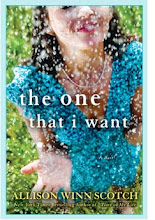
WIP update: I'm really happy with my progress - up to page 117 on my revise, and my goal last week was only page 100, so I'm ahead of the game. This week, I want to finish revising up to page 150 (where my draft ends), and then hopefully crank out another 10-20 new pages. The goal is to be at about page 175+ by the time my agent returns from her honeymoon. We'll see. So...how goes it with your WIPs?
A few people wrote me to ask what sort of PR stuff I'm doing right now for the book. I know that I glazed over this in a post last week, so I thought I'd elaborate. From what I understand, a lot of the PR work really will come once the book is released - going around to a lot of bookstores and introducing myself (with the hopes that this might draw attn from the staff to the book), signing stock, doing interviews that my agent says will inevitably happen, and I dunno what else. But I've steeled myself to be supremely stressed and busy. Blech.
Right now, here's what I have going on, in terms of the PR stuff: I have a bunch of Q/As for blogs and websites that I have to put some thought into and answer (thanks to anyone who has asked! I'm flattered and grateful); I'm redesigning my website with a professional (as opposed to the half-assed job that I created myself), so that's going to take some time this week, and I'm hoping to have it up soon; I'm writing the Reading Group Guide that HarperCollins offers on their site for book clubs; I'm brainstorming essay ideas and drafts for my publicist to submit to a variety of places such as the Lives column in the NY Times Magazine; I'm busy reaching out to libraries, readers and breast cancer causes on places such as MySpace and via their own blogs, etc; I'm putting the finishing touches on an essay that I wrote about my friendship with Lizzie for the June issue of Fitness; I'm checking in with writers I know who read the galley to see if they've been able to place any reviews in shorter-lead mags/sites/newspapers.
Hmmm, I'm sure that there's more, but those are the things that spring to mind right now...
Authors out there, what did you to at this stage (a few months out) to help your own PR plan?
Monday, March 05, 2007


Friday, March 02, 2007
When the Mail Ain't Coming
Have you seen this article? http://gawker.com/news/magazines/do-magazines-invent-letters-hell-yes-239670.php What do you think?
Hmmm, yes, I had seen it because it was the talk of several forums I frequent. For those of you who haven't or who are too lazy to click on the link, Gawker is reporting that a lot of magazines invent their letters. I'm one of the few freelancers who has never worked on staff anywhere, so I can't speak with certainty about the veracity of this, but some of the writers I know said that this isn't that unusual of a practice.
Which, I guess, leads me to ask: why??? I mean, if magazines aren't getting enough reader letters, maybe they should take this as a sign that readers don't care so much about the letters section and axe it altogether. It seems odd to me that they'd go through the effort of fabricating an entire section - a section that largely depends on their readers - rather than realize that maybe readers just don't give a damn.
I also certainly think that this expose (for lack of a better word) undermines the already sketchy leg of authority on which some magazines stand. What does this mean? Well, it's fairly well-known in the freelancing circles that a few magazines (which I won't name) make up quotes and sources when they can't find ones that suit their purposes. (Note: I don't write for any of these magazines, partially because of this reason, so please don't leap to judgment about any and all mags...my editors, including mags such as Women's Health, Self, Parents, Cooking Light, Woman's Day, Family Circle, Hallmark, etc, all put the stories through a rigorous fact-checking process.) As a writer, I can almost always tell when a quote has been made up...they're the ones you read and think, "I can't believe that they found a half-Asian, one-quarter Hawaiian 33 year-old mother of triplets who lives in Wichita, KS and is a former beauty queen who happens to have an IQ over 200 yet has found herself homeless after burning through her inheritance from both parents who died in a freak lightening accident." And the story just happens to be on racially-mixed moms of multiples who live in the Midwest and whose good fortune turned around on a dime. Okay, I'm exaggerating, but you get my point. If a quote is really, really, really too good to be true, in a few magazines, unfortunately, it is.
In fact, I remember a friend was trolling for quotes from parents who would go on record saying that their sex life had gotten hotter after their kids were born. Ha! Every person wrote her back and said, "er, you're kidding, right??" And she knew it was a total joke because how on earth was she going to find the maybe one person who thought that newborns were a turn-on, but her editor insisted that these people were out there. So my poor friend kept searching and searching to no avail. Now, I have no idea what happened with that story, but if it were being written for a few of the mags that invent quotes (which it wasn't), the editor might have just pulled Jane Smith, she who finds spit-up and sleepless nights arousing, out of thin air.
So...getting back to the original question. What do I think of the fact that magazines make up letters? Well, I just think it further undermines the idea that journalists are all too often happy to play fast and loose with the truth. 95% of us aren't.
So what do you guys think of the Gawker piece? Am I jumping to conclusions about its implications?
Hmmm, yes, I had seen it because it was the talk of several forums I frequent. For those of you who haven't or who are too lazy to click on the link, Gawker is reporting that a lot of magazines invent their letters. I'm one of the few freelancers who has never worked on staff anywhere, so I can't speak with certainty about the veracity of this, but some of the writers I know said that this isn't that unusual of a practice.
Which, I guess, leads me to ask: why??? I mean, if magazines aren't getting enough reader letters, maybe they should take this as a sign that readers don't care so much about the letters section and axe it altogether. It seems odd to me that they'd go through the effort of fabricating an entire section - a section that largely depends on their readers - rather than realize that maybe readers just don't give a damn.
I also certainly think that this expose (for lack of a better word) undermines the already sketchy leg of authority on which some magazines stand. What does this mean? Well, it's fairly well-known in the freelancing circles that a few magazines (which I won't name) make up quotes and sources when they can't find ones that suit their purposes. (Note: I don't write for any of these magazines, partially because of this reason, so please don't leap to judgment about any and all mags...my editors, including mags such as Women's Health, Self, Parents, Cooking Light, Woman's Day, Family Circle, Hallmark, etc, all put the stories through a rigorous fact-checking process.) As a writer, I can almost always tell when a quote has been made up...they're the ones you read and think, "I can't believe that they found a half-Asian, one-quarter Hawaiian 33 year-old mother of triplets who lives in Wichita, KS and is a former beauty queen who happens to have an IQ over 200 yet has found herself homeless after burning through her inheritance from both parents who died in a freak lightening accident." And the story just happens to be on racially-mixed moms of multiples who live in the Midwest and whose good fortune turned around on a dime. Okay, I'm exaggerating, but you get my point. If a quote is really, really, really too good to be true, in a few magazines, unfortunately, it is.
In fact, I remember a friend was trolling for quotes from parents who would go on record saying that their sex life had gotten hotter after their kids were born. Ha! Every person wrote her back and said, "er, you're kidding, right??" And she knew it was a total joke because how on earth was she going to find the maybe one person who thought that newborns were a turn-on, but her editor insisted that these people were out there. So my poor friend kept searching and searching to no avail. Now, I have no idea what happened with that story, but if it were being written for a few of the mags that invent quotes (which it wasn't), the editor might have just pulled Jane Smith, she who finds spit-up and sleepless nights arousing, out of thin air.
So...getting back to the original question. What do I think of the fact that magazines make up letters? Well, I just think it further undermines the idea that journalists are all too often happy to play fast and loose with the truth. 95% of us aren't.
So what do you guys think of the Gawker piece? Am I jumping to conclusions about its implications?
Thursday, March 01, 2007
When a Source Wants a Preview
I'm curious how you handle sources who want to see the final version of a story before it goes to print. I've had one particular source who has been really insistant on it, and I don't know what to tell him.
Ugh, isn't it the worst when sources become pests? (Most don't, however, and are nothing but helpful and lovely.) I had one who would just NOT leave me alone, and finally, I had to send him a very curt email telling him to take up whatever else he needed with my editor. And I then blocked his email addy.
Source requests to see the final article actually aren't that unusual - they often don't understand that it's not within our right to show it to them. So, when a source asks me to email them the copy, I always simply tell them that while I can't do that, what will happen is that a fact-checker will be in touch to go over any and all pertinent quotes, and that they can rest assured that they'll have a chance to review what they said. I empathize, I do. I just did an interview about TDLF, and I'm 100% certain that I said a few things that will make me sound like an idiot, as I stumbled my way through some answers. But that doesn't mean that I (or a source) get to impose some sort of control over the story or the editorial process.
If your source isn't placated by the old "fact-checker will be in touch" route, I suggest you simply refer him to your editor, telling him you don't have permission to share the story, but the editor might be able to help. Let your editor do the dirty work - it's not your obligation to do so.
So readers, how do you handle pushy sources?
Ugh, isn't it the worst when sources become pests? (Most don't, however, and are nothing but helpful and lovely.) I had one who would just NOT leave me alone, and finally, I had to send him a very curt email telling him to take up whatever else he needed with my editor. And I then blocked his email addy.
Source requests to see the final article actually aren't that unusual - they often don't understand that it's not within our right to show it to them. So, when a source asks me to email them the copy, I always simply tell them that while I can't do that, what will happen is that a fact-checker will be in touch to go over any and all pertinent quotes, and that they can rest assured that they'll have a chance to review what they said. I empathize, I do. I just did an interview about TDLF, and I'm 100% certain that I said a few things that will make me sound like an idiot, as I stumbled my way through some answers. But that doesn't mean that I (or a source) get to impose some sort of control over the story or the editorial process.
If your source isn't placated by the old "fact-checker will be in touch" route, I suggest you simply refer him to your editor, telling him you don't have permission to share the story, but the editor might be able to help. Let your editor do the dirty work - it's not your obligation to do so.
So readers, how do you handle pushy sources?
Wednesday, February 28, 2007
Booking Book Tours
Hey peeps - just wanted to give a plug to my friend, Kristy Kiernan, whose book, Catching Genius, goes on sale next week!! Yahoo!! For more on the book, check out Larramie's Seize a Daisy blog this week.
I've had a lot of people write to ask if I'm doing a book tour, so I thought I'd pass along some info that I've gleaned about book tours.
It's interesting, just after the comment, "You have to get on Oprah!," (Well, gee, really??? Doesn't every author on the planet - save for one or two - want to get on Oprah?? Not as easy to do as people seem to think.), people say, "So, are you going on a tour?"
So here's the deal with book tours: publishing houses rarely pay for debut authors to go on tour. There are definitely exceptions, such as my fab friend, Laura Dave, but for the most part, the house isn't going to shell out money for an unproven author. Which actually makes a lot of sense to me. I mean, who is going to show up to buy a signed book from someone whom they've never heard of? And to further this point, how many of you guys would show up for a book signing of a random Joe Schmo? Actually, how many of you guys go to book signings period? See where I'm going with this? The numbers aren't high.
That said, debut authors often have signings in places where they know they can generate a decent crowd, and to that end, I am doing a small tour, albeit in cities where I have built-in connections. My publicist told me that bookstores really don't want to waste their time if you can wrangle 50 people to show, so that's our barometer. But the publisher doesn't pay for my travel, I do. I'm fortunate to be in a position where I can do this, but some authors can't, and so they don't. And truthfully, I don't really think this is a big ding in their promotional plans. The jury is out on if tours really bolster sales - a lot of authors and publicists don't think they do - so touring is really a question of how motivated you are. One way that a tour may help is that when an author visits a city, the publicist (if she's good) will alert all the media outlets and you might get a lot of coverage in the papers and such. I believe that this is how a few of my author friends hit bestseller lists in various cities that they visited.
So...how effective do you think touring is? And why is the tour-question so common?
I've had a lot of people write to ask if I'm doing a book tour, so I thought I'd pass along some info that I've gleaned about book tours.
It's interesting, just after the comment, "You have to get on Oprah!," (Well, gee, really??? Doesn't every author on the planet - save for one or two - want to get on Oprah?? Not as easy to do as people seem to think.), people say, "So, are you going on a tour?"
So here's the deal with book tours: publishing houses rarely pay for debut authors to go on tour. There are definitely exceptions, such as my fab friend, Laura Dave, but for the most part, the house isn't going to shell out money for an unproven author. Which actually makes a lot of sense to me. I mean, who is going to show up to buy a signed book from someone whom they've never heard of? And to further this point, how many of you guys would show up for a book signing of a random Joe Schmo? Actually, how many of you guys go to book signings period? See where I'm going with this? The numbers aren't high.
That said, debut authors often have signings in places where they know they can generate a decent crowd, and to that end, I am doing a small tour, albeit in cities where I have built-in connections. My publicist told me that bookstores really don't want to waste their time if you can wrangle 50 people to show, so that's our barometer. But the publisher doesn't pay for my travel, I do. I'm fortunate to be in a position where I can do this, but some authors can't, and so they don't. And truthfully, I don't really think this is a big ding in their promotional plans. The jury is out on if tours really bolster sales - a lot of authors and publicists don't think they do - so touring is really a question of how motivated you are. One way that a tour may help is that when an author visits a city, the publicist (if she's good) will alert all the media outlets and you might get a lot of coverage in the papers and such. I believe that this is how a few of my author friends hit bestseller lists in various cities that they visited.
So...how effective do you think touring is? And why is the tour-question so common?
Tuesday, February 27, 2007
Promotional Pushes
I was wondering if your freelancing/networking with mags, and writing for Redbook helped get you there? Is this something that maybe an agent, or a publicity person does after the book has sold--do you have a publicity person or is it up to you to promote the book? Does a publicity person or do you contact the mag and pitch your book to them? Do you do this for other mags so they can blurb/publish something about your novel in order to get the word more out?
A couple of different questions here and a couple of different answers, so let's break it down.
In terms of Redbook (in case you didn't see the news last week, TDLF was selected as Redbook's Book Club pick for the month of May), the peeps at Harper handled this entirely. I've been lucky enough to have a stellar team of people working behind the scenes to garner publicity for the book, and in this case, the subsidiary rights folks - the same people who manage foreign rights - are the all-stars responsible for selling first serial rights to Redbook. I feel particularly fortunate because it seems like it's really rare to read excerpts from novels in mags these days, so my hat is really off to the subsidiary rights dept at Harper. Did my experience writing for Redbook help? I really don't think so. My editor is currently on maternity leave, and while I did shoot an email to the book editor there, I don't know her and I didn't hear back from her...so I really think this was just a happy accident: that I've written for them in the past and that they selected my book.
And the reviews in Cosmo, Marie Claire and a few others also really had nothing to do with me. They all had to do with a) I guess the fact that the book will appeal to the demographics of these various magazines and b) the fact that I really have a super-duper team at Harper and a fantabulous agent who also helped with the PR by calling various editors and writers whom she knows.
How does this all work? Well, we got the galleys back in December. And from there, the folks at Harper sent out a blanket mailing to all of the long-lead editors. (Newspapers and weeklies, with the exception of People and EW, all get copies of actual books when we get them in a month or so. People and EW got galleys.) My publicist then follows up, follows up, follows up. And hopefully, one or more editors bite. We've been very fortunate in the coverage we've received, and I really don't know why, other than to say that I guess the book is connecting on some level and to credit my savvy team once again. They put together a good Q/A with me and a sharp press release, and this must have made the book pop out among the hundreds of other submissions that these editors receive. Oh, and props to the art dept too because the cover is getting a lot of positive feedback, and as consumers, not just writers, we know that covers help sell (and evidently, move galleys to the top of an editor's stack).
Now, that said, certainly, my connections at other magazines have helped. For example, I've written for Fitness before, and my lovely editor there read the book (and enjoyed it!), and asked me to write an essay for the mag to coincide with the release. (Right now, it's slated for the May issue, but I have a sneaking suspicion that it might get bumped to June.)
And, as any author will tell you, even when your publicist is fabulous, the onus still falls on you much of the time. So I've been doing Q/As with websites and blogs, and yes, following up with a lot of my own editors to garner even more attention and mentions. Because ultimately, my publicist has a slew of other books to promote, and I only have mine. End of story.
Make sense?Monday, February 26, 2007
Progress?
So...how are we doing with our WIPs? I'm happy to report that I'm now up to page 75 on mine, which is exactly where I wanted and needed to be to date. My agent is leaving on her fabu-honeymoon, and I've promised her the first half of the book (about 150 pages) when she returns. So, as of now, I have about three weeks to revise/rewrite/overhaul the remaining 75 pages. And I think that's totally do-able. My goal is to have gotten to page 100 (at least) by the end of this week.
What is yours?
I'm sorry I'm not answering a question today. I am SOOO farking tired. (Yes, farking is my feeble attempt to curb my swearing, as my two-year old now repeats every. single. thing. we say, and it's high time that my husband and I clean up our language. I, however, am much more successful than he is at this, and I live in fear of what my son might blurt out on his first day of preschool in September. Thus, my attempt to get my husband to swap in non-swear words for similar sounding, but much worse, actual swear words.) Anyway, I went to the gym late last night, and as a result, I couldn't get to sleep, despite the Oscar's best attempts to put me to sleep. Wow, was that a boring ceremony or what?? I was up almost the entire night - hearing my horrid upstairs neighbors tromp about (despite REPEATED!!!!! notes and discussion asking them to be a little more aware of the fact that they sound like 6000 pound elephants) and then hearing various people shovel snow off the sidewalk in the middle of the night. WHY??? I ask you, was that necessary?? Then, to top if off, I absolutely could NOT get this random song from Music and Lyrics (that, yes, my husband was kind enough to see with me) out of my head, and I played it on repeat in my mind over and over while I tossed and turned. (Side note: I actually sort of dig this song, but Hugh Grant, as delicious as he is, is not a singer born.)
Anyway, the long and the short of it is that I'm pooped. So no question today. But if you have more questions, please do send them my way. A few people mentioned that they didn't know how to email me, so here's my addy: allison@allisonwinn.com
What is yours?
I'm sorry I'm not answering a question today. I am SOOO farking tired. (Yes, farking is my feeble attempt to curb my swearing, as my two-year old now repeats every. single. thing. we say, and it's high time that my husband and I clean up our language. I, however, am much more successful than he is at this, and I live in fear of what my son might blurt out on his first day of preschool in September. Thus, my attempt to get my husband to swap in non-swear words for similar sounding, but much worse, actual swear words.) Anyway, I went to the gym late last night, and as a result, I couldn't get to sleep, despite the Oscar's best attempts to put me to sleep. Wow, was that a boring ceremony or what?? I was up almost the entire night - hearing my horrid upstairs neighbors tromp about (despite REPEATED!!!!! notes and discussion asking them to be a little more aware of the fact that they sound like 6000 pound elephants) and then hearing various people shovel snow off the sidewalk in the middle of the night. WHY??? I ask you, was that necessary?? Then, to top if off, I absolutely could NOT get this random song from Music and Lyrics (that, yes, my husband was kind enough to see with me) out of my head, and I played it on repeat in my mind over and over while I tossed and turned. (Side note: I actually sort of dig this song, but Hugh Grant, as delicious as he is, is not a singer born.)
Anyway, the long and the short of it is that I'm pooped. So no question today. But if you have more questions, please do send them my way. A few people mentioned that they didn't know how to email me, so here's my addy: allison@allisonwinn.com
Friday, February 23, 2007
Breaking Into Anthologies
I've been reading lots of anthologies of non-fiction essays, including Twentysomething Essays, Death by Pad Thai, and Expat. Some of the essays are by established writers and some are from unknowns, but they're all great to read. Do you think you need to be agented to find these kinds of opportunities? How do other writers do it? Do they have an unpublished essay lying around or do they get asked to write one specifically for the anthology?
Funny, I just bought The Bitch In the House, so your question was timely. That said, I don't have the slightest idea. So...I turned to my fabulous and wise agent, who had this to say.
"A lot of times, the 'editor' of the anthology will send out a mass email, asking authors, usually published as it helps the chances for the book to be sold, for a commitment, a paragraph idea for how they would spin the anthology’s topic, and a bio. So, it certainly helps to be published in that topic and to be enmeshed in that world of writers.
I often have editors come to me and ask me if I have any authors who might be right for a story on X…and then I forward it on…but it’s not something I commission. It’s little money but a great way to build your platform.
I guess if the author is unpublished, a way to throw her hat in the ring would be to contact the editor of a previous anthology, via a fan letter (for example, Sally Wofford Girand has now worked on two) and get her name on editor's radar."
Oh, my agent, she's so brilliant!
Anyone out there ever contributed to an anthology? If so, how did it happen?
Funny, I just bought The Bitch In the House, so your question was timely. That said, I don't have the slightest idea. So...I turned to my fabulous and wise agent, who had this to say.
"A lot of times, the 'editor' of the anthology will send out a mass email, asking authors, usually published as it helps the chances for the book to be sold, for a commitment, a paragraph idea for how they would spin the anthology’s topic, and a bio. So, it certainly helps to be published in that topic and to be enmeshed in that world of writers.
I often have editors come to me and ask me if I have any authors who might be right for a story on X…and then I forward it on…but it’s not something I commission. It’s little money but a great way to build your platform.
I guess if the author is unpublished, a way to throw her hat in the ring would be to contact the editor of a previous anthology, via a fan letter (for example, Sally Wofford Girand has now worked on two) and get her name on editor's radar."
Oh, my agent, she's so brilliant!
Anyone out there ever contributed to an anthology? If so, how did it happen?
Thursday, February 22, 2007
Cool News of the Week and Switching Out Agents
Big news!! Redbook, which has a circulation of nearly three million and up to about nine million eyeballs (meaning, that's how many people actually read the magazine each month), just selected The Department of Lost and Found as its May Book Club Pick of the Month!!!!!! I am beside myself with excitement. They'll print an excerpt of the book in the magazine and conduct a Q/A with me on their website. This is such a thrill and an honor, and my whole team at Harper is elated. So I had to share! Okay, down to business:
Question of the day: Allison, is it OK to look for an agent while you're already under contract? Or should you fire Agent A first, and then look for Agent B?
Ooh, juicy question. And, depending on whom you ask, one with more than one answer.
Most agents, including Miss Snark, will tell you that you're obligated to let Agent A know that you're movin' on before setting out on a hunt for Agent B. Fair play, and all of that. Not to mention that you do run into the problem that Agent B might know Agent A, and might know that you're repped by Agent A, in which case, you'll be looking for Agent C, D, or E.
That said, it's terrifying to leave a sure thing for an unknown, so I do think that a lot of repped writers very quietly begin their agent hunt before giving notice. Now. I'm not entirely sure how you word this in your query letter, and perhaps some wise readers can suggest how they would go about this. Or if you should go about this at all. In my case, Agent A and I mutually decided to part ways, so I never had an overlap. But if she had dragged out the situation much longer, it's entirely possible that I might have jumped on the agent go-around before being officially released.
The bottom line is that this is a really sticky situation. So readers...help out this person out. What would you do?
Question of the day: Allison, is it OK to look for an agent while you're already under contract? Or should you fire Agent A first, and then look for Agent B?
Ooh, juicy question. And, depending on whom you ask, one with more than one answer.
Most agents, including Miss Snark, will tell you that you're obligated to let Agent A know that you're movin' on before setting out on a hunt for Agent B. Fair play, and all of that. Not to mention that you do run into the problem that Agent B might know Agent A, and might know that you're repped by Agent A, in which case, you'll be looking for Agent C, D, or E.
That said, it's terrifying to leave a sure thing for an unknown, so I do think that a lot of repped writers very quietly begin their agent hunt before giving notice. Now. I'm not entirely sure how you word this in your query letter, and perhaps some wise readers can suggest how they would go about this. Or if you should go about this at all. In my case, Agent A and I mutually decided to part ways, so I never had an overlap. But if she had dragged out the situation much longer, it's entirely possible that I might have jumped on the agent go-around before being officially released.
The bottom line is that this is a really sticky situation. So readers...help out this person out. What would you do?
Wednesday, February 21, 2007
My Agent, The Marketer
Got this question in reference to my post yesterday...wanted to clarify: What do you mean by create a marketing campaign for it? Do you have to work with your agent to create a special campaign for the book when you go to a publisher?
No, you don't have to create a special campaign, but an agent's job extends beyond just calling up editors and saying, "Hey, I'm sending this manuscript over to you for review." Or I should say, a good agent's job.
Much like you craft and finesse the perfect pitch letter to land an agent, so too will an agent craft a letter/pitch about your book to send to editors. (Even if this is an email or something more casual.) The agent will look for a way to set your book apart from all of the riff-raff that the editor is also receiving - she'll hone the hook of the book, find good comparisons (for example, as mentioned last week, my agent pitched my book as a Good Grief meets The True and Outstanding Adventures of the Hunt Sisters) and sell the book to the editor. Not literally, though she might well do that too, but more figuratively - she'll make your book sound so tempting that the editor would rather receive the manuscript than a dozen chocolate cupcakes.
I really think this is a critical difference between an adequate agent and a great one: the great ones know how to get editors salivating, and part of any good sell is the packaging and marketing. So, in essence, great agents are also stellar marketers. That's what I meant by that comment.
Make sense? Those of you who are agented, do you agree?
No, you don't have to create a special campaign, but an agent's job extends beyond just calling up editors and saying, "Hey, I'm sending this manuscript over to you for review." Or I should say, a good agent's job.
Much like you craft and finesse the perfect pitch letter to land an agent, so too will an agent craft a letter/pitch about your book to send to editors. (Even if this is an email or something more casual.) The agent will look for a way to set your book apart from all of the riff-raff that the editor is also receiving - she'll hone the hook of the book, find good comparisons (for example, as mentioned last week, my agent pitched my book as a Good Grief meets The True and Outstanding Adventures of the Hunt Sisters) and sell the book to the editor. Not literally, though she might well do that too, but more figuratively - she'll make your book sound so tempting that the editor would rather receive the manuscript than a dozen chocolate cupcakes.
I really think this is a critical difference between an adequate agent and a great one: the great ones know how to get editors salivating, and part of any good sell is the packaging and marketing. So, in essence, great agents are also stellar marketers. That's what I meant by that comment.
Make sense? Those of you who are agented, do you agree?
Tuesday, February 20, 2007
From Agent To Sale?
I just got an agent for my novel. Hurrah! I wanted to see if you knew what my odds were of now making a sale to a publishing house. I searched online but couldn't find anything concrete.
First of all, congrats on landing an agent! Hurrah, indeed.
Second of all, you couldn't find any reliable stats because there aren't any. And even if there were, these stats would have no bearing on whether or not your book would sell. (Sorry!) There are two reasons that a book sells: if it's good or if it meets a particular house's need at the time (or some combination of the two). And if your book isn't one of the above, then it doesn't matter if 99% of all agented books sell, yours won't.
Ok, now. I didn't at ALL mean that yours isn't good! I was simply pointing out that statistics are entirely unhelpful when it comes to situations like this. If your book is kick-ass and timely, then it probably has a better than 50% chance of selling...this is just a safe stat that I'm pulling out of my head. Unfortunately, however, getting an agent isn't a slam-dunk on the way to a book deal. And how do I know? (Lest you think I'm just being overdramatic.) Because my first (agented) book DIDN'T SELL! Came veeeeeeeery close, but alas, nada.
Here's the thing though: there's really not a whole hell of a lot you can do right now about the situation. You wrote what you (and your agent) consider to be a great book. That's ALL you can do. Now, it's up to your agent to pinpoint the best editors and put together the best marketing campaign for it, and then, let that baby fly. Here's to hoping that an editor catches it!
Good luck!
First of all, congrats on landing an agent! Hurrah, indeed.
Second of all, you couldn't find any reliable stats because there aren't any. And even if there were, these stats would have no bearing on whether or not your book would sell. (Sorry!) There are two reasons that a book sells: if it's good or if it meets a particular house's need at the time (or some combination of the two). And if your book isn't one of the above, then it doesn't matter if 99% of all agented books sell, yours won't.
Ok, now. I didn't at ALL mean that yours isn't good! I was simply pointing out that statistics are entirely unhelpful when it comes to situations like this. If your book is kick-ass and timely, then it probably has a better than 50% chance of selling...this is just a safe stat that I'm pulling out of my head. Unfortunately, however, getting an agent isn't a slam-dunk on the way to a book deal. And how do I know? (Lest you think I'm just being overdramatic.) Because my first (agented) book DIDN'T SELL! Came veeeeeeeery close, but alas, nada.
Here's the thing though: there's really not a whole hell of a lot you can do right now about the situation. You wrote what you (and your agent) consider to be a great book. That's ALL you can do. Now, it's up to your agent to pinpoint the best editors and put together the best marketing campaign for it, and then, let that baby fly. Here's to hoping that an editor catches it!
Good luck!
Monday, February 19, 2007
By George, I Think I've Got It! (My Heroine, That Is)
Hey fellow bloggers -
If you're a regular blogger and reach the mommy-demo (Manic Mom, I'm talking to you!), check out my friend, Melanie Hauser's blog. She's doing a give-away to correspond with her newest book release, Super Mom Saves the World, and along with a free book, you'll get a free Swiffer! What's not to love?
Okay, so how did you guys do this week with your WIPs? Here's where I came out:
First of all, I am completely and totally overwhelmingly busy, so let me offer that caveat first. :) Promotional stuff for TDLF is taking up a lot more time than I imagined, which isn't a bad thing because, after all, it means that there IS promotional stuff happening, but it also eats into my writing time. Which is why, er, I suppose that I should have listened to the gajillions of people who told me to write my second book as soon as my first one sold...rather than waiting until three months before it's released. Oops.
BUT. Some very good things happened. This is what I'm currently doing: I have 40k words already written. But I've changed some fundamental parts of the plot and characteristics in my heroine, such that a decent part of these 40k words need to be overhauled. So right now, I'm making my way through these pages - I got up to page 30 this week, and my goal (remember I talked about how important it is to set concrete goals) is to have revised ALL 150 or so pages that I've written by the end of March, when I head to Mexico for vacation. (Yahoo!) I actually think I'll finish this MUCH earlier, but you never know, so this is a reasonable, attainable goal. (Which is another critical factor in finding success - setting realistic goal rather than "I'm going to lose 20 pounds in a month" goals.)
More important than the actual 30 pages of revisions is the fact that I finally started to get a real feel for my heroine - get inside of her head and fully understand what motivates her, why she is how she is, and how this will affect her trajectory for the rest of her journey in the book. How, you might ask, did I write 150 pages without fully getting her? Well, I sort of equate it to the difference between being a good actor - someone who can cry on cue but never quite convince the audience that she's actually mourning - and a great actor - someone who full inhabits the role to the point where you really believe that she's experiencing the life of the character she's playing (hello, Kate Winslet!). And this is what I was doing with my heroine: I was writing her in such a way that she was believable, but fully inhabitable. And that's because I didn't inhabit her myself. But now, we've clicked, and I'm thinking about her and her story and where it will go nearly all the time. It even woke me up last night, and that's saying a lot from a seriously sleep-deprived me.
Okay, so that's where I'm at. How about you? Did I make any sense? Can you tell when someone is smiling for the camera and smiling because she really believes the reasons behind her smile? (Figuratively speaking.)
If you're a regular blogger and reach the mommy-demo (Manic Mom, I'm talking to you!), check out my friend, Melanie Hauser's blog. She's doing a give-away to correspond with her newest book release, Super Mom Saves the World, and along with a free book, you'll get a free Swiffer! What's not to love?
Okay, so how did you guys do this week with your WIPs? Here's where I came out:
First of all, I am completely and totally overwhelmingly busy, so let me offer that caveat first. :) Promotional stuff for TDLF is taking up a lot more time than I imagined, which isn't a bad thing because, after all, it means that there IS promotional stuff happening, but it also eats into my writing time. Which is why, er, I suppose that I should have listened to the gajillions of people who told me to write my second book as soon as my first one sold...rather than waiting until three months before it's released. Oops.
BUT. Some very good things happened. This is what I'm currently doing: I have 40k words already written. But I've changed some fundamental parts of the plot and characteristics in my heroine, such that a decent part of these 40k words need to be overhauled. So right now, I'm making my way through these pages - I got up to page 30 this week, and my goal (remember I talked about how important it is to set concrete goals) is to have revised ALL 150 or so pages that I've written by the end of March, when I head to Mexico for vacation. (Yahoo!) I actually think I'll finish this MUCH earlier, but you never know, so this is a reasonable, attainable goal. (Which is another critical factor in finding success - setting realistic goal rather than "I'm going to lose 20 pounds in a month" goals.)
More important than the actual 30 pages of revisions is the fact that I finally started to get a real feel for my heroine - get inside of her head and fully understand what motivates her, why she is how she is, and how this will affect her trajectory for the rest of her journey in the book. How, you might ask, did I write 150 pages without fully getting her? Well, I sort of equate it to the difference between being a good actor - someone who can cry on cue but never quite convince the audience that she's actually mourning - and a great actor - someone who full inhabits the role to the point where you really believe that she's experiencing the life of the character she's playing (hello, Kate Winslet!). And this is what I was doing with my heroine: I was writing her in such a way that she was believable, but fully inhabitable. And that's because I didn't inhabit her myself. But now, we've clicked, and I'm thinking about her and her story and where it will go nearly all the time. It even woke me up last night, and that's saying a lot from a seriously sleep-deprived me.
Okay, so that's where I'm at. How about you? Did I make any sense? Can you tell when someone is smiling for the camera and smiling because she really believes the reasons behind her smile? (Figuratively speaking.)
Friday, February 16, 2007
Do You Want It Hard or Soft?
(That's what she said!)...Er, sorry, that's my homage to The Office. (Jim!!! Pam!!! What are you doing???!!?)
You mentioned in a previous post that getting a hardcover deal was important to you. What are the pros of this? Is hardcover better than trade paperback?
Ooh, goooood question, and I definitely want other people to weigh in with their thoughts.
NO. Let me say first that there's no "better," or "worse." There's really only what's best for your particular book. And in my case, I felt, as did my agent, that hardcover was the right way to release TDLF. How did we reach that conclusion? Well, other books that it was being compared to, such as Good Grief and The True and Outstanding Adventures of the Hunt Sisters, were released in hardcover...and did really well. So clearly, the demographic for my book can and will buy hardcover. Second, hardcover books tend (and I say tend because this is evolving) to get more reviews, and reviews sell books. Third, like it or not, hardcover books are often considered more "prestigious" by people in the industry (and I put that word in quotes because it's a terrible adjective to use, but I'm lacking a better one), and so they might get a bigger push by everyone from your in-house publicist to your sales team to a buyer at Barnes and Noble. (And btw, please know that I'm just passing along what I've heard. I certainly don't believe that my book is any more prestigious or important or whatever than a gazillion wonderful trade paperbacks that I've read.) There's also the fact that, I think, libraries are more likely to order hardcovers than paperback, and libraries can definitely make a dent in your sales. (Correct me if I'm wrong about this.)
NOW. There are also a lot of benefits to coming out in trade paperback. The most obvious is price point. A LOT of people don't want to shell out twenty bucks or more for a book for which there's no guarantee that they'll like. (Though interestingly enough, a book will last you a lot longer than a movie, and these days, tix to the movies for two people are about the same as a hardcover, at least in NYC. Let's not even factor in the price of the evening once you've added in a babysitter and dinner!) I think this is really true for the chick lit market or for first-time writers. You simply might not be able to get people to shell out for an unproven author or for a lighter story. Especially the younger demographic who doesn't have as much disposable income. I think, and this is just my guess, you're also more likely to get book clubs to select trade paperbacks than hardcovers, and book clubs can really bolster sales, especially through word of mouth.
There's also the added pressure of coming out in hardcover vs. trade. I think that the publishing house tends to have greater expectations with their hardcovers, and if you fall short - which you well might, given the price point - your next book deal might be a no-go.
Speaking of reviews (well, I speaking of them in the earlier paragraphs), time for a tiny brag...:)
Booklist just had this to say about TDLF:
"Scotch handles the topic of cancer with humor and hope, never dipping into the maudlin. The changes and realizations that the characters make are profound and moving. An impressive debut."
Anyway, I'd LOVE to hear what other people think about hardcover vs. trade paperback. Please weigh in!
You mentioned in a previous post that getting a hardcover deal was important to you. What are the pros of this? Is hardcover better than trade paperback?
Ooh, goooood question, and I definitely want other people to weigh in with their thoughts.
NO. Let me say first that there's no "better," or "worse." There's really only what's best for your particular book. And in my case, I felt, as did my agent, that hardcover was the right way to release TDLF. How did we reach that conclusion? Well, other books that it was being compared to, such as Good Grief and The True and Outstanding Adventures of the Hunt Sisters, were released in hardcover...and did really well. So clearly, the demographic for my book can and will buy hardcover. Second, hardcover books tend (and I say tend because this is evolving) to get more reviews, and reviews sell books. Third, like it or not, hardcover books are often considered more "prestigious" by people in the industry (and I put that word in quotes because it's a terrible adjective to use, but I'm lacking a better one), and so they might get a bigger push by everyone from your in-house publicist to your sales team to a buyer at Barnes and Noble. (And btw, please know that I'm just passing along what I've heard. I certainly don't believe that my book is any more prestigious or important or whatever than a gazillion wonderful trade paperbacks that I've read.) There's also the fact that, I think, libraries are more likely to order hardcovers than paperback, and libraries can definitely make a dent in your sales. (Correct me if I'm wrong about this.)
NOW. There are also a lot of benefits to coming out in trade paperback. The most obvious is price point. A LOT of people don't want to shell out twenty bucks or more for a book for which there's no guarantee that they'll like. (Though interestingly enough, a book will last you a lot longer than a movie, and these days, tix to the movies for two people are about the same as a hardcover, at least in NYC. Let's not even factor in the price of the evening once you've added in a babysitter and dinner!) I think this is really true for the chick lit market or for first-time writers. You simply might not be able to get people to shell out for an unproven author or for a lighter story. Especially the younger demographic who doesn't have as much disposable income. I think, and this is just my guess, you're also more likely to get book clubs to select trade paperbacks than hardcovers, and book clubs can really bolster sales, especially through word of mouth.
There's also the added pressure of coming out in hardcover vs. trade. I think that the publishing house tends to have greater expectations with their hardcovers, and if you fall short - which you well might, given the price point - your next book deal might be a no-go.
Speaking of reviews (well, I speaking of them in the earlier paragraphs), time for a tiny brag...:)
Booklist just had this to say about TDLF:
"Scotch handles the topic of cancer with humor and hope, never dipping into the maudlin. The changes and realizations that the characters make are profound and moving. An impressive debut."
Anyway, I'd LOVE to hear what other people think about hardcover vs. trade paperback. Please weigh in!
Thursday, February 15, 2007
Get Unboxed!
Hey guys,
I'm guest-blogging today at Writer Unboxed, a fabulous resource for all levels of writers. Actually, I'm not really guest-blogging, I'm now a semi-regular contributor, but you get the idea.
Check it out!
I'm guest-blogging today at Writer Unboxed, a fabulous resource for all levels of writers. Actually, I'm not really guest-blogging, I'm now a semi-regular contributor, but you get the idea.
Check it out!
Wednesday, February 14, 2007
Decisions, Decisions
I'm in the fortunate position of having two agent offers for my novel. I know that you were in a similar position, so how did you decide which one to choose? I have phone calls set up with them later this week, but I'm stressed out about the decision! I didn't think I'd ever find myself in this position, and I have no idea what to do.
First of all, congrats!! You're in a very enviable situation, and your book must be a winner. Whoohoo!
Okay, down to business. You've already taken the right steps - namely, but setting up conversations with both of the agents. If you live nearby, you might even suggest that you meet in person - over lunch or in their offices - to get an even better feel for them. When you're on the phone, don't be afraid to ask them questions that will help you make your decision. For example, one of the agents who offered to rep me felt very strongly that TDLF was a trade paperback book. While my current agent (and obviously the offer I accepted!) felt very strongly that it was a hardcover book. And clearly, she was the one I agreed with. Ask them how they plan to shop it around - spread it to a dozen agents or limit it to a few "perfect" matches to begin with; ask them where they see your book falling in the marketplace; ask them how they like to work with authors - filling you in on news when it happens or checking in with you often. Etc. There are numerous other questions that you can (and should) ask...and my guess is that the agents will have different answers and different approaches. The one that falls more in sync with your line of thinking should be the one you sign with, even if the other is a bigger name or someone who you "thought" you should go with. Per my post yesterday, there's no right agent for you until he or she goes to work for you, and you might find yourself surprised to lean one way when you anticipated leaning the other.
The other factor is something far less tangible, and that's one of chemistry. Most authors who have had to choose between two or more agents will tell you that there was just something intrinsic in the way that they clicked with the agent they chose. I know this was certainly true in my case. My agent and I were practically finishing each other's sentences by the end of our phone call...and I knew she was the right one for me.
Good luck whomever you choose!
So readers, ever had to choose between more than one agent? If so, how did you make your decision?
First of all, congrats!! You're in a very enviable situation, and your book must be a winner. Whoohoo!
Okay, down to business. You've already taken the right steps - namely, but setting up conversations with both of the agents. If you live nearby, you might even suggest that you meet in person - over lunch or in their offices - to get an even better feel for them. When you're on the phone, don't be afraid to ask them questions that will help you make your decision. For example, one of the agents who offered to rep me felt very strongly that TDLF was a trade paperback book. While my current agent (and obviously the offer I accepted!) felt very strongly that it was a hardcover book. And clearly, she was the one I agreed with. Ask them how they plan to shop it around - spread it to a dozen agents or limit it to a few "perfect" matches to begin with; ask them where they see your book falling in the marketplace; ask them how they like to work with authors - filling you in on news when it happens or checking in with you often. Etc. There are numerous other questions that you can (and should) ask...and my guess is that the agents will have different answers and different approaches. The one that falls more in sync with your line of thinking should be the one you sign with, even if the other is a bigger name or someone who you "thought" you should go with. Per my post yesterday, there's no right agent for you until he or she goes to work for you, and you might find yourself surprised to lean one way when you anticipated leaning the other.
The other factor is something far less tangible, and that's one of chemistry. Most authors who have had to choose between two or more agents will tell you that there was just something intrinsic in the way that they clicked with the agent they chose. I know this was certainly true in my case. My agent and I were practically finishing each other's sentences by the end of our phone call...and I knew she was the right one for me.
Good luck whomever you choose!
So readers, ever had to choose between more than one agent? If so, how did you make your decision?
Tuesday, February 13, 2007
Any Seattle-ites Out There?
Hey guys,
If you're from Seattle and read this blog, would you be interested in a book signing/reading on either May 23rd or May 29th? We're trying to gauge interest and determine a head count before we book it. (No crowd = no signing.) :(
Feel free to email me and let me know, or you can post here.
Thanks!
If you're from Seattle and read this blog, would you be interested in a book signing/reading on either May 23rd or May 29th? We're trying to gauge interest and determine a head count before we book it. (No crowd = no signing.) :(
Feel free to email me and let me know, or you can post here.
Thanks!
How Long is Too Long?
(I'm so glad that so many of you guys want to tag along and post progress reports each Monday - see you then!)
Question of the day: I've been on the agent hunt for a few months, with a little success, but no agent as of yet. My dream agent requested a full about two and a half months ago, and I haven't heard anything back. Should I nudge her or should I just leave it alone?
Well, let me start by saying I think you need to remove "dream agent," from your vocabulary. There is no such thing as a dream agent with whom you aren't signed. Why? Because until an agent goes to work for you, you have no idea if, in fact, he or she really is a dream. I can't tell you how many stories I hear from fellow writers who signed with big names or people who were deemed "dreams," only to discover that these agents were closer to nightmares. Of course you can (and should) aspire to be signed by specific agents - I mean, how else would you conduct an efficient agent search? But so many writers sign with agents who ended up becoming dream agents, agents who respond quickly, agents who sell their work, agents who help them craft their future books, etc - and these agents might not have even been on these writers' top 10 lists. It's what an agent does for you that makes him or her a dream.
Anyhoo, is 2 1/2 months long enough? I dunno. Miss Snark says that it is not - that 90 days is standard in the industry - and that even then, she has loads of fulls that she hasn't read. If I were you (which I'm not), I'd probably check in with the agent, even if it's to get an ETA. I don't think you'll be considered a pest, and hey, if you are, after 2 1/2 months, you should consider whether or not this is a person with whom you'd want to work. Too many writers forget that they do have a tiny bit of power when it comes to finding an agent: namely, they can decide if they're willing to tolerate people who treat them like doormats (not that silence for 2 1/2 months means that he or she is treating you like a doormat, but finding you a pest might be), and if you're NOT willing to work with someone who deems you annoying after nearly three months, then you have your answer about whether he or she is your dream agent.
So...what say you? Would you check in or shut up and wait?
Question of the day: I've been on the agent hunt for a few months, with a little success, but no agent as of yet. My dream agent requested a full about two and a half months ago, and I haven't heard anything back. Should I nudge her or should I just leave it alone?
Well, let me start by saying I think you need to remove "dream agent," from your vocabulary. There is no such thing as a dream agent with whom you aren't signed. Why? Because until an agent goes to work for you, you have no idea if, in fact, he or she really is a dream. I can't tell you how many stories I hear from fellow writers who signed with big names or people who were deemed "dreams," only to discover that these agents were closer to nightmares. Of course you can (and should) aspire to be signed by specific agents - I mean, how else would you conduct an efficient agent search? But so many writers sign with agents who ended up becoming dream agents, agents who respond quickly, agents who sell their work, agents who help them craft their future books, etc - and these agents might not have even been on these writers' top 10 lists. It's what an agent does for you that makes him or her a dream.
Anyhoo, is 2 1/2 months long enough? I dunno. Miss Snark says that it is not - that 90 days is standard in the industry - and that even then, she has loads of fulls that she hasn't read. If I were you (which I'm not), I'd probably check in with the agent, even if it's to get an ETA. I don't think you'll be considered a pest, and hey, if you are, after 2 1/2 months, you should consider whether or not this is a person with whom you'd want to work. Too many writers forget that they do have a tiny bit of power when it comes to finding an agent: namely, they can decide if they're willing to tolerate people who treat them like doormats (not that silence for 2 1/2 months means that he or she is treating you like a doormat, but finding you a pest might be), and if you're NOT willing to work with someone who deems you annoying after nearly three months, then you have your answer about whether he or she is your dream agent.
So...what say you? Would you check in or shut up and wait?
Monday, February 12, 2007
I'm Back In the Saddle
Okay, after a fantastic conversation with my fantabulous agent, I'm diving back into book #2 today. I'm so excited to dig in. She and I brainstormed some new ideas and new directions for the WIP, and just getting a new perspective has really gotten my creative juices flowing.
So...I'll be posting my progress every Monday - letting you guys know how I'm doing and thus, holding myself accountable to really digging in and writing. Oh, and did I mention that my agent is hoping to see a draft in May? Yikes. But a deadline really gets my rear in gear, so this is a good thing.
If you're stymied, try bouncing some ideas off of an objective reader and setting deadlines for yourself. It might really help. And if you want to join me in posting your own writing progress every Monday, please do!
In other news, Publishers Weekly just called The Department of Lost and Found, "a bonbon of a book." (That's a good thing, right?) Yahoo!
So...I'll be posting my progress every Monday - letting you guys know how I'm doing and thus, holding myself accountable to really digging in and writing. Oh, and did I mention that my agent is hoping to see a draft in May? Yikes. But a deadline really gets my rear in gear, so this is a good thing.
If you're stymied, try bouncing some ideas off of an objective reader and setting deadlines for yourself. It might really help. And if you want to join me in posting your own writing progress every Monday, please do!
In other news, Publishers Weekly just called The Department of Lost and Found, "a bonbon of a book." (That's a good thing, right?) Yahoo!
Thursday, February 08, 2007
Learning to Let Go
Super practical advice sought: I am curious how you stay organized as a freelancer. My problem right now is I have a ton of ideas and often find myself overwhelmed as to how to prioritize researching, reporting, finding a market and pitching... I have notebooks and a word documents - I've tried spreadsheets and sticky notes... and I want to pursue more stories than I really have time to do well (I'm not a full-time freelancer yet).
Organizational systems are very personal but I am curious what method works for you - not just how you stay on top of deadlines, follow ups, clippings/research, etc. but also how you "triage" - determine which ideas to nurture and which to shelve for the time being.
As you noted, organizational systems are very personal - what works for one gal won't fly for another - but, as I've said here in the past, the only thing that keeps me organized is heavy-duty list-making. I write down every last thing, from errands to phone calls to story deadlines, and cross them off as I go. There's little more fulfilling than slashing through a to-do, and I seriously get a rush from it. In fact, I've been really delinquent this week with my list-making - I'm moving into a new office and literally just haven't taken out my pad of paper - and I feel really scattered as a result. And really unproductive.
As far as story triage, this is something that I really had to learn on the job. Sort of like a med student who gets better with practice. When I started out, I can't even tell you how many story ideas I probably beat to death - researching endlessly, pitching endlessly, convinced that they'd make a fab feature in BIG NAME magazine. As the years went on, I simply got a better sense of what editors were looking for, and I'm really not sure that you can figure this out via anything other than experience.
I guess one key is to go beyond the obvious. Editors have seen EVERY idea under the sun. They really don't want another "10 great ways to lose weight" idea. Yes, the want to publish an article on losing weight, but they want to hear about surprising angles and tips. And if you send them the same-old, same-old, you'll be wasting both your time and hers.
Another key is to poke around and see how much research there is to back up your idea, and how many tangents you can tie into it. What I mean by this is that often times, writers might envision their story idea as a feature but there just isn't enough interesting info or anything new to say on the subject. So if you're going to push for a big story, make sure that it is, indeed, a big story.
Of course, if there's a subject that really is near and dear to your heart, then keep at it. I've heard of writers landing stories or essays after 100 pitches. Would I pitch something 100 times? Probably not. I'd probably hit all of the magazines for which I think the story is a good idea, and if none of them bite, I'd put it on the backburner until a new market pops up or the timing is better for the story. (For example, if I'm pitching a breast cancer story, I might revisit it to hit magazine's breast cancer month issues.) This brings up my final point: make sure that you're pitching the right outlets! You'd be amazed at how many writers pitch beauty stories to a magazine that really doesn't cover beauty or a story on STDs to a magazine aimed at married moms. (Not to say that married moms aren't interested in STDs, but the editors aren't likely to bite because it's not just a subject that is universally interesting to their audience.)
So...how do you deal with story triage? When do you move on from an idea?
Organizational systems are very personal but I am curious what method works for you - not just how you stay on top of deadlines, follow ups, clippings/research, etc. but also how you "triage" - determine which ideas to nurture and which to shelve for the time being.
As you noted, organizational systems are very personal - what works for one gal won't fly for another - but, as I've said here in the past, the only thing that keeps me organized is heavy-duty list-making. I write down every last thing, from errands to phone calls to story deadlines, and cross them off as I go. There's little more fulfilling than slashing through a to-do, and I seriously get a rush from it. In fact, I've been really delinquent this week with my list-making - I'm moving into a new office and literally just haven't taken out my pad of paper - and I feel really scattered as a result. And really unproductive.
As far as story triage, this is something that I really had to learn on the job. Sort of like a med student who gets better with practice. When I started out, I can't even tell you how many story ideas I probably beat to death - researching endlessly, pitching endlessly, convinced that they'd make a fab feature in BIG NAME magazine. As the years went on, I simply got a better sense of what editors were looking for, and I'm really not sure that you can figure this out via anything other than experience.
I guess one key is to go beyond the obvious. Editors have seen EVERY idea under the sun. They really don't want another "10 great ways to lose weight" idea. Yes, the want to publish an article on losing weight, but they want to hear about surprising angles and tips. And if you send them the same-old, same-old, you'll be wasting both your time and hers.
Another key is to poke around and see how much research there is to back up your idea, and how many tangents you can tie into it. What I mean by this is that often times, writers might envision their story idea as a feature but there just isn't enough interesting info or anything new to say on the subject. So if you're going to push for a big story, make sure that it is, indeed, a big story.
Of course, if there's a subject that really is near and dear to your heart, then keep at it. I've heard of writers landing stories or essays after 100 pitches. Would I pitch something 100 times? Probably not. I'd probably hit all of the magazines for which I think the story is a good idea, and if none of them bite, I'd put it on the backburner until a new market pops up or the timing is better for the story. (For example, if I'm pitching a breast cancer story, I might revisit it to hit magazine's breast cancer month issues.) This brings up my final point: make sure that you're pitching the right outlets! You'd be amazed at how many writers pitch beauty stories to a magazine that really doesn't cover beauty or a story on STDs to a magazine aimed at married moms. (Not to say that married moms aren't interested in STDs, but the editors aren't likely to bite because it's not just a subject that is universally interesting to their audience.)
So...how do you deal with story triage? When do you move on from an idea?
Wednesday, February 07, 2007
Can This Damn Thing Earn Me Some Dough?
I'm curious if you make any income from your blog? If so, can you tell me a little bit about how that all works? Seems like a "hot topic" in the freelance writing world these days.
Er, no. I don't make diddly from this monstrosity. If only. :)
I don't think that blogs have become a hot topic because of the possibility of income. Rather, they're all the rage because they allow writers a bit of self-expression without any editorial constraints, and they're also an excellent promotional and marketing tool.
That said, I do think that HUGE blogs, like PerezHilton.com (um, not that I read it, like, four times a day), generate income from ad sales. But unless you're bringing in hundreds of thousands of hits, I'd say this is unlikely.
But then again, I'm not sure. Anyone else out there have any other thoughts?
Er, no. I don't make diddly from this monstrosity. If only. :)
I don't think that blogs have become a hot topic because of the possibility of income. Rather, they're all the rage because they allow writers a bit of self-expression without any editorial constraints, and they're also an excellent promotional and marketing tool.
That said, I do think that HUGE blogs, like PerezHilton.com (um, not that I read it, like, four times a day), generate income from ad sales. But unless you're bringing in hundreds of thousands of hits, I'd say this is unlikely.
But then again, I'm not sure. Anyone else out there have any other thoughts?
Tuesday, February 06, 2007
Breaking into Mags - A New Question
How do you begin writing for magazines? Do they ask you, or do you submit material? Do you need to be an expert at a particular topic? How does that work?
There are some good posts in the archives of the blog on smart strategies for getting started, but generally, unless you're an established book author or something similar, you're going to have to submit. And by submit, I mean you're going to have to come up with some unique ideas - editors are always looking for "fresh" angles on the same-old, same-old subjects - and email them to the correct editor. You'll probably have to do this at least several dozen times before you crack anything. Sorry! That's just the truth. How do you craft an idea? Again, there's more detail in the archives, but basically, think of something that would make an interesting story, then come up with an angle that hasn't been covered to death, then toss in some interesting research. Or maybe go at it the reverse way: find a cool new study, then fashion a pitch around it.
You don't have to be an expert in the field, but it's certainly easier if you have some level of familiarity with your subject. For example, of late, I've been doing A TON of parenting stories. Why? I have two kids. But I didn't start writing for parenting magazines until I got pregnant because I simply had no knowledge about what would or wouldn't be interesting to editors/readers, and furthermore, I had no knowledge about any of those potentially interesting subjects. In other words, even if I knew that a story on vaccinations might be interesting, I didn't know anything about the vaccinations themselves, so the learning curve and level of research required would have been huge and too time-consuming to be worth my while. To that end, I do a lot of health and fitness writing because, well, I'm a pretty fit and health-focused gal, so it doesn't take a lot for me to develop story ideas OR to research said articles. Make sense? It's not that I have to have a Ph.D or M.D to write these stories, but I should have a good working base of knowledge. Besides, I'll interview those Ph.Ds and M.D.s for my story.
Does that help? What about you guys? How "expert" are you when it comes to the stories you write?
Monday, February 05, 2007
The Magic Ticket
In your opinion, what's the key to getting an agent and then a book deal?
Okay, not to sound like Miss Snark here because as we know, I don't always agree with her, but honestly, there's no special key, secret handshake or magic ticket. The key is to write a good book. Period.
Actually, I'll amend that. There are SO many agents out there, I'd say that the key to getting an agent is to write a pretty good book. These days, some agents are willing to take on diamonds in the rough and work with writers until the ms is ready to send out. But there's just no way that you're going to get a book deal if you write a crap book. Too many people have to approve the purchase of said book (see a previous blog entry on how difficult it is for a book to get bought - usually upwards of 5-7 people have to agree on the purchase) for it to be drivel.
Now. All of that said, an enormous amount of shitty books are published, and honestly, I have no idea how or why. But I'm guessing it's because these books appeal to a market and the publisher knows that even if the novel isn't going to win any awards, people are going to read it because, let's be honest here, book preferences are totally subjective and while I'm not likely to buy, for example, a romance novel, hundreds of thousands of others are. So what I might consider crap, others - and this includes agents and editors - might consider good writing. Or at least marketable writing.
So...how do so many bad books get published anyway? And how do they find agents and editors?
Okay, not to sound like Miss Snark here because as we know, I don't always agree with her, but honestly, there's no special key, secret handshake or magic ticket. The key is to write a good book. Period.
Actually, I'll amend that. There are SO many agents out there, I'd say that the key to getting an agent is to write a pretty good book. These days, some agents are willing to take on diamonds in the rough and work with writers until the ms is ready to send out. But there's just no way that you're going to get a book deal if you write a crap book. Too many people have to approve the purchase of said book (see a previous blog entry on how difficult it is for a book to get bought - usually upwards of 5-7 people have to agree on the purchase) for it to be drivel.
Now. All of that said, an enormous amount of shitty books are published, and honestly, I have no idea how or why. But I'm guessing it's because these books appeal to a market and the publisher knows that even if the novel isn't going to win any awards, people are going to read it because, let's be honest here, book preferences are totally subjective and while I'm not likely to buy, for example, a romance novel, hundreds of thousands of others are. So what I might consider crap, others - and this includes agents and editors - might consider good writing. Or at least marketable writing.
So...how do so many bad books get published anyway? And how do they find agents and editors?
Friday, February 02, 2007
Hi, I'm Allison, and I'm a Writer
I'm curious how you deal with people who don't consider what you do to be a real "job." I'm so tired of the little ribbing comments by friends and even a few family members who think that "writer" is the same thing as "unemployed."
Ah yes, the old dinner party conversation of, "oh, you're a writer? What sort of things do you do?" Cue: smug glances to the rest of the party, suspecting that the answer will be penning love letters in my Strawberry Shortcake journal or such.
I have to say, after years of answering such idiotic questions, I still get immense satisfaction out of saying, "Well, I have a novel coming out this year, and I write for X, Y, and Z magazines." I dunno, call me immature, call me competitive, call me someone who likes to one-up people who try to one-up me...whatever. I still enjoy it. If only because they're so intent on assuming that what I do is nothing more than a hobby. Yes, in fact, I remember one friend of my in-laws asking me just that: how my writing hobby was coming along and then stating how nice it was that I had something to fill my time. As if she were referring to gardening or something. Snort.
Anyhoo, I deal with folks who make these snide insinuations by a) letting them know that I'm a professional, as indicated by my comments above. As soon as you firmly let them know that you're not a hack, their smugness usually turns to tail-between-the-legs admiration pretty quickly, and there's little I enjoy more than watching these asshats try to dig themselves out of these holes. I also b) shrug off the fact that people judge what I do for a living. (Yes, I really do shrug it off, despite the enormous satisfaction I derive from proving them wrong.) I mean, what am I going to do - go around changing the minds of people who assume that "freelance writer" is synonymous with "freeloader?" Indeed, I'm not. If people want to think that I waste my days away watching Days of Our Lives and Oprah, well, what can I do about it? They don't see the checks coming in or the phone ringing or my Outlook inbox filling up. I think changing their impressions of you only matters when they're interfering with your writing time: the neighbor who assumes you don't have anything to do all day so keeps stopping by; your child's friend's mom who keeps trying to set up playdates during office hours. To these folks, I just say, "you know, even though I work from home, I treat it like any other office job, so I really can't be available during this time. I'm sorry." Period.
How do you guys handle folks who assume you're nothing but a loafer?
Ah yes, the old dinner party conversation of, "oh, you're a writer? What sort of things do you do?" Cue: smug glances to the rest of the party, suspecting that the answer will be penning love letters in my Strawberry Shortcake journal or such.
I have to say, after years of answering such idiotic questions, I still get immense satisfaction out of saying, "Well, I have a novel coming out this year, and I write for X, Y, and Z magazines." I dunno, call me immature, call me competitive, call me someone who likes to one-up people who try to one-up me...whatever. I still enjoy it. If only because they're so intent on assuming that what I do is nothing more than a hobby. Yes, in fact, I remember one friend of my in-laws asking me just that: how my writing hobby was coming along and then stating how nice it was that I had something to fill my time. As if she were referring to gardening or something. Snort.
Anyhoo, I deal with folks who make these snide insinuations by a) letting them know that I'm a professional, as indicated by my comments above. As soon as you firmly let them know that you're not a hack, their smugness usually turns to tail-between-the-legs admiration pretty quickly, and there's little I enjoy more than watching these asshats try to dig themselves out of these holes. I also b) shrug off the fact that people judge what I do for a living. (Yes, I really do shrug it off, despite the enormous satisfaction I derive from proving them wrong.) I mean, what am I going to do - go around changing the minds of people who assume that "freelance writer" is synonymous with "freeloader?" Indeed, I'm not. If people want to think that I waste my days away watching Days of Our Lives and Oprah, well, what can I do about it? They don't see the checks coming in or the phone ringing or my Outlook inbox filling up. I think changing their impressions of you only matters when they're interfering with your writing time: the neighbor who assumes you don't have anything to do all day so keeps stopping by; your child's friend's mom who keeps trying to set up playdates during office hours. To these folks, I just say, "you know, even though I work from home, I treat it like any other office job, so I really can't be available during this time. I'm sorry." Period.
How do you guys handle folks who assume you're nothing but a loafer?
Thursday, February 01, 2007
The Persistence Payoff!
Taking a break from the Q/As today to bring you a real life example of how tenacity in this business can really pay off. Some of you might peruse the hilarious musings of Manic Mom over on her blog, and after a looooong agent search, she landed an agent! Whoohoo! Send her good vibes because her ms is out on submission now. Here, her story...
How many agents did you query before you found one?
I queried approximately 152 agents.
Did you ever feel like giving up?
I did feel like giving up plenty of times, but someone from a writer's loop I belong to wrote that it takes Talent, Persistence and Timing in this biz. I pasted this little note on my computer desk that says TPT--Talent, Persistence, Timing and I look at it every day. Also, underneath it, I found a quote I wrote down too: "A published author is an amateur who doesn't quit." I had said to myself, "I'll quit at 100 agents" but then that came and went and I didn't want to give up.
How did you sustain the belief in both yourself and your work? How many drafts of your ms did you go through? Did certain agents give you feedback and if so, did you listen to it and incorporate it into your drafts?
Sustaining the belief: I think because I received great feedback from the very first query I sent out, and kept getting the queries that made suggestions, and that kept me going. In terms of how many drafts, I would say about three or four times I made major revisions, and most of these revisions were inspired by agents who didn't take me on but offered great advice, which was invaluable to me (is invaluable the correct word? LOL). So, yes, the feedback I got from other agents I totally took to heart. One suggested it be cut by 100 pages. I did that. She was absolutely right. Others said there needed to be more conflict. I amped up the conflict. Many said they weren't too compassionate toward my main character, or she wasn't believable--some of that type of stuff I just let ride, because just like how one person loves war movies, another one may hate war movies, so I knew that some things couldn't be changed to make everybody happy.
How did you know that this agent was the one?
I knew this agent was right for me because she called me! LOL... seriously though, she has a great background and comes from a well-known agency, she has sold six-figure non-fiction deals, but she is just now getting heavy into selling fiction, so it might have been a risk, but no matter who a writer goes with for an agent, there's always some risk involved...
And in terms of the wanting to give up... when I told my mom I got an agent, she said, "I thought you were going to quit searching after 100 queries." Then I said to her, "And if I had quit, mom, I wouldn't have an agent now!"
How many agents did you query before you found one?
I queried approximately 152 agents.
Did you ever feel like giving up?
I did feel like giving up plenty of times, but someone from a writer's loop I belong to wrote that it takes Talent, Persistence and Timing in this biz. I pasted this little note on my computer desk that says TPT--Talent, Persistence, Timing and I look at it every day. Also, underneath it, I found a quote I wrote down too: "A published author is an amateur who doesn't quit." I had said to myself, "I'll quit at 100 agents" but then that came and went and I didn't want to give up.
How did you sustain the belief in both yourself and your work? How many drafts of your ms did you go through? Did certain agents give you feedback and if so, did you listen to it and incorporate it into your drafts?
Sustaining the belief: I think because I received great feedback from the very first query I sent out, and kept getting the queries that made suggestions, and that kept me going. In terms of how many drafts, I would say about three or four times I made major revisions, and most of these revisions were inspired by agents who didn't take me on but offered great advice, which was invaluable to me (is invaluable the correct word? LOL). So, yes, the feedback I got from other agents I totally took to heart. One suggested it be cut by 100 pages. I did that. She was absolutely right. Others said there needed to be more conflict. I amped up the conflict. Many said they weren't too compassionate toward my main character, or she wasn't believable--some of that type of stuff I just let ride, because just like how one person loves war movies, another one may hate war movies, so I knew that some things couldn't be changed to make everybody happy.
How did you know that this agent was the one?
I knew this agent was right for me because she called me! LOL... seriously though, she has a great background and comes from a well-known agency, she has sold six-figure non-fiction deals, but she is just now getting heavy into selling fiction, so it might have been a risk, but no matter who a writer goes with for an agent, there's always some risk involved...
And in terms of the wanting to give up... when I told my mom I got an agent, she said, "I thought you were going to quit searching after 100 queries." Then I said to her, "And if I had quit, mom, I wouldn't have an agent now!"
Tuesday, January 30, 2007
Foreign Rights Dinero
I was just wondering, since your publisher sold your book rights in Spanish, do you see any money from that deal? Or does it all go to HarperCollins?
Good question, and for it, there's a quick and easy answer (which I already emailed back to you). But I'm posting it publicly anyway because I think it's important that people know what to expect when they get their contracts, AND that they read said contracts.
The answer is that yes, I see do see money from the deal - generally, the author sees 50-80% of the money from the sale. The even better news is that the money that Harper keeps works toward fulfilling my advance. I also get royalties for every book sold. Foreign rights royalties usually fall somewhere around 10%, give or take a few points.
See? Quick and easy, as promised.
Good question, and for it, there's a quick and easy answer (which I already emailed back to you). But I'm posting it publicly anyway because I think it's important that people know what to expect when they get their contracts, AND that they read said contracts.
The answer is that yes, I see do see money from the deal - generally, the author sees 50-80% of the money from the sale. The even better news is that the money that Harper keeps works toward fulfilling my advance. I also get royalties for every book sold. Foreign rights royalties usually fall somewhere around 10%, give or take a few points.
See? Quick and easy, as promised.
Monday, January 29, 2007
Co-authoring Complications
A few months, I was approached by a scientist who wanted to explore the possibility of my working on a book with him. We made no commitments to each other, other than to discuss his general idea and to toss around some title ideas. When we parted, he was still deciding if he wanted to work with me, or even do the book at all. Coincidentally, during this time, he met with a former employer of mine who now runs a foundation whose work is related to his field. He had a long conversation with her about ways they might collaborate to help their ideas reach a broader popular audience. He mentioned to her that he was "thinking" of writing a book with me.
A month or two passed, during which I contacted him about the book, to see if he had come to any decisions. He didn't respond to my e-mail. Then a few days ago, I received a call from my former employer. She spoke glowingly of her conversation with the scientist, then asked if I
would be interested in developing a series of interviews or white papers for her foundation on him and other scientists working in the same field.
I followed up with the scientist to let him know about the foundation's offer, and that I was considering it. I told him it did not preclude my working with him on the book if at some point he decided to do so. He was incensed, and indicated he felt the foundation had stolen his idea. He didn't accuse me of impropriety, but the suggestion was there. I can't see that any proprietary idea has been stolen; the articles the foundation requests are quite different in nature from the book idea and would likely be complementary, if anything.
But now what? I am clearly obligated to keep the scientist's creative ideas confidential, and of course I will do so. But am I obligated to turn down the foundation's offer of work (which is
likely to be better-paying and more of a sure thing than the book)? Is it possible to rectify my relationship with the scientist, or is that bridge forever burned?
So...let me make sure I have this all straight: a scientist contacts you about potentially co-authoring a book. At the same time, he contacts your old boss at a foundation about ways that they can mutually help and promote each other. Your old boss asks you to write about said scientist and his specialty in order to do just that. And when you call him to find out if he's interested, he implies that you've acted unethically?? Oh, and he doesn't return your emails in the lag time?
To be honest, I'm not sure why you'd WANT to work with this guy on a book. I can't speak to the series of papers for the foundation because, well, I guess if the money is good and ultimately, you're working for your boss, not the scientist, then it might be a bearable situation. But one thing I CAN speak to is co-authoring situations, and this one has red flags waving from left, right and center fields.
I can't tell you how many co-authoring situations I've heard of (and in one instance been involved with) in which the writer is basically abused - taken advantage of because she's the lowly "writer," while the expert is the revered "source," (usually revered only by said source, I should note). Yet, funnily (don't know if that's a real word, but work with me here) enough, the writer is the one who is usually doing all the work. Go figure. Most times in situations like these, the expert views himself as a goldmine, a virtual godsend, and someone for whose book the world salivates. And I'm sorry, I can tolerate a TON of BS from editors, co-authors, etc, but this scientist strikes me as a major pain in the ass already. And you haven't even started writing! What happens when you guys have a disagreement over something small in the book or you start contract negotiations and you want a higher percentage of royalties?
I guess what I'm saying is that I can't see what you've done wrong. A) not only did you not sign a confidentiality agreement with this guy, but B) he approached the foundation looking for more publicity. So I really don't even understand why he blew a gasket. And if something like this will set him off, I'd be very wary of collaborating with him in the future. I suspect you'd always feel like you were walking on eggshells...a horrible feeling when you're supposed to be in an equal partnership with your co-author. I think that writers too often take work with the hopes that it might help their career or even just to have work period, but they don't give a lot of thought as to how it will affect their sanity and self-esteem. The bottom line, at least for me, is that entangling yourself in demoralizing and stressful situations simply isn't worth it...nearly every writer who does this has come to regret it. I'm sorry that you've found yourself in this position - truly - but I'd ask yourself how a long-term relationship with this guy would realistically play out, and if you sense that it might be difficult, I'd count your blessings that you figured this out before proceeding with him, and not give it a second thought.
I know others out there have co-authored books. What say you? Should she move forward with this project?
A month or two passed, during which I contacted him about the book, to see if he had come to any decisions. He didn't respond to my e-mail. Then a few days ago, I received a call from my former employer. She spoke glowingly of her conversation with the scientist, then asked if I
would be interested in developing a series of interviews or white papers for her foundation on him and other scientists working in the same field.
I followed up with the scientist to let him know about the foundation's offer, and that I was considering it. I told him it did not preclude my working with him on the book if at some point he decided to do so. He was incensed, and indicated he felt the foundation had stolen his idea. He didn't accuse me of impropriety, but the suggestion was there. I can't see that any proprietary idea has been stolen; the articles the foundation requests are quite different in nature from the book idea and would likely be complementary, if anything.
But now what? I am clearly obligated to keep the scientist's creative ideas confidential, and of course I will do so. But am I obligated to turn down the foundation's offer of work (which is
likely to be better-paying and more of a sure thing than the book)? Is it possible to rectify my relationship with the scientist, or is that bridge forever burned?
So...let me make sure I have this all straight: a scientist contacts you about potentially co-authoring a book. At the same time, he contacts your old boss at a foundation about ways that they can mutually help and promote each other. Your old boss asks you to write about said scientist and his specialty in order to do just that. And when you call him to find out if he's interested, he implies that you've acted unethically?? Oh, and he doesn't return your emails in the lag time?
To be honest, I'm not sure why you'd WANT to work with this guy on a book. I can't speak to the series of papers for the foundation because, well, I guess if the money is good and ultimately, you're working for your boss, not the scientist, then it might be a bearable situation. But one thing I CAN speak to is co-authoring situations, and this one has red flags waving from left, right and center fields.
I can't tell you how many co-authoring situations I've heard of (and in one instance been involved with) in which the writer is basically abused - taken advantage of because she's the lowly "writer," while the expert is the revered "source," (usually revered only by said source, I should note). Yet, funnily (don't know if that's a real word, but work with me here) enough, the writer is the one who is usually doing all the work. Go figure. Most times in situations like these, the expert views himself as a goldmine, a virtual godsend, and someone for whose book the world salivates. And I'm sorry, I can tolerate a TON of BS from editors, co-authors, etc, but this scientist strikes me as a major pain in the ass already. And you haven't even started writing! What happens when you guys have a disagreement over something small in the book or you start contract negotiations and you want a higher percentage of royalties?
I guess what I'm saying is that I can't see what you've done wrong. A) not only did you not sign a confidentiality agreement with this guy, but B) he approached the foundation looking for more publicity. So I really don't even understand why he blew a gasket. And if something like this will set him off, I'd be very wary of collaborating with him in the future. I suspect you'd always feel like you were walking on eggshells...a horrible feeling when you're supposed to be in an equal partnership with your co-author. I think that writers too often take work with the hopes that it might help their career or even just to have work period, but they don't give a lot of thought as to how it will affect their sanity and self-esteem. The bottom line, at least for me, is that entangling yourself in demoralizing and stressful situations simply isn't worth it...nearly every writer who does this has come to regret it. I'm sorry that you've found yourself in this position - truly - but I'd ask yourself how a long-term relationship with this guy would realistically play out, and if you sense that it might be difficult, I'd count your blessings that you figured this out before proceeding with him, and not give it a second thought.
I know others out there have co-authored books. What say you? Should she move forward with this project?
Friday, January 26, 2007
More Cool News of the Week
Just found out that HarperCollins sold the Spanish rights to my book! Whoohoo! So if you're in Spain and dying to get your hands on the book (erm, in which case, you're probably fluent in spanish and not reading this blog), it will be yours!
Happy weekend all! I'm off to take the little gal for her 7-week check-up!
Happy weekend all! I'm off to take the little gal for her 7-week check-up!
Thursday, January 25, 2007
Juggling Corporate and Editorial Work
I am also trying to divide my time between getting corporate clients (I have a background in marketing writing) and pitching to consumer magazines(no clips yet). I was wondering if you ever had editors question you about conflicts of interest because you were pitching stories and representing PR clients. I would never mix the two, but i don't want any perceived conflicts either. This is most relevant in terms of how I should set up my website. Should I have 2 separate sites for corporate writing services and freelancing? Should I link between the two? How do you toe the line, so to speak?
I've never had editors question my conflicts of interest, but then again, I've never had editors question anything other than something related to the article at hand really. (Other than, say, shooting the shit and just gabbing when we're on the phone.) Honestly, I don't think that editors have the time to worry about this sort of thing. But that doesn't mean that you shouldn't give it a thought, because, in fact, these conflicts can definitely arise...there was a very recent example of a writer for the NY Times, I believe, who was publicly reprimanded for writing a story on a company for which she'd done PR. (I might be screwing up some of these details - this is from memory - and I do remember that it wasn't as clear-cut as what I'm laying out here, and the writer might have not done any of this intentionally, but you get my point.)
I'm really not an ethics expert or the ethics police, but really, I do think you have to exercise some common sense here. As you know, you simply can't write a story on a client who is paying you. That's not objective journalism, and yeah, then editors would give you the justifiable stink eye. But as long as you're able to compartmentalize your various jobs, it shouldn't be a problem.
As far as the website, most writers I know have both their editorial and their corporate clips on one. Because, as I noted above, I don't think editors care, and really, just because you're a magazine writer doesn't mean that you're not any other type of writer. I no longer do PR writing, but when I did, I certainly had it up on my site and never ran into any trouble.
So...what am I saying here? Don't sweat it! :) Just write as much as you can for whomever you can, and police yourself as you go.
How do folks out there sell themselves as both journalists and corporate writers?
I've never had editors question my conflicts of interest, but then again, I've never had editors question anything other than something related to the article at hand really. (Other than, say, shooting the shit and just gabbing when we're on the phone.) Honestly, I don't think that editors have the time to worry about this sort of thing. But that doesn't mean that you shouldn't give it a thought, because, in fact, these conflicts can definitely arise...there was a very recent example of a writer for the NY Times, I believe, who was publicly reprimanded for writing a story on a company for which she'd done PR. (I might be screwing up some of these details - this is from memory - and I do remember that it wasn't as clear-cut as what I'm laying out here, and the writer might have not done any of this intentionally, but you get my point.)
I'm really not an ethics expert or the ethics police, but really, I do think you have to exercise some common sense here. As you know, you simply can't write a story on a client who is paying you. That's not objective journalism, and yeah, then editors would give you the justifiable stink eye. But as long as you're able to compartmentalize your various jobs, it shouldn't be a problem.
As far as the website, most writers I know have both their editorial and their corporate clips on one. Because, as I noted above, I don't think editors care, and really, just because you're a magazine writer doesn't mean that you're not any other type of writer. I no longer do PR writing, but when I did, I certainly had it up on my site and never ran into any trouble.
So...what am I saying here? Don't sweat it! :) Just write as much as you can for whomever you can, and police yourself as you go.
How do folks out there sell themselves as both journalists and corporate writers?
Wednesday, January 24, 2007
Do "Sponsored" Clips Count?
Some of my clips are from "sponsored sections" of magazines and are labeled "sponsored section." Are these okay to send to national consumer magazines like Parents when the editors request clips? (They are usually funded by corporations like Target for causes such as kids and nutrition or promoting reading.) I research and report them the same way as other stories I do. In other words, there are no obligations to interview sources that are sponsoring the section. But I have always felt funny about that little label on the front.
Great question! I gave this one a good deal of thought, and this is where I came out. I'd send them if you didn't have other clips to offer, but if you did, I'd probably leave the "sponsored section" ones out. Here's why.
I've written these things too. I totally agree with you: I report them exactly as I would any other story, and other than the fact that they're "sponsored," they're no different than any other contracted piece. In my eyes. But I've heard from another writer or two that editors don't always agree - that, if you've written for the promotional part of the mag (which is assigned by different folks than the editorial side), editors aren't likely to take you seriously and assign you stories for their depts. Now, I'm not really sure that I agree with this, but I am passing on the rumors that have been whispered down the lane, so if you could avoid putting yourself in this situation, you probably should.
That said, if these really are your best clips and demonstrate excellent writing and reporting, I'd suggest sending them along with the exact same caveat that you wrote to me: that you know they're from "sponsored sections," but you're still certain that they're shining examples of your work, and they'd be lucky to have you produce the same quality material for them.
Anyone have better advice or a different opinion? I think this is a really good question, and I'm truly not sure of the answer.
Great question! I gave this one a good deal of thought, and this is where I came out. I'd send them if you didn't have other clips to offer, but if you did, I'd probably leave the "sponsored section" ones out. Here's why.
I've written these things too. I totally agree with you: I report them exactly as I would any other story, and other than the fact that they're "sponsored," they're no different than any other contracted piece. In my eyes. But I've heard from another writer or two that editors don't always agree - that, if you've written for the promotional part of the mag (which is assigned by different folks than the editorial side), editors aren't likely to take you seriously and assign you stories for their depts. Now, I'm not really sure that I agree with this, but I am passing on the rumors that have been whispered down the lane, so if you could avoid putting yourself in this situation, you probably should.
That said, if these really are your best clips and demonstrate excellent writing and reporting, I'd suggest sending them along with the exact same caveat that you wrote to me: that you know they're from "sponsored sections," but you're still certain that they're shining examples of your work, and they'd be lucky to have you produce the same quality material for them.
Anyone have better advice or a different opinion? I think this is a really good question, and I'm truly not sure of the answer.
Tuesday, January 23, 2007
Cool News of the Day!
Okay, I have had a spectacularly crapola day, I mean, we're talking really crappy, thanks to a ridiculous edit on a story that I filed almost nine months ago. (See, even the experienced among us can find themselves mired in nightmarish situations.) I was just about to throw myself out the window when my agent called.
Turns out that the Literary Guild, as part of Bookspan, has selected The Department of Lost and Found, as their alternate book club pick for the month of May!! I don't really know how this all works or the process behind it or really, what it means in the end (feel free to explain it to me if you know more!), but it seems to me that they recommend a pick of the month to all of their members, and if the members don't like that one, the Guild says, "also consider picking up TDLF too." (Does anyone get the Bookspan emails? Is this how it works?)
Holy moly! Out of all the books coming out in May, they chose mine! (Well, first they chose someone else's, but then they chose mine. I'll take a silver medal any day, especially when I didn't even know I was in the competition!)
Wahoo!!
(For those of you not interested in my horn toots, I'll be back tomorrow with a question of the day.) :)
Turns out that the Literary Guild, as part of Bookspan, has selected The Department of Lost and Found, as their alternate book club pick for the month of May!! I don't really know how this all works or the process behind it or really, what it means in the end (feel free to explain it to me if you know more!), but it seems to me that they recommend a pick of the month to all of their members, and if the members don't like that one, the Guild says, "also consider picking up TDLF too." (Does anyone get the Bookspan emails? Is this how it works?)
Holy moly! Out of all the books coming out in May, they chose mine! (Well, first they chose someone else's, but then they chose mine. I'll take a silver medal any day, especially when I didn't even know I was in the competition!)
Wahoo!!
(For those of you not interested in my horn toots, I'll be back tomorrow with a question of the day.) :)
Monday, January 22, 2007
Finding Financial Success
My question today is regarding pay rates. I have freelanced for the past two years (part time) for a trade magazine and have been getting steady increases with every article that I write for them. My problem is that I am currently freelancing full-time now, and trying to get my feet off the ground by sending queries to other magazines, but the bulk of my writing (about four articles per month) is still for the trade magazine. At $450 per article, that's only $1800 per month. When I read the other day that your first year you made around $35,000, I was wondering how you managed to do that. Obviously you were either writing more articles per month than I am or getting paid more for the ones you were writing.
So now the question...If I'm going to be able to make the kind of money I'm hoping to, how many articles per month should I be writing? How many queries should I be sending out each week? How fast should I be able to finish an article of say around 2000 words? Should I be concentrating on FOBs and not so much on feature articles at this time?
Obviously I'm not going to quit writing for the trade magazine right now, since I have steady income (though paltry), but I would like to know what I need to do (in your opinion) to get "up to speed" to see an income of about $35,000 this year.
Good - and complicated -questions. To answer your first one, during my first year freelancing, I took on a variety of work, and certainly, the bulk of the 35k that I brought in was NOT from magazine work. As I've mentioned in the past, to really earn a living at freelancing, most writers expand their business beyond the mags. So that year, and for about two or three years that followed it, I also did a lot of PR and marketing work for small businesses, as well as worked on retainer for one of the larger PR firms in the city. This supplied me with a steady stream of checks and also gave me time to keep pitching mags, which was what I really wanted to do.
How do you get to your desired income level? Well, in addition to expanding your client list with some corporate work (if possible), I'm going to suggest something scary. But it has worked for SO many writer friends I know. And that's to pare back on the trade writing. I can't tell you how many times I've heard of writers who are tied to lower-paying jobs finally saying, "This isn't my end goal, and I need to focus on that end goal, and in order to do that, I need to ditch the ball and chain that's tying me down." And once they do this, their careers really soar. The problem with these trade assignments is, I assume, that they're cutting into the time that you'd spend pitching other places, AND they might lull you into a sense of complacency...after all, you have this steady stream of work coming in, do you really need to get your ass out there and find new markets? In your case, I don't know that you need to cut ties entirely, but maybe take on one or two less stories a month. Or, better yet, only pitch (or accept) those stories that already cater to your area of expertise and thus will take less time to write. I started doing this a few years ago: these days, I rarely tackle a story for which I know squat. It simply takes too long for me to research. Instead, I pitch (and accept) articles for which I already have a list of contacts, am already familiar with the general research, and already have a relatively good idea of the tips that need to be provided. And this saves an enormous amount of time.
Which gets back to one of your questions: how long should it take you to write a 2000 word story? Really, there's no concrete measure of this. What I think is a better question to ask is: how much per hour should I be making so that this story is worth my time? When I was doing PR, I got paid about $100-150 an hour for my time. (Keep in mind that I live in NYC, so these rates are probably higher than standard.) So this set the bar for what I needed to earn with my magazine work as well. If a $300 dollar FOB took me 4 hours, it simply wasn't worth it. But if a $2000 feature took me ten hours, then it was. See where I'm going with this? If that 2000 word story takes you weeks on end to write, it's probably not earning you enough to be worthwhile, even if it seems lucrative upon accepting it.
Your final question deals with FOBs vs. features. I've advocated pitching FOBs in the past because I think they're an excellent way to break into the major markets. So sure, definitely devote some time to those pitches. But again, I think it's really about being able to juggle a variety of things: pitching FOBs, writing a few trade articles that won't suck up all of your time, drumming up some well-paying corporate work, and networking with editors and other writers. Freelancing is really about being a master juggler - you need to have a lot of balls in the air in order to be successful. It sounds like you're well on your way - getting those crucial first clips are key, and congrats on that! Now, just brainstorm ways to expand your business and make better use of your time, and you'll be hitting your target income in no time.
So...how did some of you guys make that leap from fledgling writer to being able to pay the bills? I know there are a lot of successful freelancers out there...chime in!
So now the question...If I'm going to be able to make the kind of money I'm hoping to, how many articles per month should I be writing? How many queries should I be sending out each week? How fast should I be able to finish an article of say around 2000 words? Should I be concentrating on FOBs and not so much on feature articles at this time?
Obviously I'm not going to quit writing for the trade magazine right now, since I have steady income (though paltry), but I would like to know what I need to do (in your opinion) to get "up to speed" to see an income of about $35,000 this year.
Good - and complicated -questions. To answer your first one, during my first year freelancing, I took on a variety of work, and certainly, the bulk of the 35k that I brought in was NOT from magazine work. As I've mentioned in the past, to really earn a living at freelancing, most writers expand their business beyond the mags. So that year, and for about two or three years that followed it, I also did a lot of PR and marketing work for small businesses, as well as worked on retainer for one of the larger PR firms in the city. This supplied me with a steady stream of checks and also gave me time to keep pitching mags, which was what I really wanted to do.
How do you get to your desired income level? Well, in addition to expanding your client list with some corporate work (if possible), I'm going to suggest something scary. But it has worked for SO many writer friends I know. And that's to pare back on the trade writing. I can't tell you how many times I've heard of writers who are tied to lower-paying jobs finally saying, "This isn't my end goal, and I need to focus on that end goal, and in order to do that, I need to ditch the ball and chain that's tying me down." And once they do this, their careers really soar. The problem with these trade assignments is, I assume, that they're cutting into the time that you'd spend pitching other places, AND they might lull you into a sense of complacency...after all, you have this steady stream of work coming in, do you really need to get your ass out there and find new markets? In your case, I don't know that you need to cut ties entirely, but maybe take on one or two less stories a month. Or, better yet, only pitch (or accept) those stories that already cater to your area of expertise and thus will take less time to write. I started doing this a few years ago: these days, I rarely tackle a story for which I know squat. It simply takes too long for me to research. Instead, I pitch (and accept) articles for which I already have a list of contacts, am already familiar with the general research, and already have a relatively good idea of the tips that need to be provided. And this saves an enormous amount of time.
Which gets back to one of your questions: how long should it take you to write a 2000 word story? Really, there's no concrete measure of this. What I think is a better question to ask is: how much per hour should I be making so that this story is worth my time? When I was doing PR, I got paid about $100-150 an hour for my time. (Keep in mind that I live in NYC, so these rates are probably higher than standard.) So this set the bar for what I needed to earn with my magazine work as well. If a $300 dollar FOB took me 4 hours, it simply wasn't worth it. But if a $2000 feature took me ten hours, then it was. See where I'm going with this? If that 2000 word story takes you weeks on end to write, it's probably not earning you enough to be worthwhile, even if it seems lucrative upon accepting it.
Your final question deals with FOBs vs. features. I've advocated pitching FOBs in the past because I think they're an excellent way to break into the major markets. So sure, definitely devote some time to those pitches. But again, I think it's really about being able to juggle a variety of things: pitching FOBs, writing a few trade articles that won't suck up all of your time, drumming up some well-paying corporate work, and networking with editors and other writers. Freelancing is really about being a master juggler - you need to have a lot of balls in the air in order to be successful. It sounds like you're well on your way - getting those crucial first clips are key, and congrats on that! Now, just brainstorm ways to expand your business and make better use of your time, and you'll be hitting your target income in no time.
So...how did some of you guys make that leap from fledgling writer to being able to pay the bills? I know there are a lot of successful freelancers out there...chime in!
Friday, January 19, 2007
Whenever I Come Up For Air
Ah, weekends used to be for...well, honestly, I can't remember what on earth I used to do with my time before I had kids, but I do know that I got a lot more reading done. I'm hoping that things will slow down soon (ha!) because I've had Cindy Bokma's A Thousand Dollars For A Kiss on my nightstand for, since, like forever. The plot - all about Hollywood and its false promises and pretenses - sounds just like something I could (when I actually can) dive into. (Cindy runs the wonderful Conversation With Famous Writers blog, fyi.)
I also bought Gillian Flynn's Sharp Objects to bring with me to the hospital when I gave birth to Amelia, thinking (double ha!), I guess, that I'd have some free time there. I read the first chapter, and it's marvelously excellent, but I haven't had another moment to pick it back up. I don't know Gillian personally, but she works for my favorite magazine, and that's a good enough for me.
Oh, and I'm also anticipating Mia King's Good Things, which comes out in a few weeks. I do know Mia, and she's fabu, so I'm sure her book will be the same.
What's on your nightstand? And what have you read recently that rocks?
I also bought Gillian Flynn's Sharp Objects to bring with me to the hospital when I gave birth to Amelia, thinking (double ha!), I guess, that I'd have some free time there. I read the first chapter, and it's marvelously excellent, but I haven't had another moment to pick it back up. I don't know Gillian personally, but she works for my favorite magazine, and that's a good enough for me.
Oh, and I'm also anticipating Mia King's Good Things, which comes out in a few weeks. I do know Mia, and she's fabu, so I'm sure her book will be the same.
What's on your nightstand? And what have you read recently that rocks?
Thursday, January 18, 2007
Separating Fact From Fiction
When writing fiction, how close to the truth should it be? For instance, if writing a novel based in Los Angeles, how important is it to have REAL street names, locations, etc? Or if writing a mystery/suspense, how important is it to give REAL details of what the LAPD office looks like, REAL LA laws and regulations, etc?
Great question. And I think the answer depends on what specifically you're writing about. Though, I think when in doubt, it's best to stick as close to the truth as possible, since, even though you're creating a fictional world, you still want readers to believe that it's a reality.
What I mean by that is this: when writing TDLF, it was very important to me to try to be as factual as possible about the process of chemo and what a cancer patient endures. Not only out of respect for real life cancer patients, but also because it was important for the reader to go along this realistic journey with my heroine. To that end, I spoke with doctors, did a lot of research on the web, and also relied on my personal experience with both survivors and my friend who succumbed to the disease. And from what I understand from people who have read the galley, I did, indeed, do a pretty good job of mirroring the cancer process. So, in that case - something medical or scientific or even something like LAPD regulations, which you mention - I do think it's important to try to be as truthful as possible. After all, you don't want people to read the book and think, "There's just no way that this is realistic." You lose reader interest right there.
That said, I also have a scene in the book that's set in the world of showbiz. (I'm being purposefully vague because I don't want to give anything away!) Now, this scene was intentionally comical and slightly slapstick, and while some of the details might be off, I think that's okay: do readers really care if I nail 100% what happens behind the scenes of a show or whether or not a character's Blackberry would go off in the green room? I think - and this is solely my opinion - that in situations such as these, conveying an overall sense of the scene and the emotion that goes along with that scene (in the TDLF's case - joy, humor, elation) might be important than nailing all of the minutiae. That said, when drafting this scene, I certainly tried to adhere to reality as close as possible, or as close as I imagined it to be.
So what am I saying here? If you're setting your book in LA, I'd imagine that it's entirely fine to make up say, the name of a nightclub or a restaurant or a movie studio. Writers do this all the time, and readers - since, after all, this is fiction - expect it. But when it comes to specific standards or guidelines, like police rules or scientific facts, well, I think readers are less inclined to suspend their disbelief. And frankly, it might help your writing to do the necessary background research.
I don't know if I'm expressing this very well - maybe someone can do a better job. :)
So writers out there...how closely do you stick to the truth? What can authors get away with and what can't they?
Great question. And I think the answer depends on what specifically you're writing about. Though, I think when in doubt, it's best to stick as close to the truth as possible, since, even though you're creating a fictional world, you still want readers to believe that it's a reality.
What I mean by that is this: when writing TDLF, it was very important to me to try to be as factual as possible about the process of chemo and what a cancer patient endures. Not only out of respect for real life cancer patients, but also because it was important for the reader to go along this realistic journey with my heroine. To that end, I spoke with doctors, did a lot of research on the web, and also relied on my personal experience with both survivors and my friend who succumbed to the disease. And from what I understand from people who have read the galley, I did, indeed, do a pretty good job of mirroring the cancer process. So, in that case - something medical or scientific or even something like LAPD regulations, which you mention - I do think it's important to try to be as truthful as possible. After all, you don't want people to read the book and think, "There's just no way that this is realistic." You lose reader interest right there.
That said, I also have a scene in the book that's set in the world of showbiz. (I'm being purposefully vague because I don't want to give anything away!) Now, this scene was intentionally comical and slightly slapstick, and while some of the details might be off, I think that's okay: do readers really care if I nail 100% what happens behind the scenes of a show or whether or not a character's Blackberry would go off in the green room? I think - and this is solely my opinion - that in situations such as these, conveying an overall sense of the scene and the emotion that goes along with that scene (in the TDLF's case - joy, humor, elation) might be important than nailing all of the minutiae. That said, when drafting this scene, I certainly tried to adhere to reality as close as possible, or as close as I imagined it to be.
So what am I saying here? If you're setting your book in LA, I'd imagine that it's entirely fine to make up say, the name of a nightclub or a restaurant or a movie studio. Writers do this all the time, and readers - since, after all, this is fiction - expect it. But when it comes to specific standards or guidelines, like police rules or scientific facts, well, I think readers are less inclined to suspend their disbelief. And frankly, it might help your writing to do the necessary background research.
I don't know if I'm expressing this very well - maybe someone can do a better job. :)
So writers out there...how closely do you stick to the truth? What can authors get away with and what can't they?
Wednesday, January 17, 2007
Publicity Plans
I'd love to hear about your publicity efforts for TDLF. Did you hire an outside publicist? What made you decide to/not to? What is the timeline of pre-publication efforts? Will you do a launch party? A tour? A dance routine like Andrea Seigel? (Okay, just kidding on that last one...it's been a long afternoon of editing and I'm a bit punchy.)
Well, one thing is for sure: there will be no dancing. Unless, of course, it will help sell books, in which case, I'll dance my ass off.
Great questions, and I'd love to hear others weigh in on what they did or didn't do to gear up for their own book launches.
As of now, I've opted not to hire an outside publicist. For a few reasons. I'm in a pretty unique position of having excellent magazine contacts - I know a lot of editors personally - and I really don't think an outside publicist could bring that much more to the table, at least in that realm, than I can. I've made a point to send galleys to all of my editors, and have asked them, with the understanding that they are under no obligation, to consider featuring the book in some capacity. A publicist might find a cute way to package this to these same editors, but still, at the end of the day, we're more or less doing the same thing. In addition, outside publicists are pricey - from what I understand, you're not going to get much real help for less than 10k. Now, certainly, I could shell that out - my advance would allow for it - but would I really sell THAT many more copies to justify dropping ten thousand dollars?? I really can't imagine it. Really can't imagine it. The thing about publicists is that there's no guarantee that they'll have success. They might - and often times they do - but geez, what if you paid that sort of money and they didn't end up landing many hits for you? Can you imagine how furious you'd be? (This isn't to point a shady finger at publicists: their job is to try to generate press, and really, there are simply no 100%s when doing that.)
Case in point: there has actually been a lot of mag interest in TDLF. I've been lucky. Through both my efforts and the efforts of my fabulous in-house publicist, we've gotten some really positive feedback. But none of these mentions are slam dunks until the magazines close and are printed. An outside publicist wouldn't have any more luck securing these plugs than we have.
I guess what I'm trying to say, and from what I understand from other authors, is that you really have to weigh how much impact you think an outside publicist will have on your sales vs. how much they're going to cost you. You also need to assess how involved your in-house person will be. As I've mentioned before, I've been very fortunate to have a great team at Harper. If, however, I wasn't getting internal support - and that might be something that you just have to gauge when the time comes - maybe I'd be more likely to look elsewhere for help. I've heard in the past though, for what it's worth - and I really don't know if this is correct or not - but that your publisher probably won't put a whole lot of effort into promotion if your advance is less thank 50k. Again, I have no idea if this is a publishing urban myth or not: I'm just passing it on.
One possibility I *have* entertained is hiring someone to generate some radio and TV coverage. I have no contacts in that arena, so maybe that would be a smart move, but again, nothing is guaranteed, and who knows if a debut fiction author would really generate much interest.
In terms of a time line, we started really making an effort about a month ago. The monthly mags usually have about a 4-6 month lead time, so galleys were sent, and follow-up calls were (and still are) being made. I've also placed an essay in one of the mags, set to correspond with the book's release, about the experience of losing a friend to cancer. So I'm working on that right now. I think things will be relatively quiet for a month or so, and then we go back out (with the actual book, not the galley) to weekly mags, newspapers and websites. Once the book comes out, things can really get nuts: I'll be driving around to local bookstores to introduce myself, trying to drum up interviews with papers/websites, and will probably head out to a few cities for readings. Oh, and I'll most definitely will be throwing a launch party, though I haven't given any thought to the details. (Other than copious amounts of alcohol.)
So that's my general plan.
Folks who have gone through this already - what was your game plan? Did you hire a publicist? How was your in-house support? Thoughts to add?
Well, one thing is for sure: there will be no dancing. Unless, of course, it will help sell books, in which case, I'll dance my ass off.
Great questions, and I'd love to hear others weigh in on what they did or didn't do to gear up for their own book launches.
As of now, I've opted not to hire an outside publicist. For a few reasons. I'm in a pretty unique position of having excellent magazine contacts - I know a lot of editors personally - and I really don't think an outside publicist could bring that much more to the table, at least in that realm, than I can. I've made a point to send galleys to all of my editors, and have asked them, with the understanding that they are under no obligation, to consider featuring the book in some capacity. A publicist might find a cute way to package this to these same editors, but still, at the end of the day, we're more or less doing the same thing. In addition, outside publicists are pricey - from what I understand, you're not going to get much real help for less than 10k. Now, certainly, I could shell that out - my advance would allow for it - but would I really sell THAT many more copies to justify dropping ten thousand dollars?? I really can't imagine it. Really can't imagine it. The thing about publicists is that there's no guarantee that they'll have success. They might - and often times they do - but geez, what if you paid that sort of money and they didn't end up landing many hits for you? Can you imagine how furious you'd be? (This isn't to point a shady finger at publicists: their job is to try to generate press, and really, there are simply no 100%s when doing that.)
Case in point: there has actually been a lot of mag interest in TDLF. I've been lucky. Through both my efforts and the efforts of my fabulous in-house publicist, we've gotten some really positive feedback. But none of these mentions are slam dunks until the magazines close and are printed. An outside publicist wouldn't have any more luck securing these plugs than we have.
I guess what I'm trying to say, and from what I understand from other authors, is that you really have to weigh how much impact you think an outside publicist will have on your sales vs. how much they're going to cost you. You also need to assess how involved your in-house person will be. As I've mentioned before, I've been very fortunate to have a great team at Harper. If, however, I wasn't getting internal support - and that might be something that you just have to gauge when the time comes - maybe I'd be more likely to look elsewhere for help. I've heard in the past though, for what it's worth - and I really don't know if this is correct or not - but that your publisher probably won't put a whole lot of effort into promotion if your advance is less thank 50k. Again, I have no idea if this is a publishing urban myth or not: I'm just passing it on.
One possibility I *have* entertained is hiring someone to generate some radio and TV coverage. I have no contacts in that arena, so maybe that would be a smart move, but again, nothing is guaranteed, and who knows if a debut fiction author would really generate much interest.
In terms of a time line, we started really making an effort about a month ago. The monthly mags usually have about a 4-6 month lead time, so galleys were sent, and follow-up calls were (and still are) being made. I've also placed an essay in one of the mags, set to correspond with the book's release, about the experience of losing a friend to cancer. So I'm working on that right now. I think things will be relatively quiet for a month or so, and then we go back out (with the actual book, not the galley) to weekly mags, newspapers and websites. Once the book comes out, things can really get nuts: I'll be driving around to local bookstores to introduce myself, trying to drum up interviews with papers/websites, and will probably head out to a few cities for readings. Oh, and I'll most definitely will be throwing a launch party, though I haven't given any thought to the details. (Other than copious amounts of alcohol.)
So that's my general plan.
Folks who have gone through this already - what was your game plan? Did you hire a publicist? How was your in-house support? Thoughts to add?
Tuesday, January 16, 2007
I'm a Guest Blogger
Hey guys,
The fabulous gals at The Debutante Ball asked me to guest blog for the day, so for today's post, check out their grog. And fyi: for those of you who aren't regular readers of the grog, the Deb Ball is a group blog made up of seven wonderful authors, all of whom will have debut novels published in 2007. They pick a topic each week, and then each author weighs in with her thoughts.
This week - my entry included - they're chatting about the writing process.
Go for my post, stay for their wonderful insights.
The fabulous gals at The Debutante Ball asked me to guest blog for the day, so for today's post, check out their grog. And fyi: for those of you who aren't regular readers of the grog, the Deb Ball is a group blog made up of seven wonderful authors, all of whom will have debut novels published in 2007. They pick a topic each week, and then each author weighs in with her thoughts.
This week - my entry included - they're chatting about the writing process.
Go for my post, stay for their wonderful insights.
Monday, January 15, 2007
Does Geography Matter?
Many successful writers live in New York City and while there are obvious advantages to proximity to this major media market, NYC is prohibitively expensive for some writers and seems like the internet may have leveled the playing field on some level. Do you think its feasible for a writer in a secondary market like Boston or Philly to make a decent living writing full-time?
Great question, and one, I think, with a surprising answer. Which is this: I really don't think that NYC-based writers have much of an advantage at all. If anything, given our high cost of living, we might actually be disadvantaged.
When I got your question, I took a quick look at my address book to determine where most of my writer friends live. Here's what I came up with: several in Chicago, several in New England, a few in Philly, D.C, LA, SF, various random parts of California and the Midwest, Long Island, and Brooklyn. A paltry number of us actually live in Manhattan. Surprised? You shouldn't be. Hell, some of my friends even live in Europe.
As you hinted, the internet has become the great equalizer. I can count the number of editors I've met in person on one, okay, maybe two hands. Nearly all of my relationships have been built via email, and nearly of my correspondence is carried out this way too. So most editors don't give a flying fig where you live, as long as you're accessible. Another bonus? Many of the writers who do live outside of the city plan visits to NYC and make a point to schedule meetings with their editors, something I don't do nearly enough because, well, I live here, so both my editors and I fall into the trap of thinking, "Oh, we can do coffee at any time." And meeting with your editors is definitely a great way to land assignments, so if you live in Timbuktu, just plan an annual trip, and you're set.
Finally, don't forget that some of the biggie magazines don't even operate from NYC these days. Many of Rodale's mags are housed in Emmaus, PA (where???) and Southern Progress, now an arm of TimeInc, operates out of Birmingham.
I often beg my husband to give it all up and move to Southern Cal - nude babies on the beach, lingering warm afternoons, lazy work schedules. Alas, he's a New Englander (never more so during Red Sox season, sigh) and just won't cave. But if I could, I'd happily move anywhere in the world (anywhere that's warm, that is), and I'm confident my career wouldn't be affected one bit.
So...where do you all live? Think it affects your success?
Great question, and one, I think, with a surprising answer. Which is this: I really don't think that NYC-based writers have much of an advantage at all. If anything, given our high cost of living, we might actually be disadvantaged.
When I got your question, I took a quick look at my address book to determine where most of my writer friends live. Here's what I came up with: several in Chicago, several in New England, a few in Philly, D.C, LA, SF, various random parts of California and the Midwest, Long Island, and Brooklyn. A paltry number of us actually live in Manhattan. Surprised? You shouldn't be. Hell, some of my friends even live in Europe.
As you hinted, the internet has become the great equalizer. I can count the number of editors I've met in person on one, okay, maybe two hands. Nearly all of my relationships have been built via email, and nearly of my correspondence is carried out this way too. So most editors don't give a flying fig where you live, as long as you're accessible. Another bonus? Many of the writers who do live outside of the city plan visits to NYC and make a point to schedule meetings with their editors, something I don't do nearly enough because, well, I live here, so both my editors and I fall into the trap of thinking, "Oh, we can do coffee at any time." And meeting with your editors is definitely a great way to land assignments, so if you live in Timbuktu, just plan an annual trip, and you're set.
Finally, don't forget that some of the biggie magazines don't even operate from NYC these days. Many of Rodale's mags are housed in Emmaus, PA (where???) and Southern Progress, now an arm of TimeInc, operates out of Birmingham.
I often beg my husband to give it all up and move to Southern Cal - nude babies on the beach, lingering warm afternoons, lazy work schedules. Alas, he's a New Englander (never more so during Red Sox season, sigh) and just won't cave. But if I could, I'd happily move anywhere in the world (anywhere that's warm, that is), and I'm confident my career wouldn't be affected one bit.
So...where do you all live? Think it affects your success?
Subscribe to:
Posts (Atom)